Kirjojen hintavertailu. Mukana 12 409 332 kirjaa ja 12 kauppaa.

Kirjahaku

Etsi kirjoja tekijän nimen, kirjan nimen tai ISBN:n perusteella.

4 kirjaa tekijältä Paul Youngquist

Madness and Blake's Myth

Madness and Blake's Myth

Paul Youngquist

Pennsylvania State University Press
1989
pokkari
This book offers the first systematic study of madness and its significance for the poetry of William Blake. Blake's reputation as an artist was long clouded by suspicions of madness. Although the great victory of his modern critics has been to see his work clearly, unobstructed by this prejudice, criticism now runs the risk of vindicating Blake the poet at the expense of understanding certain elements of his poetry. In Madness and Blake's Myth, Paul Youngquist argues that, in its thematic content and dramatic method, Blake's myth is about madness. From the early lyrics to the late epic-prophecies, Blake repeatedly dramatizes the dissociation of a unified mind in a manner that comes increasingly to resemble the major symptoms of mental illness. Drawing upon recent clinical and philosophical inquiries, Youngquist shows how Blake makes poetry out of mental suffering; madness comes to operate in his myth as a metaphor for the Fall. For all its literary sophistication, however, Blake's mythology serves specific psychological needs, acquiring a therapeutic function for Blake personally as a defense against the madness it dramatizes. Madness and Blake's Myth is a challenging reexamination of both a sophisticated literary achievement and the mind that conceived it.
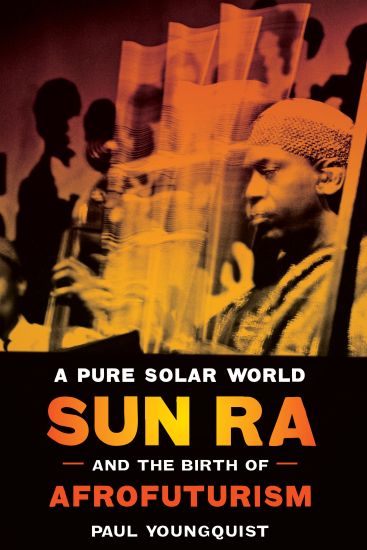
A Pure Solar World – Sun Ra and the Birth of Afrofuturism

A Pure Solar World – Sun Ra and the Birth of Afrofuturism

Paul Youngquist

University of Texas Press
2016
sidottu
Sun Ra said he came from Saturn. Known on earth for his inventive music and extravagant stage shows, he pioneered free-form improvisation in an ensemble setting with the devoted band he called the "Arkestra." Sun Ra took jazz from the inner city to outer space, infusing traditional swing with far-out harmonies, rhythms, and sounds. Described as the father of Afrofuturism, Sun Ra created "space music" as a means of building a better future for American blacks here on earth. A Pure Solar World: Sun Ra and the Birth of Afrofuturism offers a spirited introduction to the life and work of this legendary but underappreciated musician, composer, and poet. Paul Youngquist explores and assesses Sun Ra's wide-ranging creative output-music, public preaching, graphic design, film and stage performance, and poetry-and connects his diverse undertakings to the culture and politics of his times, including the space race, the rise of technocracy, the civil rights movement, and even space-age bachelor-pad music. By thoroughly examining the astro-black mythology that Sun Ra espoused, Youngquist masterfully demonstrates that he offered both a holistic response to a planet desperately in need of new visions and vibrations and a new kind of political activism that used popular culture to advance social change. In a nation obsessed with space and confused about race, Sun Ra aimed not just at assimilation for the socially disfranchised but even more at a wholesale transformation of American society and a more creative, egalitarian world.
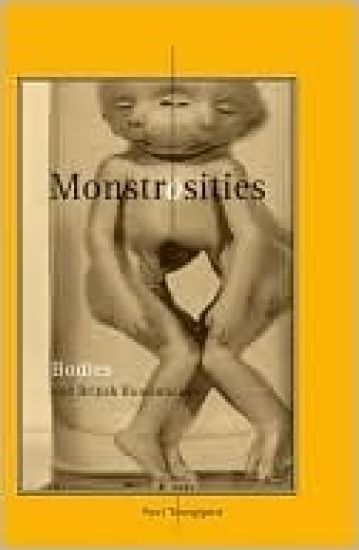
Monstrosities

Monstrosities

Paul Youngquist

University of Minnesota Press
2003
nidottu
A surprising evaluation of the role of the physical body in the construction of British identity. Eighteenth-century medicine used the word “monstrosities” to describe physically deformed bodies—those irreducible to the “proper body” in their singular, sometimes startling difference. Considering British society in confrontation with such monstrosities, Paul Youngquist reveals the cultural politics of embodiment in Britain during the late eighteenth and early nineteenth centuries. Drawing on the histories of medicine, economics, liberalism, and nationalism, his work shows that bodies are not simply born but rather built by cultural practices directed toward particular social ends. Among the phenomena Youngquist treats are the science of comparative anatomy, the annual festivity of Bartholomew Fair, the social status of black Britons, opium habitués, pregnant women, and wounded war veterans. The authors he engages include John Locke, William Blake, Olaudah Equiano, Samuel Taylor Coleridge, Thomas De Quincey, Mary Wollstonecraft, Lord Byron, and Mary Shelley. Uniquely interdisciplinary, formidably researched, and replete with curious illustrations, this remarkable book should be of interest to anyone concerned with the historical and cultural fate of bodies in liberal society—and with the importance of deviance in determining that fate. Paul Youngquist is associate professor of English at Penn State University. He is the author of Madness and Blake’s Myth (1990).
A Pure Solar World – Sun Ra and the Birth of Afrofuturism

A Pure Solar World – Sun Ra and the Birth of Afrofuturism

Paul Youngquist

UNIVERSITY OF TEXAS PRESS
2023
nidottu
Surveying the range of Sun Ra's extraordinary creativity, this book explores how the father of Afrofuturism brought "space music" to a planet in need of transformation, supporting the aspirations of black people in an inhospitable white world. Sun Ra said he came from Saturn. Known on earth for his inventive music and extravagant stage shows, he pioneered free-form improvisation in an ensemble setting with the devoted band he called the "Arkestra." Sun Ra took jazz from the inner city to outer space, infusing traditional swing with far-out harmonies, rhythms, and sounds. Described as the father of Afrofuturism, Sun Ra created "space music" as a means of building a better future for American blacks here on earth. A Pure Solar World: Sun Ra and the Birth of Afrofuturism offers a spirited introduction to the life and work of this legendary but underappreciated musician, composer, and poet. Paul Youngquist explores and assesses Sun Ra's wide-ranging creative output-music, public preaching, graphic design, film and stage performance, and poetry-and connects his diverse undertakings to the culture and politics of his times, including the space race, the rise of technocracy, the civil rights movement, and even space-age bachelor-pad music. By thoroughly examining the astro-black mythology that Sun Ra espoused, Youngquist masterfully demonstrates that he offered both a holistic response to a planet desperately in need of new visions and vibrations and a new kind of political activism that used popular culture to advance social change. In a nation obsessed with space and confused about race, Sun Ra aimed not just at assimilation for the socially disfranchised but even more at a wholesale transformation of American society and a more creative, egalitarian world.