Kirjojen hintavertailu. Mukana 11 342 296 kirjaa ja 12 kauppaa.

Kirjahaku

Etsi kirjoja tekijän nimen, kirjan nimen tai ISBN:n perusteella.

11 kirjaa tekijältä Paula Fredriksen

From Jesus to Christ

From Jesus to Christ

Paula Fredriksen

Yale University Press
2000
pokkari
How did Jesus of Nazareth become the Christ of the Christian tradition? “Magisterial. . . . A learned, brilliant and enjoyable study.”—Géza Vermès, Times Literary Supplement “Brilliant and lucidly written, full of original and fascinating insights.”—Reginald H. Fuller, Journal of the American Academy of Religion “This is a first-rate work of a first-rate historian.”—James D. Tabor, Journal of Religion In this exciting book, Paula Fredriksen explains the variety of New Testament images of Jesus by exploring the ways that the new Christian communities interpreted his mission and message in light of the delay of the Kingdom he had preached. Carefully examining the New Testament texts, she provides fascinating insights into such issues as the social and religious problems facing early Christian communities, the content of Jesus’ ministry, and the circumstances of his crucifixion. This edition includes an introduction that reviews more recent scholarship on Jesus and its implications for both history and theology.
Augustine and the Jews

Augustine and the Jews

Paula Fredriksen

Yale University Press
2010
pokkari
Now in paperback with a new postscript, this updated edition of Paula Fredriksen's critically acclaimed Augustine and the Jews traces the social and intellectual forces that led to the development of Christian anti-Judaism and shows how and why Augustine challenged this tradition. Drawing us into the life, times, and thought of Augustine of Hippo (396-430), Fredriksen focuses on the period of astounding creativity that led to his new understanding of Paul and to his great classic, The Confessions. She shows how Augustine's struggle to read the Bible led him to a new theological vision, one that countered the anti-Judaism not only of his Manichaean opponents but also of his own church. The Christian Empire, Augustine held, was right to ban paganism and to coerce heretics. But the source of ancient Jewish scripture and current Jewish practice, he argued, was the very same as that of the New Testament and of the church-namely, God himself. Accordingly, he urged, Jews were to be left alone.Conceived as a vividly original way to defend Christian ideas about Jesus and about the Old Testament, Augustine's theological innovation survived the collapse of the Western Roman Empire, and it ultimately served to protect Jewish lives against the brutality of medieval crusades. Augustine and the Jews sheds new light on the origins of Christian anti-Semitism and, through Augustine, opens a path toward better understanding between two of the world's great religions.
Paul

Paul

Paula Fredriksen

Yale University Press
2017
sidottu
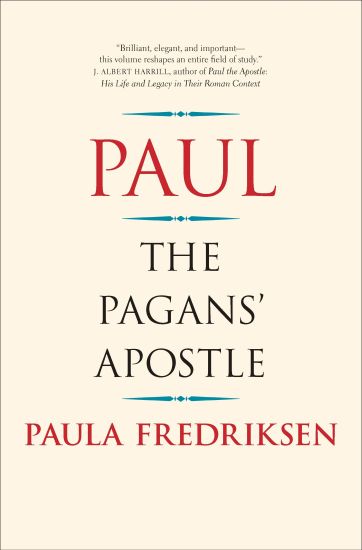
A groundbreaking new portrait of the apostle Paul, from one of today’s leading historians of antiquity Often seen as the author of timeless Christian theology, Paul himself heatedly maintained that he lived and worked in history’s closing hours. His letters propel his readers into two ancient worlds, one Jewish, one pagan. The first was incandescent with apocalyptic hopes, expecting God through his messiah to fulfill his ancient promises of redemption to Israel. The second teemed with ancient actors, not only human but also divine: angry superhuman forces, jealous demons, and hostile cosmic gods. Both worlds are Paul’s, and his convictions about the first shaped his actions in the second. Only by situating Paul within this charged social context of gods and humans, pagans and Jews, cities, synagogues, and competing Christ-following assemblies can we begin to understand his mission and message. This original and provocative book offers a dramatically new perspective on one of history’s seminal figures.
Paul

Paul

Paula Fredriksen

Yale University Press
2018
pokkari
A groundbreaking new portrait of the apostle Paul, from one of today’s leading historians of antiquity Often seen as the author of timeless Christian theology, Paul himself heatedly maintained that he lived and worked in history’s closing hours. His letters propel his readers into two ancient worlds, one Jewish, one pagan. The first was incandescent with apocalyptic hopes, expecting God through his messiah to fulfill his ancient promises of redemption to Israel. The second teemed with ancient actors, not only human but also divine: angry superhuman forces, jealous demons, and hostile cosmic gods. Both worlds are Paul’s, and his convictions about the first shaped his actions in the second. Only by situating Paul within this charged social context of gods and humans, pagans and Jews, cities, synagogues, and competing Christ-following assemblies can we begin to understand his mission and message. This original and provocative book offers a dramatically new perspective on one of history’s seminal figures.
When Christians Were Jews

When Christians Were Jews

Paula Fredriksen

Yale University Press
2019
pokkari
A compelling account of Christianity’s Jewish beginnings, from one of the world’s leading scholars of ancient religion How did a group of charismatic, apocalyptic Jewish missionaries, working to prepare their world for the impending realization of God’s promises to Israel, end up inaugurating a movement that would grow into the gentile church? Committed to Jesus’s prophecy—“The Kingdom of God is at hand!”—they were, in their own eyes, history’s last generation. But in history’s eyes, they became the first Christians. In this electrifying social and intellectual history, Paula Fredriksen answers this question by reconstructing the life of the earliest Jerusalem community. As her account arcs from this group’s hopeful celebration of Passover with Jesus, through their bitter controversies that fragmented the movement’s midcentury missions, to the city’s fiery end in the Roman destruction of Jerusalem, she brings this vibrant apostolic community to life. Fredriksen offers a vivid portrait both of this temple-centered messianic movement and of the bedrock convictions that animated and sustained it.
Jesus of Nazareth, King of the Jews: A Jewish Life and the Emergence of Christianity
Paula Fredriksen, renowned historian and author of From Christ to Jesus, begins this inquiry into the historic Jesus with a fact that may be the only undisputed thing we know about him: his crucifixion. Rome reserved this means of execution particularly for political insurrectionists; and the Roman charge posted at the head of the cross indicted Jesus for claiming to be King of the Jews. To reconstruct the Jesus who provoked this punishment, Fredriksen takes us into the religious worlds, Jewish and pagan, of Mediterranean antiquity, through the labyrinth of Galilean and Judean politics, and on into the ancient narratives of Paul's letters, the gospels, the Dead Sea Scrolls, and Josephus' histories. The result is a profound contribution both to our understanding of the social and religious contexts within which Jesus of Nazareth moved, and to our appreciation of the mission and message that ended in the proclamation of Jesus as Messiah.
Sin

Sin

Paula Fredriksen

Princeton University Press
2012
sidottu
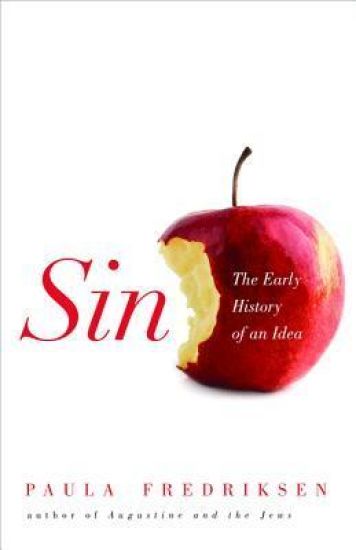
Ancient Christians invoked sin to account for an astonishing range of things, from the death of God's son to the politics of the Roman Empire that worshipped him. In this book, award-winning historian of religion Paula Fredriksen tells the surprising story of early Christian concepts of sin, exploring the ways that sin came to shape ideas about God no less than about humanity. Long before Christianity, of course, cultures had articulated the idea that human wrongdoing violated relations with the divine. But "Sin" tells how, in the fevered atmosphere of the four centuries between Jesus and Augustine, singular new Christian ideas about sin emerged in rapid and vigorous variety, including the momentous shift from the belief that sin is something one does to something that one is born into. As the original defining circumstances of their movement quickly collapsed, early Christians were left to debate the causes, manifestations, and remedies of sin. This is a powerful and original account of the early history of an idea that has centrally shaped Christianity and left a deep impression on the secular world as well.
Ancient Christianities

Ancient Christianities

Paula Fredriksen

PRINCETON UNIVERSITY PRESS
2024
sidottu
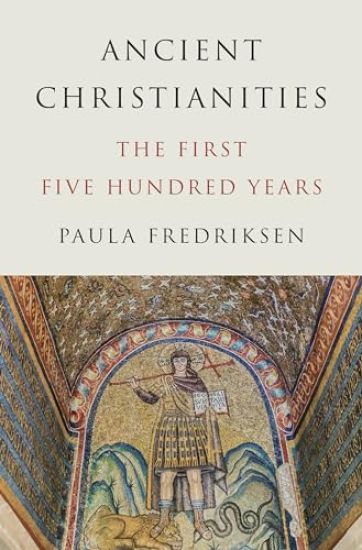
How, over the course of five centuries, one particular god and one particular Christianity came to dominate late Roman imperial politics and piety The ancient Mediterranean teemed with gods. For centuries, a practical religious pluralism prevailed. How, then, did one particular god come to dominate the politics and piety of the late Roman Empire? In Ancient Christianities, Paula Fredriksen traces the evolution of early Christianity—or rather, of early Christianities—through five centuries of Empire, mapping its pathways from the hills of Judea to the halls of Rome and Constantinople. It is a story with a sprawling cast of characters: not only theologians, bishops, and emperors, but also gods and demons, angels and magicians, astrologers and ascetics, saints and heretics, aristocratic patrons and millenarian enthusiasts. All played their part in the development of what became and remains an energetically diverse biblical religion.The New Testament, as we know it, represents only a small selection of the many gospels, letters, acts of apostles, and revelations that circulated before the establishment of the imperial church. It tells how the gospel passed from Jesus, to the apostles, thence to Paul. But by using our peripheral vision, by looking to noncanonical and paracanonical texts, by availing ourselves of information derived from papyri, inscriptions, and archaeology, we can see a different, richer, much less linear story emerging. Fredriksen brings together these many sources to reconstruct the lively interactions of pagans, Jews, and Christians, tracing the conversions of Christianity from an energetic form of Jewish messianism to an arm of the late Roman state.
Sin

Sin

Paula Fredriksen

Princeton University Press
2014
pokkari
Ancient Christians invoked sin to account for an astonishing range of things, from the death of God's son to the politics of the Roman Empire that worshipped him. In this book, award-winning historian of religion Paula Fredriksen tells the surprising story of early Christian concepts of sin, exploring the ways that sin came to shape ideas about God no less than about humanity. Long before Christianity, of course, cultures had articulated the idea that human wrongdoing violated relations with the divine. But Sin tells how, in the fevered atmosphere of the four centuries between Jesus and Augustine, singular new Christian ideas about sin emerged in rapid and vigorous variety, including the momentous shift from the belief that sin is something one does to something that one is born into. As the original defining circumstances of their movement quickly collapsed, early Christians were left to debate the causes, manifestations, and remedies of sin. This is a powerful and original account of the early history of an idea that has centrally shaped Christianity and left a deep impression on the secular world as well.
Ancient Christianities

Ancient Christianities

Paula Fredriksen

PRINCETON UNIVERSITY PRESS
2026
pokkari
How, over the course of five centuries, one particular god and one particular Christianity came to dominate late Roman imperial politics and piety The ancient Mediterranean teemed with gods. For centuries, a practical religious pluralism prevailed. How, then, did one particular god come to dominate the politics and piety of the late Roman Empire? In Ancient Christianities, Paula Fredriksen traces the evolution of early Christianity—or rather, of early Christianities—through five centuries of Empire, mapping its pathways from the hills of Judea to the halls of Rome and Constantinople. It is a story with a sprawling cast of characters: not only theologians, bishops, and emperors, but also gods and demons, angels and magicians, astrologers and ascetics, saints and heretics, aristocratic patrons and millenarian enthusiasts. All played their part in the development of what became and remains an energetically diverse biblical religion. The New Testament, as we know it, represents only a small selection of the many gospels, letters, acts of apostles, and revelations that circulated before the establishment of the imperial church. It tells how the gospel passed from Jesus, to the apostles, thence to Paul. But by using our peripheral vision, by looking to noncanonical and paracanonical texts, by availing ourselves of information derived from papyri, inscriptions, and archaeology, we can see a different, richer, much less linear story emerging. Fredriksen brings together these many sources to reconstruct the lively interactions of pagans, Jews, and Christians, tracing the conversions of Christianity from an energetic form of Jewish messianism to an arm of the late Roman state.
Augustine and the Jews

Augustine and the Jews

Paula Fredriksen

Third Millennium Press Ltd.
2020
nidottu
Examines the Work of Augustine Of Hippo 396-430AD, Leading To A Greater Understanding of Paul the Apostle. Contents Include The Legacy Of Alexander[ Part 1], The Prodigal Son[Part 2], God And Israel[Part 3]. Timeline, Bibliography, Names and Places, Chronology of Augustine.