Kirjojen hintavertailu. Mukana 11 627 373 kirjaa ja 12 kauppaa.

Kirjahaku

Etsi kirjoja tekijän nimen, kirjan nimen tai ISBN:n perusteella.

14 kirjaa tekijältä Pauline Johnson

Pauline Johnson

Pauline Johnson

Pauline Johnson

Dundurn Group Ltd
2013
pokkari
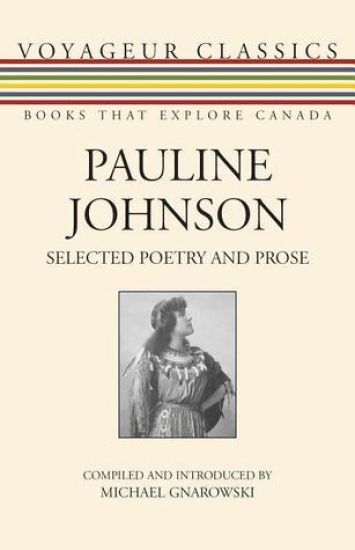
Half-Mohawk, half-English author Pauline Johnson astounded Canada with her unique poetry, prose, and presentations. Pauline Johnson was an unusual and unique presence on the literary scene during the late 19th and early 20th centuries. Part Mohawk and part European, she was a compelling female voice in the midst of an almost entirely male writing community. Having discovered her talent for public recitation of poetry, Johnson relied on her ancestry and gender to establish an international reputation for her stage performances, during which she appeared in European and native costume. These poems were later collected under the title of Flint and Feather (1912) and form the source of the selections appearing in this volume.Later, suffering from ill health, Pauline Johnson retired from the stage and devoted herself to the writing of prose, collected in Legends of Vancouver, The Moccasin Maker (1913), and The Shagganappi (1913), gleanings from which form part of this collection.

Feminism As Radical Humanism

Feminism As Radical Humanism

Pauline Johnson

Routledge
2019
sidottu
Feminism is currently at an impasse. Both the liberation feminism of the 1970's and the more recent feminism of difference are increasingly faced with the limitations of their own perspectives. While feminists today generally acknowledge the need to recognise diversity, they lack a coherent framework through which this need can be articulated. In "
Habermas

Habermas

Pauline Johnson

Routledge
2006
sidottu
If we are to believe what many sociologists are telling us, the public sphere is in a near terminal state. Our ability to build solidarities with strangers and to agree on the general significance of needs and problems seems to be collapsing. These cultural potentials appear endangered by a newly aggressive attempt to universalize and extend the norms of the market. For four decades Habermas has been trying to bring the claims of a modern public sphere before us. His vast oeuvre has investigated its historical, sociological and theoretical preconditions, has explored its relevance and meaning as well as diagnosing its on-going crises. In the contemporary climate, a systematic look at Habermas’ lifelong project of rescuing the modern public sphere seems an urgent task. This study reconstructs major developments in Habermas’ thinking about the public sphere, and is a contribution to the current vigorous debate over its plight. It marshals the significance of Habermas’ lifetime of work on this topic to illuminate what is at stake in a contemporary interest in rescuing an embattled modern public sphere.Habermas’ project of rescuing the neglected potentials of Enlightenment legacies has been deeply controversial. For many, it is too lacking in radical commitments to warrant its claim to a contemporary place within a critical theory tradition. Against this developing consensus, Pauline Johnson describes Habermas’ project as one that is still informed by utopian energies, even though his own construction of emancipatory hopes itself proves to be too narrow and one-sided.
Habermas

Habermas

Pauline Johnson

Routledge
2009
nidottu
If we are to believe what many sociologists are telling us, the public sphere is in a near terminal state. Our ability to build solidarities with strangers and to agree on the general significance of needs and problems seems to be collapsing. These cultural potentials appear endangered by a newly aggressive attempt to universalize and extend the norms of the market. For four decades Habermas has been trying to bring the claims of a modern public sphere before us. His vast oeuvre has investigated its historical, sociological and theoretical preconditions, has explored its relevance and meaning as well as diagnosing its on-going crises. In the contemporary climate, a systematic look at Habermas’ lifelong project of rescuing the modern public sphere seems an urgent task. This study reconstructs major developments in Habermas’ thinking about the public sphere, and is a contribution to the current vigorous debate over its plight. It marshals the significance of Habermas’ lifetime of work on this topic to illuminate what is at stake in a contemporary interest in rescuing an embattled modern public sphere.Habermas’ project of rescuing the neglected potentials of Enlightenment legacies has been deeply controversial. For many, it is too lacking in radical commitments to warrant its claim to a contemporary place within a critical theory tradition. Against this developing consensus, Pauline Johnson describes Habermas’ project as one that is still informed by utopian energies, even though his own construction of emancipatory hopes itself proves to be too narrow and one-sided.
Marxist Aesthetics (Routledge Revivals)
Originally published in 1984, this study deals with a number of influential figures in the European tradition of Marxist theories of aesthetics, ranging from Lukacs to Benjamin, through the Frankfurt School, to Brecht and the Althusserians. Pauline Johnson shows that, despite the great diversity in these theories about art, they all formulate a common problem, and she argues that an adequate response to this problem must be based on account of the practical foundations within the recipient's own experience for a changed consciousness.
Marxist Aesthetics (Routledge Revivals)
Originally published in 1984, this study deals with a number of influential figures in the European tradition of Marxist theories of aesthetics, ranging from Lukacs to Benjamin, through the Frankfurt School, to Brecht and the Althusserians. Pauline Johnson shows that, despite the great diversity in these theories about art, they all formulate a common problem, and she argues that an adequate response to this problem must be based on account of the practical foundations within the recipient's own experience for a changed consciousness.
Feminism As Radical Humanism

Feminism As Radical Humanism

Pauline Johnson

Westview Press Inc
1994
nidottu
For Johnson, feminism must recognize itself as a humanism in order to avoid certain theoretical quagmires. [The argument] is extremely provocative, and even, I would say, necessary. This book is sure to be controversial and of interest to a wide audience in feminist theory. I know of no other treatment of feminism and humanism that is so clear, cogent, and systematic. Judith Grant University of Southern California Feminism is currently at an impasse. Both the liberation feminism of the 1970’s and the more recent feminism of difference are increasingly faced with the limitations of their own perspectives. While feminists today generally acknowledge the need to recognise diversity, they lack a coherent framework through which this need can be articulated. In Feminism as Radical Humanism, Pauline Johnson calls for a reassessment of feminism’s relationship to modern humanism. She argues that despite its very thorough and necessary critique of mainstream formulations of humanist ideals, feminism itself remains strongly committed to humanist values. Drawing on a broad range of political and intellectual traditions, Johnson demonstrates that, only by proudly affirming its own humanist commitments can feminist theory find a way to negotiate the impasse in which it currently finds itself. Feminism as Radical Humanism is an important and controversial contribution to feminist theory, and to the ongoing debate about the meaning of contemporary humanism.
Critique in a Neoliberal Age

Critique in a Neoliberal Age

Pauline Johnson

Taylor Francis Ltd
2021
nidottu
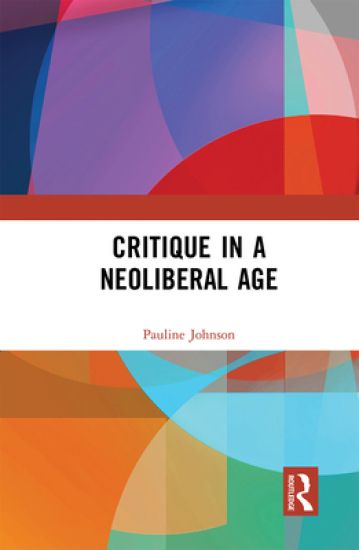
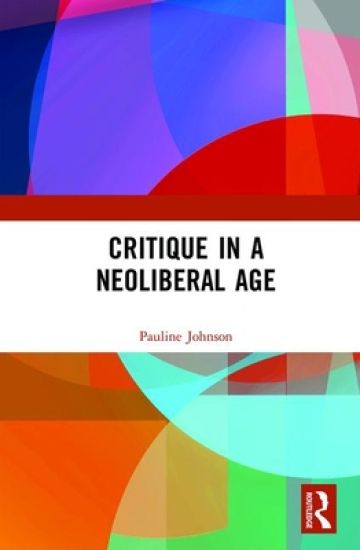
Critique in a Neoliberal Age brings a critique of ideology to main debates within economic sociology, populism studies, the neoliberal university, therapy culture, contemporary intimacies and feminism. Over the last decades, neoliberalism has worked to lift social protections and political regulations from the market and to identify modernity with capitalism itself. It has also engaged in an ideological project to screen alternative measurements of progress. Liberal and social democracy have been effectively disabled as grounds for weighing the costs of neoliberal predations. This volume examines the strategies through which neoliberalism has reconstituted and de-politicized liberal precepts such as universal justice, private right and a social democratic project responsive to needs. As such it will appeal to scholars and students of sociology and social and critical theory, political and social philosophy, politics, cultural studies and feminist thought.
Critique in a Neoliberal Age

Critique in a Neoliberal Age

Pauline Johnson

Routledge
2019
sidottu
Critique in a Neoliberal Age brings a critique of ideology to main debates within economic sociology, populism studies, the neoliberal university, therapy culture, contemporary intimacies and feminism. Over the last decades, neoliberalism has worked to lift social protections and political regulations from the market and to identify modernity with capitalism itself. It has also engaged in an ideological project to screen alternative measurements of progress. Liberal and social democracy have been effectively disabled as grounds for weighing the costs of neoliberal predations. This volume examines the strategies through which neoliberalism has reconstituted and de-politicized liberal precepts such as universal justice, private right and a social democratic project responsive to needs. As such it will appeal to scholars and students of sociology and social and critical theory, political and social philosophy, politics, cultural studies and feminist thought.
Legends of Vancouver

Legends of Vancouver

Pauline Johnson

Douglas and McIntyre (2013) Ltd.
1971
nidottu
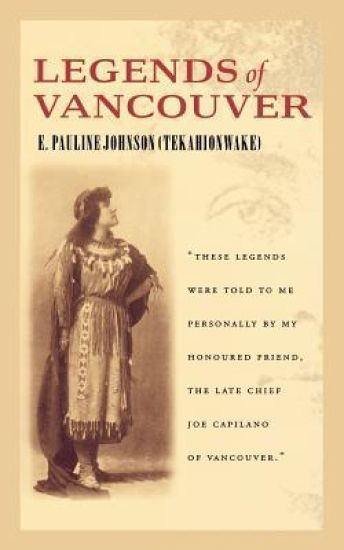
This print-on-demand title is available by request from most booksellers. A much-loved Canadian classic, Pauline Johnson's Legends of Vancouver was first published in 1911 and has been in print ever since. Through her poetic, romantic retelling of these Native legends, Pauline Johnson takes the reader back to a time long ago, before the city of Vancouver was built, when the land belonged to the Squamish people. These legends explain the stories behind many prominent natural features in and around Vancouver, such as the mountains known as The Lions and Siwash Rock in Stanley Park.