Kirjojen hintavertailu. Mukana 12 390 323 kirjaa ja 12 kauppaa.

Kirjahaku

Etsi kirjoja tekijän nimen, kirjan nimen tai ISBN:n perusteella.

6 kirjaa tekijältä Peggy Levitt

The Transnational Villagers

The Transnational Villagers

Peggy Levitt

University of California Press
2001
pokkari
Contrary to popular opinion, increasing numbers of migrants continue to participate in the political, social, and economic lives of their countries of origin even as they put down roots in the United States. The Transnational Villagers offers a detailed, compelling account of how ordinary people keep their feet in two worlds and create communities that span borders. Peggy Levitt explores the powerful familial, religious, and political connections that arise between Miraflores, a town in the Dominican Republic, and Jamaica Plain, a neighborhood in Boston and examines the ways in which these ties transform life in both the home and host country. The Transnational Villagers is one of only a few books based on in-depth fieldwork in the countries of origin and reception. It provides a moving, detailed account of how transnational migration transforms family and work life, challenges migrants' ideas about race and gender, and alters life for those who stay behind as much, if not more, than for those who migrate. It calls into question conventional thinking about immigration by showing that assimilation and transnational lifestyles are not incompatible. In fact, in this era of increasing economic and political globalization, living transnationally may become the rule rather than the exception.

Artifacts and Allegiances

Artifacts and Allegiances

Peggy Levitt

University of California Press
2015
pokkari
What can we learn about nationalism by looking at a country's cultural institutions? How do the history and culture of particular cities help explain how museums represent diversity? Artifacts and Allegiances takes us around the world to tell the compelling story of how museums today are making sense of immigration and globalization. Based on firsthand conversations with museum directors, curators, and policymakers; descriptions of current and future exhibitions; and inside stories about the famous paintings and iconic objects that define collections across the globe, this work provides a close-up view of how different kinds of institutions balance nationalism and cosmopolitanism. By comparing museums in Europe, the United States, Asia, and the Middle East, Peggy Levitt offers a fresh perspective on the role of the museum in shaping citizens. Taken together, these accounts tell the fascinating story of a sea change underway in the museum world at large.
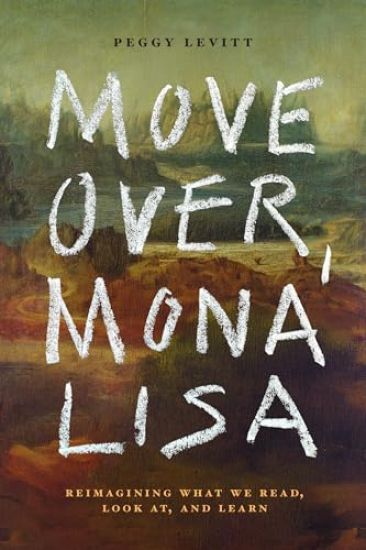
Move Over, Mona Lisa

Move Over, Mona Lisa

Peggy Levitt

STANFORD UNIVERSITY PRESS
2026
sidottu
Calls to include a wider range of art, literature, and ideas in the world's classrooms, libraries, and museums are loud and clear. If so many agree that reforms are needed, why is change so slow? The answer is the inequality pipeline – the multiple obstacles that ideas and art needs to overcome to circulate globally. Most strategies to disrupt the pipeline only increase inclusivity, without fundamentally challenging institutional hierarchies. In Move Over, Mona Lisa, Peggy Levitt reveals, through her conversations with creatives, thinkers, and professionals working in the cultural and academic worlds in Argentina, Lebanon, and South Korea, that another approach to combatting global cultural and intellectual inequality is underway. Like-minded actors outside of traditional cultural centers are creating new nodes of power, and new pathways which connect them, that allow art, books, and ideas to, "travel from Buenos Aires to Mexico City without having to pass through Madrid." They are circumventing traditional powerbrokers and boldly reconfiguring the cultural and intellectual order. Levitt's journey begins where art and literature are first created; then takes us to where they get discovered, circulated, exhibited, and acquired; and concludes where they are researched, published about, and taught. Along the way, we meet visionary artists, out-of-the box writers, committed activists, and teachers striving to define what it means to train truly global citizens. We also discover how the culture and history of the cities they work from influences what they do. By linking these ideas together, Levitt persuasively demonstrates that what happens in the museum or the library is integrally connected to what happens in institutions of higher learning. With deeply researched, novel insights, ambition, and hope, Move Over, Mona Lisa offers nothing short of a new theory of global cultural and intellectual change.
Move Over, Mona Lisa

Move Over, Mona Lisa

Peggy Levitt

STANFORD UNIVERSITY PRESS
2026
pokkari
Calls to include a wider range of art, literature, and ideas in the world's classrooms, libraries, and museums are loud and clear. If so many agree that reforms are needed, why is change so slow? The answer is the inequality pipeline – the multiple obstacles that ideas and art needs to overcome to circulate globally. Most strategies to disrupt the pipeline only increase inclusivity, without fundamentally challenging institutional hierarchies. In Move Over, Mona Lisa, Peggy Levitt reveals, through her conversations with creatives, thinkers, and professionals working in the cultural and academic worlds in Argentina, Lebanon, and South Korea, that another approach to combatting global cultural and intellectual inequality is underway. Like-minded actors outside of traditional cultural centers are creating new nodes of power, and new pathways which connect them, that allow art, books, and ideas to, "travel from Buenos Aires to Mexico City without having to pass through Madrid." They are circumventing traditional powerbrokers and boldly reconfiguring the cultural and intellectual order. Levitt's journey begins where art and literature are first created; then takes us to where they get discovered, circulated, exhibited, and acquired; and concludes where they are researched, published about, and taught. Along the way, we meet visionary artists, out-of-the box writers, committed activists, and teachers striving to define what it means to train truly global citizens. We also discover how the culture and history of the cities they work from influences what they do. By linking these ideas together, Levitt persuasively demonstrates that what happens in the museum or the library is integrally connected to what happens in institutions of higher learning. With deeply researched, novel insights, ambition, and hope, Move Over, Mona Lisa offers nothing short of a new theory of global cultural and intellectual change.
Transnational Social Protection

Transnational Social Protection

Peggy Levitt; Erica Dobbs; Ken Chih-Yan Sun; Ruxandra Paul

OXFORD UNIVERSITY PRESS INC
2023
sidottu
Argues that a new set of transnational social welfare arrangements has emerged that challenge traditional social welfare provision based on national citizenship and residence. The idea that social rights are something we are eligible for based on where we live or where we are citizens is out-of-date. In Transnational Social Protection, Peggy Levitt, Erica Dobbs, Ken Chih-Yan Sun, and Ruxandra Paul consider what happens to social welfare when more and more people live, work, study, and retire outside their countries of citizenship where they receive health, education, and elder care. The authors use the concept of resource environment to show how migrants and their families piece together packages of protections from multiple sources in multiple settings and the ways that these vary by place and time. They further show how a new, hybrid transnational social protection regime has emerged in response to the changing environment that complements, supplements, or, in some cases, substitutes for national social welfare systems as we knew them. Examining how national social welfare is affected when migration and mobility become an integral part of everyday life, this book moves our understanding of social protection from the national to the transnational.
Transnational Social Protection

Transnational Social Protection

Peggy Levitt; Erica Dobbs; Ken Chih-Yan Sun; Ruxandra Paul

OXFORD UNIVERSITY PRESS INC
2023
nidottu
Argues that a new set of transnational social welfare arrangements has emerged that challenge traditional social welfare provision based on national citizenship and residence. The idea that social rights are something we are eligible for based on where we live or where we are citizens is out-of-date. In Transnational Social Protection, Peggy Levitt, Erica Dobbs, Ken Chih-Yan Sun, and Ruxandra Paul consider what happens to social welfare when more and more people live, work, study, and retire outside their countries of citizenship where they receive health, education, and elder care. The authors use the concept of resource environment to show how migrants and their families piece together packages of protections from multiple sources in multiple settings and the ways that these vary by place and time. They further show how a new, hybrid transnational social protection regime has emerged in response to the changing environment that complements, supplements, or, in some cases, substitutes for national social welfare systems as we knew them. Examining how national social welfare is affected when migration and mobility become an integral part of everyday life, this book moves our understanding of social protection from the national to the transnational.