Kirjojen hintavertailu. Mukana 11 699 587 kirjaa ja 12 kauppaa.

Kirjahaku

Etsi kirjoja tekijän nimen, kirjan nimen tai ISBN:n perusteella.

7 kirjaa tekijältä Penelope Curtis

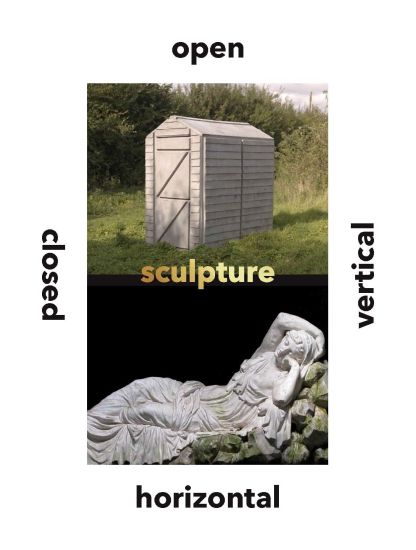
Sculpture Vertical, Horizontal, Closed, Open

Sculpture Vertical, Horizontal, Closed, Open

Penelope Curtis

Yale University Press
2017
sidottu
By taking simple ways of looking at sculpture, this book uncovers unexpected affinities between works of very different periods and types. From sundials to mirrors, from graves to way-markers, from fountains to contemporary art, a wide range of illustrated examples expands the definitions of sculpture and proposes that we understand this art as something more fundamental to the way we experience and construct our rites of passage. Penelope Curtis argues that there are some basic functions shared by many kinds of three-dimensional objects, be they more or less obviously sculptural. Even contemporary sculpture, with no apparent purpose, makes use of this deeply embedded vocabulary. Together, the qualities of vertical, horizontal, closed and open are consolidated in the ensemble, which places the viewer at its heart, on the threshold of sculpture and on the threshold of change. This book elides the usual notions of figurative and abstract to think instead about how sculpture works. Published in association with the Paul Mellon Centre for Studies in British Art
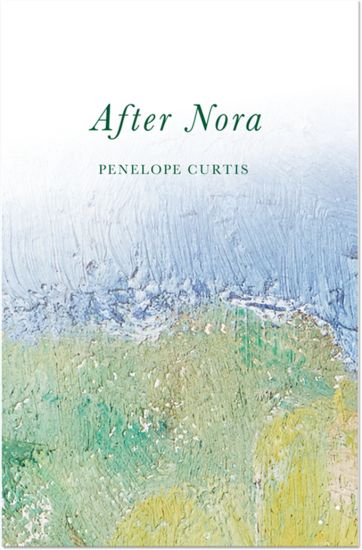
After Nora

After Nora

Penelope Curtis

Les Fugitives
2024
nidottu
In early 1920s England, Nora's life is in a state of flux: leaving one husband for another, she embarks on a new existence on the margins of the cultural and political elite, trying to hold onto her aspirations as a painter, along with her marriage. In late 1960s Glasgow, young biologist Maria de Sousa wrestles with her feelings for an older colleague, Adam Curtis, the author's father. The unclear connection between the two impels the author, fifty years later, to seek out answers in Lisbon: what really happened between Adam and Maria? After Nora bridges three generations spanning a century, and moves between London, Paris, southern England, Scotland, Jamaica and Portugal, touching on key scientific discoveries, artistic and historical landmarks, the Carnation Revolution and a global pandemic. Penelope Curtis offers sensitive portraits of those whose lives she has had to imagine in order to understand, in an ambitious debut that movingly resurrects a past whose remnants still permeate the present.
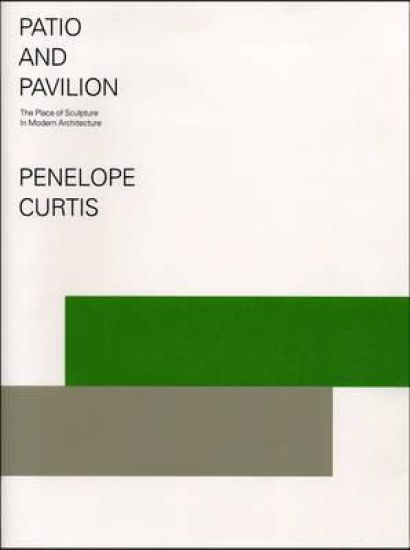
Patio and Pavilion

Patio and Pavilion

Penelope Curtis

Ridinghouse
2007
nidottu
This volume examines the relationship between modern sculpture and architecture in the mid-twentieth century, an interplay that has laid the ground for the semisculptural or semiarchitectural works by architects such as Frank Gehry and artists such as Dan Graham. The first half of the book explores how the addition of sculpture enhanced several architectural projects, including Mies van der Rohe's Barcelona Pavilion (1929) and Eliel Saarinen's Cranbrook Campus (1934). The second half of the book uses several additional case studies, including Philip Johnson's sculpture court for New York's Museum of Modern Art (1953), to explore what architectural spaces can add to the sculpture they are designed to contain. The author argues that it was in the middle of the twentieth century – before sculptural and architectural forms began to converge – that the complementary nature of the two practices began clearly to emerge: figurative sculpture highlighting the modernist architectural experience, and the abstract qualities of that architecture imparting to sculpture a heightened role.
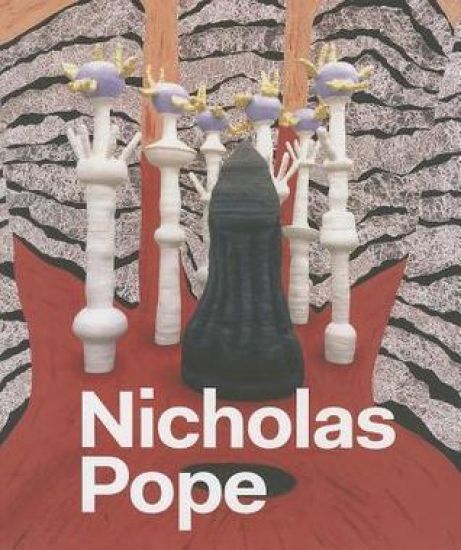
Nicholas Pope

Nicholas Pope

Penelope Curtis

Ridinghouse
2013
nidottu
British artist Nicholas Pope was best known in the 1970s and early 1980s for his large-scale sculptures made of wood, metal, stone, sheet lead or chalk. Following his 1980 exhibition representing Britain at the Venice Biennale, Pope was awarded a Cultural Visitor grant to Zimbabwe and Tanzania; an experience that affected the rest of his life and twisted his artistic practice completely. In a move towards softer, more malleable materials such as glass, porcelain, texture, moulded aluminium and ceramics, Pope began to make abstract works that reference complicated themes of spirituality, suicide and society. The first comprehensive monograph on the artist, this publication features over 150 colour illustrations alongside an introduction to the artist by Penelope Curtis, an analysis of the work's religious themes by Christopher Townsend and Andrew Sabin's exploration of Pope's recent work.
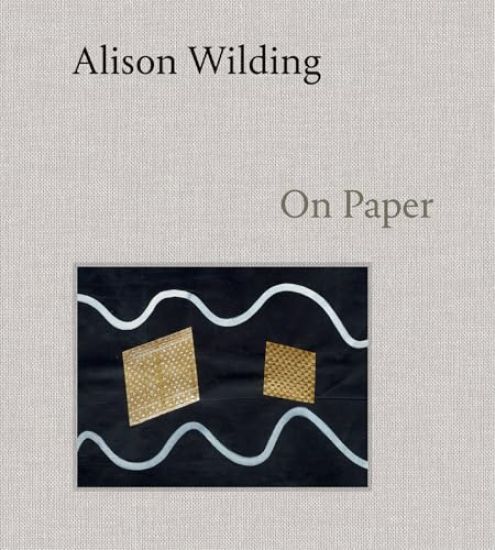
Alison Wilding: On Paper

Alison Wilding: On Paper

Penelope Curtis

RIDINGHOUSE
2024
sidottu
Best-known for her ambitious sculptural works, this volume explores how Alison Wilding’s compelling drawing and extensive use of collage have been integral to her development for five decades. Whilst sharing affiliations with Wilding’s three-dimensional work, the artist’s drawings – often in series – expand upon her investigation of surface by using a distinctive formal language. The works are characterised by a strong interplay between representation and metaphor, incorporating a range of materials – from ink to silicone fluid – to visualise and test ideas of mass and depth. Alongside essays by Anna Lovatt and Penelope Curtis, and an in-conversation with the artist by Rosie Cooper, this full-colour survey of over 300 illustrations offers the opportunity to track subtle correspondences in forms and concepts between historic and recent series of works. This publication was conceived by gallerist and Ridinghouse founder Karsten Schubert.
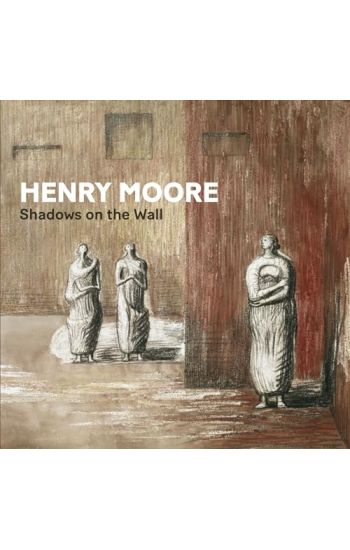
Henry Moore

Henry Moore

Penelope Curtis

Paul Holberton Publishing Ltd
2024
pokkari
Uncovers the significance of walls in the drawings of Henry Spencer Moore after World War II. Henry Spencer Moore (1898–1986) was one of the most influential British artists of the twentieth century. This book and exhibition offer a new reading of Moore's celebrated Shelter series and the artist's fascination with images of walls during and immediately after World War II. Henry Moore: Shadows on the Wall accompanies a focused exhibition at the Courtauld Gallery. After the destruction of his London studio early in World War II, Henry Moore began drawing figures sheltering from bomb raids in the London Underground. The walls of these sheltered spaces came to absorb his attention in an altogether new way, becoming scene-setters and key components of his drawings. This fascination with the bricks and the presence of walls, their texture, mass, and volume, became especially important after his project to illustrate the wartime radio play The Rescue, based on Homer's Odyssey. Henry Moore, a collaboration with the Henry Moore Foundation, suggests for the first time that the walls in his drawings offer a new way to understand some of his most individual and monumental post-war sculpture projects.
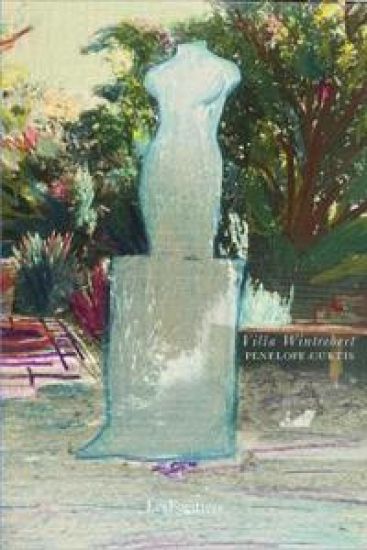
Villa Wintrebert

Villa Wintrebert

Penelope Curtis

Les Fugitives
2026
nidottu
In Banyuls-sur-Mer, French Catalonia, the Villa Wintrebert turns its back on passers-by and looks instead down the length of its enormously long, tropical garden. Renamed after the pioneering naturalist Paul Wintrebert, who once lived there with his wife, the villa was also aptly known as ‘Loin des Yeux’ (Out of Sight). In her speculative history of the place, its inhabitants and visitors, Penelope Curtis imagines the relationships of tenderness and passion across three generations of women, witnessed at a distance by two little girls. Harmony is disrupted when a well-intentioned commission to the renowned local sculptor, Aristide Maillol, shines a light on the fundamental fragility of the women’s relationship. Villa Wintrebert is a story of childhood, of adult complicity, and of the unfinished sculpture which fractures the female friendship on which the villa and its garden had depended.