

Kirjahaku
Etsi kirjoja tekijän nimen, kirjan nimen tai ISBN:n perusteella.
3 kirjaa tekijältä Penelope Harris
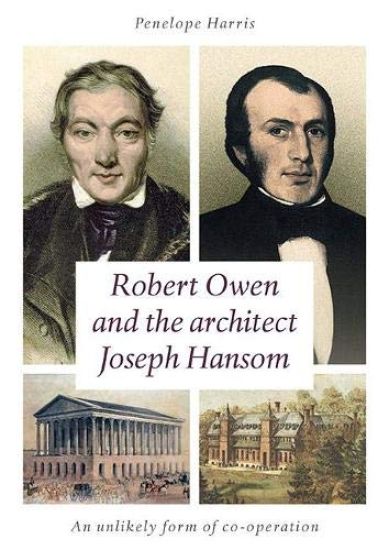
Robert Owen was a charismatic pipe-dreamer, bound to unrealistic expectations. Though born in Newtown, Montgomeryshire, by the time he met Joseph Hansom in Birmingham, he had become a self-taught manager of successful cotton mills in Manchester and New Lanark, Scotland. It was here that he developed his theories of early education and campaigned for factory reform. Lacking the support he needed to advance his plans, he purchased a community in America, only to lose all his money. The much younger Hansom was an ambitious architect, who fast-tracked his own career by winning the competition to design Birmingham Town Hall. Birmingham was a proactive town, open to Thomas Attwood's efforts to bring about the Great Reform Bill, and the advancement of newly-formed trade unions. Along with his partner, Edward Welch, Hansom became so involved in politics that his attention was diverted away from the Town Hall, which resulted in both their bankruptcies. Nevertheless Hansom re-established his career, while Owen strove to develop his master 'Plan', the building of a self-sufficient community. He leased a property in a remote part of Hampshire and appointed Hansom. Despite Herculean efforts (as Hansom described the Town Hall), the community collapsed. Under different ownership, it became home to the most prestigious scientists in Britain. The inclusion of Birmingham and Hansom adds a new dimension to the complexities of Robert Owen's life ... a great bit of research ... should grace the shelves of any museum or library where his name rests. Charles Rex Shayler, chairman of the Robert Owen Museum and relative of the architect who designed the building in which it is housed.
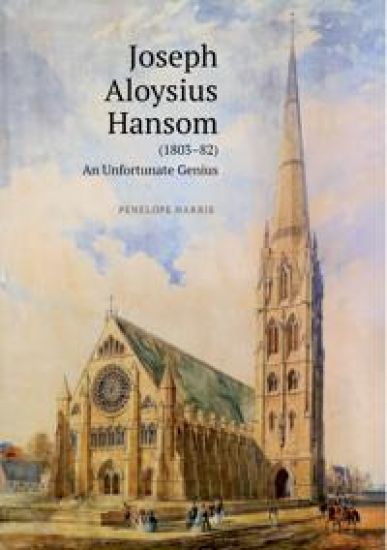
In Joseph Aloysius Hansom (1803-82), An Unfortunate Genius, biographer Penelope Harris portrays an imaginative, eclectic architect of around two hundred buildings across the British Isles and into France, mainly for Catholic and gentry patrons. Starting from humble origins, but blessed with his upbringing in York, driven by passion and not afraid to defy convention, Hanson is now perhaps unfairly as well remembered as the inventor of the Hansom Cab as he is for his many wonderful architectural masterpieces. Using original research material such as the meticulous diaries of his clerk of works who recorded their daily building routine, Harris shows how that far from being a self-seeking egoist Hansom attempted to set up a college for budding architects and promoted building skills through his journal The Builder.