

Kirjahaku
Etsi kirjoja tekijän nimen, kirjan nimen tai ISBN:n perusteella.
9 kirjaa tekijältä Penelope Shuttle


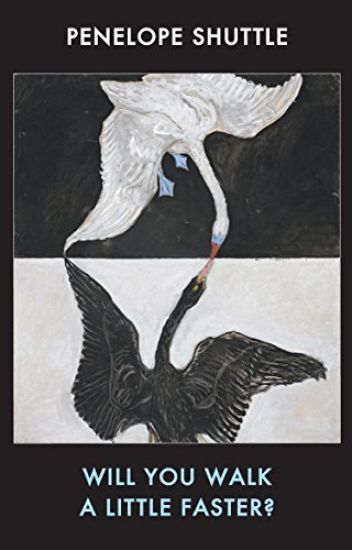
Penelope Shuttle's collection explores cities (London, Bristol) on foot and via inward exploration, drawing on architecture, history and personal memory. These are poems drawn from the flipside of experience, undermining and rebuilding syntax in order to precipitate language, and, in the main, abjuring punctuation. The poems also engage with inward exploration where both active and meditative thinking seek a vulnerable and temporary equilibrium; poems more interested in framing questions than arriving at answers. The volatile and tactile realities and delusions of being in the world direct much of the language's traffic here; there's a commingling of sadness and wry humour in Shuttle's travels through our physical and metaphysical worlds. Pared-back imagery and lyric purpose are embodied here throughout in the work of a poet who agrees with Ekbert Faas's comment: 'as soon as you have a new syntax, you have a new way of breathing, and as soon as you have that you have a new consciousness'. Will You Walk a Little Faster was Penelope Shuttle's first new book-length collection after her Bloodaxe retrospective, Unsent: New & Selected Poems (2012), and was published on her 70th birthday.
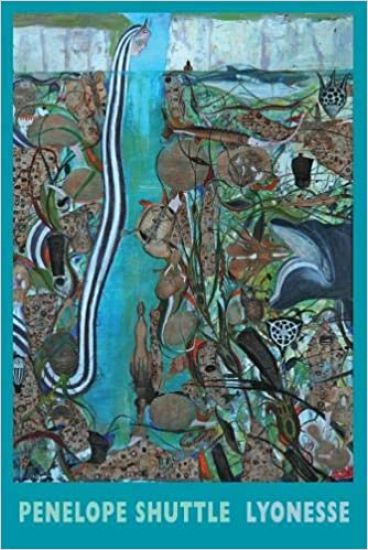
The submerged land of Lyonesse was once part of Cornwall, according to myth and the oral tradition, standing for a lost paradise in Arthurian legend, but now an emblem of human frailty in the face of climate change. And there was indeed a Bronze Age inundation event which swept the entire west of Cornwall under the sea, with only the Scilly Isles and St Michael’s Mount left as remnants above sea-level. Lyonesse was also Thomas Hardy’s name for Cornwall where Penelope Shuttle has lived all her adult life, always fascinated by the stories and symbolic presence of Lyonesse. After seeing the Scilly Isles from a small plane at a low altitude – flying over the Wolf Lighthouse – and then visiting the recent Sunken Cities exhibition at the British Museum, imagination and memory played their part in joining the Lyonesse dots together for her, prompting what she calls ‘a spontaneous inundation of approaches to the theme, images, soundings of Lyonesse’. As she writes in a preface to this book: ‘The universality of loss, both of physical cities and of the human experience erased from the record, enhanced the resource of Lyonesse in my writing. Lyonesse is a place of paradox. It is real, had historical existence. It is also an imaginary region for exploring depths. It holds grief for many kinds of loss… The poems seek re-wilding of a city where human loss interconnects with mythic loss; myth is rooted in the real.’ The second part of this book – New Lamps for Old – is a collection of poems she needed to write in coming up for air from the watery depths of Lyonesse, to find ways to begin again, to find meaning in life after bereavement. The ‘old lamps’ of a former life have been extinguished, leaving darkness. Her challenge was to find ‘new lamps’ to illuminate and give meaning to life. Lyonesse is a fluid magical world. The poems of New Lamps for Old are concerned with earth, air and fire. Both collections share allegiance with the fifth element, the spirit.

Penelope Shuttle is one of Britain's leading poets. This selection - drawn from ten collections published over three decades plus new work - shows both her consistency of voice and her energised openness to language and to life. Adventurous, searching, interested in the luminous instant of reality that dwells in the perpetual now of the poem, Penelope Shuttle is a poet who clearly shares Picasso's view that 'If you know exactly what you're going to do, what's the point of doing it?' Not for nothing was one of her books titled Adventures with My Horse. The new poems of Unsent are communications to and with her husband Peter Redgrove, remembering their shared past with love, wit, paradox, exasperation and a lightness of heart towards ageing and sorrow. With these poems Shuttle concludes her triptych of mourning for Redgrove, and ceases 'to weep on the world's shoulder'. If a poet's work is her personal experience of the universe then this book takes us deep into that Shuttle-verse. In earlier collections her concerns are with language as a safety net from life's difficulties and a guide through widening regions of love and motherhood. Her themes range widely: personal life, that part of our 'secret working mind' which we call dreams, the landscape of Cornwall, myth and fairytale. And she has a passionate awareness of the many ways - sacred and profane, comic, sensuous, and joyful - in which we sustain ourselves through poetry, combining a provocative intelligence with uninhibited emotional power.
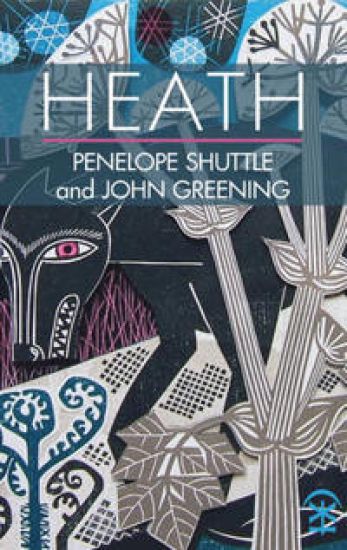
‘alas, alas for everythingwe lost on the Heath’Criss-crossed with desire-lines and flight paths, Penelope Shuttle and John Greening’s Heath is a wild chorus of poems written in call and response across Hounslow Heath. Through bramble, furze and over wild tracks, we explore the run-out grooves of a rapidly vanishing edgeland that may soon go under the tarmac of the proposed third runway at Heathrow. This is eco-poetry beautifully realised and retold in the form of a contemporary fable, straying from the known routes into the borderlands between the human, natural and the supernatural.
On her shelves Penelope Shuttle found several Old English dictionaries belonging to her late husband Peter Redgrove, which she studied until their strange and mysterious vocabulary found its way into a sequence of poetry. Here Shuttle's writing of animals, based upon a reading of a medieval mystery play about Noah and The Deluge, is connected and intertwined with current environmental concerns. The magic and richness of biblical stories is present as mythology rather than theology, and Noah sees Penelope Shuttle utilise the title character as a critique of patriarchal attitudes, particularly in regard to Emzara, Noah's wife. This is a remarkable work that brings the past into the present, and reimagines a better future.
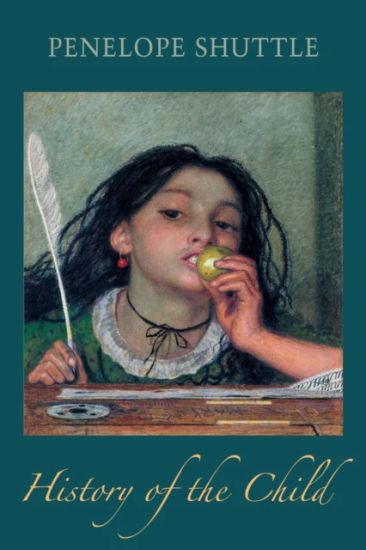
History of the Child is a highly evocative exploration of childhood, memory, and imagination, blending personal and historical perspectives. The book’s themes include parenting, grief, nature, emotional recovery and connections to the past, guided by the idea of childhood as a transformative and rebellious space. The first of its four sections features poems about Katherine of Aragon, the Vestal Virgins, Stanley Spencer and Wallace Stevens, with a focus on grief, nature, and animals. ?The second, Book of Lullabies, steps closer to the theme of the child, with poems about memory, inwardness, climate change, sexuality in older age, and the natural world. ? The third part, History of the Child, is a journey back to Penelope Shuttle's own childhood, blending personal memories with imagined perspectives to explore psychological crises, emotional recovery, and the traumas of childhood. ? It introduces an ‘alternative girl child self’, inspired by Persian legends, by her late husband Peter Redgrove’s dream of such a girl (‘my death, and she is my soul’), and by a friend’s fanciful wish. The culminating fourth section is a playful sequence about a little table, inspired by her mother and her childhood. ? The table symbolises connection to her mother, who lived to be 100 years old, and their shared history. ? Penelope Shuttle's History of the Child is guided by themes of memory, imagination, foreboding, magic, history and humour, and seeks to articulate the essence of ‘being’ through fiery language and elemental imagery. ? She draws inspiration from Donald Winnicott’s concept of the ‘potentive space’ where play, fantasy and reality intersect.