Kirjojen hintavertailu. Mukana 11 342 296 kirjaa ja 12 kauppaa.

Kirjahaku

Etsi kirjoja tekijän nimen, kirjan nimen tai ISBN:n perusteella.

5 kirjaa tekijältä Perry Gauci

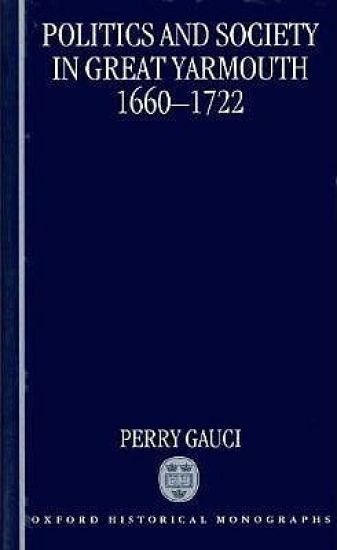
Politics and Society in Great Yarmouth 1660-1722
This is the first intensive study of the political development of a major English town during the late seventeenth and early eighteenth centuries. Perry Gauci examines the activities of the local oligarchy over a period which begins in upheaval, in the aftermath of civil war, and ends in the relative stability of early Georgian England. He brings a fresh perspective to such important episodes as the borough regulation of the 1680s, and the `rage of party' after 1689, by broadening the sphere of `politics' to encompass provincial experiences. He examines the role of the town corporation, a little-studied organ of local government, whose membership reveals much about the relationship between social and political change in this period. Gauci challenges accepted views on these corporations, showing them to be much more dynamic, and less self-interested, than is usually supposed. His analysis of the structures of local politics transcends local history and reveals a great deal about the influence of national authorities over provincial life. It is a significant contribution to the urban history of England.
The London Private Banker

The London Private Banker

Perry Gauci

Oxford University Press
2025
sidottu
At the Restoration of 1660, there was no distinctive banking sector, and banking services were provided by a variety of traders, most notably the London goldsmiths. In the later seventeenth century, the first specialists appeared against a background of rapid economic change, and they were often attacked for their greed and self-interest. Historic associations with usury were slow to dissipate, but in the mid-Georgian period a more distinctive cadre of bankers had established itself, thanks to their pivotal role in the service of both landed and commercial elites. These private bankers provided core retail services to thousands of customers, and their premises became well-known sites within the metropolitan landscape. By 1800, the characteristics of the profession were well-developed, to the extent that its members were often seen as establishment figures by both critics and admirers, lauded or vilified in turn for their contribution to national prosperity or instability. The great financial crisis of 1825–6 had a disastrous impact on many private bankers, heralding the rise of the joint-stock bank, but their professional ethos endured as a permanent legacy of their Georgian achievement. The London Private Banker: A Social History, 1660–1825 examines the societal impact of the London private bankers between 1660 and 1825 for the first time. Economic historians have clarified their commercial development, but their distinctive role as retail bankers offers insight into an array of dynamic social forces in eighteenth-century Britian, especially the relationship between the middling and upper orders. Using a sample of some 300 partners, the book examines the development of London private banking from its uncertain late Stuart origins to its established place on the late Georgian high street. Their experiences illuminate the solidity and adaptability of the social order, and their importance is tracked through their commercial services, public lives, and private pleasures. Their advancement renders them a remarkable social phenomenon with a uniquely broad archival record, whose influence ranked alongside the metropolitan merchants and the early industrialists, and whose study has wide-ranging implications for broader understandings of social, cultural, and political life in Georgian England.
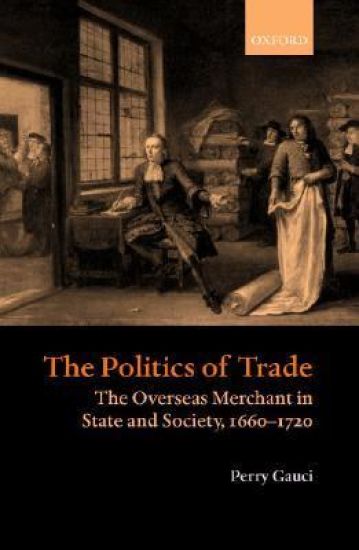
The Politics of Trade

The Politics of Trade

Perry Gauci

Oxford University Press
2001
sidottu
This book examines the political and social impact of the English overseas merchant during this key era of state development. Historians have increasingly recognized the significance of this period as one of commercial and political transition, but relatively little thought has been given to the perspective of the overseas traders, whose activities transended these dynamic arenas. Analsis of the role of merchants in public life highlights their important contribution to England's rise as a commercial power of the first rank, and illuminates the fundamerntal political changes of the time. Case-studies of London, Liverpool, and York reveal the intricate workings of mercantile politics, while studies of the press and Parliament illustrate the increasing prominence of the trader on the national stage. The author's pioneering approach shows how crucial the political accomodation which the merchant class secured with the landed gentry was to the country's success in the eighteenth century.
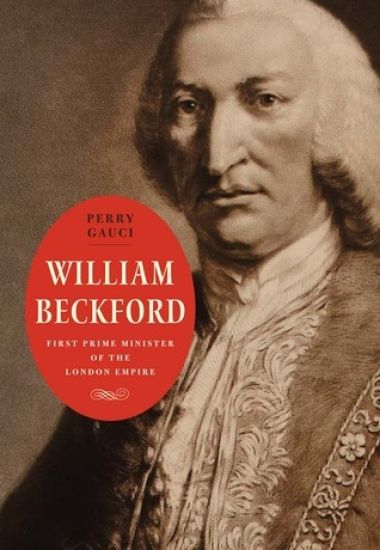
William Beckford

William Beckford

Perry Gauci

Yale University Press
2013
sidottu
This first-ever biography of William Beckford provides a unique look at eighteenth-century British history from the perspective of the colonies. Even in his own time, Beckford was seen as a metaphor for the dramatic changes occurring during this era. He was born in 1709 into a family of wealthy sugar planters living in Jamaica, when the colonies were still peripheral to Britain. By the time he died in 1770, the colonies loomed large and were considered the source of Britain’s growing global power. Beckford grew his fortune in Jamaica, but he spent most of his adult life in London, where he was elected Lord Mayor twice. He was one of the few politicians to have experienced imperial growing pains on both sides of the Atlantic, and his life offers a riveting look at how the expanding empire challenged existing political, social, and cultural norms.
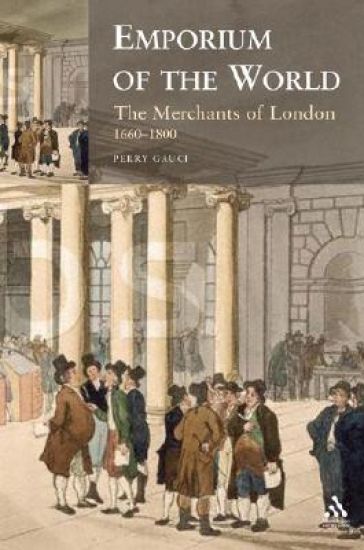
Emporium of the World: the Merchants of London 1660-1800
This book examines one of the most dynamic groups in early modern Britain, the overseas merchants of the City of London. Historians have increasingly recognized their key contribution to the nation's emergence as an imperial power and commercial society, but we still lack a clear picture of their activities within their natural City habitat. Rising from the ruins of the Great Fire, the 'Square Mile' was the scene of changes of profound significance for society as a whole, and contemporaries recognized the unique qualities of this potent environment. It will be re-created here by studying merchants at home, in the workplace, and through all other arenas of activity and association. These experiences are then linked to their contribution to broader social and political developments, in order to illuminate their response to the challenges and opportunities of the age. The working City has suffered relative neglect compared to the fashionable West End. This book demonstrates that this equally cosmopolitan and competitive arena had just as important an impact on the nation at large. By 1800, London could claim pre-eminence as an international centre of commerce and finance, and its merchants were vital to that achievement. The nineteenth century would see these great traders depart to the suburbs, and the port itself move to the east, but the character of the modern City still owes much to these eighteenth-century commercial leaders.