Kirjojen hintavertailu. Mukana 11 244 527 kirjaa ja 12 kauppaa.

Kirjahaku

Etsi kirjoja tekijän nimen, kirjan nimen tai ISBN:n perusteella.

6 kirjaa tekijältä Perry Meisel

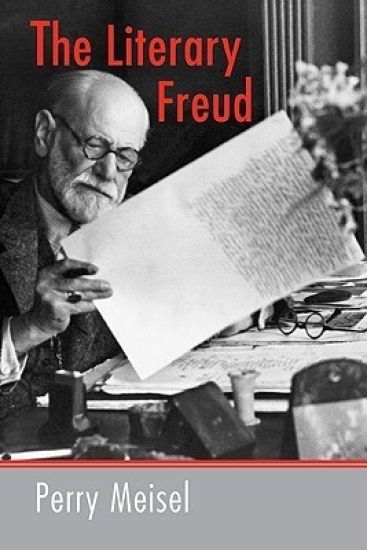
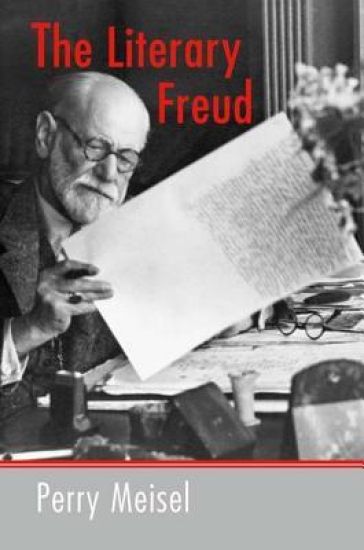
The Literary Freud

The Literary Freud

Perry Meisel

Routledge
2006
sidottu
In this book, Perry Meisel argues that Freud's texts are properly literary, and casts Freud as both literary theoretician and practitioner. Here, after an introductory reception history of Freud as literature, Meisel provides a series of close readings of Freud's major texts that take literary representation as their central focus. As for Freud's influence on others, it, too, is structured like a literary history, argues Meisel. He discusses Freud's influence on modernism, Strachey's Standard Edition (once again the subject of debate with the recent Penguin retranslations), and Freud's influence on Michel Foucault. Finally, we explore the relationship of Freud and literature. Does an understanding of how Freud himself writes and influences help us to read literature and interpret it anew?
The Literary Freud

The Literary Freud

Perry Meisel

Routledge
2006
nidottu
In this book, Perry Meisel argues that Freud's texts are properly literary, and casts Freud as both literary theoretician and practitioner. Here, after an introductory reception history of Freud as literature, Meisel provides a series of close readings of Freud's major texts that take literary representation as their central focus. As for Freud's influence on others, it, too, is structured like a literary history, argues Meisel. He discusses Freud's influence on modernism, Strachey's Standard Edition (once again the subject of debate with the recent Penguin retranslations), and Freud's influence on Michel Foucault. Finally, we explore the relationship of Freud and literature. Does an understanding of how Freud himself writes and influences help us to read literature and interpret it anew?
Criticism After Theory from Shakespeare to Virginia Woolf
The argument of this book is a simple one: that criticism after theory is a single movement of thought defined by synthesis and continuity rather than by conflict and change. The most influential figures in criticism since Saussure—Bakhtin, Derrida, and Foucault—are wholly consistent with Saussure's foundational Course in General Linguistics (1916) no matter the traditions of complaint that have followed in Saussure's wake from Bakhtin forward. These complaints vitiate—despite themselves and often hilariously so—the misconceptions that have made cottage industries out of quarrels with Saussurean semiology that are based on notions of Saussure that are incorrect. The materialist criticism dominant today is actually dependent upon on the legacy of a presumably formalist structuralism rather than a step beyond it. New Historicism, postcolonialism, gender studies, environmental criticism, archive studies, even shared and surface reading are, like deconstruction, the by-products of Saussure's structuralism, not its foils. Saussure's sign is sensory and concrete. Language and materiality are not distinct but one and the same—history, society, the psychological subject, even the environment are systems of signs, material archives read and reread by futures that produce the past after the fact. Without Saussure, contemporary criticism would have no identifiable or effective source. The book begins with chapters on Saussure and Derrida, Bakhtin and Shakespeare, and Freud and Foucault followed by chapters on Victorian and American fiction, D.H. Lawrence and modern poetry, Virginia Woolf and Melanie Klein, and the historicist tropology of psychoanalysis. It concludes with a coda in life writing on the author's epileptic disability.
Criticism After Theory from Shakespeare to Virginia Woolf
The argument of this book is a simple one: that criticism after theory is a single movement of thought defined by synthesis and continuity rather than by conflict and change. The most influential figures in criticism since Saussure—Bakhtin, Derrida, and Foucault—are wholly consistent with Saussure's foundational Course in General Linguistics (1916) no matter the traditions of complaint that have followed in Saussure's wake from Bakhtin forward. These complaints vitiate—despite themselves and often hilariously so—the misconceptions that have made cottage industries out of quarrels with Saussurean semiology that are based on notions of Saussure that are incorrect. The materialist criticism dominant today is actually dependent upon on the legacy of a presumably formalist structuralism rather than a step beyond it. New Historicism, postcolonialism, gender studies, environmental criticism, archive studies, even shared and surface reading are, like deconstruction, the by-products of Saussure's structuralism, not its foils. Saussure's sign is sensory and concrete. Language and materiality are not distinct but one and the same—history, society, the psychological subject, even the environment are systems of signs, material archives read and reread by futures that produce the past after the fact. Without Saussure, contemporary criticism would have no identifiable or effective source. The book begins with chapters on Saussure and Derrida, Bakhtin and Shakespeare, and Freud and Foucault followed by chapters on Victorian and American fiction, D.H. Lawrence and modern poetry, Virginia Woolf and Melanie Klein, and the historicist tropology of psychoanalysis. It concludes with a coda in life writing on the author's epileptic disability.
Capital as Literature

Capital as Literature

Perry Meisel

TAYLOR FRANCIS LTD
2026
sidottu
Studies of Marx, particularly of his masterwork Capital (1867), are as a rule tutelary—they attempt to explain him. Even literary readers of Marx from Raymond Williams to Fredric Jameson seek to secure Marxist tenets by means of Marxian style. ‘Capital’ as Literature: Marx Against Himself departs from this tradition by reading Capital as literary in its own right rather than as political economy with style as its filigree rather than its focus. Here Marx emerges in a different light. If literature is writing that calls whatever is settled into question, then Marx's writing is literature, not because of its revolutionary program, but because Marx's rhetoric, particularly its key trope of chiasmus, undoes the coherence of the notions it propounds, especially in Capital. Marx's chiasmatic style turns Capital into a mise en abyme and Marx's enterprise into an example of what it describes rather than its foil or antidote: the structure of capital itself. Capital, like capital, is a self-begetting production machine whose fungibility as a form is one and the same with the money economy it unravels. ‘Capital’ as Literature: Marx Against Himself shows how this irony unfolds and what the implications are for epistemology, cultural studies, and literary criticism.
The Myth of Popular Culture

The Myth of Popular Culture

Perry Meisel

Wiley-Blackwell (an imprint of John Wiley Sons Ltd)
2009
nidottu
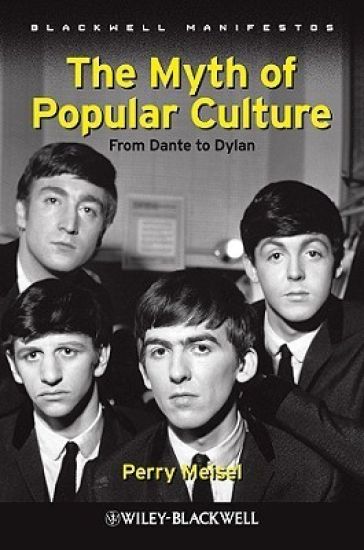
The Myth of Popular Culture In this fascinating examination of popular culture, esteemed cultural critic Perry Meisel shatters conventionally held notions about the division between “high” and “low” culture with the provocative theory that popular culture has sustained dialectical rhythms. Meisel’s deft critical analysis of three enduring cultural traditions — the American novel, Hollywood, and British and American rock music — leads us to question the very concept of the division between “high” and “low” culture. Meisel begins his engaging discussion by refuting philosopher Theodor Adorno’s assertion that “high” culture is “dialectical” and “pop” is not, showing that popular culture does indeed have a conversation both with its sources and with cultural authority as a whole. In the final section, Meisel turns his attention to Bob Dylan, a figure who, more than any other, shows what it means to synthesize and revise all traditions — music, poetry, iconography — and transform them completely. Brilliantly conceived and clearly articulated, The Myth of Popular Culture from Dante to Dylan redefines the way in which we think about all forms of artistic expression.