Kirjojen hintavertailu. Mukana 11 244 527 kirjaa ja 12 kauppaa.

Kirjahaku

Etsi kirjoja tekijän nimen, kirjan nimen tai ISBN:n perusteella.

2 kirjaa tekijältä Pertti Ahonen

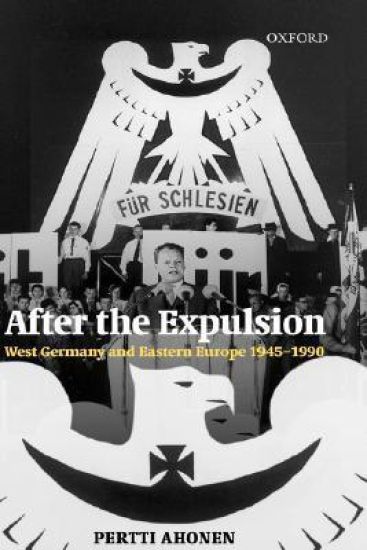
After the Expulsion

After the Expulsion

Pertti Ahonen

Oxford University Press
2003
sidottu
This book breaks new ground by connecting two central problems faced by the Federal Republic of Germany prior to reunification in 1990, both of them rooted in the Second World War. Domestically, the country had to integrate eight million expellees forced out of their homes in Central and Eastern Europe as a result of the lost war. Externally, it had to re-establish relations with Eastern Europe, despite the burdens of the Nazi past, the expulsions, and the ongoing East-West struggle in the Cold War. This study shows how the long-term consequences of the expellee problem significantly hindered West German efforts to develop normal ties to the East European states. In particular, it emphasizes a point largely overlooked in the existing literature: the way in which the political integration of the expellees into the Federal Republic had unanticipated negative consequences for the country's Ostpolitik.
Death at the Berlin Wall

Death at the Berlin Wall

Pertti Ahonen

Oxford University Press
2010
sidottu
During its 28-year existence, the Berlin Wall was the foremost symbol of the Cold War division of Germany - and of Europe as a whole. But it was also a very concrete site of separation and suffering that claimed the lives of at least 136 people. Taking these deaths at its point of departure, this book reconstructs twelve individual tragedies that occurred at the Wall between 1961 and 1989. They include deaths of escapees from the GDR, by far the largest sub-category of the Wall's victims, as well as those of West Berliners who made an unauthorized entry into the border zone and of East German border guards killed in the line of duty. Ahonen connects these fatalities to larger political processes between the two Germanys, linking micro- and macro-historical perspectives in innovative ways. Within a comparative East-West framework, he examines how the deaths became politicized and instrumentalized in the two states' Cold War battles over legitimacy and power. At the same time, he provides a broader narrative history of the Berlin Wall and of German-German relations during the last three decades of the Cold War. He also extends the analysis into the post-1989 context, exploring post-unification Germany's efforts to come to terms with the problematic legacies of the Wall and of national division more generally, thereby adding new perspectives to the ongoing analysis of contemporary German memory politics.