Kirjojen hintavertailu. Mukana 11 244 527 kirjaa ja 12 kauppaa.

Kirjahaku

Etsi kirjoja tekijän nimen, kirjan nimen tai ISBN:n perusteella.

3 kirjaa tekijältä Peter Adam Nash

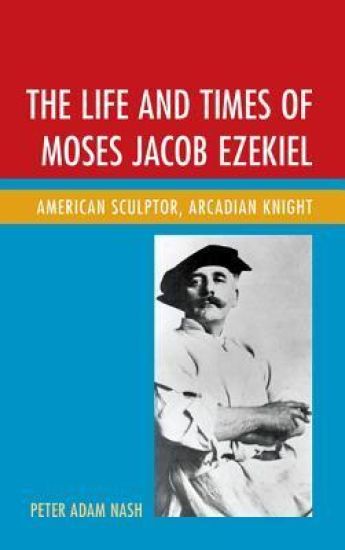
The Life and Times of Moses Jacob Ezekiel

The Life and Times of Moses Jacob Ezekiel

Peter Adam Nash

Fairleigh Dickinson University Press
2014
sidottu
The Life and Times of Moses Jacob Ezekiel: American Sculptor, Arcadian Knight tells the remarkable story of Moses Ezekiel and his rise to international fame as an artist in late nineteenth-century Italy. Sephardic Jew, homosexual, Confederate soldier, Southern apologist, opponent of slavery, patriot, expatriate, mystic, Victorian, dandy, good Samaritan, humanist, royalist, romantic, reactionary, republican, monist, dualist, theosophist, freemason, champion of religious freedom, proto-Zionist, and proverbial Court Jew, Moses Ezekiel was a riddle of a man, a puzzle of seemingly irreconcilable parts. Knighted by three European monarchs, courted by the rich and famous, Moses Ezekiel lived the life of an aristocrat with rarely a penny to his name. Making his home in the capacious ruins of the Baths of Diocletian in Rome, he quickly distinguished himself as the consummate artist and host, winning international fame for his work and consorting with many of the lions and luminaries of the fin-de-siècle world, including Giuseppe Garibaldi, Queen Margherita, Franz Liszt, Richard Wagner, Sarah Bernhardt, Gabriele D’Annunzio, Eleonora Duse, Annie Besant, Clara Schumann, Sir Lawrence Alma-Tadema, Alphonse Daudet, Mark Twain, Émile Zola, Robert E. Lee, Augustus Saint-Gaudens, and Isaac Mayer Wise. In a city besieged with eccentrics, he, a Southern Jewish homosexual sculptor, was outstanding, an enigma to those who knew him, a man at once stubbornly original and deeply emblematic of his times. According to Stanley Chyet in his introduction to Ezekiel’s memoirs, “The contemporary European struggle between liberalism and reaction, between modernity and feudalism, between the democratic and the hierarchical is rather amply refracted in Ezekiel’s account of his life in Rome.” Indeed so many of the contentious cultural, political, artistic, and scientific struggles of the age converged in the figure of this adroit and prepossessing Jew.
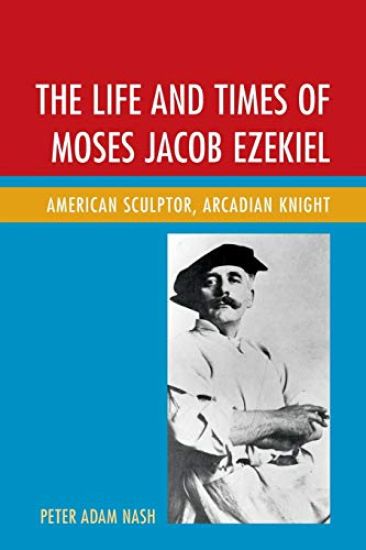
The Life and Times of Moses Jacob Ezekiel

The Life and Times of Moses Jacob Ezekiel

Peter Adam Nash

Fairleigh Dickinson University Press
2016
nidottu
The Life and Times of Moses Jacob Ezekiel: American Sculptor, Arcadian Knight tells the remarkable story of Moses Ezekiel and his rise to international fame as an artist in late nineteenth-century Italy. Sephardic Jew, homosexual, Confederate soldier, Southern apologist, opponent of slavery, patriot, expatriate, mystic, Victorian, dandy, good Samaritan, humanist, royalist, romantic, reactionary, republican, monist, dualist, theosophist, freemason, champion of religious freedom, proto-Zionist, and proverbial Court Jew, Moses Ezekiel was a riddle of a man, a puzzle of seemingly irreconcilable parts. Knighted by three European monarchs, courted by the rich and famous, Moses Ezekiel lived the life of an aristocrat with rarely a penny to his name. Making his home in the capacious ruins of the Baths of Diocletian in Rome, he quickly distinguished himself as the consummate artist and host, winning international fame for his work and consorting with many of the lions and luminaries of the fin-de-siècle world, including Giuseppe Garibaldi, Queen Margherita, Franz Liszt, Richard Wagner, Sarah Bernhardt, Gabriele D’Annunzio, Eleonora Duse, Annie Besant, Clara Schumann, Sir Lawrence Alma-Tadema, Alphonse Daudet, Mark Twain, Émile Zola, Robert E. Lee, Augustus Saint-Gaudens, and Isaac Mayer Wise. In a city besieged with eccentrics, he, a Southern Jewish homosexual sculptor, was outstanding, an enigma to those who knew him, a man at once stubbornly original and deeply emblematic of his times. According to Stanley Chyet in his introduction to Ezekiel’s memoirs, “The contemporary European struggle between liberalism and reaction, between modernity and feudalism, between the democratic and the hierarchical is rather amply refracted in Ezekiel’s account of his life in Rome.” Indeed so many of the contentious cultural, political, artistic, and scientific struggles of the age converged in the figure of this adroit and prepossessing Jew.
Parsimony

Parsimony

Peter Adam Nash

Fomite
2017
nidottu
Parsimony is a novel about fathers and sons, about the twisted manifestations of politics and history in the lives of a particular Jewish American family. When the novel opens, David Ansky, a divorced and disaffected New York architect, has gone to Florida to move his father into a local nursing home. He has never been close to the man and dreads the responsibility, intending to dispatch with the matter as swiftly as possible. Yet things do not go as planned, so that quickly he finds himself entangled in the past, trapped in a cat and mouse game with his father in which he is never quite sure how to gauge the man's remarks, which range from the paranoid and sentimental to the cruelly, severely astute. At the heart of this experience is David's reckoning, just after 9/11, with his own life and career, and with his family's radically left-wing past-with his Stalinist grandfather and with his bitter, politically disillusioned father, a Trotsky scholar and retired professor of history. Set in the course of a single day in an apartment overlooking Sanibel Island, the novel explores the generational impact of shattered ideals.