Kirjojen hintavertailu. Mukana 12 083 983 kirjaa ja 12 kauppaa.

Kirjahaku

Etsi kirjoja tekijän nimen, kirjan nimen tai ISBN:n perusteella.

3 kirjaa tekijältä Peter Allsop

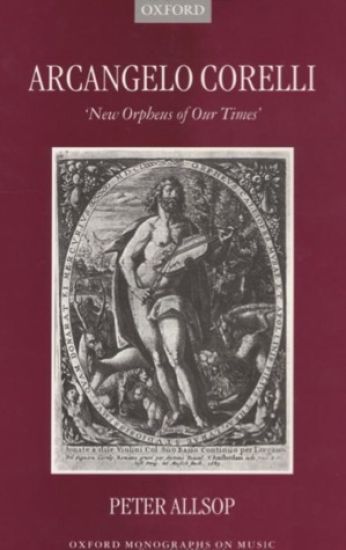
Arcangelo Corelli

Arcangelo Corelli

Peter Allsop

Clarendon Press
1999
sidottu
The first full-length study for forty years, Arcangelo Corelli offers a much needed reassessment of the seminal composer's life and works. His current historical perspective is still largely conditioned by the opinions of Burney and Hawkins in the late 18th century who saw him as the consolidator of past trends rather than an instigator--a view fully endorsed in the two biographies of the present century. Neither of these writers was truly in a position to make such judgements if only because neither was aware of the contributions of the Roman School to which Corelli emphatically affirmed his allegiance. Extensive archival research over recent years now dispels much of the anecdote and hearsay accumulated over the centuries and makes possible a more balanced evaluation of Corelli's true status in the development of the prime instrumental genres, accounting for his phenomenal success both during his lifetime and in the creation of musical canon in the decades after his death.
Cavalier Giovanni Battista Buonamente
Giovanni Battista Buonamente was among the most original and inventive Italian composers of the seventeenth century. Peter Allsop reveals his importance as part of a tradition that stands in direct antithesis to that of the Corellian sonata today regarded as the 'norm'. This development is traced in a series of likely teacher-pupil relationships from Salamone Rossi to Marco Uccellini, the most prolific Italian composers of instrumental ensemble music in the first half of the seventeenth century. The first half of the book sets out what is known of Buonamente's turbulent career as he moved from the courtly environments of the Gonzaga household and Habsburg court to several less auspicious posts at various religious institutions, ending his life as maestro di cappella at the mother house of his order, S. Francesco in Assisi. A fascinating picture emerges of the nature of musical patronage against a background of war and plague in this time of great political instability. The later chapters comprise detailed discussions, supported with over 100 music examples, of the unusually wide range of genres for which Buonamente wrote: sinfonias, free sonatas, sets of variations, canzonas, dances; and he was the first Italian to cultivate the ensemble suite to any extent. The book concludes with an examination of his influence on his probable pupil Marco Uccellini and the interest Buonamente instigated in canonic writing, which was passed via Uccellini to a succession of Modenese composers.
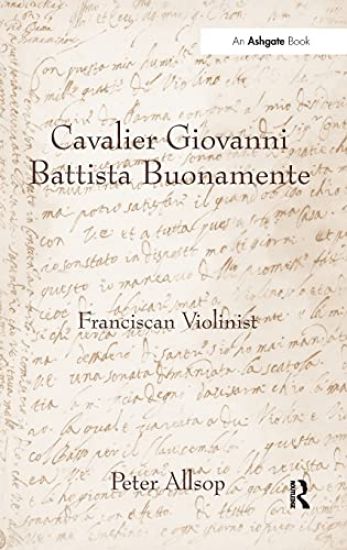
Cavalier Giovanni Battista Buonamente

Cavalier Giovanni Battista Buonamente

Peter Allsop

Ashgate Publishing Limited
2005
sidottu
Giovanni Battista Buonamente was among the most original and inventive Italian composers of the seventeenth century. Peter Allsop reveals his importance as part of a tradition that stands in direct antithesis to that of the Corellian sonata today regarded as the 'norm'. This development is traced in a series of likely teacher-pupil relationships from Salamone Rossi to Marco Uccellini, the most prolific Italian composers of instrumental ensemble music in the first half of the seventeenth century. The first half of the book sets out what is known of Buonamente's turbulent career as he moved from the courtly environments of the Gonzaga household and Habsburg court to several less auspicious posts at various religious institutions, ending his life as maestro di cappella at the mother house of his order, S. Francesco in Assisi. A fascinating picture emerges of the nature of musical patronage against a background of war and plague in this time of great political instability. The later chapters comprise detailed discussions, supported with over 100 music examples, of the unusually wide range of genres for which Buonamente wrote: sinfonias, free sonatas, sets of variations, canzonas, dances; and he was the first Italian to cultivate the ensemble suite to any extent. The book concludes with an examination of his influence on his probable pupil Marco Uccellini and the interest Buonamente instigated in canonic writing, which was passed via Uccellini to a succession of Modenese composers.