Kirjojen hintavertailu. Mukana 11 244 527 kirjaa ja 12 kauppaa.

Kirjahaku

Etsi kirjoja tekijän nimen, kirjan nimen tai ISBN:n perusteella.

12 kirjaa tekijältä Peter Andreas

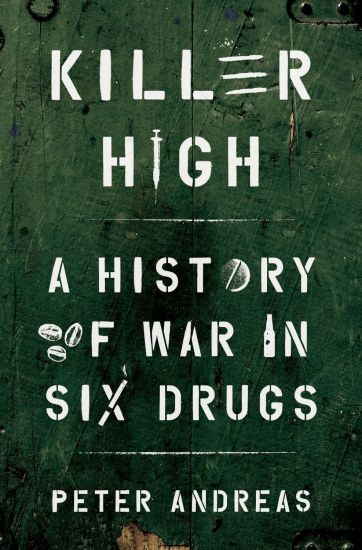
Killer High

Killer High

Peter Andreas

Oxford University Press Inc
2020
sidottu
There is growing alarm over how drugs empower terrorists, insurgents, militias, and gangs. But by looking back not just years and decades but centuries, Peter Andreas reveals that the drugs-conflict nexus is actually an old story, and that powerful states have been its biggest beneficiaries. In his path-breaking Killer High, Andreas shows how six psychoactive drugs-ranging from old to relatively new, mild to potent, licit to illicit, natural to synthetic-have proven to be particularly important war ingredients. This sweeping history tells the story of war from antiquity to the modern age through the lens of alcohol, tobacco, caffeine, opium, amphetamines, and cocaine. Beer and wine drenched ancient and medieval battlefields, and the distilling revolution lubricated the conquest and ethnic cleansing of the New World. Tobacco became globalized through soldiering, with soldiers hooked on smoking and governments hooked on taxing it. Caffeine and opium fueled imperial expansion and warfare. The commercialization of amphetamines in the twentieth century energized soldiers to fight harder, longer, and faster, while cocaine stimulated an increasingly militarized drug war that produced casualty numbers surpassing most civil wars. As Andreas demonstrates, armed conflict has become progressively more drugged with the introduction, mass production, and global spread of mind-altering substances. As a result, we cannot understand the history of war without including drugs, and we similarly cannot understand the history of drugs without including war. From ancient brews and battles to meth and modern warfare, drugs and war have grown up together and become addicted to each other.
The Illicit Global Economy

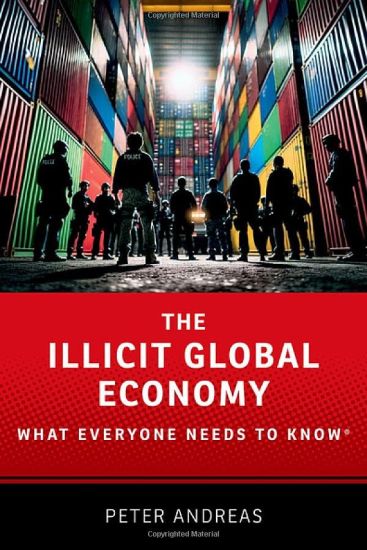
The Illicit Global Economy

Peter Andreas

OXFORD UNIVERSITY PRESS INC
2025
sidottu
The illicit global economy encompasses cross-border flows of goods, people, money, and information unauthorized by either the sending or receiving country. Typically, this means flows that are prohibited (endangered species and narcotics), regulated (migrants, cigarettes, arms), stolen (art and antiquities), or counterfeit (ranging from prescription medicines to currency). Some of these flows are obscure (the black-market trade in bear bile) or mostly a law enforcement nuisance (cross-border trade in stolen vehicle parts), but others receive enormous policy and media attention (drug trafficking and human smuggling). Still others have severe environmental impacts (toxic waste, illegal logging, overfishing, and poaching) and security implications (sanctions busting and arms trafficking). Collectively, these flows reflect the illicit side of the global economy. The Illicit Global Economy: What Everyone Needs to Know® answers the key questions about how illicit global markets are structured and operate, how they intersect with state institutions and practices, how they interact with the legal economy, and how they shape and are shaped by domestic and international politics. This pithy yet authoritative primer helps readers make sense of a crucial part of the global economy that is too often either neglected or distorted. In this regard, an underlying theme in the book is the need for a more historically informed critical perspective that challenges the many myths and misconceptions about the illicit global economy that are all-too-prevalent in contemporary media accounts, Hollywood depictions, popular books, and policy debates.
The Illicit Global Economy

The Illicit Global Economy

Peter Andreas

OXFORD UNIVERSITY PRESS INC
2025
nidottu
The illicit global economy encompasses cross-border flows of goods, people, money, and information unauthorized by either the sending or receiving country. Typically, this means flows that are prohibited (endangered species and narcotics), regulated (migrants, cigarettes, arms), stolen (art and antiquities), or counterfeit (ranging from prescription medicines to currency). Some of these flows are obscure (the black-market trade in bear bile) or mostly a law enforcement nuisance (cross-border trade in stolen vehicle parts), but others receive enormous policy and media attention (drug trafficking and human smuggling). Still others have severe environmental impacts (toxic waste, illegal logging, overfishing, and poaching) and security implications (sanctions busting and arms trafficking). Collectively, these flows reflect the illicit side of the global economy. The Illicit Global Economy: What Everyone Needs to Know® answers the key questions about how illicit global markets are structured and operate, how they intersect with state institutions and practices, how they interact with the legal economy, and how they shape and are shaped by domestic and international politics. This pithy yet authoritative primer helps readers make sense of a crucial part of the global economy that is too often either neglected or distorted. In this regard, an underlying theme in the book is the need for a more historically informed critical perspective that challenges the many myths and misconceptions about the illicit global economy that are all-too-prevalent in contemporary media accounts, Hollywood depictions, popular books, and policy debates.
Killer High

Killer High

Peter Andreas

OXFORD UNIVERSITY PRESS INC
2022
nidottu
The story of war from antiquity to the modern age through the lens of six drugs: alcohol, tobacco, caffeine, opium, amphetamines, and cocaine. There is growing alarm over how drugs empower terrorists, insurgents, militias, and gangs. But by looking back not just years and decades but centuries, Peter Andreas reveals that the drugs-conflict nexus is actually an old story, and that powerful states have been its biggest beneficiaries. In his path-breaking Killer High, Andreas shows how six psychoactive drugs-ranging from old to relatively new, mild to potent, licit to illicit, natural to synthetic-have proven to be particularly important war ingredients. This sweeping history tells the story of war from antiquity to the modern age through the lens of alcohol, tobacco, caffeine, opium, amphetamines, and cocaine. Beer and wine drenched ancient and medieval battlefields, and the distilling revolution lubricated the conquest and ethnic cleansing of the New World. Tobacco became globalized through soldiering, with soldiers hooked on smoking and governments hooked on taxing it. Caffeine and opium fueled imperial expansion and warfare. The commercialization of amphetamines in the twentieth century energized soldiers to fight harder, longer, and faster, while cocaine stimulated an increasingly militarized drug war that produced casualty numbers surpassing most civil wars. As Andreas demonstrates, armed conflict has become progressively more drugged with the introduction, mass production, and global spread of mind-altering substances. As a result, we cannot understand the history of war without including drugs, and we similarly cannot understand the history of drugs without including war. From ancient brews and battles to meth and modern warfare, drugs and war have grown up together and become addicted to each other.
Smuggler Nation

Smuggler Nation

Peter Andreas

Oxford University Press Inc
2014
nidottu
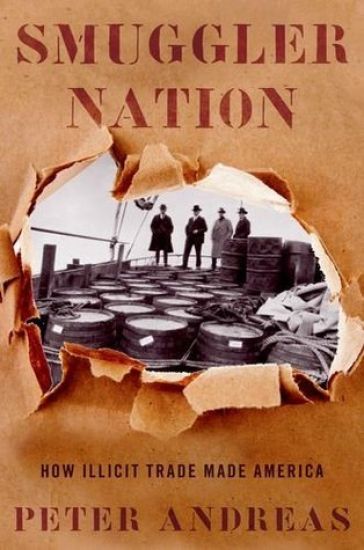
America is a smuggler nation. Our long history of illicit imports has ranged from West Indies molasses and Dutch gunpowder in the 18th century, to British industrial technologies and African slaves in the 19th century, to French condoms and Canadian booze in the early 20th century, to Mexican workers and Colombian cocaine in the modern era. Contraband capitalism, it turns out, has been an integral part of American capitalism. Providing a sweeping narrative history from colonial times to the present, Smuggler Nation, now available in paperback to retell the story of America--and of its engagement with its neighbors and the rest of the world--as a series of highly contentious battles over clandestine commerce. As Peter Andreas demonstrates in this provocative and fascinating work, smuggling has played a pivotal and too often overlooked role in America's birth, westward expansion, and economic development, while anti-smuggling campaigns have dramatically enhanced the federal government's policing powers. The great irony, Andreas tells us, is that a country that was born and grew up through smuggling is today the world's leading anti-smuggling crusader. In tracing America's long and often tortuous relationship with the murky underworld of smuggling, Andreas provides a much-needed antidote to today's hyperbolic depictions of out-of-control borders and growing global crime threats. Urgent calls by politicians and pundits to regain control of the nation's borders suffer from a severe case of historical amnesia, nostalgically implying that they were ever actually under control. This is pure mythology, says Andreas. For better and for worse, America's borders have always been highly porous. Far from being a new and unprecedented danger to America, the illicit underside of globalization is actually an old American tradition. As Andreas shows, it goes back not just decades but centuries. And its impact has been decidedly double-edged, not only subverting U.S. laws but also helping to fuel America's evolution from a remote British colony to the world's pre-eminent superpower.
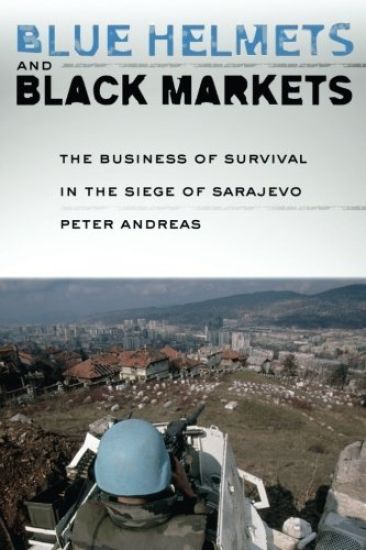
Blue Helmets and Black Markets

Blue Helmets and Black Markets

Peter Andreas

Cornell University Press
2008
sidottu
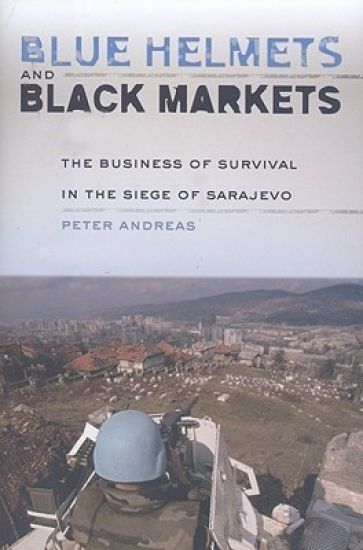
The 1992–1995 battle for Sarajevo was the longest siege in modern history. It was also the most internationalized, attracting a vast contingent of aid workers, UN soldiers, journalists, smugglers, and embargo-busters. The city took center stage under an intense global media spotlight, becoming the most visible face of post-Cold War conflict and humanitarian intervention. However, some critical activities took place backstage, away from the cameras, including extensive clandestine trading across the siege lines, theft and diversion of aid, and complicity in the black market by peacekeeping forces. In Blue Helmets and Black Markets, Peter Andreas traces the interaction between these formal front-stage and informal backstage activities, arguing that this created and sustained a criminalized war economy and prolonged the conflict in a manner that served various interests on all sides. Although the vast majority of Sarajevans struggled for daily survival and lived in a state of terror, the siege was highly rewarding for some key local and international players. This situation also left a powerful legacy for postwar reconstruction: new elites emerged via war profiteering and an illicit economy flourished partly based on the smuggling networks built up during wartime. Andreas shows how and why the internationalization of the siege changed the repertoires of siege-craft and siege defenses and altered the strategic calculations of both the besiegers and the besieged. The Sarajevo experience dramatically illustrates that just as changes in weapons technologies transformed siege warfare through the ages, so too has the arrival of CNN, NGOs, satellite phones, UN peacekeepers, and aid convoys. Drawing on interviews, reportage, diaries, memoirs, and other sources, Andreas documents the business of survival in wartime Sarajevo and the limits, contradictions, and unintended consequences of international intervention. Concluding with a comparison of the battle for Sarajevo with the sieges of Leningrad, Grozny, and Srebrenica, and, more recently, Falluja, Blue Helmets and Black Markets is a major contribution to our understanding of contemporary urban warfare, war economies, and the political repercussions of humanitarian action.
Border Games

Border Games

Peter Andreas

Cornell University Press
2019
sidottu
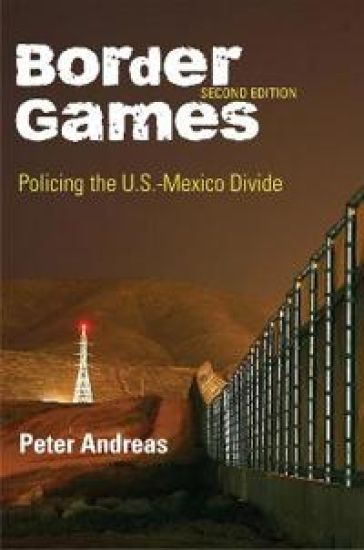
The U.S.-Mexico border is the busiest in the world, the longest and most dramatic meeting point of a rich and poor country, and the site of intense confrontation between law enforcement and law evasion. Border control has changed in recent years from a low-maintenance and politically marginal activity to an intensive campaign focusing on drugs and migrant labor. Yet the unprecedented buildup of border policing has taken place in an era otherwise defined by the opening of the border, most notably through NAFTA. This contrast creates a borderless economy with a barricaded border.In the updated and expanded second edition of his essential book on policing the U.S.-Mexico border, Peter Andreas places the continued sharp escalation of border policing in the context of a transformed post-September 11 security environment. As Andreas demonstrates, in some ways it is still the same old border game but more difficult to manage, with more players, played out on a bigger stage, and with higher stakes and collateral damage.
Border Games

Border Games

Peter Andreas

Cornell University Press
2009
pokkari
The U.S.-Mexico border is the busiest in the world, the longest and most dramatic meeting point of a rich and poor country, and the site of intense confrontation between law enforcement and law evasion. Border control has changed in recent years from a low-maintenance and politically marginal activity to an intensive campaign focusing on drugs and migrant labor. Yet the unprecedented buildup of border policing has taken place in an era otherwise defined by the opening of the border, most notably through NAFTA. This contrast creates a borderless economy with a barricaded border. In the updated and expanded second edition of his essential book on policing the U.S.-Mexico border, Peter Andreas places the continued sharp escalation of border policing in the context of a transformed post-September 11 security environment. As Andreas demonstrates, in some ways it is still the same old border game but more difficult to manage, with more players, played out on a bigger stage, and with higher stakes and collateral damage.
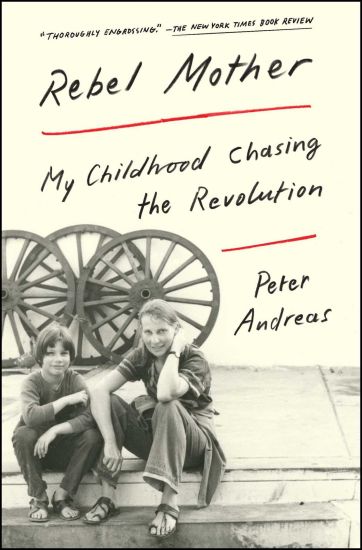
Rebel Mother

Rebel Mother

Peter Andreas

SIMON SCHUSTER
2018
pokkari
"Those who enjoyed Jeannette Walls's The Glass Castle will find much to admire" (Booklist, starred review) in this "thoroughly engrossing" (The New York Times Book Review) memoir about a boy on the run with his mother, as she abducts
Blue Helmets and Black Markets

Blue Helmets and Black Markets

Peter Andreas

Cornell University Press
2016
pokkari
The 1992–1995 battle for Sarajevo was the longest siege in modern history. It was also the most internationalized, attracting a vast contingent of aid workers, UN soldiers, journalists, smugglers, and embargo-busters. The city took center stage under an intense global media spotlight, becoming the most visible face of post-Cold War conflict and humanitarian intervention. However, some critical activities took place backstage, away from the cameras, including extensive clandestine trading across the siege lines, theft and diversion of aid, and complicity in the black market by peacekeeping forces. In Blue Helmets and Black Markets, Peter Andreas traces the interaction between these formal front-stage and informal backstage activities, arguing that this created and sustained a criminalized war economy and prolonged the conflict in a manner that served various interests on all sides. Although the vast majority of Sarajevans struggled for daily survival and lived in a state of terror, the siege was highly rewarding for some key local and international players. This situation also left a powerful legacy for postwar reconstruction: new elites emerged via war profiteering and an illicit economy flourished partly based on the smuggling networks built up during wartime. Andreas shows how and why the internationalization of the siege changed the repertoires of siege-craft and siege defenses and altered the strategic calculations of both the besiegers and the besieged. The Sarajevo experience dramatically illustrates that just as changes in weapons technologies transformed siege warfare through the ages, so too has the arrival of CNN, NGOs, satellite phones, UN peacekeepers, and aid convoys. Drawing on interviews, reportage, diaries, memoirs, and other sources, Andreas documents the business of survival in wartime Sarajevo and the limits, contradictions, and unintended consequences of international intervention. Concluding with a comparison of the battle for Sarajevo with the sieges of Leningrad, Grozny, and Srebrenica, and, more recently, Falluja, Blue Helmets and Black Markets is a major contribution to our understanding of contemporary urban warfare, war economies, and the political repercussions of humanitarian action.
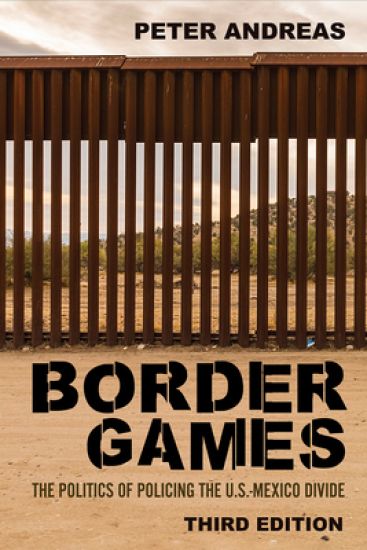
Border Games

Border Games

Peter Andreas

CORNELL UNIVERSITY PRESS
2022
sidottu
In this third edition of Border Games, Peter Andreas charts the rise and transformation in policing the flow of drugs and migrants across the US-Mexico border. Recent border crackdowns and wall-building campaigns, he argues, are not unprecedented. Rather, they are the outcome of an escalatory dynamic already in motion—but now played out on a far bigger stage, with higher stakes, and in new security and political contexts. Focusing on the power of symbolic politics and policy feedback effects, Andreas traces the logic behind such buildup. Border policing is an attractive political mechanism for handling the often unintended consequences of past policy choices, signaling a commitment to territorial integrity and projecting an image of territorial authority. Yet its negative aftermath is not only frequently glossed over; it also fuels further escalation. With new chapters on the border policies of the Obama, Trump, and Biden administrations, Border Games continues to help readers grasp how the busiest border in the world is also one of the most fortified, and why it plays such a complicated and contentious role in both domestic politics and US-Mexico relations.
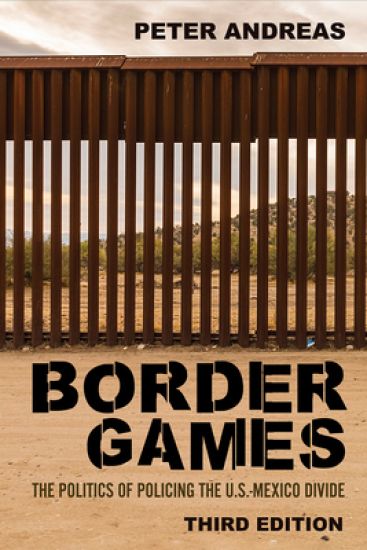
Border Games

Border Games

Peter Andreas

CORNELL UNIVERSITY PRESS
2022
pokkari
In this third edition of Border Games, Peter Andreas charts the rise and transformation in policing the flow of drugs and migrants across the US-Mexico border. Recent border crackdowns and wall-building campaigns, he argues, are not unprecedented. Rather, they are the outcome of an escalatory dynamic already in motion—but now played out on a far bigger stage, with higher stakes, and in new security and political contexts. Focusing on the power of symbolic politics and policy feedback effects, Andreas traces the logic behind such buildup. Border policing is an attractive political mechanism for handling the often unintended consequences of past policy choices, signaling a commitment to territorial integrity and projecting an image of territorial authority. Yet its negative aftermath is not only frequently glossed over; it also fuels further escalation. With new chapters on the border policies of the Obama, Trump, and Biden administrations, Border Games continues to help readers grasp how the busiest border in the world is also one of the most fortified, and why it plays such a complicated and contentious role in both domestic politics and US-Mexico relations.