Kirjojen hintavertailu. Mukana 12 083 983 kirjaa ja 12 kauppaa.

Kirjahaku

Etsi kirjoja tekijän nimen, kirjan nimen tai ISBN:n perusteella.

27 kirjaa tekijältä Peter Atkins

Atkins' Physical Chemistry 11e

Atkins' Physical Chemistry 11e

Peter Atkins

Oxford University Press
2019
nidottu
Atkins' Physical Chemistry: Molecular Thermodynamics and Kinetics is designed for use on the second semester of a quantum-first physical chemistry course. Based on the hugely popular Atkins' Physical Chemistry, this volume approaches molecular thermodynamics with the assumption that students will have studied quantum mechanics in their first semester.The exceptional quality of previous editions has been built upon to make this new edition of Atkins' Physical Chemistry even more closely suited to the needs of both lecturers and students. Re-organised into discrete 'topics', the text is more flexible to teach from and more readable for students. Now in its eleventh edition, the text has been enhanced with additional learning features and maths support to demonstrate the absolute centrality of mathematics to physical chemistry. Increasing the digestibility of the text in this new approach, the reader is brought to a question, then the math is used to show how it can be answered and progress made. The expanded and redistributed maths support also includes new 'Chemist's toolkits' which provide students with succinct reminders ofmathematical concepts and techniques right where they need them. Checklists of key concepts at the end of each topic add to the extensive learning support provided throughout the book, to reinforce the main take-home messages in each section. The coupling of the broad coverage of the subject with a structure and use of pedagogy that is even more innovative will ensure Atkins' Physical Chemistry remains the textbook of choice for studying physical chemistry.
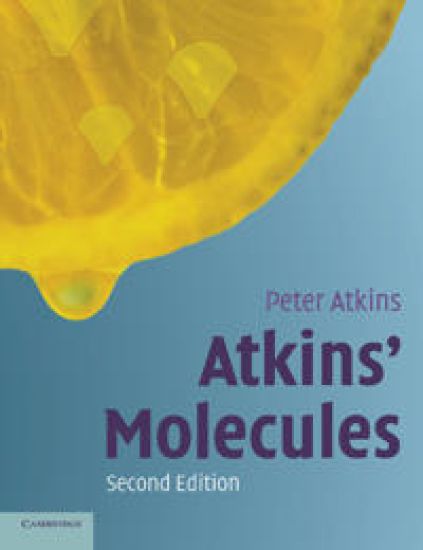
Atkins' Molecules

Atkins' Molecules

Peter Atkins

Cambridge University Press
2003
pokkari
This is a brand new edition of the book that was called ‘the most beautiful chemistry book ever written’. In it, we see the molecules responsible for the experiences of our everyday life - including fabrics, drugs, plastics, explosives, detergents, fragrances, tastes, and sex. With engaging prose Peter Atkins gives a non-technical account of an incredible range of aspects of the world around us, showing unexpected connections, and giving an insight into how this amazing world can be understood in terms of the atoms and molecules from which it is built. The new edition has dozens of new molecules, a completely new graphical presentation, and an even more accessible and enthralling account of the molecules themselves.
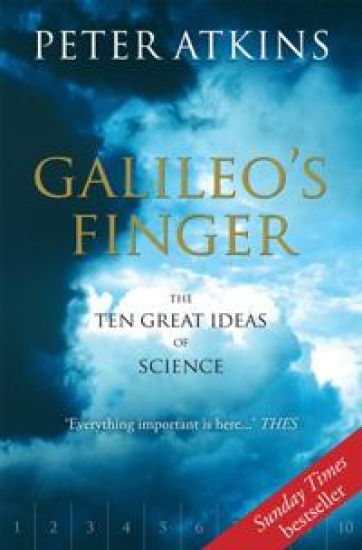
Galileo's Finger

Galileo's Finger

Peter Atkins

Oxford University Press
2004
nidottu
Any literate person should be familiar with the central ideas of modern science. In his sparkling new book, Peter Atkins introduces his choice of the ten great ideas of science. With wit, charm, patience, and astonishing insights, he leads the reader through the emergence of the concepts, and then presents them in a strikingly effective manner. At the same time, he works into his engaging narrative an illustration of the scientific method and shows how simple ideas can have enormous consequences. His choice of the ten great ideas are: * Evolution occurs by natural selection, in which the early attempts at explaining the origin of species is followed by an account of the modern approach and some of its unsolved problems. * Inheritance is encoded in DNA, in which the story of the emergence of an understanding of inheritance is followed through to the mapping of the human genome. * Energy is conserved, in which we see how the central concept of energy gradually dawned on scientists as they mastered the motion of particles and the concept of heat. * All change is the consequence of the purposeless collapse of energy and matter into disorder, in which the extraordinarily simple concept of entropy is used to account for events in the world. * Matter is atomic, in which we see how the concept of atoms emerged and how the different personalities of the elements arise from the structures of their atoms. * Symmetry limits, guides, and drives, in which we see how concepts related to beauty can be extended to understand the nature of fundamental particles and the forces that act between them. * Waves behave like particles and particles behave like waves, in which we see how old familiar ideas gave way to the extraordinary insights of quantum theory and transformed our perception of matter. * The universe is expanding, in which we see how a combination of astronomy and a knowledge of elementary particles accounts for the origin of the universe and its long term future. * Spacetime is curved by matter, in which we see the emergence of the theories of special and general relativity and come to understand the nature of space and time. * If arithmetic is consistent, then it is incomplete, in which we learn the origin of numbers and arithmetic, see how the philosophy of mathematics lets us understand the nature of this most cerebral of subjects, and are brought to the limits of its power. C. P. Snow once said 'not knowing the second law of thermodynamics is like never having read a work by Shakespeare'. This is an extraordinary, exciting book that not only will make you literate in science but give you deep enjoyment on the way.
Conjuring the Universe

Conjuring the Universe

Peter Atkins

Oxford University Press
2018
sidottu
The marvellous complexity of the Universe emerges from several deep laws and a handful of fundamental constants that fix its shape, scale, and destiny. There is a deep structure to the world which at the same time is simple, elegant, and beautiful. Where did these laws and these constants come from? And why are the laws so fruitful when written in the language of mathematics? Peter Atkins considers the minimum effort needed to equip the Universe with its laws and its constants. He explores the origin of the conservation of energy, of electromagnetism, of classical and quantum mechanics, and of thermodynamics, showing how all these laws spring from deep symmetries. The revolutionary result is a short but immensely rich weaving together of the fundamental ideas of physics. With his characteristic wit, erudition, and economy, Atkins sketches out how the laws of Nature can spring from very little. Or arguably from nothing at all.
Conjuring the Universe

Conjuring the Universe

Peter Atkins

Oxford University Press
2020
nidottu
The marvellous complexity of the Universe emerges from several deep laws and a handful of fundamental constants that fix its shape, scale, and destiny. There is a deep structure to the world which at the same time is simple, elegant, and beautiful. Where did these laws and these constants come from? And why are the laws so fruitful when written in the language of mathematics? Peter Atkins considers the minimum effort needed to equip the Universe with its laws and its constants. He explores the origin of the conservation of energy, of electromagnetism, of classical and quantum mechanics, and of thermodynamics, showing how all these laws spring from deep symmetries. The revolutionary result is a short but immensely rich weaving together of the fundamental ideas of physics. With his characteristic wit, erudition, and economy, Atkins sketches out how the laws of Nature can spring from very little. Or arguably from nothing at all.
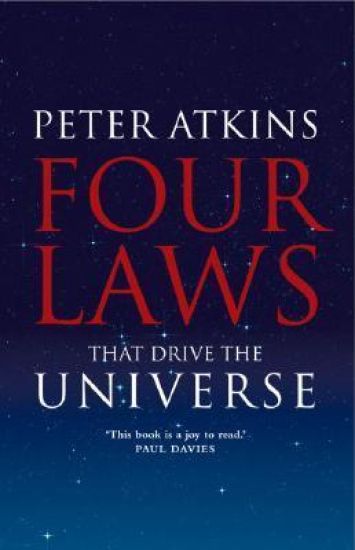
Four Laws That Drive the Universe

Four Laws That Drive the Universe

Peter Atkins

Oxford University Press
2007
sidottu
The laws of thermodynamics drive everything that happens in the universe. From the sudden expansion of a cloud of gas to the cooling of hot metal, and from the unfurling of a leaf to the course of life itself - everything is directed and constrained by four simple laws. They establish fundamental concepts such as temperature and heat, and reveal the arrow of time and even the nature of energy itself. Peter Atkins' powerful and compelling introduction explains what the laws are and how they work, using accessible language and virtually no mathematics. Guiding the reader from the Zeroth Law to the Third Law, he introduces the fascinating concept of entropy, and how it not only explains why your desk tends to get messier, but also how its unstoppable rise constitutes the engine of the universe.
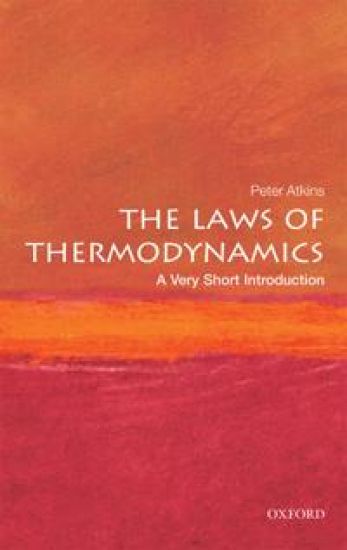
The Laws of Thermodynamics

The Laws of Thermodynamics

Peter Atkins

Oxford University Press
2010
nidottu
From the sudden expansion of a cloud of gas or the cooling of a hot metal, to the unfolding of a thought in our minds and even the course of life itself, everything is governed by the four Laws of Thermodynamics. These laws specify the nature of 'energy' and 'temperature', and are soon revealed to reach out and define the arrow of time itself: why things change and why death must come. In this Very Short Introduction Peter Atkins explains the basis and deeper implications of each law, highlighting their relevance in everyday examples. Using the minimum of mathematics, he introduces concepts such as entropy, free energy, and to the brink and beyond of the absolute zero temperature. These are not merely abstract ideas: they govern our lives. In this concise and compelling introduction Atkins paints a lucid picture of the four elegant laws that, between them, drive the Universe. ABOUT THE SERIES: The Very Short Introductions series from Oxford University Press contains hundreds of titles in almost every subject area. These pocket-sized books are the perfect way to get ahead in a new subject quickly. Our expert authors combine facts, analysis, perspective, new ideas, and enthusiasm to make interesting and challenging topics highly readable.
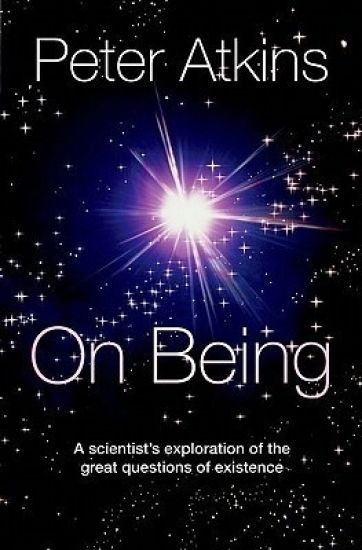
On Being

On Being

Peter Atkins

Oxford University Press
2011
sidottu
In this scientific 'Credo', Peter Atkins considers the universal questions of origins, endings, birth, and death to which religions have claimed answers. With his usual economy, wit, and elegance, unswerving before awkward realities, Atkins presents what science has to say. While acknowledging the comfort some find in belief, he declares his own faith in science's capacity to reveal the deepest truths.
On Being

On Being

Peter Atkins

Oxford University Press
2012
nidottu
In this scientific 'Credo', Peter Atkins considers the universal questions of origins, endings, birth, and death to which religions have claimed answers. With his usual economy, wit, and elegance, unswerving before awkward realities, Atkins presents what science has to say. While acknowledging the comfort some find in belief, he declares his own faith in science's capacity to reveal the deepest truths.
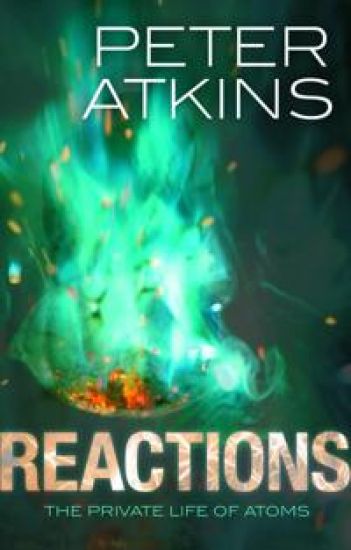
Reactions

Reactions

Peter Atkins

Oxford University Press
2013
nidottu
Peter Atkins captures the heart of chemistry in this book, through an innovative, closely integrated design of images and text, and his characteristically clear, precise, and economical exposition. Explaining the processes involved in chemical reactions, he begins by introducing a 'tool kit' of basic reactions, such as precipitation, corrosion, and catalysis, and concludes by showing how these building blocks are brought together in more complex processes such as photosynthesis, to provide a concise and intellectually rewarding introduction to the private life of atoms.
Chemistry

Chemistry

Peter Atkins

Oxford University Press
2015
nidottu
Most people remember chemistry from their schooldays as largely incomprehensible, a subject that was fact-rich but understanding-poor, smelly, and so far removed from the real world of events and pleasures that there seemed little point, except for the most introverted, in coming to terms with its grubby concepts, spells, recipes, and rules. Peter Atkins wants to change all that. In this Very Short Introduction to Chemistry, he encourages us to look at chemistry anew, through a chemist's eyes, in order to understand its central concepts and to see how it contributes not only towards our material comfort, but also to human culture. Atkins shows how chemistry provides the infrastructure of our world, through the chemical industry, the fuels of heating, power generation, and transport, as well as the fabrics of our clothing and furnishings. By considering the remarkable achievements that chemistry has made, and examining its place between both physics and biology, Atkins presents a fascinating, clear, and rigorous exploration of the world of chemistry - its structure, core concepts, and exciting contributions to new cutting-edge technologies. ABOUT THE SERIES: The Very Short Introductions series from Oxford University Press contains hundreds of titles in almost every subject area. These pocket-sized books are the perfect way to get ahead in a new subject quickly. Our expert authors combine facts, analysis, perspective, new ideas, and enthusiasm to make interesting and challenging topics highly readable.
What is Chemistry?

What is Chemistry?

Peter Atkins

Oxford University Press
2013
sidottu
Most people remember chemistry from their schooldays as a subject that was largely incomprehensible, fact-rich but understanding-poor, smelly, and so far removed from the real world of events and pleasures that there seemed little point, except for the most introverted, in coming to terms with its grubby concepts, spells, recipes, and rules. Peter Atkins wants to change all that. In What is Chemistry? he encourages us to look at chemistry anew, through a chemist's eyes, to understand its central concepts and to see how it contributes not only towards our material comfort, but also to human culture. Atkins shows how chemistry provides the infrastructure of our world, through the chemical industry, the fuels of heating, power generation, and transport, as well as the fabrics of our clothing and furnishings. By considering the remarkable achievements that chemistry has made, and examining its place between both physics and biology, Atkins presents a fascinating, clear, and rigorous exploration of the world of chemistry - its structure, core concepts, and exciting contributions to new cutting-edge technologies.
Physical Chemistry

Physical Chemistry

Peter Atkins

Oxford University Press
2014
nidottu
With the development of a variety of exciting new areas of research involving computational chemistry, nano- and smart materials, and applications of the recently discovered graphene, there can be no doubt that physical chemistry is a vitally important field. It is also perceived as the most daunting branch of chemistry, being necessarily grounded in physics and mathematics and drawing as it does on quantum mechanics, thermodynamics, and statistical thermodynamics. With his typical clarity and hardly a formula in sight, Peter Atkins' Very Short Introduction explores the contributions physical chemistry has made to all branches of chemistry. Providing an insight into its central concepts Atkins reveals the cultural contributions physical chemistry has made to our understanding of the natural world. ABOUT THE SERIES: The Very Short Introductions series from Oxford University Press contains hundreds of titles in almost every subject area. These pocket-sized books are the perfect way to get ahead in a new subject quickly. Our expert authors combine facts, analysis, perspective, new ideas, and enthusiasm to make interesting and challenging topics highly readable.
Reactions

Reactions

Peter Atkins

Oxford University Press
2011
sidottu
Through an innovative, closely integrated design of images and text, and his characteristically clear, precise, and economical exposition, Peter Atkins explains the processes involved in chemical reactions. He begins by introducing a 'tool kit' of basic reactions, such as precipitation, corrosion, and catalysis, and concludes by showing how these building blocks are brought together in more complex processes such as photosynthesis.
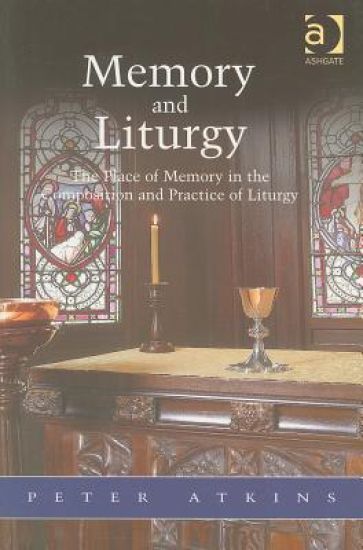
Memory and Liturgy

Memory and Liturgy

Peter Atkins

Ashgate Publishing Limited
2003
nidottu
Memory is a major factor in the composition and practice of liturgy. Recent research into how the brain and memory function points the way to how liturgy can best meet the needs of worshippers. In Memory and Liturgy, Peter Atkins draws on the fruits of his research into the process of the brain and our memory and applies it to liturgical worship. His extensive experience in writing and using liturgy keeps this book rooted in reality. In its ten chapters the author applies the functioning of the brain and the memory to our remembrance of God in worship; God's memory of us through Baptism; our remembrance of Jesus Christ in the Eucharist; the corporate memory of the community created through worship; the healing of memories of sin and pain through forgiveness; three aids to help us worship; the process of continuity and change in liturgy; and the connection between memory, imagination and hope. The conclusion summarizes the main practical issues. This provides a check-list for those serving on Liturgical Commissions and those involved in the teaching of the practice of liturgy. This book is a positive contribution to the ongoing search for suitable liturgical worship and music for the 21st century.
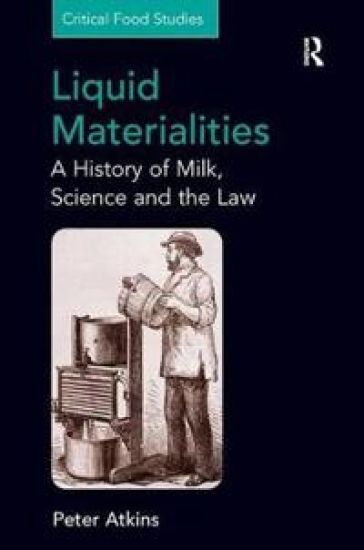
Liquid Materialities

Liquid Materialities

Peter Atkins

Ashgate Publishing Limited
2010
sidottu
As a food, milk has been revered and ignored, respected and feared. In the face of its 'material resistance', attempts were made to purify it of dirt and disease, and to standardize its fat content. This is a history of the struggle to bring milk under control, to manipulate its naturally variable composition and, as a result, to redraw the boundaries between nature and society. Peter Atkins follows two centuries of dynamic and intriguing food history, shedding light on the resistance of natural products to the ordering of science. After this look at the stuff in foodstuffs, it is impossible to see the modern diet in the same way again.
Ascension Now

Ascension Now

Peter Atkins

Liturgical Press
2001
pokkari
Ascension Now examines the New Testament references to the ascension and exhaltation of Jesus and looks at the theological and liturgical implications. This includes not only the description of the "event" in the Gospel of Luke and the Acts of the Apostles but also the departure scene that concludes the Gospel of Matthew and the references to Christ as King, as Intercessor, and as "exalted in glory" elsewhere in the New Testament. It also notes the implications for Christians who pray and preach and foreshadows some developments in worship and practical living in the light of the ascension experience.The doctrine of the ascension of Christ is important to theological debates and to the liturgical developments of the Christian Churches. Unless we connect the Christ of history with the Christ of worship, we will fail to hold together the two essential poles of the Christian faith. Christ must be both in time and beyond time. He must have been in history and been more than just a historical figure. He must be both fully human and fully God. Only then can Christ be the object of our faith and our worship. The ascension of Jesus can be seen as the journey of the humanity of Christ into the heart of the Divine God and of our journey in worship into the divine dimension of heaven. In Ascension Now, Bishop Atkins shows that in our worship we are never earthbound; we lift our hearts and minds up to where Christ is seated, symbolically reigning over the world. There he holds them tenderly in love as, through his redemptive power, we are transformed and renewed to fulfill the purposes of its Creator God.Chapters are "Introduction: The Importance of the Doctrine of the Ascension for Today's Church," "Prelude: New Ways of Seeing the Ascension," "The Biblical Evidence for the Doctrine of the Ascension," "The Theological Implications of the Doctrine of the Ascension," "The Liturgical Implications of the Doctrine of the Ascension," "The Implications of the Ascension for Our Personal Prayers," "The Implications of the Doctrine of the Ascension for Preaching," "The Implications of the Doctrine of the Ascension for Future Liturgical Practice," "Conclusion: Personal Implications of the Doctrine of the Ascension," and "Appendix: The Geography of the Ascension."