Kirjojen hintavertailu. Mukana 11 518 949 kirjaa ja 12 kauppaa.

Kirjahaku

Etsi kirjoja tekijän nimen, kirjan nimen tai ISBN:n perusteella.

5 kirjaa tekijältä Peter B. Dedek

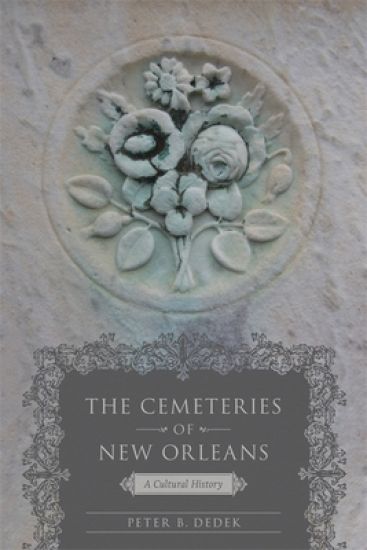
The Cemeteries of New Orleans

The Cemeteries of New Orleans

Peter B. Dedek

Louisiana State University Press
2017
sidottu
In The Cemeteries of New Orleans, Peter B. Dedek reveals the origins and evolution of the Crescent City's world-famous necropolises, exploring both their distinctive architecture and their cultural impact. Spanning centuries, this fascinating body of research takes readers from muddy fields of crude burial markers to extravagantly designed cities of the dead, illuminating a vital and vulnerable piece of New Orleans's identity.Where many histories of New Orleans cemeteries have revolved around the famous people buried within them, Dedek focuses on the marble cutters, burial society members, journalists, and tourists who shaped these graveyards into internationally recognizable emblems of the city. In addition to these cultural actors, Dedek's exploration of cemetery architecture reveals the impact of ancient and medieval grave traditions and styles, the city's geography, and the arrival of trained European tomb designers, such as the French architect J. N. B. de Pouilly in 1833 and Italian artist and architect Pietro Gualdi in 1851.As Dedek shows, the nineteenth century was a particularly critical era in the city's cemetery design. Notably, the cemeteries embodied traditional French and Spanish precedents, until the first garden cemetery- the Metairie Cemetery- was built on the site of an old racetrack in 1872. Like the older walled cemeteries, this iconic venue served as a lavish expression of fraternal and ethnic unity, a backdrop to exuberant social celebrations, and a destination for sightseeing excursions. During this time, cultural and religious practices, such as the celebration of All Saints' Day and the practice of Voodoo rituals, flourished within the spatial bounds of these resting places. Over the course of the twentieth and twenty-first centuries, however, episodes of neglect and destruction gave rise to groups that aimed to preserve the historic cemeteries of New Orleans- an endeavor, which, according to Dedek, is still wanting for resources and political will.Containing ample primary source material, abundant illustrations, appendices on both tomb styles and the history of each of the city's eighteenth- and nineteenth-century cemeteries, The Cemeteries of New Orleans offers a comprehensive and intriguing resource on these fascinating historic sites.
The Cemeteries of New Orleans

The Cemeteries of New Orleans

Peter B. Dedek

LOUISIANA STATE UNIVERSITY PRESS
2023
pokkari
In The Cemeteries of New Orleans, Peter B. Dedek reveals the origins and evolution of the Crescent City's world-famous necropolises, exploring both their distinctive architecture and their cultural impact. Drawing on a fascinating body of research, Dedek takes readers from muddy fields of crude burial markers to extravagantly designed cities of the dead, illuminating a vital and vulnerable piece of New Orleans's identity.Where many histories of New Orleans cemeteries focus on the famous people buried within them, Dedek sets his sights on the marble cutters, burial society members, journalists, and tourists who shaped these graveyards into internationally recognizable emblems of the city. In his detailed exploration of cemetery architecture, Dedek reveals the impacts of ancient and medieval grave traditions and styles, the city's geography, and the arrival of trained European tomb designers, such as the French architect J. N. B. de Pouilly in 1833 and Italian artist and architect Pietro Gualdi in 1851.As Dedek shows, the nineteenth century was a particularly critical era in the city's cemetery design. Traditional French and Spanish patterns prevailed until the first garden cemetery—Metairie Cemetery—was built on the site of an old racetrack in 1872. Like the older walled cemeteries, this iconic venue served as a lavish expression of fraternal and ethnic unity, a backdrop to exuberant social celebrations, and a destination for sightseers. During this time, cultural and religious customs, such as the celebration of All Saints' Day and the practice of Voodoo rituals, flourished within the spatial bounds of these resting places. Over the course of the twentieth and twenty-first centuries, however, episodes of neglect and destruction gave rise to groups that aimed to preserve the historic cemeteries of New Orleans—an endeavor that, according to Dedek, is still wanting for resources and political will. Containing abundant illustrations, The Cemeteries of New Orleans is a comprehensive and intriguing resource on these fascinating historic sites.
Hip to the Trip

Hip to the Trip

Peter B. Dedek

University of New Mexico Press
2007
nidottu
Before and since its official closure in 1985, historic U.S. 66 became associated with the deserts, Indians and cowboys of the Southwest, the ""Okies"" of the Great Depression, and the millions of vacationers who took to the highway in their streamlined automobiles and found adventure on the open road from the late 1940s to the 1970s. Route 66 has such name recognition that in the past twenty years it has been used to advertise products ranging from blue jeans, to root beer, to automobiles. The highway enjoyed only about thirty years of dominance as a primary auto and truck route from 1926 to around 1956. Gradually replaced by interstates into the 1980s, Route 66 became forever fixed in the history and lore of the Southwest and the United States. Route 66 provides a unique vantage point from which to better understand American popular culture from the 1920s to the present. The purpose of this book is not to simply recount the history of Route 66, but to create a comprehensive portrait of the cultural meaning of the highway. What was Route 66 at its pinnacle, what is it today, and what might it become in the future?
Hip to the Trip

Hip to the Trip

Peter B. Dedek

UNIVERSITY OF NEW MEXICO PRESS
2026
pokkari
This fully revised and updated edition of Peter B. Dedek's classic is a thorough dive into the history and current delights of America's Road in time for its 100th birthday! In 2026, Route 66 reached a major mile marker: it has celebrated its one-hundredth anniversary. Commissioned by the federal government as US Highway 66 in 1926, Route 66 has weathered many bumps in the road. The old road even survived a near-death experience in 1985 when it was bypassed by interstate highways and officially decommissioned only to rise again as a historic landmark and symbol of the independent American spirit and America’s love affair with the automobile. Although much along the historic highway has been lost over the years, Route 66 still has a lot to offer. Old motels, vacant gas stations, vintage restaurants, and decayed tourist traps have been preserved and transformed into sites of reverence and memory. In the past few decades, the highway has evolved into a linear community, a heritage corridor, an American route of pilgrimage sustained by a series of preserved landmarks visited by tourists from all over the world. More recently built museums, visitors’ centers, roadside parks, and Route 66–themed businesses offer tourists the chance to experience myriad aspects of the highway and the ideas it represents. This book examines the many meanings of Route 66 and how they relate to its past, present, and future. More an idea than a highway, Route 66 symbolizes a sense of freedom and benign rebellion against the constrained routines of modern life, a place where one can wander and live in the moment. The old road also represents community, wholesome enjoyment, and an entrepreneurial, independent spirit. Route 66 is a road of stories and legends.
Historic Preservation for Designers

Historic Preservation for Designers

Peter B. Dedek

Fairchild Books
2014
nidottu
Historic Preservation for Designers offers a comprehensive overview of historic preservation with a focus on historic interiors, historic building materials, and the adaptive reuse of interiors. This text includes a brief history of preservation in the United States, criteria to determine whether a building is historic, a discussion of preservation law, and how to document historic buildings with a focus on design and understanding functional and aesthetic requirements.The text explores issues including building restoration and rehabilitation standards, adaptive reuse principles,and codes and accessibility requirements. Designers will discover timely information on inspecting historic buildings to determine their age and condition as well as the growing relationship between historic preservation, green design, and the environment.