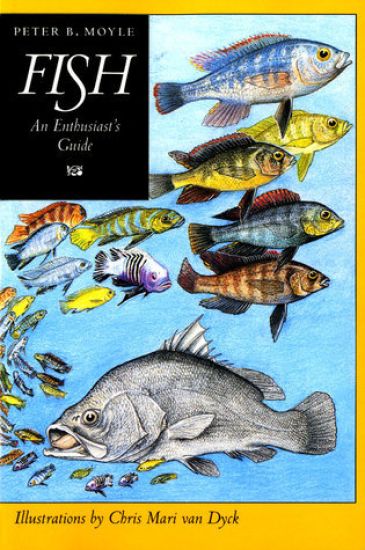
Engagingly written, with both learning and humor, "Fish" bridges the gap between purely pictorial books and scholarly texts, and provides a succinct summary of fish biology and conservation for students and fish enthusiasts.
Written to be accessible to any college-level reader, "Protecting Life on Earth" offers a non-technical, yet comprehensive introduction to the growing field of conservation science. This multifaceted exploration of our current biodiversity crisis delivers vivid examples throughout, including features on some of nature's most compelling wildlife. Beginning with a brief introduction to environmental history, the text introduces the central concepts of evolution and ecology, and covers several major issues related to the conservation of biodiversity including extinction, climate change, sustainability, conservation law, and invasive species. It also touches on adjacent disciples such as economics and sociology as they relate to conservation. The text even includes practical advice on the decisions we make every day - how we spend our money, where we live and work, what we eat and buy. Throughout, "Protecting Life on Earth" underscores the ways in which our future is tied to that of Earth's threatened species, and demonstrates exactly why conservation is so vitally important for us all.
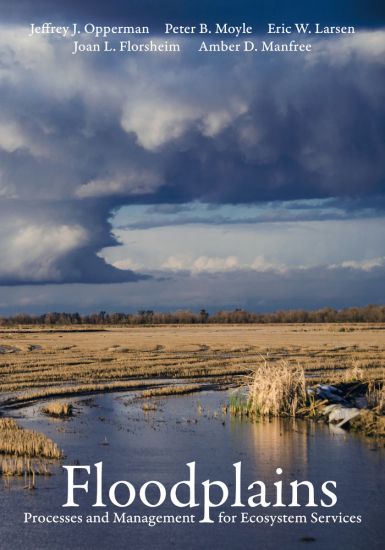
Floodplains provides an overview of floodplains and their management in temperate regions. It synthesizes decades of research on floodplain ecosystems, explaining hydrologic, geomorphic, and ecological processes and how under appropriate management these processes can provide benefits to society ranging from healthy fish populations to flood-risk reduction. Drawing on the framework of reconciliation ecology, the authors explore how new concepts for floodplain ecosystem restoration and management can increase these benefits. Additionally, they use case studies from California's Central Valley and other temperate regions to show how innovative management approaches are reshaping rivers and floodplains around the world.
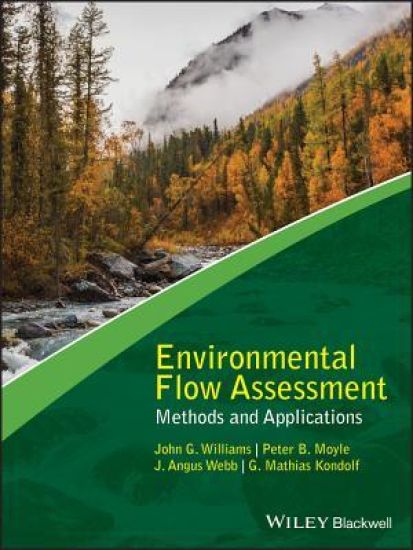
Provides critiques of current practices for environmental flow assessment and shows how they can be improved, using case studies. In Environmental Flow Assessment: Methods and Applications, four leading experts critique methods used to manage flows in regulated streams and rivers to balance environmental (instream) and out-of-stream uses of water. Intended for managers as well as practitioners, the book dissects the shortcomings of commonly used approaches, and offers practical advice for selecting and implementing better ones. The authors argue that methods for environmental flow assessment (EFA) can be defensible as well as practicable only if they squarely address uncertainty, and provide guidance for doing so. Introductory chapters describe the scientific and social reasons that EFA is hard, and provide a brief history. Because management of regulated streams starts with understanding freshwater ecosystems, Environmental Flow Assessment: Methods and Applications includes chapters on flow and organisms in streams. The following chapters assess standard and emerging methods, how they should be tested, and how they should (or should not) be applied. The book concludes with practical recommendations for implementing environmental flow assessment. Describes historical and recent trends in environmental flow assessmentDirectly addresses practical difficulties with applying a scientifically informed approach in contentious circumstancesServes as an effective introduction to the relevant literature, with many references to articles in related scientific fieldsPays close attention to statistical issues such as sampling, estimation of statistical uncertainty, and model selectionIncludes recommendations for methods and approachesExamines how methods have been tested in the past and shows how they should be tested today and in the future Environmental Flow Assessment: Methods and Applications is an excellent book for biologists and specialists in allied fields such as engineering, ecology, fluvial geomorphology, environmental planning, landscape architecture, along with river managers and decision makers.