Kirjojen hintavertailu. Mukana 11 627 469 kirjaa ja 12 kauppaa.

Kirjahaku

Etsi kirjoja tekijän nimen, kirjan nimen tai ISBN:n perusteella.

11 kirjaa tekijältä Peter Bellwood

First Farmers

First Farmers

Peter Bellwood

Blackwell Publishers
2004
sidottu
First Farmers: the Origins of Agricultural Societies offers readers an understanding of the origins and histories of early agricultural populations in all parts of the world. Uses data from archaeology, comparative linguistics, and biological anthropology to cover developments over the past 12,000 yearsExamines the reasons for the multiple primary origins of agricultureFocuses on agricultural origins in and dispersals out of the Middle East, central Africa, China, New Guinea, Mesoamerica and the northern AndesCovers the origins and dispersals of major language families such as Indo-European, Austronesian, Sino-Tibetan, Niger-Congo and Uto-Aztecan
First Farmers

First Farmers

Peter Bellwood

Blackwell Publishers
2004
nidottu
First Farmers: the Origins of Agricultural Societies offers readers an understanding of the origins and histories of early agricultural populations in all parts of the world. Uses data from archaeology, comparative linguistics, and biological anthropology to cover developments over the past 12,000 yearsExamines the reasons for the multiple primary origins of agricultureFocuses on agricultural origins in and dispersals out of the Middle East, central Africa, China, New Guinea, Mesoamerica and the northern AndesCovers the origins and dispersals of major language families such as Indo-European, Austronesian, Sino-Tibetan, Niger-Congo and Uto-Aztecan
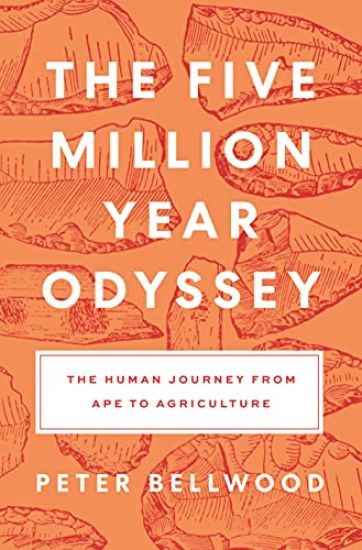
The Five-Million-Year Odyssey

The Five-Million-Year Odyssey

Peter Bellwood

PRINCETON UNIVERSITY PRESS
2022
sidottu
The epic story of human evolution, from our primate beginnings more than five million years ago to the agricultural eraOver the course of five million years, our primate ancestors evolved from a modest population of sub-Saharan apes into the globally dominant species Homo sapiens. Along the way, humans became incredibly diverse in appearance, language, and culture. How did all of this happen? In The Five-Million-Year Odyssey, Peter Bellwood synthesizes research from archaeology, biology, anthropology, and linguistics to immerse us in the saga of human evolution, from the earliest traces of our hominin forebears in Africa, through waves of human expansion across the continents, and to the rise of agriculture and explosive demographic growth around the world.Bellwood presents our modern diversity as a product of both evolution, which led to the emergence of the genus Homo approximately 2.5 million years ago, and migration, which carried humans into new environments. He introduces us to the ancient hominins—including the australopithecines, Homo erectus, the Neanderthals, and others—before turning to the appearance of Homo sapiens circa 300,000 years ago and subsequent human movement into Eurasia, Australia, and the Americas. Bellwood then explores the invention of agriculture, which enabled farmers to disperse to new territories over the last 10,000 years, facilitating the spread of language families and cultural practices. The outcome is now apparent in our vast array of contemporary ethnicities, linguistic systems, and customs.The fascinating origin story of our varied human existence, The Five-Million-Year Odyssey underscores the importance of recognizing our shared genetic heritage to appreciate what makes us so diverse.
The Five-Million-Year Odyssey

The Five-Million-Year Odyssey

Peter Bellwood

PRINCETON UNIVERSITY PRESS
2024
pokkari
The epic story of human evolution, from our primate beginnings more than five million years ago to the agricultural eraOver the course of five million years, our primate ancestors evolved from a modest population of sub-Saharan apes into the globally dominant species Homo sapiens. Along the way, humans became incredibly diverse in appearance, language, and culture. How did all of this happen? In The Five-Million-Year Odyssey, Peter Bellwood synthesizes research from archaeology, biology, anthropology, and linguistics to immerse us in the saga of human evolution, from the earliest traces of our hominin forebears in Africa, through waves of human expansion across the continents, and to the rise of agriculture and explosive demographic growth around the world.Bellwood presents our modern diversity as a product of both evolution, which led to the emergence of the genus Homo approximately 2.5 million years ago, and migration, which carried humans into new environments. He introduces us to the ancient hominins—including the australopithecines, Homo erectus, the Neanderthals, and others—before turning to the appearance of Homo sapiens circa 300,000 years ago and subsequent human movement into Eurasia, Australia, and the Americas. Bellwood then explores the invention of agriculture, which enabled farmers to disperse to new territories over the last 10,000 years, facilitating the spread of language families and cultural practices. The outcome is now apparent in our vast array of contemporary ethnicities, linguistic systems, and customs.The fascinating origin story of our varied human existence, The Five-Million-Year Odyssey underscores the importance of recognizing our shared genetic heritage to appreciate what makes us so diverse.

First Islanders

First Islanders

Peter Bellwood

John Wiley Sons Inc
2017
sidottu
Incorporating research findings over the last twenty years, First Islanders examines the human prehistory of Island Southeast Asia. This fascinating story is explored from a broad swathe of multidisciplinary perspectives and pays close attention to migration in the period dating from 1.5 million years ago to the development of Indic kingdoms late in the first millennium CE.
First Islanders

First Islanders

Peter Bellwood

John Wiley Sons Inc
2017
nidottu
Incorporating research findings over the last twenty years, First Islanders examines the human prehistory of Island Southeast Asia. This fascinating story is explored from a broad swathe of multidisciplinary perspectives and pays close attention to migration in the period dating from 1.5 million years ago to the development of Indic kingdoms late in the first millennium CE.
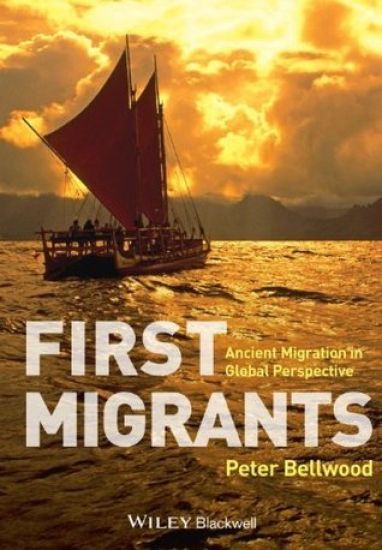
First Migrants

First Migrants

Peter Bellwood

Wiley-Blackwell (an imprint of John Wiley Sons Ltd)
2013
nidottu
The first publication to outline the complex global story of human migration and dispersal throughout the whole of human prehistory. Utilizing archaeological, linguistic and biological evidence, Peter Bellwood traces the journeys of the earliest hunter-gatherer and agriculturalist migrants as critical elements in the evolution of human lifeways. The first volume to chart global human migration and population dispersal throughout the whole of human prehistory, in all regions of the worldAn archaeological odyssey that details the initial spread of early humans out of Africa approximately two million years ago, through the Ice Ages, and down to the continental and island migrations of agricultural populations within the past 10,000 yearsEmploys archaeological, linguistic and biological evidence to demonstrate how migration has always been a vital and complex element in explaining the evolution of the human speciesOutlines how significant migrations have affected population diversity in every region of the worldClarifies the importance of the development of agriculture as a migratory imperative in later prehistoryFully referenced with detailed maps throughout
First Migrants

First Migrants

Peter Bellwood

Wiley-Blackwell (an imprint of John Wiley Sons Ltd)
2013
sidottu
The first publication to outline the complex global story of human migration and dispersal throughout the whole of human prehistory. Utilizing archaeological, linguistic and biological evidence, Peter Bellwood traces the journeys of the earliest hunter-gatherer and agriculturalist migrants as critical elements in the evolution of human lifeways. The first volume to chart global human migration and population dispersal throughout the whole of human prehistory, in all regions of the worldAn archaeological odyssey that details the initial spread of early humans out of Africa approximately two million years ago, through the Ice Ages, and down to the continental and island migrations of agricultural populations within the past 10,000 yearsEmploys archaeological, linguistic and biological evidence to demonstrate how migration has always been a vital and complex element in explaining the evolution of the human speciesOutlines how significant migrations have affected population diversity in every region of the worldClarifies the importance of the development of agriculture as a migratory imperative in later prehistoryFully referenced with detailed maps throughout