Kirjojen hintavertailu. Mukana 11 342 296 kirjaa ja 12 kauppaa.

Kirjahaku

Etsi kirjoja tekijän nimen, kirjan nimen tai ISBN:n perusteella.

29 kirjaa tekijältä Peter Bond

Distant Worlds

Distant Worlds

Peter Bond

Springer-Verlag New York Inc.
2007
sidottu
CHAPTER 1: DISCOVERING DISTANT WORLDS 3 CHAPTER 2: MERCURY: THE IRON PLANET 21 CHAPTER 3: VENUS: THE RUNAWAY GREENHOUSE 45 CHAPTER 4: THE MOON: QUEEN OF THE NIGHT 69 5: MARS: THE RED PLANET CHAPTER 101 CHAPTER 6: ASTEROIDS: VERMIN OF THE SKIES 129 CHAPTER 7: JUPITER: KING OF THE PLANETS 147 CHAPTER 8: SATURN: LIGHTWEIGHT LORD OF THE RINGS 185 CHAPTER 9: URANUS: THE TOPPLED GIANT 217 CHAPTER 10: NEPTUNE: THE LAST GIANT 237 CHAPTER 11: PLUTO: KING OF THE KUIPER BELT 257 CHAPTER 12: COMETS: COSMIC ICEBERGS 269 APPENDICES 1: Lunar and Planetary Missions 285 2: Planetary Data 298 3: Satellite Data 299 4: Planetary Rings 305 5: The Largest Known Kuiper Belt Objects 307 6: Lunar and Planetary Firsts 308 7: Selected Reading List 310 8: Selected Websites 314 INDEX 317 VII Until about 500 years ago, the Earth was believed to lie at Pluto and its recently discovered, larger cousin in the far the center of the Universe, with the Sun and five planets reaches of the Sun's realm. For the first time, human eyes revolving around it. The planets themselves were merely have been able to see towering cliffs, dust devils, erupting points of light that drifted across the stellar constellations.
Exploring the Solar System

Exploring the Solar System

Peter Bond

Wiley-Blackwell
2020
nidottu
An Exciting and Authoritative Account of the Second Golden Age of Solar System Exploration Award-winning author Peter Bond provides an up-to-date, in-depth account of the sun and its family in the 2nd edition of Exploring the Solar System. This new edition brings together the discoveries and advances in scientific understanding made during the last 60 years of solar and planetary exploration, using research conducted by the world's leading geoscientists, astronomers, and physicists. Exploring the Solar System, 2nd Edition is an ideal introduction for non-science undergraduates and anyone interested in learning about our small corner of the Milky Way galaxy.
Distant Worlds

Distant Worlds

Peter Bond

Springer-Verlag New York Inc.
2016
nidottu
CHAPTER 1: DISCOVERING DISTANT WORLDS 3 CHAPTER 2: MERCURY: THE IRON PLANET 21 CHAPTER 3: VENUS: THE RUNAWAY GREENHOUSE 45 CHAPTER 4: THE MOON: QUEEN OF THE NIGHT 69 5: MARS: THE RED PLANET CHAPTER 101 CHAPTER 6: ASTEROIDS: VERMIN OF THE SKIES 129 CHAPTER 7: JUPITER: KING OF THE PLANETS 147 CHAPTER 8: SATURN: LIGHTWEIGHT LORD OF THE RINGS 185 CHAPTER 9: URANUS: THE TOPPLED GIANT 217 CHAPTER 10: NEPTUNE: THE LAST GIANT 237 CHAPTER 11: PLUTO: KING OF THE KUIPER BELT 257 CHAPTER 12: COMETS: COSMIC ICEBERGS 269 APPENDICES 1: Lunar and Planetary Missions 285 2: Planetary Data 298 3: Satellite Data 299 4: Planetary Rings 305 5: The Largest Known Kuiper Belt Objects 307 6: Lunar and Planetary Firsts 308 7: Selected Reading List 310 8: Selected Websites 314 INDEX 317 VII Until about 500 years ago, the Earth was believed to lie at Pluto and its recently discovered, larger cousin in the far the center of the Universe, with the Sun and five planets reaches of the Sun's realm. For the first time, human eyes revolving around it. The planets themselves were merely have been able to see towering cliffs, dust devils, erupting points of light that drifted across the stellar constellations.

The Continuing Story of The International Space Station
Peter Bond describes the development and evolution of space stations, with particular emphasis on the International Space Station, beginning with the revolution that began in 1970, when Salyut 1, the world's first space station was sent into orbit by the Soviet Union. Defeated in the race to the Moon, the Soviets redirected their efforts towards the conquest of near-Earth space. In the next three decades, their increasingly large and sophisticated structures rewrote the history books as cosmonauts continued to push back all space endurance records. Only the U.S. Skylab, a technological cul-de-sac based on surplus Apollo hardware, interrupted this era of Soviet domination. By the mid-1990's, Russian physician Valeri Poliakov had lived continuously for 14 months on board the Mir space station, long enough to travel to Mars and back. The book explains how the human exploitation of low-Earth orbit is about to change. With Mir no longer in existence, all eyes are on the next generation, the International Space Station (ISS).
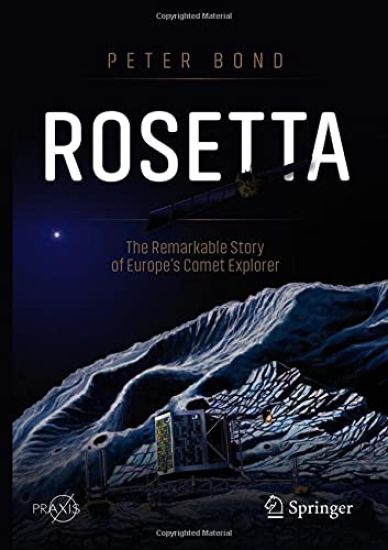
Rosetta: The Remarkable Story of Europe's Comet Explorer

Rosetta: The Remarkable Story of Europe's Comet Explorer

Peter Bond

Springer Nature Switzerland AG
2020
nidottu
In 2014, Rosetta became the first mission to orbit a comet and to deploy a lander onto its surface. This is the story of ESA’s pioneering comet explorer, following the mission from its initial inception to its historic touchdown. Read along as the Rosetta orbiter and its lander, Philae, evolve over the years, overcoming early mission hurdles before embarking on their one-way, decade-long voyage to a comet. See how the saga then culminates with Rosetta and Philae at last unveiling their icy target and achieving an unprecedented touchdown on its surface.Award-winning space writer Peter Bond takes us behind the scenes of this historic endeavor, sharing insights from the international team of scientists and engineers who made the mission possible, describing the remarkable technology that they created, and delving into the treasure trove of scientific discoveries that followed.Recounting in vivid detail the inner workings of Rosetta, this book is a celebration of the mission that has left a lasting impact on planetary science and space exploration.
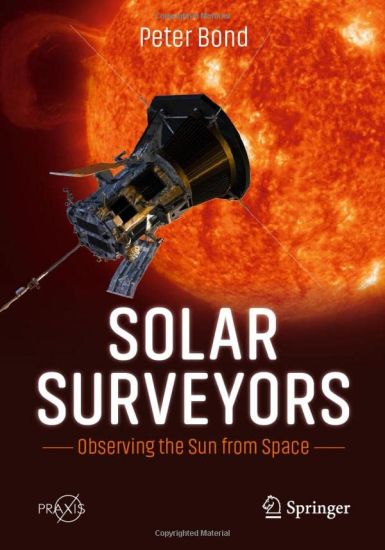
Solar Surveyors

Solar Surveyors

Peter Bond

Springer Nature Switzerland AG
2022
nidottu
This is the story of humankind’s quest over centuries to learn the true nature of the most dominant object in our Solar System: the Sun.Award-winning science writer Peter Bond describes in detail how our ideas about the Sun have changed over the millennia, starting with the simple observations of classical astronomy and continuing through telescopic observations to the age of nuclear physics. He shows how we discovered the Sun’s basic characteristics – its distance, size, temperature and composition – and then describes how, with evermore sophisticated instruments, we have learned about the Sun’s enormous energy output, its atmosphere and the explosive eruptions that blast clouds of magnetized gas and high-energy particles toward our world.Most of this book focuses on the Space Age, when suborbital rockets and satellites have probed every aspect of our nearby star. Each of these missions is described in detail, with summaries of their objectives, spacecraft designs, scientific payloads and results. The book also looks forward, describing forthcoming missions that will shed new light on remaining solar mysteries, notably the source of the energy that heats the outer corona to millions of degrees.Richly illustrated with mission photos, design diagrams, and infocharts, this book is a fascinating read for anybody interested in the Sun and our attempts to unravel its secrets.