Kirjojen hintavertailu. Mukana 11 349 057 kirjaa ja 12 kauppaa.

Kirjahaku

Etsi kirjoja tekijän nimen, kirjan nimen tai ISBN:n perusteella.

4 kirjaa tekijältä Peter Burnell

Foreign Aid In A Changing World

Foreign Aid In A Changing World

Peter Burnell

Open University Press
1997
nidottu
* An accessible introduction for all social science students* A balanced, comprehensive and up-to-date treatment of the issues and trends* A guide to the past, present and future of foreign aidForeign aid has undergone considerable changes over the past fifty years. Foreign Aid in a Changing World explores the changes and locates them in a context of wider economic and political developments. These are the developments affecting all countries, in North, South, East and West, and in particular, the changing relations among them. The book analyses the different reasons why some countries - both in the developing world and former communist states - seem to need assistance. It critically surveys the values-based and interests-based arguments in favour of aid and its many forms; encompasses the important non-governmental and multilateral dimensions, as well as the bilateral flows, at national and sub-national levels; and focuses particularly on the contemporary emphasis on making aid dependent on democratization and 'good government'.Peter Burnell examines the principal influences on foreign aid, what makes aid controversial, and whether it has a future. He provides an important text for all students of international relations and development studies across the social science disciplines.

The Augustinian Person

The Augustinian Person

Peter Burnell

The Catholic University of America Press
2005
sidottu
Augustine's notions of human nature and of person have not received adequate systematic treatment, despite their centrality to all the important areas of his thought. Although he notoriously changed his mind on many major points, his explorations of human nature and person remained central and to a great extent consistent across his mature and most important works. In this insightful and accessible book, Peter Burnell examines the crucial issues in Augustine's understanding of these two related subjects, and concentrates on Augustine's fullest development of that understanding. Through careful analysis of Augustine's writings, Burnell concludes that Augustine conceives of human nature as a unity at every level - socially, morally, and in basic constitution - despite very common objections that he fails to achieve such a conception. Furthermore, Augustine's doctrine of the Incarnation is the basis of his notion of person - not only human but divine. Thus the eternal relationships of God's interior life, though unchanging, have always had an outward bearing, in the sense of being eternally oriented on the Incarnation. Continued interest in Augustine as a historical figure and a resource for contemporary reflection, as well as contemporary theorizing, by both philosophers and theologians, about the human person makes this study significant not only for the understanding of Augustine but for more general questions raised today regarding the human person.
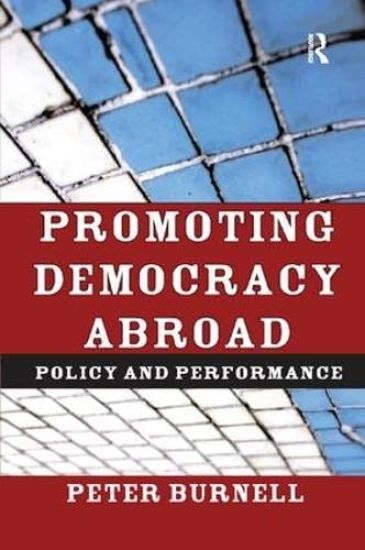
Promoting Democracy Abroad

Promoting Democracy Abroad

Peter Burnell

Routledge
2017
nidottu
Promoting democracy has grown from a small, little- known activity to a high-profile endeavor. It now involves academia, think tanks, and the popular media. The number of countries and organizations, inter-governmental, non-governmental, as well as governmental involved in supporting the spread of democracy is now legion. Countries touched by these efforts include a majority of all the world's states and some independent territories that are not yet fully sovereign.The definitional boundaries between promoting democracy and international advocacy and defense of human rights and "good governance" are not precise. Similarly, the concept of promoting democracy itself is not uniformly accepted. It has become a slogan that attracts both fervent support and grave condemnation. For Burnell, promoting democracy refers to a wide range of non-coercive attempts to spread democracy abroad for whatever reason. At its heart, it is political intervention in the domestic affairs of other countries that seeks to affect the distribution of power, whether by patient and non-violent involvement or more urgent action, democracy assistance projects form a core activity.Burnell holds that participation in the democracy assistance industry will continue to grow. However, the industry's progress up until now has in part been contingent on the progress of democratization itself. The slowdown that is currently happening in the advance of freedom and democracy around the world, and the strength shown by leading authoritarian or semi-authoritarian regimes, must raise questions about the outlook for democracy promotion. If democracy promotion and assistance are to be fit for the future, then the need for a broadly based, appropriately contextualized examination of the policy and the performance is greater now than at any time in the past.
Promoting Democracy Abroad

Promoting Democracy Abroad

Peter Burnell

AldineTransaction
2011
sidottu
Promoting democracy has grown from a small, little- known activity to a high-profile endeavor. It now involves academia, think tanks, and the popular media. The number of countries and organizations, inter-governmental, non-governmental, as well as governmental involved in supporting the spread of democracy is now legion. Countries touched by these efforts include a majority of all the world's states and some independent territories that are not yet fully sovereign.The definitional boundaries between promoting democracy and international advocacy and defense of human rights and "good governance" are not precise. Similarly, the concept of promoting democracy itself is not uniformly accepted. It has become a slogan that attracts both fervent support and grave condemnation. For Burnell, promoting democracy refers to a wide range of non-coercive attempts to spread democracy abroad for whatever reason. At its heart, it is political intervention in the domestic affairs of other countries that seeks to affect the distribution of power, whether by patient and non-violent involvement or more urgent action, democracy assistance projects form a core activity.Burnell holds that participation in the democracy assistance industry will continue to grow. However, the industry's progress up until now has in part been contingent on the progress of democratization itself. The slowdown that is currently happening in the advance of freedom and democracy around the world, and the strength shown by leading authoritarian or semi-authoritarian regimes, must raise questions about the outlook for democracy promotion. If democracy promotion and assistance are to be fit for the future, then the need for a broadly based, appropriately contextualized examination of the policy and the performance is greater now than at any time in the past.