Kirjojen hintavertailu. Mukana 11 417 157 kirjaa ja 12 kauppaa.

Kirjahaku

Etsi kirjoja tekijän nimen, kirjan nimen tai ISBN:n perusteella.

6 kirjaa tekijältä Peter C. Mancall

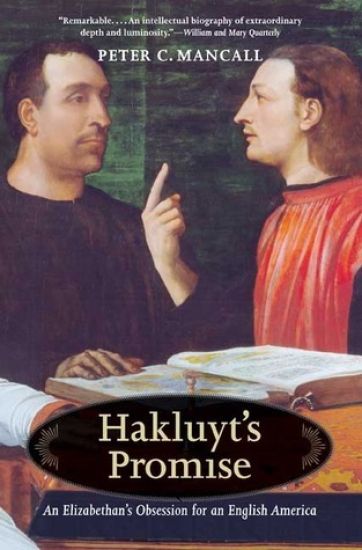
Hakluyt’s Promise

Hakluyt’s Promise

Peter C. Mancall

Yale University Press
2010
pokkari
The most comprehensive portrait yet of Richard Hakluyt, indefatigable promoter of English colonization in America Richard Hakluyt the younger, a contemporary of William Shakespeare, advocated the creation of English colonies in the New World at a time when the advantages of this idea were far from self-evident. This book describes in detail the life and times of Hakluyt, a trained minister who became an editor of travel accounts. Hakluyt’s Promise demonstrates his prominent role in the establishment of English America as well as his interests in English opportunities in the East Indies. The volume presents nearly 50 illustrations—many unpublished since the sixteenth century—and offers a fresh view of Hakluyt’s milieu and the central concerns of the Elizabethan age.Though he never traveled farther than Paris, young Hakluyt spent much of the 1580s recording information about the western hemisphere and became an international authority on overseas exploration. The book traces his rise to prominence as a source of information and inspiration for England’s policy makers, including the queen, and his advocacy for colonies in Roanoke and Jamestown. Hakluyt’s thought was shaped by debates that stretched across Europe, and his interests ranged just as widely, encompassing such topics as peaceful coexistence with Native Americans, the New World as a Protestant Holy Land, and in, his later life, trade with the Spice Islands.
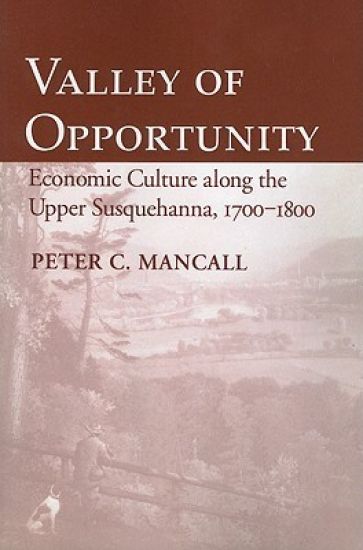
Valley of Opportunity

Valley of Opportunity

Peter C. Mancall

Cornell University Press
2011
pokkari
Valley of Opportunity recreates an age when Indians, colonists, and post-Revolutionary settlers embraced a similar dream: to create a successful economy in the rural hinterland of the middle colonies. Peter C. Mancall draws on abundant evidence from seldom-used archives in the region, as well as from libraries on both sides of the Atlantic, to reconstruct their daily economic life. The author describes the varied economic transformations that took place in the area, considering these changes from an environmental as well as an economic standpoint. He shows how different groups of people perceived the resources of the region and how their perceptions shaped settlement patterns, land use, and the formation of commercial networks. Ultimately, each of the three peoples looked beyond the mountains that set the boundaries of their physical world and tried to establish ties to the larger commercial network that linked North America to Europe. Mancall offers connections between the development of a particular region, previously overlooked by most historians, and the wide pattern of American economic change. He breaks through old ethnocentric barriers of settlement history by portraying Indian people in their full diversity and by including Indians and whites as actors of comparable significance, and he shows how attitudes that developed in the colonial period affected economic patterns well beyond the Revolution. Integrating a range of disciplines, from anthropology through ecology and geography to zoology, he seeks to answer the questions: what did different groups of people make of the natural resources of this river valley and how did they allocate the rewards? His answers provide a novel overview of the economic culture of the eighteenth century. Studded with sharp insights and attention-catching quotations that mirror everyday life of the times, Valley of Opportunity will appeal to those interested in the development of the American economy, the impact of the Revolution on urban Americans, and the relations between the peoples who together created a vibrant world along the edges of European settlement in North America.
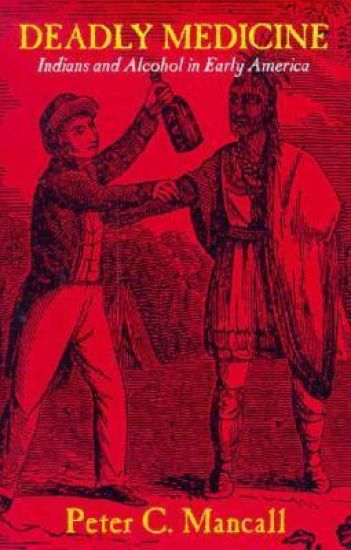
Deadly Medicine

Deadly Medicine

Peter C. Mancall

Cornell University Press
1997
pokkari
"An important work of scholarship, with powerful, concise, and objective insights into the complicated history of alcohol use among Native American peoples. Impeccably researched, cogently argued and clearly written, Peter Mancall's book is both an eye-opener for the lay reader and an invaluable resource for the expert."— Michael Dorris, author of The Broken Cord: A Family's Ongoing Struggle with Fetal Alcohol Syndrome Alcohol abuse has killed and impoverished American Indians since the seventeenth century, when European settlers began trading rum for furs. In the first book to probe the origins of this ongoing social crisis, Peter C. Mancall explores the liquor trade's devastating impact on the Indian communities of colonial America. Mancall recounts how English settlers quickly found a market for alcohol among the Indians, and traffic in rum became a prominent source of revenue for the British Empire. In spite of the colonists' growing awareness that some Indians abused alcohol and that drinking threatened the stability of countless Indian villages already decimated by European diseases, they expanded the liquor trade into virtually every Indian community from the Atlantic to the Mississippi. In response, Indians created one of the most important temperance movements in American history, a movement that was nevertheless unable to halt the lucrative commerce. The author follows the trail of rum from the West Indian producers to the colonial distributors and on to the Indian consumers in the eastern woodlands. To discover why Indians participated in the trade and why they experienced such a powerful desire for alcohol, he addresses current medical views on alcoholism and reexamines the colonial era as a time when Indians were forming new strategies for survival in a world that had been radically changed. Finally, Mancall compares Indian drinking in New France and New Spain with that in the British colonies. Forever shattering the stereotype of the drunken Indian, Mancall offers a powerful indictment of English participation in the liquor trade and a new awareness or the trade's tragic cost for the American Indians.
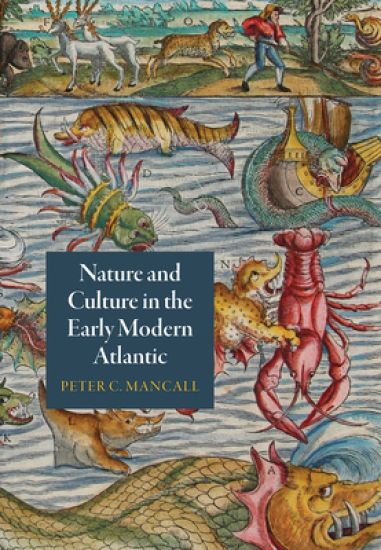
Nature and Culture in the Early Modern Atlantic

Nature and Culture in the Early Modern Atlantic

Peter C. Mancall

University of Pennsylvania Press
2020
pokkari
In the sixteenth-century Atlantic world, nature and culture swirled in people's minds to produce fantastic images. In the South of France, a cloister's painted wooden panels greeted parishioners with vivid depictions of unicorns, dragons, and centaurs, while Mayans in the Yucatan created openings to buildings that resembled a fierce animal's jaws, known to archaeologists as serpent-column portals. In Nature and Culture in the Early Modern Atlantic, historian Peter C. Mancall reveals how Europeans and Native Americans thought about a natural world undergoing rapid change in the century following the historic voyages of Christopher Columbus. Through innovative use of oral history and folklore maintained for centuries by Native Americans, as well as original use of spectacular manuscript atlases, paintings that depict on-the-spot European representations of nature, and texts that circulated imperfectly across the ocean, he reveals how the encounter between the old world and the new changed the fate of millions of individuals. This inspired work of Atlantic, European, and American history begins with medieval concepts of nature and ends in an age when the printed book became the primary avenue for the dissemination of scientific information. Throughout the sixteenth century, the borders between the natural world and the supernatural were more porous than modern readers might realize. Native Americans and Europeans alike thought about monsters, spirits, and insects in considerable depth. In Mancall's vivid narrative, the modern world emerged as a result of the myriad encounters between peoples who inhabited the Atlantic basin in this period. The centuries that followed can be comprehended only by exploring how culture in its many forms-stories, paintings, books-shaped human understanding of the natural world.
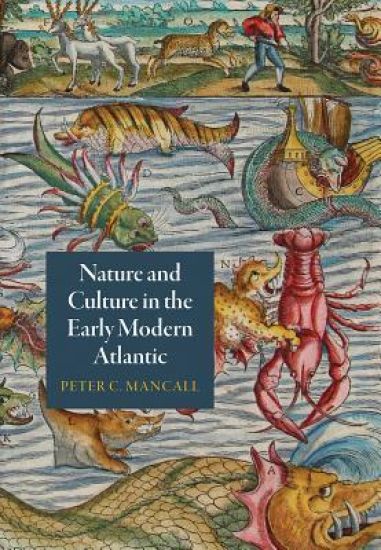
Nature and Culture in the Early Modern Atlantic

Nature and Culture in the Early Modern Atlantic

Peter C. Mancall

University of Pennsylvania Press
2017
sidottu
In the sixteenth-century Atlantic world, nature and culture swirled in people's minds to produce fantastic images. In the South of France, a cloister's painted wooden panels greeted parishioners with vivid depictions of unicorns, dragons, and centaurs, while Mayans in the Yucatan created openings to buildings that resembled a fierce animal's jaws, known to archaeologists as serpent-column portals. In Nature and Culture in the Early Modern Atlantic, historian Peter C. Mancall reveals how Europeans and Native Americans thought about a natural world undergoing rapid change in the century following the historic voyages of Christopher Columbus. Through innovative use of oral history and folklore maintained for centuries by Native Americans, as well as original use of spectacular manuscript atlases, paintings that depict on-the-spot European representations of nature, and texts that circulated imperfectly across the ocean, he reveals how the encounter between the old world and the new changed the fate of millions of individuals. This inspired work of Atlantic, European, and American history begins with medieval concepts of nature and ends in an age when the printed book became the primary avenue for the dissemination of scientific information. Throughout the sixteenth century, the borders between the natural world and the supernatural were more porous than modern readers might realize. Native Americans and Europeans alike thought about monsters, spirits, and insects in considerable depth. In Mancall's vivid narrative, the modern world emerged as a result of the myriad encounters between peoples who inhabited the Atlantic basin in this period. The centuries that followed can be comprehended only by exploring how culture in its many forms-stories, paintings, books-shaped human understanding of the natural world.
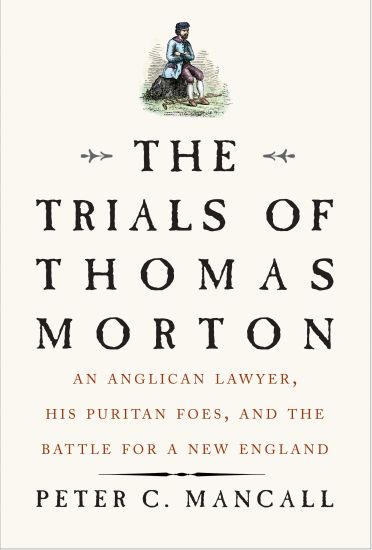
The Trials of Thomas Morton

The Trials of Thomas Morton

Peter C. Mancall

Yale University Press
2020
sidottu
A new look at Thomas Morton, his controversial colonial philosophy, and his lengthy feud with the Puritans “[This] brilliant riposte to scholarly conventions . . . reconstructs an early colonial experience that is troubled and contested, one that provides a powerful counter-narrative to the traditional accounts that have been institutionalized as clichés in the Thanksgiving tradition.”—Crawford Gribben, Wall Street Journal Adding new depth to our understanding of early New England society, this riveting account of Thomas Morton explores the tensions that arose from competing colonial visions. A lawyer and fur trader, Thomas Morton dreamed of a society where Algonquian peoples and English colonists could coexist. Infamous for dancing around a maypole in defiance of his Pilgrim neighbors, Morton was reviled by the Puritans for selling guns to the Natives. Colonial authorities exiled him three separate times from New England, but Morton kept returning to fight for his beliefs. This compelling counter-narrative to the familiar story of the Puritans combines a rich understanding of the period with a close reading of early texts to bring the contentious Morton to life. This volume sheds new light on the tumultuous formative decades of the American experience.