Kirjojen hintavertailu. Mukana 11 342 296 kirjaa ja 12 kauppaa.

Kirjahaku

Etsi kirjoja tekijän nimen, kirjan nimen tai ISBN:n perusteella.

83 kirjaa tekijältä Peter Clarke

Assessment Guide 3

Assessment Guide 3

Peter Clarke

Collins Educational
2014
kierre
The Busy Ant Maths programme has assessment at the heart and from the start, embedding best practice across the school. This guide offers you a simple and robust way of assessing and capturing progress and communicating it effectively to pupils, other teachers and parents. "The Busy Ant Maths programme has assessment at the heart and from the start, embedding best practice across the school. This guide offers you a simple and robust way of assessing and capturing progress and communicating it effectively to pupils, other teachers and parents. Written by an expert author team with over 50 years’ combined classroom experience, Busy Ant Maths is a flexible, whole-school mathematics programme that ensures conceptual understanding and mathematical fluency from the start. "
Assessment Guide 4

Assessment Guide 4

Peter Clarke

Collins
2015
kierre
The Busy Ant Maths programme has assessment at the heart and from the start, embedding best practice across the school. This guide offers you a simple and robust way of assessing and capturing progress and communicating it effectively to pupils, other teachers and parents. "The Busy Ant Maths programme has assessment at the heart and from the start, embedding best practice across the school. This guide offers you a simple and robust way of assessing and capturing progress and communicating it effectively to pupils, other teachers and parents. Written by an expert author team with over 50 years’ combined classroom experience, Busy Ant Maths is a flexible, whole-school mathematics programme that ensures conceptual understanding and mathematical fluency from the start. "
Assessment Guide 1

Assessment Guide 1

Peter Clarke

Collins Educational
2014
kierre
The Busy Ant Maths programme has assessment at the heart and from the start, embedding best practice across the school. This guide offers you a simple and robust way of assessing and capturing progress and communicating it effectively to pupils, other teachers and parents. The Busy Ant Maths programme has assessment at the heart and from the start, embedding best practice across the school. This guide offers you a simple and robust way of assessing and capturing progress and communicating it effectively to pupils, other teachers and parents. Written by an expert author team with over 50 years’ combined classroom experience, Busy Ant Maths is a flexible, whole-school mathematics programme that ensures conceptual understanding and mathematical fluency from the start.
Assessment Guide 2

Assessment Guide 2

Peter Clarke

Collins
2015
kierre
The Busy Ant Maths programme has assessment at the heart and from the start, embedding best practice across the school. This guide offers you a simple and robust way of assessing and capturing progress and communicating it effectively to pupils, other teachers and parents. The Busy Ant Maths programme has assessment at the heart and from the start, embedding best practice across the school. This guide offers you a simple and robust way of assessing and capturing progress and communicating it effectively to pupils, other teachers and parents. Written by an expert author team with over 50 years’ combined classroom experience, Busy Ant Maths is a flexible, whole-school mathematics programme that ensures conceptual understanding and mathematical fluency from the start.
Assessment Guide 5

Assessment Guide 5

Peter Clarke

Collins
2015
nidottu
The Busy Ant Maths programme has assessment at the heart and from the start, embedding best practice across the school. This guide offers you a simple and robust way of assessing and capturing progress and communicating it effectively to pupils, other teachers and parents. The Busy Ant Maths programme has assessment at the heart and from the start, embedding best practice across the school. This guide offers you a simple and robust way of assessing and capturing progress and communicating it effectively to pupils, other teachers and parents. Written by an expert author team with over 50 years’ combined classroom experience, Busy Ant Maths is a flexible, whole-school mathematics programme that ensures conceptual understanding and mathematical fluency from the start.
Assessment Guide 6

Assessment Guide 6

Peter Clarke

Collins
2015
kierre
The Busy Ant Maths programme has assessment at the heart and from the start, embedding best practice across the school. This guide offers you a simple and robust way of assessing and capturing progress and communicating it effectively to pupils, other teachers and parents. The Busy Ant Maths programme has assessment at the heart and from the start, embedding best practice across the school. This guide offers you a simple and robust way of assessing and capturing progress and communicating it effectively to pupils, other teachers and parents. Written by an expert author team with over 50 years’ combined classroom experience, Busy Ant Maths is a flexible, whole-school mathematics programme that ensures conceptual understanding and mathematical fluency from the start.
Stretch and Challenge 1

Stretch and Challenge 1

Peter Clarke

Collins
2016
nidottu
Challenge and stretch Year 1 pupils with this resource designed to broaden and deepen children’s mathematical understanding. This book supports the classroom teacher in delivering structured guidance and support for gifted children who are exceeding age-related expectations in mathematics. contains 36 photocopiable newspaper-style issues packed with investigations, problem-solving activities and maths challengesspecific teacher guidance (and answers) in the accompanying teachers notes for all 36 issuesall content is within the years programme of studyevaluate children’s learning and identify the next steps for progression with detailed assessment guidanceencourage children to apply their mathematical knowledge and skills across the curriculum with cross-curricular activities
Stretch and Challenge 2

Stretch and Challenge 2

Peter Clarke

Collins
2016
nidottu
Challenge and stretch Year 2 pupils with this resource designed to broaden and deepen children’s mathematical understanding. This book supports the classroom teacher in delivering structured guidance and support for gifted children who are exceeding age-related expectations in mathematics. contains 36 photocopiable newspaper-style issues packed with investigations, problem-solving activities and maths challenges specific teacher guidance (and answers) in the accompanying teachers notes for all 36 issues all content is within the years programme of study evaluate children’s learning and identify the next steps for progression with detailed assessment guidance encourage children to apply their mathematical knowledge and skills across the curriculum with cross-curricular activities
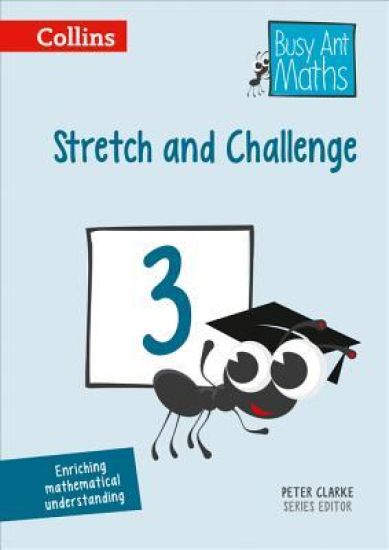
Stretch and Challenge 3

Stretch and Challenge 3

Peter Clarke

Collins
2016
nidottu
Challenge and stretch Year 3 pupils with this resource designed to broaden and deepen children’s mathematical understanding. This book supports the classroom teacher in delivering structured guidance and support for gifted children who are exceeding age-related expectations in mathematics. contains 36 photocopiable newspaper-style issues packed with investigations, problem-solving activities and maths challenges specific teacher guidance (and answers) in the accompanying teachers notes for all 36 issues all content is within the years programme of study evaluate children’s learning and identify the next steps for progression with detailed assessment guidance encourage children to apply their mathematical knowledge and skills across the curriculum with cross-curricular activities
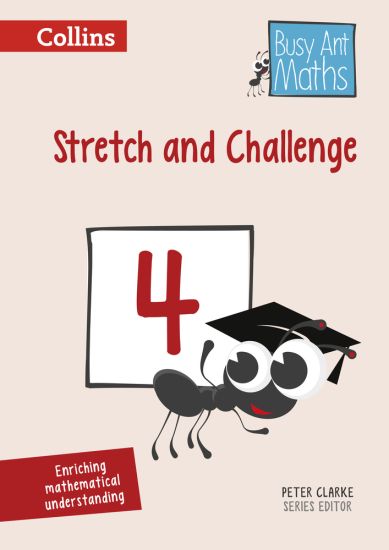
Stretch and Challenge 4

Stretch and Challenge 4

Peter Clarke

Collins
2016
nidottu
Challenge and stretch Year 4 pupils with this resource designed to broaden and deepen children’s mathematical understanding. This book supports the classroom teacher in delivering structured guidance and support for gifted children who are exceeding age-related expectations in mathematics. contains 36 photocopiable newspaper-style issues packed with investigations, problem-solving activities and maths challenges specific teacher guidance (and answers) in the accompanying teachers notes for all 36 issues all content is within the years programme of study evaluate children’s learning and identify the next steps for progression with detailed assessment guidance encourage children to apply their mathematical knowledge and skills across the curriculum with cross-curricular activities
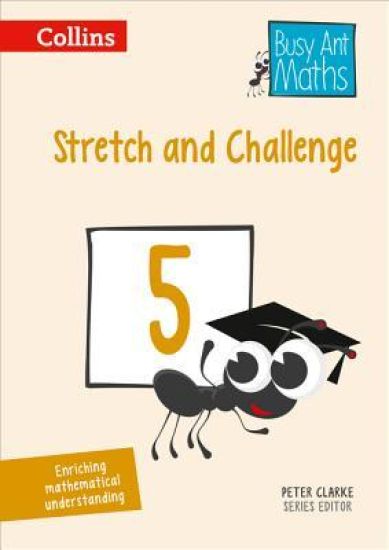
Stretch and Challenge 5

Stretch and Challenge 5

Peter Clarke

Collins
2016
nidottu
Challenge and stretch Year 5 pupils with this resource designed to broaden and deepen children’s mathematical understanding. This book supports the classroom teacher in delivering structured guidance and support for gifted children who are exceeding age-related expectations in mathematics. contains 36 photocopiable newspaper-style issues packed with investigations, problem-solving activities and maths challenges specific teacher guidance (and answers) in the accompanying teachers notes for all 36 issues all content is within the years programme of study evaluate children’s learning and identify the next steps for progression with detailed assessment guidance encourage children to apply their mathematical knowledge and skills across the curriculum with cross-curricular activities
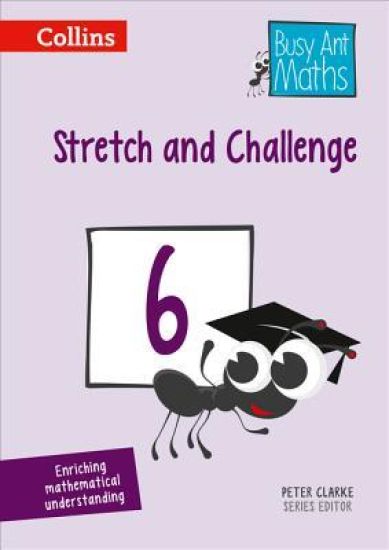
Stretch and Challenge 6

Stretch and Challenge 6

Peter Clarke

Collins
2016
nidottu
Challenge and stretch Year 6 pupils with this resource designed to broaden and deepen children’s mathematical understanding. This book supports the classroom teacher in delivering structured guidance and support for gifted children who are exceeding age-related expectations in mathematics. contains 36 photocopiable newspaper-style issues packed with investigations, problem-solving activities and maths challenges specific teacher guidance (and answers) in the accompanying teachers notes for all 36 issues all content is within the years programme of study evaluate children’s learning and identify the next steps for progression with detailed assessment guidance encourage children to apply their mathematical knowledge and skills across the curriculum with cross-curricular activities
Problem Solving and Reasoning Pupil Book 4

Problem Solving and Reasoning Pupil Book 4

Peter Clarke

HARPERCOLLINS PUBLISHERS
2018
nidottu
Pupils can quickly get to grips with KS2 problem solving and reasoning by completing activities categorised by topic and question type. Fully in line with the new National Curriculum. Problem solving and reasoning have been key focuses within primary maths since the introduction of the 2014 curriculum, and the focus on ‘teaching for mastery’. It is essential that all pupils have access to problem solving and reasoning activities. Some key benefits to problem solving in maths include:• Helping pupils grasp diverse mathematical concepts and understand the application of the subject• Enhancing strategic thinking• Developing transferable skills This book consists of three different types of mathematical problem solving challenges:1. Solving mathematical problems. This involves pupils solving problems ‘within’ mathematics itself, recognising patterns and relationships, making conjectures and generalisations, and explaining and justifying conclusions.2. Reasoning mathematically. This involved pupils using logical thinking to solve problems, focusing on making conjectures and generalisations, and explaining and justifying conclusions using appropriate language.3. Using & applying mathematics in real-world contexts. This involves pupils engaging in challenges that require them to use and apply their mathematical knowledge and skills in open-ended, real-world contexts.
Problem Solving and Reasoning Pupil Book 5
Pupils can quickly get to grips with KS2 problem solving and reasoning by completing activities categorised by topic and question type. Fully in line with the new National Curriculum. Problem solving and reasoning have been key focuses within primary maths since the introduction of the 2014 curriculum, and the focus on ‘teaching for mastery’. It is essential that all pupils have access to problem solving and reasoning activities. Some key benefits to problem solving in maths include:• Helping pupils grasp diverse mathematical concepts and understand the application of the subject• Enhancing strategic thinking• Developing transferable skills This book consists of three different types of mathematical problem solving challenges:1. Solving mathematical problems. This involves pupils solving problems ‘within’ mathematics itself, recognising patterns and relationships, making conjectures and generalisations, and explaining and justifying conclusions.2. Reasoning mathematically. This involved pupils using logical thinking to solve problems, focusing on making conjectures and generalisations, and explaining and justifying conclusions using appropriate language.3. Using & applying mathematics in real-world contexts. This involves pupils engaging in challenges that require them to use and apply their mathematical knowledge and skills in open-ended, real-world contexts.
Problem Solving and Reasoning Pupil Book 6
Pupils can quickly get to grips with KS2 problem solving and reasoning by completing activities categorised by topic and question type. Fully in line with the new National Curriculum. Problem solving and reasoning have been key focuses within primary maths since the introduction of the 2014 curriculum, and the focus on ‘teaching for mastery’. It is essential that all pupils have access to problem solving and reasoning activities. Some key benefits to problem solving in maths include:• Helping pupils grasp diverse mathematical concepts and understand the application of the subject• Enhancing strategic thinking• Developing transferable skills This book consists of three different types of mathematical problem solving challenges:1. Solving mathematical problems. This involves pupils solving problems ‘within’ mathematics itself, recognising patterns and relationships, making conjectures and generalisations, and explaining and justifying conclusions.2. Reasoning mathematically. This involved pupils using logical thinking to solve problems, focusing on making conjectures and generalisations, and explaining and justifying conclusions using appropriate language.3. Using & applying mathematics in real-world contexts. This involves pupils engaging in challenges that require them to use and apply their mathematical knowledge and skills in open-ended, real-world contexts.
Problem Solving and Reasoning Pupil Book 1
Pupils can quickly get to grips with KS1 problem solving and reasoning by completing activities categorised by topic and question type. Fully in line with the new National Curriculum. Problem solving and reasoning have been key focuses within primary maths since the introduction of the 2014 curriculum, and the focus on ‘teaching for mastery’. It is essential that all pupils have access to problem solving and reasoning activities. Some key benefits to problem solving in maths include:• Helping pupils grasp diverse mathematical concepts and understand the application of the subject• Enhancing strategic thinking• Developing transferable skills This book consists of three different types of mathematical problem solving challenges:1. Solving mathematical problems. This involves pupils solving problems ‘within’ mathematics itself, recognising patterns and relationships, making conjectures and generalisations, and explaining and justifying conclusions.2. Reasoning mathematically. This involved pupils using logical thinking to solve problems, focusing on making conjectures and generalisations, and explaining and justifying conclusions using appropriate language.3. Using & applying mathematics in real-world contexts. This involves pupils engaging in challenges that require them to use and apply their mathematical knowledge and skills in open-ended, real-world contexts.
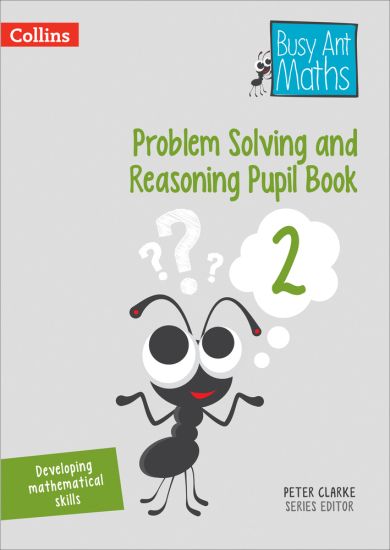
Problem Solving and Reasoning Pupil Book 2
Pupils can quickly get to grips with KS1 problem solving and reasoning by completing activities categorised by topic and question type. Fully in line with the new National Curriculum. Problem solving and reasoning have been key focuses within primary maths since the introduction of the 2014 curriculum, and the focus on ‘teaching for mastery’. It is essential that all pupils have access to problem solving and reasoning activities. Some key benefits to problem solving in maths include:• Helping pupils grasp diverse mathematical concepts and understand the application of the subject• Enhancing strategic thinking• Developing transferable skills This book consists of three different types of mathematical problem solving challenges:1. Solving mathematical problems. This involves pupils solving problems ‘within’ mathematics itself, recognising patterns and relationships, making conjectures and generalisations, and explaining and justifying conclusions.2. Reasoning mathematically. This involved pupils using logical thinking to solve problems, focusing on making conjectures and generalisations, and explaining and justifying conclusions using appropriate language.3. Using & applying mathematics in real-world contexts. This involves pupils engaging in challenges that require them to use and apply their mathematical knowledge and skills in open-ended, real-world contexts.
Problem Solving and Reasoning Pupil Book 3
Pupils can quickly get to grips with KS2 problem solving and reasoning by completing activities categorised by topic and question type. Fully in line with the new National Curriculum. Problem solving and reasoning have been key focuses within primary maths since the introduction of the 2014 curriculum, and the focus on ‘teaching for mastery’. It is essential that all pupils have access to problem solving and reasoning activities. Some key benefits to problem solving in maths include:• Helping pupils grasp diverse mathematical concepts and understand the application of the subject• Enhancing strategic thinking• Developing transferable skills This book consists of three different types of mathematical problem solving challenges:1. Solving mathematical problems. This involves pupils solving problems ‘within’ mathematics itself, recognising patterns and relationships, making conjectures and generalisations, and explaining and justifying conclusions.2. Reasoning mathematically. This involved pupils using logical thinking to solve problems, focusing on making conjectures and generalisations, and explaining and justifying conclusions using appropriate language.3. Using & applying mathematics in real-world contexts. This involves pupils engaging in challenges that require them to use and apply their mathematical knowledge and skills in open-ended, real-world contexts.
Problem Solving and Reasoning Student Book 1
Students can quickly get to grips with problem solving and reasoning by completing activities categorised by topic and question type. Fully in line with the Cambridge Primary Mathematics Curriculum. Problem solving and reasoning are focuses in the Cambridge Primary Mathematics Curriculum. It is essential that all students have access to problem solving and reasoning activities. Some key benefits to problem solving in maths include: • Helping pupils grasp diverse mathematical concepts and understand the application of the subject • Enhancing strategic thinking • Developing transferable skills This book consists of three different types of mathematical problem solving challenges: 1. Solving mathematical problems. This involves pupils solving problems ‘within’ mathematics itself, recognising patterns and relationships, making conjectures and generalisations, and explaining and justifying conclusions. 2. Reasoning mathematically. This involved pupils using logical thinking to solve problems, focusing on making conjectures and generalisations, and explaining and justifying conclusions using appropriate language. 3. Using & applying mathematics in real-world contexts. This involves pupils engaging in challenges that require them to use and apply their mathematical knowledge and skills in open-ended, real-world contexts.
Problem Solving and Reasoning Student Book 2
Students can quickly get to grips with problem solving and reasoning by completing activities categorised by topic and question type. Fully in line with the Cambridge Primary Mathematics Curriculum. Problem solving and reasoning are focuses in the Cambridge Primary Mathematics Curriculum. It is essential that all students have access to problem solving and reasoning activities. Some key benefits to problem solving in maths include:• Helping pupils grasp diverse mathematical concepts and understand the application of the subject• Enhancing strategic thinking• Developing transferable skills This book consists of three different types of mathematical problem solving challenges:1. Solving mathematical problems. This involves pupils solving problems ‘within’ mathematics itself, recognising patterns and relationships, making conjectures and generalisations, and explaining and justifying conclusions.2. Reasoning mathematically. This involved pupils using logical thinking to solve problems, focusing on making conjectures and generalisations, and explaining and justifying conclusions using appropriate language.3. Using & applying mathematics in real-world contexts. This involves pupils engaging in challenges that require them to use and apply their mathematical knowledge and skills in open-ended, real-world contexts.