Kirjojen hintavertailu. Mukana 11 717 486 kirjaa ja 12 kauppaa.

Kirjahaku

Etsi kirjoja tekijän nimen, kirjan nimen tai ISBN:n perusteella.

18 kirjaa tekijältä Peter Conrad

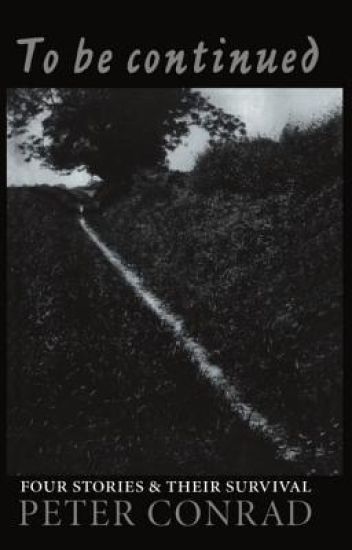
To Be Continued

To Be Continued

Peter Conrad

Oxford University Press
1995
sidottu
Books end, but the stories they tell continue. Stories exist to be retold, and those which are retold often enough acquire the status of myth. To Be Continued considers four such continuations of English literature, extending between the fourteenth and twentieth centuries, and surveying Europe, America, Africa, and Japan. It first asks what happened to Chaucer's pilgrims after the poet deserted them halfway through their pilgrimage: could they ever have arrived at Canterbury? T S Eliot has one answer, William Burroughs another; films by Michael Powell and Pasolini contribute other guesses, and a song by Elvis Presley makes its own enigmatic contribution. Next, two Shakespearean plays undergo universalization: Romeo and Juliet is translated into music by a succession of Romantic composers, and King Lear is reinterpreted by a series of nineteenth century novelists and modern dramatists. Finally, the story of Prometheus is traced from Aeschylus to the monster movies of the 1930s, by way of Mary Shelley's Frankenstein. These post-dated meanings enrich and complicate their sources, keeping them alive: a myth, as Levi-Strauss pointed out, is the sum total of all its possible variants and versions. Accessible and entertaining, To Be Continued shows how, by retelling its stories, our culture recreates and reckons with its past.
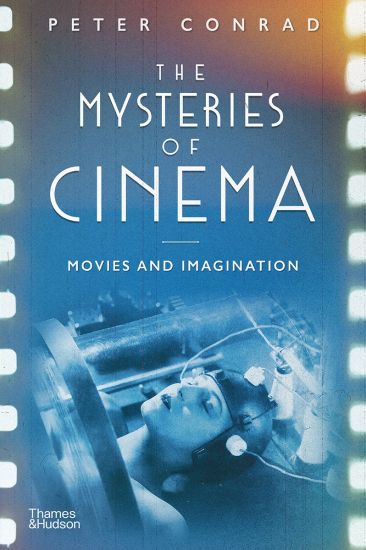
The Mysteries of Cinema

The Mysteries of Cinema

Peter Conrad

Thames Hudson Ltd
2021
sidottu
People who saw the first moving pictures at the end of the nineteenth century were delighted by a new art that communicated without words – yet they were also alarmed to be witnessing events in a strange, mute, spectral realm, where the laws of time and space were suspended and magical transformations could occur. Some early commentators hailed cinema as a blessing and praised it for resurrecting the dead; others likened it to a hypnotic trance or a hallucinogenic drug. The medium has always been excited by speed, and it enjoys sending the body on furious kinetic chases; at the same time, it stealthily probes our minds, invading our dreams and titillating our desires. Although this is an art kindled by light and inflamed by colour, it is nurtured by darkness and can reduce life to an insubstantial shadow play. Either way, as Peter Conrad argues in this brilliant book, the movie camera has given us new eyes and changed forever our view of reality. The Mysteries of Cinema sets out to map this ambiguous territory by taking readers on a thematic roller-coaster ride through movie history. Directors and critics speculate about the nature of cinematic vision, and there are contributions to the debate from writers like Kafka, Virginia Woolf and Joan Didion, artists including Salvador Dalí, George Grosz and Fernand Léger, and the composers Arnold Schoenberg and Dmitri Shostakovich. The book begins from the audacious innovations of silent film, and examines the influence of French surrealism and German expressionism; it accounts for the appeal of Hollywood genres like the Western, the horror film and the musical, and ends by considering the fate of the moving image in our visually glutted society. Combining contagious enthusiasm with an eye for the subjective quirks of filmmakers and the allure of favourite performers, Conrad delivers an astonishing addition to the literature on the seventh art. With 61 illustrations
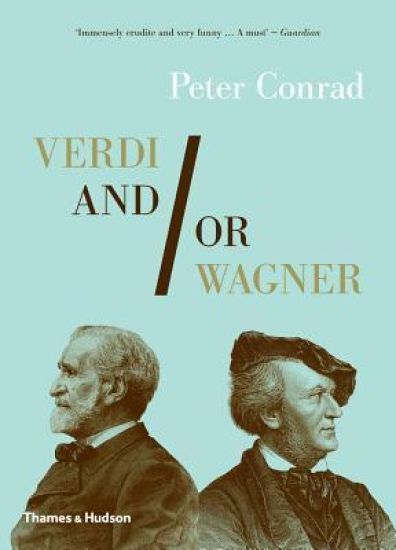
Verdi and/or Wagner

Verdi and/or Wagner

Peter Conrad

Thames Hudson Ltd
2013
nidottu
Giuseppe Verdi and Richard Wagner, the two greatest operatic composers of their time, had everything and nothing in common. Their achievements were comparable, but their personalities, their approaches to music and drama, and their complex legacies made them incompatible. Verdi thought of art as a comfort to mankind; it pleased Wagner to believe that the nervous intensity of his operas might drive listeners mad. Is it impossible – as Peter Conrad asks in this book, the first to investigate their affinities and explain their mutual mistrust – to love them both? These equally matched Titans offer us a choice between two kinds of art, two ways of life, two opposed philosophies of existence. During their lifetimes Verdi and Wagner helped to define the identity of their emerging nations; their music still dramatizes the light and dark sides of every human being’s character and consciousness.
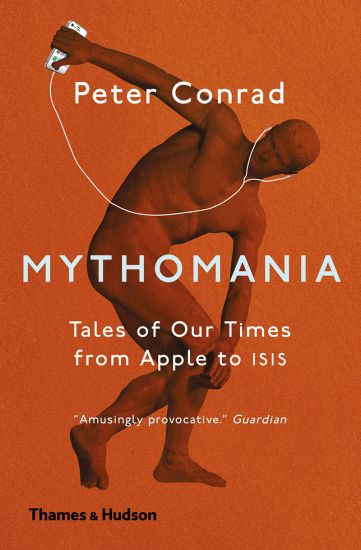
Mythomania

Mythomania

Peter Conrad

Thames Hudson Ltd
2017
nidottu
Peter Conrad’s exhilarating book exposes the absurdity and occasional insanity of our godforsaken, demon-haunted contemporary culture. Conrad casts his brilliant beam upon subjects from the Queen to the Kardashians, via Banksy, Nando’s, vaping, the vogue of the cronut, the mushroom-like rise of Dubai, the launch of the Large Hadron Collider, the growth of the Pacific garbage patch... In Judge Judy, he shows us a matronly Roman goddess dispensing justice with a fly swatter. In the metamorphosis of Caitlyn Jenner from Olympic athlete and paterfamilias into idealized female form, he sees parallels to the deeds of the residents of Mount Olympus themselves. Finally, after surveying advances in biomedical engineering and artificial intelligence, he asks whether we might be on the brink of a post-human world.
Creation

Creation

Peter Conrad

Thames Hudson Ltd
2007
sidottu
Throughout history artists, writers and musicians - 'creative' people - have tried to outdo God or the Gods in the acts of creation. This extraordinarily wide-ranging study traces the different concepts of creation in Western civilization, following the struggle between man and god for the right to create, and even the right to create gods. Along the way it becomes what is in essence a new history of Western civilization, a series of thirty-three chapters brimming with ideas, insights and erudition. It touches upon religion, art and artistry, alchemy, mystical traditions, opera, film, literature, linguistics, psychoanalysis, psychology and physics, among many other things, exploring what it means to create, as well as the popular myths of creation from every conceivable angle. The result is a breathtaking overview of man's uncrushable impulse to create, and his endless rivalry with the gods.
The Medicalization of Society

The Medicalization of Society

Peter Conrad

Johns Hopkins University Press
2007
pokkari
Over the past half-century, the social terrain of health and illness has been transformed. What were once considered normal human events and common human problems-birth, aging, menopause, alcoholism, and obesity-are now viewed as medical conditions. For better or worse, medicine increasingly permeates aspects of daily life. Building on more than three decades of research, Peter Conrad explores the changing forces behind this trend with case studies of short stature, social anxiety, "male menopause," erectile dysfunction, adult ADHD, and sexual orientation. He examines the emergence of and changes in medicalization, the consequences of the expanding medical domain, and the implications for health and society. He finds in recent developments-such as the growing number of possible diagnoses and biomedical enhancements-the future direction of medicalization. Conrad contends that the impact of medical professionals on medicalization has diminished. Instead, the pharmaceutical and biotechnical industries, insurance companies and HMOs, and the patient as consumer have become the major forces promoting medicalization. This thought-provoking study offers valuable insight into not only how medicalization got to this point but also how it may continue to evolve.
Deviance and Medicalization

Deviance and Medicalization

Peter Conrad

Temple University Press,U.S.
1992
pokkari
This classic text on the nature of deviance, originally published in 1980, is now reissued with a new Afterword by the authors. In this new edition of their award-winning book, Conrad and Schneider investigate the origins and contemporary consequences of the medicalization of deviance. They examine specific cases—madness, alcoholism, opiate addiction, homosexuality, delinquency, and child abuse—and draw out their theoretical and policy implications. In a new chapter, the authors address developments in the last decade—including AIDS, domestic violence, co-dependency, hyperactivity in children, and learning disabilities—and they discuss the fate of medicalization in the 1990s with the changes in medicine and continued restrictions on social services.
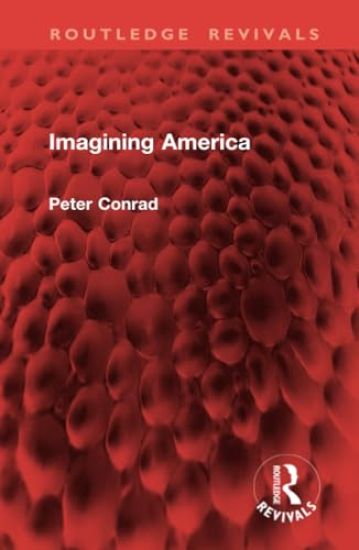
Imagining America

Imagining America

Peter Conrad

TAYLOR FRANCIS LTD
2024
sidottu
In his book Imagining America (originally published in 1980), Peter Conrad shows how the English literary imagination over the course of a century devised for itself a contradictory series of ideal or alarming Americas which it then sets out to actualize. For Mrs Trollope, Americans are unkempt brutes, throwbacks to savagery; for H. G. Wells, they are a future race of cerebral technocrats. Oscar Wilde and Rupert Brooke want to redeem them by corrupting them with the insidious gospel of art; D. H. Lawrence wants to rescue them by fomenting revolution in their stale, sterile society. For W. H. Auden, Americans are an existential people, sad citizens of a deracinated modern world, suffering from anxiety; for Chrsitopher Isherwood, they are bland, sun-tanned Oriental angels. But there is a logic to the succession of these images, which Peter Conrads’s narrative follows. The Victorians are disturbed by America because it is not yet a society and lacks the upholstery of manners. Their modern successors, however, praise it for this very disability and find there a psychological, mystical or even psychedelic freedom denied to them by the Europe they have left behind.Imagining America is stimulating both as cultural history and literary criticism. Superbly written, it presents an argumentative tour de force in a style that is witty and diverting.
Imagining America

Imagining America

Peter Conrad

TAYLOR FRANCIS LTD
2026
nidottu
In his book Imagining America (originally published in 1980), Peter Conrad shows how the English literary imagination over the course of a century devised for itself a contradictory series of ideal or alarming Americas which it then sets out to actualize. For Mrs Trollope, Americans are unkempt brutes, throwbacks to savagery; for H. G. Wells, they are a future race of cerebral technocrats. Oscar Wilde and Rupert Brooke want to redeem them by corrupting them with the insidious gospel of art; D. H. Lawrence wants to rescue them by fomenting revolution in their stale, sterile society. For W. H. Auden, Americans are an existential people, sad citizens of a deracinated modern world, suffering from anxiety; for Chrsitopher Isherwood, they are bland, sun-tanned Oriental angels. But there is a logic to the succession of these images, which Peter Conrads’s narrative follows. The Victorians are disturbed by America because it is not yet a society and lacks the upholstery of manners. Their modern successors, however, praise it for this very disability and find there a psychological, mystical or even psychedelic freedom denied to them by the Europe they have left behind. Imagining America is stimulating both as cultural history and literary criticism. Superbly written, it presents an argumentative tour de force in a style that is witty and diverting.
Television

Television

Peter Conrad

Routledge
2016
sidottu
It dominates our lives. It is the twentieth-century medium. And yet we're all a little sheepish when it comes to television, disowning it by disavowal or by inventing subtle, innocuous disguises for it. Why is this? In this book, first published in 1982, Peter Conrad argues that our unease stems from the way that the medium works: it absorbs the messages it transmits, it invents a reality of its own and ends by luring the world into the confines of its box. Television's achievement is to have estranged us from the reality which it puports to represent, but which it actually refracts. This invasion of our lives is monitored and projected in programmes designed to ape the human routine. Following a discussion of television as furniture, Peter Conrad explores its various versions of reality: the simulated conversation of the talk show, the competitive consumerism of the games, the messianic commercials, the eventless protraction of the soap operas and the camera's incitement of happenings which the television calls news.
Television

Television

Peter Conrad

Routledge
2018
nidottu
It dominates our lives. It is the twentieth-century medium. And yet we're all a little sheepish when it comes to television, disowning it by disavowal or by inventing subtle, innocuous disguises for it. Why is this? In this book, first published in 1982, Peter Conrad argues that our unease stems from the way that the medium works: it absorbs the messages it transmits, it invents a reality of its own and ends by luring the world into the confines of its box. Television's achievement is to have estranged us from the reality which it puports to represent, but which it actually refracts. This invasion of our lives is monitored and projected in programmes designed to ape the human routine. Following a discussion of television as furniture, Peter Conrad explores its various versions of reality: the simulated conversation of the talk show, the competitive consumerism of the games, the messianic commercials, the eventless protraction of the soap operas and the camera's incitement of happenings which the television calls news.
Identifying Hyperactive Children

Identifying Hyperactive Children

Peter Conrad

Routledge
2017
nidottu
This is a new and expanded edition of a classic case-study in the medicalization of ADHD, originally published in 1976. The book centres on an empirical study of the process of identifying hyperactive children, providing a perceptive and accessible introduction to the concepts and issues involved. In this revised edition, Peter Conrad sets the original study in context, demonstrating the continuing relevance of his research. He highlights the issues at stake, outlining recent changes in our understanding of ADHD and reviewing recent sociological research. Peter Conrad is Harry Coplan Professor of Social Sciences at Brandeis University, USA. He has written extensively in the area of medical sociology, publishing nine books and over eighty articles and chapters.
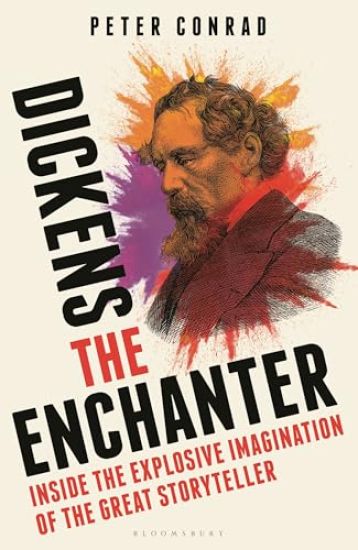
Dickens the Enchanter

Dickens the Enchanter

Peter Conrad

BLOOMSBURY PUBLISHING PLC
2025
sidottu
A kaleidoscopic investigation of Dickens’s imagination and the world he created.See Dickens as never before in this creative biography, which delves into his novels, journalistic essays and letters to reveal his strange, hilarious but obsessive personal character and the audacity of a mind that set out, as he said, to rearrange the universe. Peter Conrad’s bold rediscovery of Dickens suggests that he alone rivals Shakespeare and in some ways betters him. As well as re-examining the great novels, Conrad’s book probes the journalism in which Dickens reports on his risky ventures into the urban underworld. It also describes the celebrated but dangerously over-intense public readings in which, as at a seance, he allowed his most terrifying characters to take possession of him. Ultimately itreveals how the forces of creation and destruction come together in Dickens, who despite his reputation for jollity and effusive sentiment found it increasingly hard to control the madness and violence of his own self-destructive genius.Dickens the Enchanter takes us deep into an imagination whose power and originality struck some contemporaries as godlike while others thought it demonic. If you already love Dickens, it will renew your understanding of him; if you have yet to read him, it will lure you into his astonishing, alarming, enchanted world.
Shakespeare

Shakespeare

Peter Conrad

Head of Zeus
2018
sidottu
In 1623 the actors John Heminges and Henry Condell assembled Mr. William Shakespeare's Comedies, Histories, & Tragedies, better known as The First Folio. In doing so they preserved literature's most dramatically vital and poetically rich account of our human world. Endlessly reinterpreted by critics and performers, Shakespeare's inexhaustible work has remained abreast of contemporary concerns ever since, and it continues to hold a mirror up to the nature of our troubled society and our contradictory selves. The plays accompany us through the ages of mankind, from comic springtime to wintry age, compressing our life in time into the three hours' traffic of the stage; the characters in them have shaped the way we think about politics and war, consciousness and morality, love and death. Peter Conrad examines the world-view of the plays, their generic originality and their astonishingly inventive language. He goes on to explore Shakespeare's global legacy as his characters migrate to every continent and are reinvented by later writers, painters, composers, choreographers and film-makers.
Canadian Wartime Prison Escapes

Canadian Wartime Prison Escapes

Peter Conrad

Folklore Publishing
2007
nidottu
This book tells the stories of heroic Canadian soldiers who escaped from behind enemy lines during the wars of the 20th century. Learn about the Wooden Horse escape and the tragic Great Escape of World War 2. The book includes hair-raising accounts of Canadian soldiers who managed to break to freedom from prisoner trains and eastern front work camps and those who made their way back to Allied territory from behind enemy lines.
Mörderisches Leipzig

Mörderisches Leipzig

Peter Conrad

Books on Demand
2014
pokkari
"M rderisches Leipzig" enth lt drei F lle von Kriminalkommissar Sascha Altmann von der Mordkommission Leipzig: Othello und andere Katastrophen: Ein Toter in einer ausgebrannten Wohnung gibt den Ermittlern R tsel auf. Hit any key to die Der Computer eines Verd chtigen ist gut verschl sselt. Kann er geknackt werden, und welche Rolle spielt er bei einer Reihe von geheimnisvollen Todesf llen. Brennen soll Leipzig Eine rechtsextreme Partei hat eine Demonstration angemeldet - aber der Parteichef ist verschwunden. Mit seinem pl tzlichen Wiederauftauchen fangen die Probleme f r die Polizei und die ganze Stadt Leipzig aber erst so richtig an.
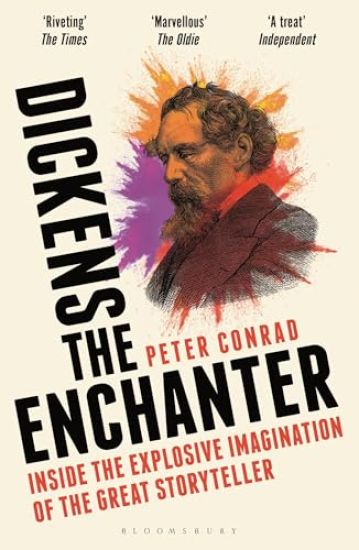
Dickens the Enchanter

Dickens the Enchanter

Peter Conrad

BLOOMSBURY PUBLISHING PLC
2026
nidottu
'Dickensian is a language, not an adjective. Conrad speaks it fluently.' -- Spectator World 'Marvellous... the best book on Dickens since G.K. Chesterton’s. -- A. N. Wilson, The Oldie A kaleidoscopic investigation of Dickens’s imagination and the world he created. See Dickens as never before in this creative biography, which delves into his novels, journalistic essays and letters to reveal his strange, hilarious but obsessive personal character and the audacity of a mind that set out, as he said, to rearrange the universe. As well as re-examining the great novels, Conrad’s book probes the journalism in which Dickens reports on his risky ventures into the urban underworld. It also describes the celebrated but dangerously over-intense public readings in which, as at a seance, he allowed his most terrifying characters to take possession of him. Ultimately it reveals how the forces of creation and destruction come together in Dickens, who despite his reputation for jollity and effusive sentiment found it increasingly hard to control the madness and violence of his own self-destructive genius. Dickens the Enchanter takes us deep into an imagination whose power and originality struck some contemporaries as godlike while others thought it demonic. If you already love Dickens, it will renew your understanding of him; if you have yet to read him, it will lure you into his astonishing, alarming, enchanted world.