Kirjojen hintavertailu. Mukana 12 016 292 kirjaa ja 12 kauppaa.

Kirjahaku

Etsi kirjoja tekijän nimen, kirjan nimen tai ISBN:n perusteella.

3 kirjaa tekijältä Peter D. Feaver

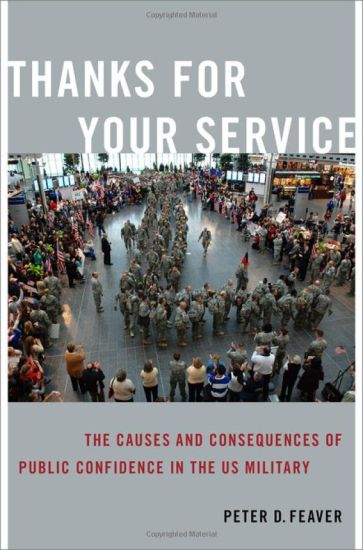
Thanks for Your Service

Thanks for Your Service

Peter D. Feaver

OXFORD UNIVERSITY PRESS INC
2024
sidottu
A definitive study on the decades-long run of high public confidence in the military and why it may rest on some shaky foundations. What explains the high levels of public confidence in the US military and does high confidence matter? In Thanks for Your Service, the eminent civil-military relations scholar Peter D. Feaver addresses this question and focuses on what it means for the military. Proprietary survey data show that confidence is partly based on public beliefs about the military's high competence, adherence to high professional ethics, and a determination to stand apart from the bitter divisions of partisan politics. However, as Feaver argues, confidence is also shaped by a partisan gap and by social desirability bias, the idea that some individuals express confidence in the military because they believe that is the socially approved attitude to hold. Not only does Feaver help us understand how and why the public has confidence in the military, but he also exposes problems that policymakers need to be aware of. Specifically, this book traces how confidence in the institution shapes public attitudes on the use of force and may not always reinforce best practices in democratic civil-military relations.
Thanks for Your Service

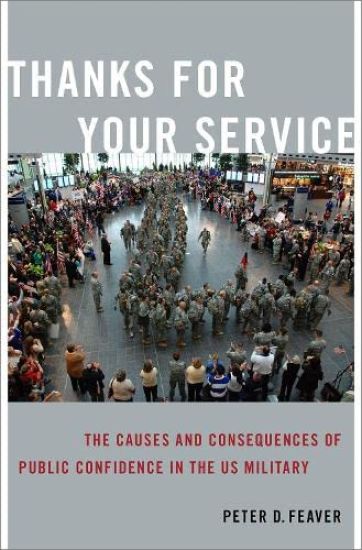
Thanks for Your Service

Peter D. Feaver

OXFORD UNIVERSITY PRESS INC
2024
nidottu
A definitive study on the decades-long run of high public confidence in the military and why it may rest on some shaky foundations. What explains the high levels of public confidence in the US military and does high confidence matter? In Thanks for Your Service, the eminent civil-military relations scholar Peter D. Feaver addresses this question and focuses on what it means for the military. Proprietary survey data show that confidence is partly based on public beliefs about the military's high competence, adherence to high professional ethics, and a determination to stand apart from the bitter divisions of partisan politics. However, as Feaver argues, confidence is also shaped by a partisan gap and by social desirability bias, the idea that some individuals express confidence in the military because they believe that is the socially approved attitude to hold. Not only does Feaver help us understand how and why the public has confidence in the military, but he also exposes problems that policymakers need to be aware of. Specifically, this book traces how confidence in the institution shapes public attitudes on the use of force and may not always reinforce best practices in democratic civil-military relations.
Armed Servants

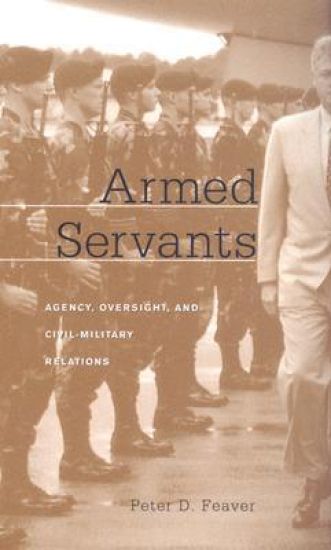
Armed Servants

Peter D. Feaver

Harvard University Press
2005
nidottu
How do civilians control the military? In the wake of September 11, the renewed presence of national security in everyday life has made this question all the more pressing. In this book, Peter Feaver proposes an ambitious new theory that treats civil-military relations as a principal-agent relationship, with the civilian executive monitoring the actions of military agents, the "armed servants" of the nation-state. Military obedience is not automatic but depends on strategic calculations of whether civilians will catch and punish misbehavior.This model challenges Samuel Huntington's professionalism-based model of civil-military relations, and provides an innovative way of making sense of the U.S. Cold War and post-Cold War experience--especially the distinctively stormy civil-military relations of the Clinton era. In the decade after the Cold War ended, civilians and the military had a variety of run-ins over whether and how to use military force. These episodes, as interpreted by agency theory, contradict the conventional wisdom that civil-military relations matter only if there is risk of a coup. On the contrary, military professionalism does not by itself ensure unchallenged civilian authority. As Feaver argues, agency theory offers the best foundation for thinking about relations between military and civilian leaders, now and in the future.