
Kirjahaku
Etsi kirjoja tekijän nimen, kirjan nimen tai ISBN:n perusteella.
16 kirjaa tekijältä Peter Dixon
In July 1940, a desperately weakened Britain licks her wounds after the humiliating retreat from Dunkirk. How can the fight be taken to the enemy? New Prime Minister Winston Churchill orders the creation of the Special Operations Executive, to 'set Europe ablaze' through subversion and sabotage. But this most secret of agencies must be kept secure. Guardians of Churchill's Secret Army tells the mostly unknown human stories of the men who were brought into SOE, straight from Intelligence Corps training, to do just that. They were junior in rank, but far from ordinary people. They were Australian, Anglo-French, Canadian, Scandinavian, East European and British. They had been schoolteachers, journalists, artists, ship brokers, racehorse trainers and international businessmen. Each spoke several languages. These men stood alongside courageous agents in training: encouraged them, assessed their character, and tried to teach them the caution and suspicion that might just keep them alive, deep in enemy territory. But they did much more. Many became agents themselves and displayed great bravery. All played a crucial role in the global effort to undermine the enemy. We find them not only in the Baker Street Headquarters of SOE, but also in night parachute drops, in paramilitary training in the remotest depths of Scotland and in undercover agent training in isolated English country houses. We follow them to occupied France, to Malaya and Thailand under threat of Japanese invasion, to Italy and Germany as they play their part in the collapse of the Axis regimes. As we do so, we find a world of heroism and commitment so different from our own experience that it is scarcely believable.
In July 1940, a desperately weakened Britain licks her wounds after the humiliating retreat from Dunkirk. How can the fight be taken to the enemy? New Prime Minister Winston Churchill orders the creation of the Special Operations Executive, to 'set Europe ablaze' through subversion and sabotage. But this most secret of agencies must be kept secure. Guardians of Churchill's Secret Army tells the mostly unknown human stories of the men who were brought into SOE, straight from Intelligence Corps training, to do just that. They were junior in rank, but far from ordinary people. They were Australian, Anglo-French, Canadian, Scandinavian, East European and British. They had been schoolteachers, journalists, artists, ship brokers, racehorse trainers and international businessmen. Each spoke several languages. These men stood alongside courageous agents in training: encouraged them, assessed their character, and tried to teach them the caution and suspicion that might just keep them alive, deep in enemy territory. But they did much more. Many became agents themselves and displayed great bravery. All played a crucial role in the global effort to undermine the enemy. We find them not only in the Baker Street Headquarters of SOE, but also in night parachute drops, in paramilitary training in the remotest depths of Scotland and in undercover agent training in isolated English country houses. We follow them to occupied France, to Malaya and Thailand under threat of Japanese invasion, to Italy and Germany as they play their part in the collapse of the Axis regimes. As we do so, we find a world of heroism and commitment so different from our own experience that it is scarcely believable.
When is war a just war? Should outsiders intervene in civil wars, and how? How can Christians effectively engage in resolving conflict? What is relational peacebuilding? How can we achieve reconciliation? Peter Dixon offers a moral framework on which to base our thinking about war and peace, undergirded by a solid confidence in God's sovereignty, as we face the uncertainty of the real world. 'I don't think we need to take responsibility for righting all the wrongs of the world like Superman.' he says. 'It is enough for us to do what we can, when we can, where we can.' Peacemakers evolves at another level too. As the author takes us down an icy Kabul street, or allows us to observe children celebrating a shaky peace in South Sudan, we experience first-hand the backcloth against which international peacebuilding takes place.
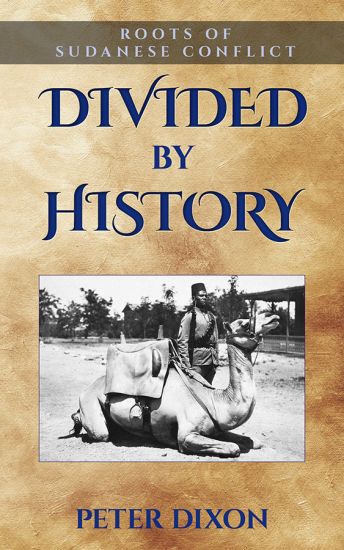
Do you wonder how our past affects today’s wars? Sudanese civil wars were not ended by formation of a new state. Violence has continued in South Sudan and the North is by no means peaceful. Current politics matter. Yet the origins of today’s violence stretch back into past centuries. And much of Sudanese history has been about intervention and domination by foreigners. By telling the stories of some of these outsiders, Divided by History digs out the historical roots of Sudanese conflicts. Along the way, we meet: The 2,300 BC pioneer who braved the dangers of Egypt’s `Wild South’ The ambitious Albanian `Turk’ who connived his way to becoming ruler of Egypt and Sudan The devout Christian who was sent to relieve a besieged city - and gave his life The meticulous general whose superior weaponry proved an unstoppable force The adventurers, soldiers and even Olympic oarsmen who ruled a vast land while still young And we recognise the difficulty of escaping from our past and the importance of understanding it.
First published in 1968, The World of Pope’s Satires is a stimulating and challenging book showing how the satires written by Pope during the 1730s were not only expressions of his own .poetic personality but were also responsive to the habits and attitudes of the age. The author considers Pope’s uses of some current conversational technique (especially that of ‘raillery’) and of the closely related social ideal of the cultivated gentleman. Pope’s regard for certain personal attributes and moral values – notably hospitality, integrity, friendship, charity and self-knowledge – is examined in two ways; as it expresses itself positively in the satires, and as it is defined negatively by his antipathy towards courtly self-seeking and hypocrisy, contemporary manifestations of acquisitiveness, and the pride associated with neo-stoicism. The final chapter is wide ranging and shows that although Pope is at times representative, and therefore limited, in his response to the pressures and uncertainties of the age, his satires live because of the subtlety of his treatment of such Augustan commonplaces as Order and Balance and the passion and spirit of his writing. This will be an interesting read for students of English literature.
First published in 1968, The World of Pope’s Satires is a stimulating and challenging book showing how the satires written by Pope during the 1730s were not only expressions of his own .poetic personality but were also responsive to the habits and attitudes of the age. The author considers Pope’s uses of some current conversational technique (especially that of ‘raillery’) and of the closely related social ideal of the cultivated gentleman. Pope’s regard for certain personal attributes and moral values – notably hospitality, integrity, friendship, charity and self-knowledge – is examined in two ways; as it expresses itself positively in the satires, and as it is defined negatively by his antipathy towards courtly self-seeking and hypocrisy, contemporary manifestations of acquisitiveness, and the pride associated with neo-stoicism. The final chapter is wide ranging and shows that although Pope is at times representative, and therefore limited, in his response to the pressures and uncertainties of the age, his satires live because of the subtlety of his treatment of such Augustan commonplaces as Order and Balance and the passion and spirit of his writing. This will be an interesting read for students of English literature.
First published in 1971, this book provides a historical account of the fortunes of Rhetoric. Beginning with a study of classical rhetorical theory and practice, it goes on to explore the impact of rhetoric on English literature and the renunciation of rhetoric from the late 17th century. The book concludes with a survey of the ways in which rhetoric was revived and re-modelled in the 20th century and its bearings on the practice and theory of literary criticism.This book will be of interest to those studying English literature and literary theory.
First published in 1971, this book provides a historical account of the fortunes of Rhetoric. Beginning with a study of classical rhetorical theory and practice, it goes on to explore the impact of rhetoric on English literature and the renunciation of rhetoric from the late 17th century. The book concludes with a survey of the ways in which rhetoric was revived and re-modelled in the 20th century and its bearings on the practice and theory of literary criticism.This book will be of interest to those studying English literature and literary theory.
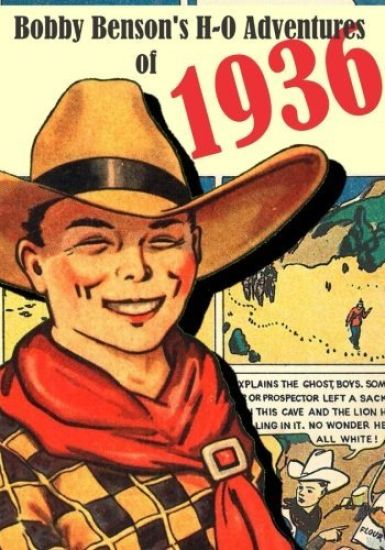
Bobby Benson's H-O Adventures of 1936
Peter Dixon
Createspace Independent Publishing Platform
2016
nidottu
'Charles Kennedy' parachuted into a moonlit Austrian forest and searched frantically for his lost radio set. His real name was Leo Hillman and he was a Jewish refugee from Vienna. He was going home. Men and women of Churchill’s secret Special Operations Executive worked to free Austria from Hitler's grip. Many were themselves Austrians who had fled Nazi persecution. Trained and equipped by SOE, they courageously returned to their homeland. Some died in the attempt. Their moving stories are part of the history of how Austria recovered her sovereignty. With a Foreword by Michael Zimmerman, Austrian Ambassador to the United Kingdom.
It was Christmas 1942 when eleven young women boarded the troopship Strathaird and braved the attentions of U-Boats in the deep Atlantic. Borrowing a cricketing phrase, they called themselves the First Eleven. But they were not the first to arrive at the Special Operations Executive's secret North African base near Algiers. Code-named Massingham, it was formed by SOE to spearhead subversion and sabotage in what Winston Churchill called 'the soft underbelly' of Europe. Massingham was hidden away at the Club des Pins, a former luxury resort nestling among pines next to a Mediterranean beach. By the time SOE had got to work, there was little luxury left. Setting the Med Ablaze tells the true stories of the men and women of Churchill's secret base. Its life was short. Less than two years after its formation, its job was done. But Massingham played a key role in the Allied offensive in the Mediterranean islands, Italy and France. If you enjoy historical nonfiction, this book is for you.
It was Christmas 1942 when eleven young women boarded the troopship Strathaird and braved the attentions of U-Boats in the deep Atlantic. Borrowing a cricketing phrase, they called themselves the First Eleven. But they were not the first to arrive at the Special Operations Executive's secret North African base near Algiers. Code-named Massingham, it was formed by SOE to spearhead subversion and sabotage in what Winston Churchill called 'the soft underbelly' of Europe. Massingham was hidden away at the Club des Pins, a former luxury resort nestling among pines next to a Mediterranean beach. By the time SOE had got to work, there was little luxury left. Setting the Med Ablaze tells the true stories of the men and women of Churchill's secret base. Its life was short. Less than two years after its formation, its job was done. But Massingham played a key role in the Allied offensive in the Mediterranean islands, Italy and France. If you enjoy historical nonfiction, this book is for you.
"Money never stays with me. It would burn me if it did." John Wesley John Wesley's eighteenth-century message about personal finance, 'Gain all you can. Save all you can. Give all you can.' is as radical today as it was three centuries ago. Perhaps more so. Gain Save Give updates Wesley's words for today's concerned Christian, and for all who want their money and resources to make a positive impact for good in the world. As we look forward to a post-pandemic world, this practical guide will help you: Gain productively Save efficiently Give effectively Gain Save Give focuses on what we do with the resources with which we are entrusted. Each chapter concludes with some actions you can put into practice right away, so we can all get a little closer to using money for good.
'Charles Kennedy' parachuted into a moonlit Austrian forest and searched frantically for his lost radio set. His real name was Leo Hillman and he was a Jewish refugee from Vienna. He was going home. Men and women of Churchill’s secret Special Operations Executive worked to free Austria from Hitler's grip. Many were themselves Austrians who had fled Nazi persecution. Trained and equipped by SOE, they courageously returned to their homeland. Some died in the attempt. Their moving stories are part of the history of how Austria recovered her sovereignty. With a Foreword by Michael Zimmermann, Austrian Ambassador to the United Kingdom.