Kirjojen hintavertailu. Mukana 11 980 650 kirjaa ja 12 kauppaa.

Kirjahaku

Etsi kirjoja tekijän nimen, kirjan nimen tai ISBN:n perusteella.

12 kirjaa tekijältä Peter Doherty

The Beginner's Guide to Winning the Nobel Prize

The Beginner's Guide to Winning the Nobel Prize

Peter Doherty

Columbia University Press
2006
sidottu
In The Beginner's Guide to Winning the Nobel Prize, Doherty recounts his unlikely path to becoming a Nobel Laureate. Beginning with his humble origins in Australia, he tells how he developed an interest in immunology and describes his award-winning, influential work with Rolf Zinkernagel on T-cells and the nature of immune defense. In prose that is at turns amusing and astute, Doherty reveals how his nonconformist upbringing, sense of being an outsider, and search for different perspectives have shaped his life and work. Doherty offers a rare, insider's look at the realities of being a research scientist. He lucidly explains his own scientific work and how research projects are selected, funded, and organized; the major problems science is trying to solve; and the rewards and pitfalls of a career in scientific research. For Doherty, science still plays an important role in improving the world, and he argues that scientists need to do a better job of making their work more accessible to the public. Throughout the book, Doherty explores the stories of past Nobel winners and considers some of the crucial scientific debates of our time, including the safety of genetically modified foods and the tensions between science and religion. He concludes with some "tips" on how to win a Nobel Prize, including advice on being persistent, generous, and culturally aware, and he stresses the value of evidence. The Beginner's Guide to Winning the Noble Prize is essential reading for anyone interested in a career in science.
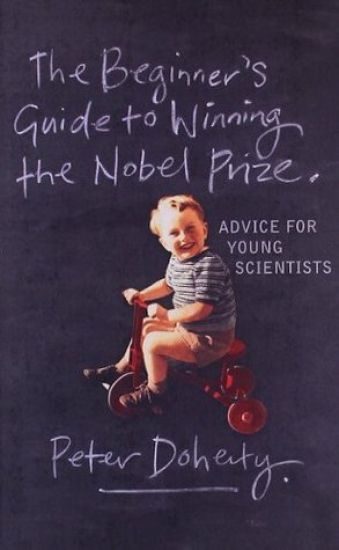
The Beginner's Guide to Winning the Nobel Prize

The Beginner's Guide to Winning the Nobel Prize

Peter Doherty

Columbia University Press
2008
pokkari
In The Beginner's Guide to Winning the Nobel Prize, Doherty recounts his unlikely path to becoming a Nobel Laureate. Beginning with his humble origins in Australia, he tells how he developed an interest in immunology and describes his award-winning, influential work with Rolf Zinkernagel on T-cells and the nature of immune defense. In prose that is at turns amusing and astute, Doherty reveals how his nonconformist upbringing, sense of being an outsider, and search for different perspectives have shaped his life and work. Doherty offers a rare, insider's look at the realities of being a research scientist. He lucidly explains his own scientific work and how research projects are selected, funded, and organized; the major problems science is trying to solve; and the rewards and pitfalls of a career in scientific research. For Doherty, science still plays an important role in improving the world, and he argues that scientists need to do a better job of making their work more accessible to the public. Throughout the book, Doherty explores the stories of past Nobel winners and considers some of the crucial scientific debates of our time, including the safety of genetically modified foods and the tensions between science and religion. He concludes with some "tips" on how to win a Nobel Prize, including advice on being persistent, generous, and culturally aware, and he stresses the value of evidence. The Beginner's Guide to Winning the Noble Prize is essential reading for anyone interested in a career in science.

Olfaction and the Brain

Olfaction and the Brain

Peter Doherty

Cambridge University Press
2006
sidottu
Olfaction and its relation to mental health is an area of growing interest, evidenced by the 2004 Nobel Prize in Physiology or Medicine being awarded for discoveries relating to odorant receptors and the organization of the olfactory system. Olfaction is of particular interest to specialists seeking a fuller understanding of schizophrenia. Clear deficits in the sense of smell could predict schizophrenia in apparently unaffected individuals. In this book, first published in 2006, Warrick Brewer and his team of experts set out our understanding of olfaction and mental health, relating it to broader principles of neural development and processing as a foundation for understanding psychopathology. The neuropathological, neuropsychological and neuropsychiatric aspects of olfactory function and dysfunction are all covered (drawing on neuroimaging techniques where appropriate), and indications for future research and applications are discussed.
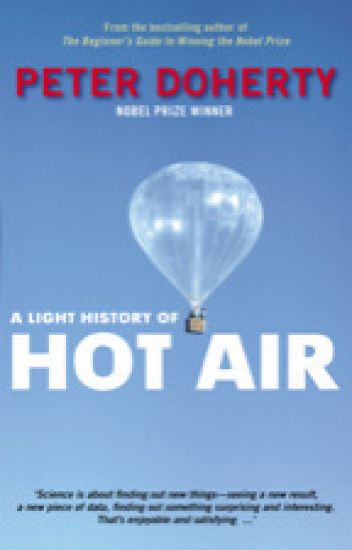
A Light History of Hot Air

A Light History of Hot Air

Peter Doherty

MELBOURNE UNIVERSITY PRESS
2008
pokkari
We've lit big fires and gentle flames over the ages to open our minds, to warn of danger, to brighten our way through the darkness and to allow us to read in bed at night...Nobel Prize-winner Peter Doherty's enthusiasm and curiosity about the world around him informs this atmospheric collection of stories on illumination, hot air and burning in all their guises. Written with great style and richly intimate with personal anecdotes, ""A Light History of Hot Air"" is concerned with the world and the simple beauty of science. Doherty shines a unique, tangential light of insight that reveals his subjects in new and unexpected ways.A childhood in Queensland awakens a boy's-own-adventure enthusiasm for trains and ships; further learning leads to admiration for such engineering marvels as the humble refrigerator and the steady march of progress that has brought us from tallow candles to electric lights.Featuring cameos from Albert Einstein, Samuel Pepys, Charles Dickens and Thomas the Tank Engine, among others, ""A Light History of Hot Air"" is an unmissable treat.
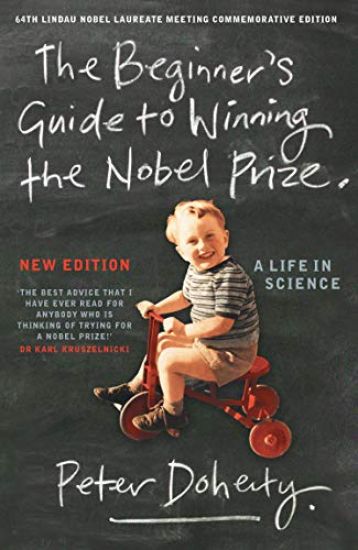
The Beginner's Guide to Winning the Nobel Prize (New Edition)
Nobel Prize winner Professor Peter Doherty offers readers an insider's guide into just what scientists do all day. Is it possible to be passionate about politics, football or R&B and still be a creative scientist? In this entertaining and inspiring account, Nobel Prize winner Peter Doherty offers readers an insider's guide into discovery science and the individuals who work in it. Starting with the story of his own career and its improbable origins in the outer suburbs of Brisbane, and its progression to a breakthrough discovery about how human immunity works. Doherty explores the realities of a life in science. How research projects are selected; how discovery science is resourced and organised; the big problems it is trying to solve; and the rewards and pitfalls of a career in scientific research- all these are explored in The Beginner's Guide to Winning the Nobel Prize. Doherty gives readers an insight into the issues that make him tick including his belief that the mission of science is to help make the world a better place to live in. He also essays answers to some of the great questions of our age. Are Nobel Prize winners exceptional human beings or just lucky? Are GMO crops really dangerous? And why can't scientists and born-again Christians get along?
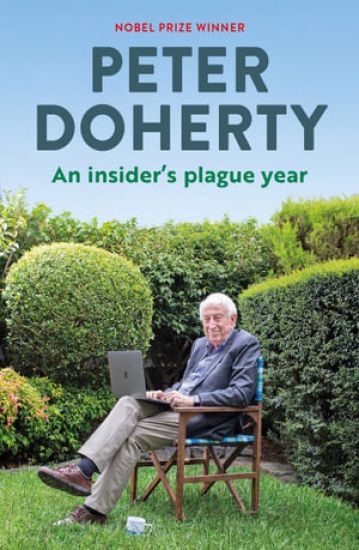
An Insider’s Plague Year

An Insider’s Plague Year

Peter Doherty

MELBOURNE UNIVERSITY PRESS
2021
nidottu
In An Insider's Plague Year, Nobel laureate and prominent COVID-19 authority Professor Peter Doherty recounts his response to the pandemic as it developed from January 2020-February 2021. As citizens and governments around the world suddenly became acutely dependent on the capacity of scientists to understand and recommend appropriate public health policy responses to the disease, Doherty and his team were at the forefront. In his always conversational style, Doherty systematically provides a deep understanding of the virus and of the numerous areas of knowledge that have been brought together in the fight against it. Rendering complex medical and scientific issues accessible and providing a fascinating glimpse into how health experts have worked with governments to control and manage the challenge, Doherty also turns his mind to what we can hope for in the months and years ahead, considering even larger questions about the pivotal role of science in our lives.
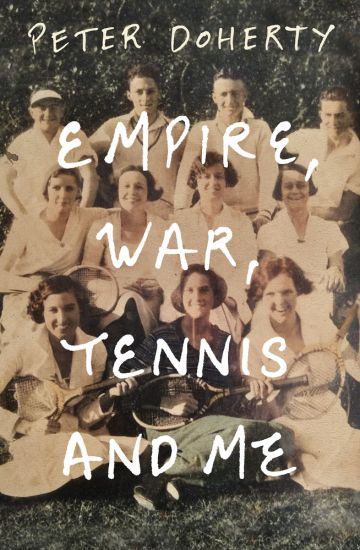
Empire, War, Tennis and Me

Empire, War, Tennis and Me

Peter Doherty

MELBOURNE UNIVERSITY PRESS
2022
pokkari
In this personal yet unsentimental memoir, Nobel Laureate Peter Doherty unearths the revealing and unique history of tennis and its ties to culture and nationalism.For those who look, and think deeply, new connections emerge.Peter Doherty, one of the world's foremost authorities on immunology, recipient of the Nobel Prize for medicine, and an active and respected commentator on public health, reflects in this book on empire, war and tennis.Doherty identifies the origins of modern tennis within its imperial context, relating seemingly unlikely connections between the sport, its players and national militaries. He traces the fate of tennis-and its players-as a nascent force for internationalism and cultural tolerance within the context of World War II. And he personalises this account through an unsentimental but revealing depiction of his tennis-loving Queenslander uncles, at war and in captivity in the Pacific.As Doherty shows, tennis and war have threaded their way through the lives of many people since the nineteenth century, in a way intriguingly unique to this sport.This is part of Peter's story. And, as we come to realise, it is also part of the story of our world.
Empire, War, Tennis and Me (Signed by the author)

Empire, War, Tennis and Me (Signed by the author)

Peter Doherty

MELBOURNE UNIVERSITY PRESS
2022
pokkari
In this personal yet unsentimental memoir, Nobel Laureate Peter Doherty unearths the revealing and unique history of tennis and its ties to culture and nationalism.For those who look, and think deeply, new connections emerge.Peter Doherty, one of the world's foremost authorities on immunology, recipient of the Nobel Prize for medicine, and an active and respected commentator on public health, reflects in this book on empire, war and tennis.Doherty identifies the origins of modern tennis within its imperial context, relating seemingly unlikely connections between the sport, its players and national militaries. He traces the fate of tennis—and its players—as a nascent force for internationalism and cultural tolerance within the context of World War II. And he personalises this account through an unsentimental but revealing depiction of his tennis-loving Queenslander uncles, at war and in captivity in the Pacific.As Doherty shows, tennis and war have threaded their way through the lives of many people since the nineteenth century, in a way intriguingly unique to this sport.This is part of Peter's story. And, as we come to realise, it is also part of the story of our world.
Olfaction and the Brain

Olfaction and the Brain

Peter Doherty

Cambridge University Press
2012
pokkari
Olfaction and its relation to mental health is an area of growing interest, evidenced by the 2004 Nobel Prize in Physiology or Medicine being awarded for discoveries relating to odorant receptors and the organization of the olfactory system. Olfaction is of particular interest to specialists seeking a fuller understanding of schizophrenia. Clear deficits in the sense of smell could predict schizophrenia in apparently unaffected individuals. In this book, first published in 2006, Warrick Brewer and his team of experts set out our understanding of olfaction and mental health, relating it to broader principles of neural development and processing as a foundation for understanding psychopathology. The neuropathological, neuropsychological and neuropsychiatric aspects of olfactory function and dysfunction are all covered (drawing on neuroimaging techniques where appropriate), and indications for future research and applications are discussed.
No. 13 Herbert Road

No. 13 Herbert Road

Peter Doherty

Brewin Books Ltd
2015
pokkari
No.13 Herbert Road is an engaging autobiographical account of a young boy growing up in the back streets of Small Heath in Birmingham during the 1940s. Through fond recollections and amusing anecdotes, the reader is transported back to the often hard times experienced by many of the working classes in post-war Britain.