Kirjojen hintavertailu. Mukana 11 244 527 kirjaa ja 12 kauppaa.

Kirjahaku

Etsi kirjoja tekijän nimen, kirjan nimen tai ISBN:n perusteella.

7 kirjaa tekijältä Peter Forrest

Developmental Theism

Developmental Theism

Peter Forrest

Clarendon Press
2007
sidottu
This is a work of speculative theology based on three themes: that a version of materialism is a help not a hindrance in philosophical theology; that God develops; and that this development is on the whole kenotic, in other words an abandonment of power. Peter Forrest argues that the resulting kenotic theism might well be correct. He claims that his hypothesis concerning God is better than known rival hypotheses, including atheism, and that if there is no unknown better hypothesis it is good enough to be believed. In the Introduction he offers a defense of the type of metaphysical speculation on which his thesis rests. Elsewhere in the book he defends his 'moderate materialism', expounds the notion of the 'Primordial God', and discusses how God changes. In the resulting account, Forrest reconciles the unloving and unlovable God of the philosophers with the God of the Abrahamic tradition. In a quasi-Gnostic fashion he puts the blame for evils on the Primordial God and argues that after God has become loving, the divine powers of intervention are limited by the natural order. In the final two chapters he applies this kenotic theism to specifically Christian teachings, notably the Trinity and the Incarnation.
Intellectual, Humanist and Religious Commitment

Intellectual, Humanist and Religious Commitment

Peter Forrest

Bloomsbury Academic
2019
sidottu
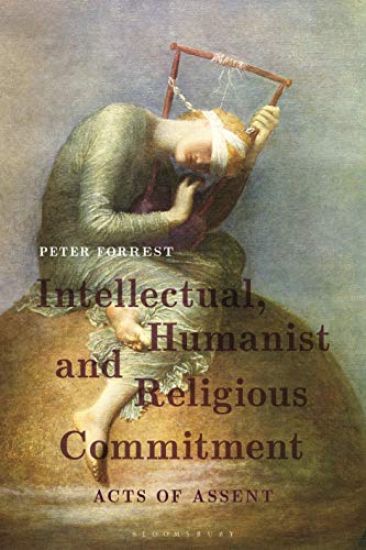
This book offers a rigorous analysis of why commitment matters and the challenges it presents to a range of believers.Peter Forrest treats commitment as a response to lost innocence. He considers the intellectual consequences of this by demonstrating why, for example, we should not believe in angels. He then explores why humans are attached to reason and to humanism, recognising the different commitments made by theist and non-theist humanists. Finally, he analyses religious faith, specifically fideism, defining it by way of contrast to Descartes, Pascal and William James, as well as contemporary philosophers including John Schellenberg and Lara Buchak.Of particular interest to scholars working on the philosophy of religion, the book makes the case both for and against committing to God, recognising that God’s divine character sets up an emotional rather than an intellectual barrier to commitment to worship.
Intellectual, Humanist and Religious Commitment

Intellectual, Humanist and Religious Commitment

Peter Forrest

Bloomsbury Academic
2021
nidottu
This book offers a rigorous analysis of why commitment matters and the challenges it presents to a range of believers.Peter Forrest treats commitment as a response to lost innocence. He considers the intellectual consequences of this by demonstrating why, for example, we should not believe in angels. He then explores why humans are attached to reason and to humanism, recognising the different commitments made by theist and non-theist humanists. Finally, he analyses religious faith, specifically fideism, defining it by way of contrast to Descartes, Pascal and William James, as well as contemporary philosophers including John Schellenberg and Lara Buchak.Of particular interest to scholars working on the philosophy of religion, the book makes the case both for and against committing to God, recognising that God’s divine character sets up an emotional rather than an intellectual barrier to commitment to worship.
The Essence of Catholicism

The Essence of Catholicism

Peter Forrest

BLOOMSBURY PUBLISHING PLC
2025
sidottu
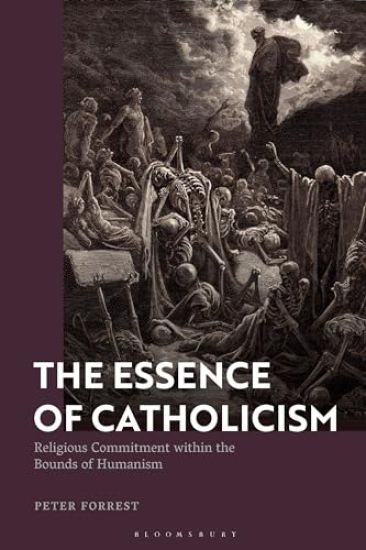
Peter Forrest argues that Essential Catholicism is the one and only religion to which reasonable humanists could commit. Drawing on Immanuel Kant’s Religion within the Bounds of Bare Reason and Ludwig Feuerbach’s The Essence of Christianity, he provides an in-depth philosophical investigation into the synthesis of Catholicism and the Enlightenment. In this nuanced study humanity and divinity are two species of the same genus. Chapters defend the apologetic project from common objections and cover the argument from evil to Catholicism, the case for the Catholic synthesis, the argument from tradition, and finally the negative case for Essential Catholicism. Forrest elucidates how the various Catholic churches have Essential Catholicism in common, discussing the Roman Catholic, the Eastern Orthodox, the Oriental Orthodox, and the Old Catholics, as well as High Church Anglicanism with Methodism as a borderline case. He argues that we can learn from other Christian denominations and from other religions, but Catholicism is the overarching and one true religion. An engaging and original account, The Essence of Catholicism departs from Vatican theory and provides a sharp philosophical reflection on a distinctive religious position within the Catholic tradition of thought.
The Necessary Structure of the All-pervading Aether
In this book I investigate the necessary structure of the aether – the stuff that fills the whole universe. Some of my conclusions are. 1. There is an enormous variety of structures that the aether might, for all we know, have. 2. Probably the aether is point-free. 3. In that case, it should be distinguished from Space-time, which is either a fiction or a construct. 4. Even if the aether has points, we should reject the orthodoxy that all regions are grounded in points by summation. 5. If the aether is point-free but not continuous, its most likely structure has extended atoms that are not simples. 6. Space-time is symmetric if and only if the aether is continuous. 7. If the aether is continuous, we should reject the standard interpretation of General Relativity, in which geometry determines gravity. 8. Contemporary physics undermines an objection to discrete aether based on scale invariance, but does not offer much positive support.
The Essence of Catholicism

The Essence of Catholicism

Peter Forrest

BLOOMSBURY PUBLISHING PLC
2026
nidottu
Peter Forrest argues that Essential Catholicism is the one and only religion to which reasonable humanists could commit. Drawing on Immanuel Kant’s Religion within the Bounds of Bare Reason and Ludwig Feuerbach’s The Essence of Christianity, he provides an in-depth philosophical investigation into the synthesis of Catholicism and the Enlightenment. In this nuanced study humanity and divinity are two species of the same genus. Chapters defend the apologetic project from common objections and cover the argument from evil to Catholicism, the case for the Catholic synthesis, the argument from tradition, and finally the negative case for Essential Catholicism. Forrest elucidates how the various Catholic churches have Essential Catholicism in common, discussing the Roman Catholic, the Eastern Orthodox, the Oriental Orthodox, and the Old Catholics, as well as High Church Anglicanism with Methodism as a borderline case. He argues that we can learn from other Christian denominations and from other religions, but Catholicism is the overarching and one true religion. An engaging and original account, The Essence of Catholicism departs from Vatican theory and provides a sharp philosophical reflection on a distinctive religious position within the Catholic tradition of thought.