Kirjojen hintavertailu. Mukana 12 277 510 kirjaa ja 12 kauppaa.

Kirjahaku

Etsi kirjoja tekijän nimen, kirjan nimen tai ISBN:n perusteella.

16 kirjaa tekijältä Peter Franklin

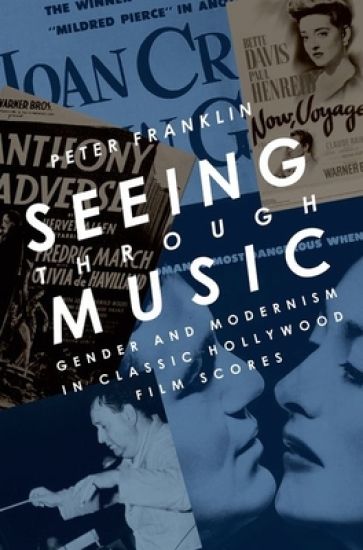
Seeing Through Music

Seeing Through Music

Peter Franklin

Oxford University Press Inc
2015
nidottu
Hollywood film music is often mocked as a disreputably "applied" branch of the art of composition that lacks both the seriousness and the quality of the classical or late-romantic concert and operatic music from which it derives. Its composers in the 1930s and '40s were themselves often scornful of it and aspired to produce more 'serious' works that would enhance their artistic reputation. In fact the criticism of film music as slavishly descriptive or manipulatively over-emotional has a history that is older than film - it had even been directed at the relatively popular operatic and concert music written by some of the émigré Hollywood composers themselves before they had left Europe. There, as subsequently in America, such criticism was promoted by the developing project of Modernism, whose often high-minded opposition to mass culture used polarizing language that drew, intentionally or not, upon that of gender difference. Regressive, late-romantic music, the old argument ran, was — as women were believed to be — emotional, irrational, and lacking in logic. This book seeks to level the critical playing field between film music and "serious music," reflecting upon gender-related ideas about music and modernism as much as about film. Peter Franklin broaches the possibility of a history of twentieth-century music that would include, rather than marginalize, film music — and, indeed, the scores of a number of the major Hollywood movies discussed here, like The Bride of Frankenstein, King Kong, Rebecca, Gone With The Wind, Citizen Kane and Psycho. In doing so, he brings more detailed music-historical knowledge to bear upon cinema music, often discussed as a unique and special product of film, and also offers conclusions about the problematic aspects of musical modernism and some arguably liberating aspects of "late-romanticism."
Seeing Through Music

Seeing Through Music

Peter Franklin

Oxford University Press Inc
2011
sidottu
Hollywood film music is often mocked as a disreputably 'applied' branch of the art of composition that lacks both the seriousness and the quality of the classical or late-romantic concert and operatic music from which it derives. Its composers in the 1930s and '40s were themselves often scornful of it and aspired to produce more 'serious' works that would enhance their artistic reputation. In fact the criticism of film music as slavishly descriptive or manipulatively over-emotional has a history that is older than film - it had even been directed at the relatively popular operatic and concert music written by some of the émigré Hollywood composers themselves before they had left Europe. There, as subsequently in America, such criticism was promoted by the developing project of Modernism, whose often high-minded opposition to mass culture used polarizing language that drew, intentionally or not, upon that of gender difference. Regressive, late-romantic music, the old argument ran, was - as women were believed to be - emotional, irrational, and lacking in logic. This book seeks to level the critical playing field between film music and 'serious music', reflecting upon gender-related ideas about music and modernism as much as about film. Peter Franklin broaches the possibility of a history of twentieth-century music that would include, rather than marginalize, film music - and, indeed, the scores of a number of the major Hollywood movies discussed here, like The Bride of Frankenstein, King Kong, Rebecca, Gone With The Wind, Citizen Kane and Psycho. In doing so, he brings more detailed music-historical knowledge to bear upon cinema music, often discussed as a unique and special product of film, and also offers conclusions about the problematic aspects of musical modernism and some arguably liberating aspects of 'late-romanticism'.
Reclaiming Late-Romantic Music

Reclaiming Late-Romantic Music

Peter Franklin

University of California Press
2014
sidottu
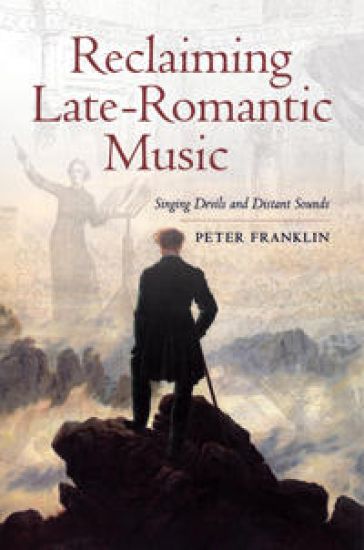
Why are some of the most beloved and frequently performed works of the late-romantic period--Mahler, Delius, Debussy, Sibelius, Puccini--regarded by many critics as perhaps not quite of the first rank? Why has modernist discourse continued to brand these works as overly sentimental and emotionally self-indulgent? Peter Franklin takes a close and even-handed look at how and why late-romantic symphonies and operas steered a complex course between modernism and mass culture in the period leading up to the Second World War. The style's continuing popularity and its domination of the film music idiom (via work by composers such as Max Steiner, Erich Wolfgang Korngold, and their successors) bring late-romantic music to thousands of listeners who have never set foot in a concert hall. Reclaiming Late-Romantic Music sheds new light on these often unfairly disparaged works and explores the historical dimension of their continuing role in the contemporary sound world.
Mahler: Symphony No. 3

Mahler: Symphony No. 3

Peter Franklin

Cambridge University Press
1991
pokkari
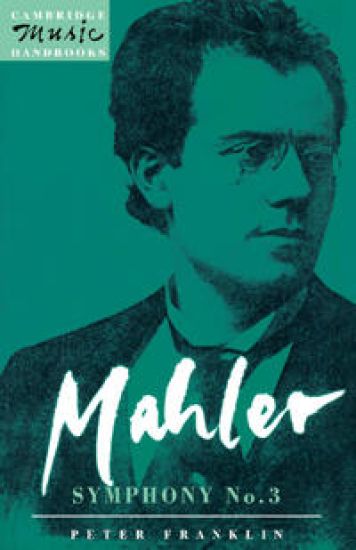
Mahler’s Third Symphony was conceived as a musical picture of the natural world. This handbook describes the composition of Mahler’s grandiose piece of philosophical programme music in the context of the ideas that inspired it and the artistic debates and social conflicts that it reflects. In this original and wide ranging account, Peter Franklin takes the Third Symphony as a representative modern European symphony of its period and evaluates it as the culmination of Mahler’s early symphonic style and a as work whose contradictory effects mirror the complexity of contemporary social and musical manners. The music is described in detail, movement by movement, with chapters on the genesis, early performance and subsequent reception of the work.
The Life of Mahler

The Life of Mahler

Peter Franklin

Cambridge University Press
1997
sidottu
'... a person should remain a 'person' and not be frozen into a legend' (Alma Mahler). As a leading European conductor, and the composer of enormous and controversial symphonies, Gustav Mahler (1860–1911) inspired mythologisers in his own lifetime. Some of them were personal friends, concerned to counter biased criticism of him in which German-nationalist, hide-bound traditionalist or anti-semitic elements were often mixed. In this 1997 biography, Peter Franklin re-confronts the myth of Mahler the misunderstood hero and attempts to find the person, or persons, behind the legends: the profoundly sensitive thinker and composer, the dictatorial conductor and husband, the iconoclast, the traditionalist. Mahler's life and work emerge as a battle-ground for some of the major conflicting currents and impulses of his period, in which Empires and ideals struggled with the spectre of their own destruction.
The Life of Mahler

The Life of Mahler

Peter Franklin

Cambridge University Press
1997
nidottu
‘... a person should remain a ‘person’ and not be frozen into a legend’ (Alma Mahler). As a leading European conductor, and the composer of enormous and controversial symphonies, Gustav Mahler (1860–1911) inspired mythologisers in his own lifetime. Some of them were personal friends, concerned to counter biased criticism of him in which German-nationalist, hide-bound traditionalist or anti-semitic elements were often mixed. In this new biography, Peter Franklin re-confronts the myth of Mahler the misunderstood hero and attempts to find the person, or persons, behind the legends: the profoundly sensitive thinker and composer, the dictatorial conductor and husband, the iconoclast, the traditionalist. Mahler’s life and work emerge as a battle-ground for some of the major conflicting currents and impulses of his period, in which Empires and ideals struggled with the spectre of their own destruction.
Britten Experienced

Britten Experienced

Peter Franklin

TAYLOR FRANCIS LTD
2024
sidottu
Who writes the books we read about music that excites us, and why? Is ‘classical music’ all about class? Related questions underpin this partly polemical study, written by an academic who believes that the Humanities, to be really humane, must confront their methods and aims. Two recent studies of Benjamin Britten have specifically interested the author, who was educated in a world where the composer was a living subject of criticism and praise, his works reflecting values, worries and dramas that were not just about ‘music’. Franklin’s response is to question the recent writers, proposing that, like theirs, his own story conditioned when and how he experienced Britten. This he unfolds autobiographically in and around the discussion of specific works. Recalling his encounters with the composer as a schoolboy, as a student and opera-goer, and then as a teacher, he challenges recent assertions about Britten and modernism in the period.
Britten Experienced

Britten Experienced

Peter Franklin

TAYLOR FRANCIS LTD
2025
nidottu
Who writes the books we read about music that excites us, and why? Is ‘classical music’ all about class? Related questions underpin this partly polemical study, written by an academic who believes that the Humanities, to be really humane, must confront their methods and aims. Two recent studies of Benjamin Britten have specifically interested the author, who was educated in a world where the composer was a living subject of criticism and praise, his works reflecting values, worries and dramas that were not just about ‘music’. Franklin’s response is to question the recent writers, proposing that, like theirs, his own story conditioned when and how he experienced Britten. This he unfolds autobiographically in and around the discussion of specific works. Recalling his encounters with the composer as a schoolboy, as a student and opera-goer, and then as a teacher, he challenges recent assertions about Britten and modernism in the period.
Beauty for Ashes

Beauty for Ashes

Peter Franklin

TRAFFORD PUBLISHING
2021
pokkari
Humanists see life as a fluke with no ultimate purpose so good or bad are just a matter of opinion. The self centred are entitled to believe what they like so you must not punish but educate a naughty child or a murderer. Every good human quality is debased and bad behaviour is mitigated so peace is lost and evil flourishes. Hegel decided that a legalistic, god-like elite should decide what is right and wrong. It is never right for everyone else so it has to be enforced. The moderate succumb to the bad ideas of aggressive pressure groups. Like the old Greek god-men, egoists go through the looking glass into their psyche so their reasoning is inverted, the truth denied and they achieve the opposite of their intentions. God's safety laws, warn them about self harming acts and ideas but they turn the stark truth in the Bible into myth and myths into truths to excuse their wrong-doing (Is. 47 v 8-15, Rom. 1 v 32, Eph. 4 v 1 4). Only the truth can set you free (Jn. 8 v 32, 43-51). The truth is beautiful. In John chapter 15 Jesus said: "I am like a vine and you its branches which the Father trains so that you will bear much fruit. If you live through me, and accept and obey my words of truth, your life will be fruitful and full of joy. If you abide in me, I will abide with you (Rev. 3 v 20), and if you ask anything of me that gives you glory to my Father, it will be given to you. Whoever is not joined to my life cannot do these things but instead they will wither and die" (Jn. 15 v 1-8, Rev. 2 v 5, 7, 16, 23, 3 v 3, 9, 16). The problem is that the 'branches' that are cut off from God's life think they are new trees but we all know they will die and be as firewood. They can only continue to live and bear fruit if they are grafted back into God's life before they die (Rom. 11 v 20- 25). Jesus' is the source or 'Tree' of Life (Jn. 1, 6 v 27, 63, 14 v 6, Rom. 8 v 6-11, 1 Cor. 2 v 12-16). All our honour and praise belongs only to him. He took on a human body to join us in death so all who repent of their futile godless lives and die trusting in him for forgiveness (Jn. 1 v 10-14) will rise with his godly nature. Their battle against death ends in victory (1 Cor. 15 v 56-57). Salvation or the promise of a new life is just a prayer away (Lk. 23 v 40-43). Those who bump into Jesus are never the same again (Lk. 8 v 46-48).
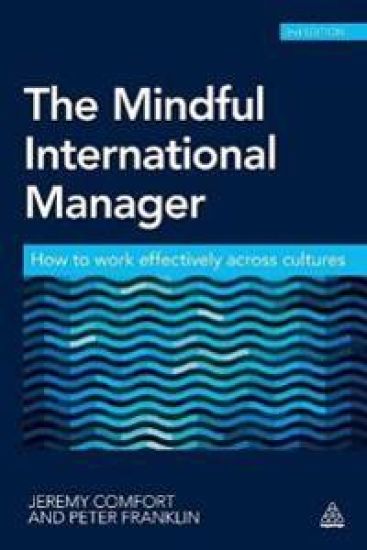
The Mindful International Manager

The Mindful International Manager

Jeremy Comfort; Peter Franklin

Kogan Page Ltd
2014
nidottu
The Mindful International Manager tackles the management situations that international managers have to handle every day. Accessible and jargon-free it explains how to clarify local vs. international roles, support and develop a team, organize and coordinate boundaries of time and distance, and win commitment toward common goals. The authors, both interculturalists, include exercises and best practice advice and the experiences and insights of practising international managers. They combine their practical approach with great depth of insight into the challenges of working and managing internationally and include the results of new research findings and cutting-edge case studies on topics such as leadership, global nomads, virtual teams, coaching and mentoring across cultures and decision-making.
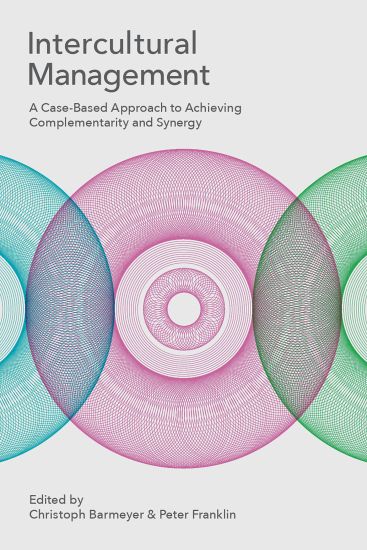
Intercultural Management

Intercultural Management

Christoph Barmeyer; Peter Franklin

Red Globe Press
2016
nidottu
This ground breaking textbook looks at the issue of managing across cultures: the difficulties and opportunities it brings and the competencies needed to handle situation and create solutions. Applying a constructive approach, Intercultural Management demonstrates how cultural diversity can be used as a resource to demonstrate synergy and complementarity. Taking a case-based approach, its innovative case studies examine a wide range of topics in international management, helping students to explore theory in the context of real-life situations. Taking the form of an edited collection, it offers a fascinating range of perspectives from a global panel of experts in the discipline.This will be the ideal companion to students taking courses on intercultural, cross-cultural, and international management at undergraduate, postgraduate and MBA level. It will also be valuable reading for organisations seeking to improve their intercultural management strategies.Accompanying online resources for this title can be found at bloomsburyonlineresources.com/intercultural-management. These resources are designed to support teaching and learning when using this textbook and are available at no extra cost.
Intercultural Interaction

Intercultural Interaction

H. Spencer-Oatey; Peter Franklin

Palgrave Macmillan
2009
sidottu
Written in a highly accessible style and in four parts, this book provides rapid and authoritative access to current ideas and practice in intercultural communication. It draws on concepts and findings from a range of different disciplines and uses authentic examples of intercultural interaction to illustrate points.
Intercultural Interaction

Intercultural Interaction

H. Spencer-Oatey; Peter Franklin

Palgrave Macmillan
2009
nidottu
Written in a highly accessible style and in four parts, this book provides rapid and authoritative access to current ideas and practice in intercultural communication. It draws on concepts and findings from a range of different disciplines and uses authentic examples of intercultural interaction to illustrate points.