Kirjojen hintavertailu. Mukana 12 083 983 kirjaa ja 12 kauppaa.

Kirjahaku

Etsi kirjoja tekijän nimen, kirjan nimen tai ISBN:n perusteella.

76 kirjaa tekijältä Peter Fritz Walter

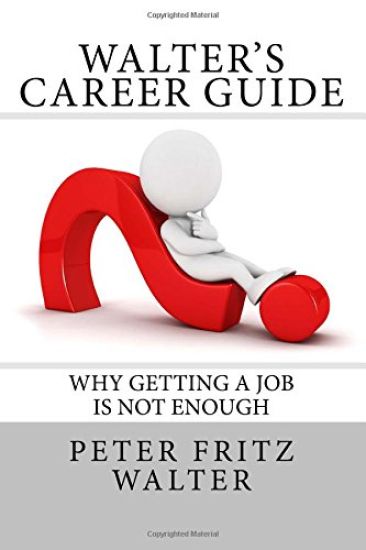
Walter's Career Guide: Why Getting a Job is Not Enough

Walter's Career Guide: Why Getting a Job is Not Enough

Peter Fritz Walter

Createspace Independent Publishing Platform
2015
nidottu
'Walter's Career Guide: Why Getting a Job is Not Enough (Series Training and Consulting, Vol. 1)'-2017 Revised, Updated and Reformatted Edition-presents a fresh approach to brainsmart effective learning and career design, for young audiences. The book doesn't offer quick fixes for developing your career. It presents an approach to raise the awareness level of the whole of the person. The author contends that true selfhelp must encourage the reader to be critical in the first place, and develop their self-thinking abilities, which is one quality of several when designing a first-hand life and becoming truly responsible for your destiny. To be critical means to question tradition and authority, in the first place and to rely on your god-given gifts and talents. We are all unique individuals, with each of us coming into the career arena with a treasure box of personal talents and skills. While our educational systems do not encourage our individuation, nor acknowledge our individuality, we need as creative people swim against the stream and develop ourselves not because, but despite we received a 'good education.' The main focus of the guide is upon developing and using creativity as a primary tool for personal growth and expansion, and further, the creative expansion of the whole self. The author's approach is holistic and spiritual in the sense that it considers the human being as a functional and organic unit embedded in a contextual and systemic environment, which is primarily self-organizing and driven by an inner program. We are directing our destinies through the inner programs we are writing, while most people do this unconsciously. From the moment we begin to take charge of our lives and begin living a first-hand life, we begin to consciously direct our destiny. We do this first of all by reprogramming ourselves. There are few selfhelp guides that are deliberately holistic in their approach, that offer an encyclopedic approach to knowledge, which encompasses non-mainstream knowledge, that are beyond giving quick fixes and that are academic in the sense to be based on almost three decades of academic research. This book gives you the key to begin leading a first-hand life, a life of your own creation The book comes with a complete contextual bibliography.
Walter's Leadership Guide: Why Good Leadership Starts With Self-Leadership

Walter's Leadership Guide: Why Good Leadership Starts With Self-Leadership

Peter Fritz Walter

Createspace Independent Publishing Platform
2015
nidottu
'Walter's Leadership Guide: Why Good Leadership Starts with Self-Leadership (Series Training and Consulting, Vol. 2)'-2017 Revised, Updated and Reformatted Edition-presents a novel approach to understanding and training the new servant leadership approach for top and middle management audiences. This guide to servant leadership addresses college students who are looking for a way to prepare for their upcoming exposure to the corporate environment. Many of the ideas the author comes up with in this guide are non-standard, and the result of his own creative thinking. The author's approach is original in the sense that he has enriched and transformed the traditional leadership paradigm through basic elements of timeless wisdom, taken from Zen and the I Ching, thereby expanding the paradigm beyond the borders of the strictly Western corporate culture, adapting it for international, and particularly, Asian audiences. This book doesn't offer quick fixes for developing leadership skills. It presents an approach to raise the awareness level of the whole of the person. The author contends that leaders must develop not only values like integrity and accountability, but must also expand their critical thinking ability, which is one quality of several for becoming accountable as a leader in the corporate or political world. To be critical means to question tradition and authority, in the first place; it means to look for realizing our personal style and cognitive preferences and to activate our heart, which according to newest HeartMath(R) research is essentially contributing to the sharpness of our cognitive apparatus, and thus a factor for right decision-making. The main focus of the guide is upon developing the broad-mindedness and the human qualities that make a servant leader being followed not because of obedience, but because of the willingness to share with him a personal growth experience that ultimately will be to the benefit of the organization as a whole. As uncanny as it sounds, but 2600 years ago, the Taoist sage Lao-tzu has described precisely the qualities of the servant leader in the Tao Te Ching with the laconic dictum that when the task is accomplished, and the leader had the right qualities in place, the people will say 'We have done it all by ourselves.' That such a form of leading is not child play, but requires self-discipline and years of practice, everybody will know who is familiar with the requirements of leading organizations in our time of global challenges. The guide comes with a complete contextual bibliography.
Walter's Inner Child Coaching: A Guide for Your Inner Journey

Walter's Inner Child Coaching: A Guide for Your Inner Journey

Peter Fritz Walter

Createspace Independent Publishing Platform
2015
nidottu
'Walter's Inner Child Coaching: A Guide For Your Inner Journey (Series Training and Consulting, Vol. 3)'-2017 Revised, Updated and Reformatted Edition-is a systematic road map for the whole of the procedure of Inner Child Recovery, Healing and Artwork. It is a selfhelp guide and provides many examples and sample dialogues. The content has been structured so as to provide some meat for all tastes. Each of the main chapters is different in style and addresses issues that speak to a different inner self. Exclusiveness in fostering only the Inner Child is unwise and not recommended since the other main actors of our inner stage, your Inner Parent and your Inner Adult which compose your inner team, are always present and active; thus, they have to be involved if an effective outcome of voice dialogue is to be achieved. Only once a flexible and dynamic equilibrium within this inner team is achieved, the person can be said to play out her full potential of personal power, creativeness and inner strength. That means this inner process is a truly religious quest; this, however, does not imply that it is for that reason a strictly serious affair. In the contrary, working with the Inner Child is highly amusing at times, and that punch of humor and wit is one of the most rewarding aspects of Inner Child work, for it is one of the most typical character traits of the recovered and healed Inner Child. The guide comes with an Inner Child Glossary and a complete contextual Bibliography.
Your Way to Innocence: A Heretic's Guide

Your Way to Innocence: A Heretic's Guide

Peter Fritz Walter

Independently Published
2019
nidottu
'Your Way to Innocence' is a guide for developing an innocent and carefree attitude in everyday life. In simple terms it could be said that innocence results from awakening our inner child and using the energy of the inner child as a trigger for self-transformation.This systematic guide to the how-to for creating innocence is not teaching anything, but in the contrary suggests unlearning much of learned knowledge, and dissolving conditioned habits and behavior patterns that have to be cleared before true innocence can unfold. The author contends that the meaning of innocence is misconstrued and misunderstood in our culture, especially when it's applied to children, hence the need to develop truthful language for making the necessary divide between sentimentality and authenticity.There is no need to be innocent, it's a choice but once people see the power of innocence, they may want to give it a try Innocence is also a safety device, for nothing bad will ever happen to the truly innocent-which means etymologically, 'non-harming, ' person. Innocence is the true power, it makes for excellent relationships with all beings, it makes for a modest, humble attitude, and is a base condition for a long life, and good health till old age
Your Way to Autonomy: A Heretic's Guide

Your Way to Autonomy: A Heretic's Guide

Peter Fritz Walter

Independently Published
2019
nidottu
'Your Way to Autonomy' is an extensive personal guide helping the reader to become aware of their unique soul values. The author came to call our unique power potential 'primary power' or 'self-power' at first, before he introduced the term soul power. The guide not only explains what soul power is, how it can be developed and strengthened, but also what stands in the way to developing it. The guide explains that the main obstacle to developing soul power is parent-child codependence and emotional abuse, that the author sees as a form of addiction and which he calls symbiotoholism. When we grasp the notion of autonomy, we see that all human growth has a destination-and that is why we say we have a destiny. The destination of youth is not to remain young, but to grow old. The destiny of a child is not to remain in childhood but to grow out of childhood. Building soul power requires to discover one's self, to build a genuine identity, not one that, for example, is coined as a hanger-identity around our sexual choices, such as being a 'heterosexual', a 'homosexual', a 'pedophile', for example. The author shows that building a genuine soul identity is done through discovering our innocence, realizing our primary power, developing our soul reality, accepting our marginality instead of striving for conformity, recovering and healing our inner child, liberating our inner Minotaur, thereby discovering our shadow, and our projections, and learning to see that a holographic image of the whole of mythology and human evolution is contained in our soul.As the topic of individuation is highly neglected in our school system and is neither a topic to be taught at university, and as in addition the notion of soul and soul values doesn't really fit in a materialistic and non-spiritual society, there is an obvious need for a mind-opening approach to personal growth that is provided with this guide.
Your Way to Excellence: A Heretic's Guide

Your Way to Excellence: A Heretic's Guide

Peter Fritz Walter

Independently Published
2019
nidottu
'Your Way to Excellence' is a guide to reaching excellence in all areas of your life. The author's approach to excellence is holistic in the sense that he considers excellence not as a skill, but as an attitude that is an organic mix of various ingredients, among them, autonomy and self-reliance, originality, creativity, self-awareness, and an acute sense for one's difference.The author describes the human being as a functional and organic organism that is primarily self-organizing and self-regulating. This approach to personality development, which is corroborated by systems research, leads to organic and smooth solutions for personal change and evolution that this guide proposes to you.The author contends that true selfhelp must encourage the reader to be critical in the first place, and develop their self-thinking abilities, which is one quality of several when designing a first-hand life and becoming truly responsible for reaching excellence. To be critical means to question tradition and authority, in the first place; it means to look for realizing our personal style and cognitive preferences. The value of this guide also consists in the fact that the author's own life path is an accidented one in the sense that he was misled early in life, driven into the wrong career (law), which meant in practice more than two decades of a life wasted with being around the wrong people, studying the wrong majors, suffering endless frustrations, and focusing on qualities and goals that were not his own because they were not in alignment with his soul values and karmic challenges.
Creative-C Learning: The Innovative Kindergarten

Creative-C Learning: The Innovative Kindergarten

Peter Fritz Walter

Createspace Independent Publishing Platform
2014
nidottu
'Creative-C Learning: The Innovative Kindergarten'-2017 Revised, Updated and Reformatted Edition-presents a pre-school curriculum for a sane, holistic, brainsmart and systemliterate education of small children. The author's educational approach is tailored to how our brain works and develops from ages 2 to 6. It's a functional approach, not an idealistic one, based on the actual constitution of the human being, with all the complexity inherent in it. The author contends that children are born sane and are rendered more or less insane by an educational system that till now considers the human being as the impossible human, that is, a creature that is basically faulty and has to be improved and upgraded by education, and morality. The present view opposes this age-old educational paradigm and shows that traditional education brings about fragmentation, ignorance and widespread violence. The present curriculum emphasizes the natural integrity and wholeness of the small child, who is by nature a systems thinker. The curriculum builds upon this fact and presents a way to raise pre-schoolers in a learning environment that fosters systemic thinking capabilities, so that children become systemliterate at a young age. The author also emphasizes the need for teaching emotional awareness to teachers and presents techniques to be applied in the vocational training for early child care workers and pre-school teachers that teach how to cope with stress, and that show the details of the trustbuilding process both between teachers and students and between parents and teachers. The audience for this guide are all those involved in educating children, as well as educational policy makers, also parents, educational associations, politicians, pediatricians and child psychologists, and also the lay public, especially those who are looking for a new way to educate children now and in the future.
Integrate Your Emotions: A Guide to Emotional Wholeness

Integrate Your Emotions: A Guide to Emotional Wholeness

Peter Fritz Walter

Createspace Independent Publishing Platform
2014
nidottu
'Integrate Your Emotions: A Guide to Emotional Wholeness'-2017 Revised, Updated and Reformatted Edition-is a guide to emotional wholeness and wellbeing. It has two functions; it sets out to elucidate the nature and functions of our emotions, and provides clear instructions and examples how to handle them and keep them in a healthy balance. The author stresses the fact that emotions have a kaleidoscopic nature, that all emotions are interlocked and that balance is vital to emotions in the sense that they assume a negative and devastating character when being repressed and getting out of balance. The author demonstrates in this cutting-edge selfhelp guide that sexual misconduct is regularly the result of people mishandling their emotions. In fact, in our culture there is a huge knowledge gap about the art of emotional balance and wellbeing. This is so because the bioenergetic nature of emotions is veiled or outright rejected; this means emotions are not seen as what they are, that is, flowing streams of vital energy that are part of our luminous body. In addition, emotions are often misconstrued by our mainstream science and psychology as static elements of cognition. The book proposes effective solutions both for the individual quest for emotional sanity and for forging new and effective social and legal policies for handling emotional flow within society at large, and with the ultimate objective to regulate our social and sexual conduct responsibly and without the need of law enforcement, coercion and monolithic state control. The audience for this guide is both professional and the lay audience, including those who are directly concerned and who have a problem with handling their emotional flow. The need for solutions to our emotional problems is not only an individual quest, but also a matter of public hygiene. It results from our collective denial of the basic patterns of living. This collective denial resulted in our messing up the code of life, thereby bringing about large-scale perversion and violence. The social and legal policies in place for handling sexual misconduct are largely ineffective because they are based on the ignorance of the bioenergetic nature of human sexuality.
The New Paradigm in Science and Systems Theory: Book and Media Reviews, Quotes and Comments

The New Paradigm in Science and Systems Theory: Book and Media Reviews, Quotes and Comments

Peter Fritz Walter

Createspace Independent Publishing Platform
2014
nidottu
The New Paradigm in Science and Systems Theory-2017 Revised, Updated and Reformatted Edition- is a book review sampler. The book reviews were written between 2005 and 2014, the result of an effort for making a contribution not only to academia, but more so, to college students around the world who wish to be informed about books that cover the exciting adventure of the paradigm changes in business, science and society that we are currently living through. Invariably, as students, scientists, doctors, consultants, lawyers, business executives or government officials, we face problems today that are so complex, entangled and novel that they cannot possibly be solved on the philosophical and scientific foundation of our old paradigm, and our old way of thinking. As Albert Einstein said, we cannot solve a problem on the same level of thought that created it in the first place-hence the need for changing our view of looking at things, the world, and our personal and collective predicaments. 34 books of the following authors have been reviewed in this volume: Victor H. Anderson, Fritjof Capra, Russell DiCarlo (Ed.), Donna Eden, Riane Eisler, Masaru Emoto, Richard Gerber, Amit Goswami, Valery Hunt, Shafica Karagulla, Georges Lakhovsky, Ervin Laszlo, Lynne McTaggart, Michel Odent, Candace B. Pert, Dean Radin, Otto Carl Simonton, Rick Strassman, Michael Talbot, and Vidette Todaro-Franceschi. The volume closes with an extensive review and critique of the well-known movie 'What the Bleep Do We Know ' which is to be considered as a credible testimony for the fact that the quantum field, unified field, zero point field or quantum vacuum now has been finally recognized by modern science within the framework of quantum physics and string theory.
The New Paradigm in Consciousness and Spirituality: Book Reviews, Quotes and Comments

The New Paradigm in Consciousness and Spirituality: Book Reviews, Quotes and Comments

Peter Fritz Walter

Createspace Independent Publishing Platform
2014
nidottu
The New Paradigm in Consciousness and Spirituality-2017 Revised, Updated and Reformatted Edition- is a book and media review sampler. The book reviews were written between 2005 and 2014, the result of an effort for making a contribution not only to academia, but more so, to college students around the world who wish to be informed about books that cover the exciting adventure of the paradigm changes in business, science and society that we are currently living through. The present volume belongs to a reviews trilogy that are intended to be a coherent whole. The two other volumes are entitled 'The New Paradigm in Business, Leadership and Career' and 'The New Paradigm in Science and Systems Theory.' Invariably, as students, scientists, doctors, consultants, lawyers, business executives or government officials, we face problems today that are so complex, entangled and novel that they cannot possibly be solved on the basis of our old paradigm, and our old way of thinking. As Albert Einstein said, we cannot solve a problem on the same level of thought that created it in the first place-hence the need for changing our view of looking at things, the world, and our personal and collective predicaments. 34 books of the following authors have been reviewed in this volume: Jeremiah Abrams (Ed.), Joseph Campbell, Deepak Chopra, Mircea Eliade, Walter Y. Evens-Wentz, Jonathan Goldman, Stanislav Grof, J. Krishnamurti, Charles W. Leadbeater, Timothy Leary, Alexander Lowen, Terence McKenna, Ralph Metzner, Thomas Moore, Jeremy Narby, Michael Newton, Hal & Sidra Stone, Dora van Gelder, and Alberto Villoldo.
The New Paradigm in Business, Leadership and Career: Book Reviews, Quotes and Comments

The New Paradigm in Business, Leadership and Career: Book Reviews, Quotes and Comments

Peter Fritz Walter

Createspace Independent Publishing Platform
2014
nidottu
The New Paradigm in Business, Leadership & Career-2017 Revised, Updated and Reformatted Edition- is a book review sampler. The book reviews were written between 2005 and 2014, the result of an effort for making a contribution not only to academia, but more so, to college students around the world who wish to be informed about books that cover the exciting adventure of the paradigm changes in business, science and society that we are currently living through. This book was the result of an effort for making a contribution not only to academia, but more so, to college students around the world who wish to be informed about books that cover the exciting adventure of the paradigm changes in business, science and society that we are currently living through. The present volume belongs to a reviews trilogy that are intended to be a coherent whole. The two other volumes are entitled 'The New Paradigm in Science and Systems Theory' and 'The New Paradigm in Consciousness & Spirituality.' Invariably, as students, scientists, doctors, consultants, lawyers, business executives or government officials, we face problems today that are so complex, entangled and novel that they cannot possibly be solved on the basis of our old paradigm, and our old way of thinking. As Albert Einstein said, we cannot solve a problem on the same level of thought that created it in the first place-hence the need for changing our view of looking at things, the world, and our personal and collective predicaments. 17 books of the following authors have been reviewed in this volume: Laurence G. Boldt, Tom Butler-Bowden, Edward de Bono, James Borg, Stephen R. Covey, Napoleon Hill, Donald G. Krause, and Sergio Zyman.
Shamanic Wisdom Meets the Western Mind: An Inquiry into the Nature of Shamanism

Shamanic Wisdom Meets the Western Mind: An Inquiry into the Nature of Shamanism

Peter Fritz Walter

Createspace Independent Publishing Platform
2014
nidottu
'Shamanic Wisdom Meets the Western Mind: An Inquiry into the Nature of Shamanism'-2017 Revised, Updated, Expanded and Reformatted Edition-provides a synthesis of realms of knowledge that hitherto were either blinded out from human consciousness or that were seen from a disparaging perspective that is in turn the result of a fragmented perception. Shamanism, perennial science traditions and modern science have been relegated to different cognitive and experiential realms; they were seemingly different topics, while in reality, they belong systemically together. The need for this book is evident in a time where an intuitive and integrative approach to life is going counter to 'authoritative' scientism, and where people begin to build awareness of their multiple fragmentations. The study is destined to broaden the reader's awareness for apprehending a network of hidden connections that is spanning the whole gamut of human experience, once one honestly approaches living systems with a mindset that is as much as possible free of conceptual conditioning and intellectual assumptions and projections. The book is designed to show that at the basis of shamanism, there is not myth and mythology, but empirical and logical behavior that approaches nature without preconceptions, and an open inquisitive mind. The study outlines the shamanic science paradigm, which is empirical and holistic, and then presents and discusses, as a first-person account, a mind-opening psychedelic voyage of the author through the use of Ayahuasca. Further, the book outlines the person of the warrior-scientist, the shaman, his or her roles, and the scientific nature of their proceedings. The author presents 20+ years of research on shamanic cultures to find eight specific dynamic patterns of living that characterize their living continuum, and that are the pillars of their peaceful and nature-loving kind of life. This book provides a truly integrative vision; in this sense, it goes beyond mere science and reveals to be a visionary quest.
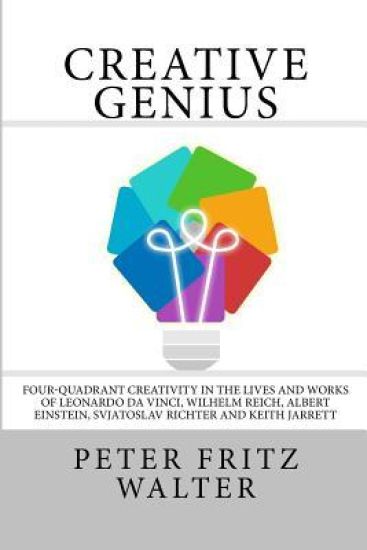
Creative Genius: Four-Quadrant Creativity in the Lives and Works of Leonardo da Vinci, Wilhelm Reich, Albert Einstein, Svjatoslav Richt
'Creative Genius'-2017 Revised, Updated and Reformatted Edition-is the second volume of Great Minds Series and the author's main publication on his more than thirty years of genius research. In this book, the author, applying the 4-quadrant IQ scheme commonly used in genius research, reviews and portrays the lives of five highly creative men: Leonardo da Vinci, Wilhelm Reich, Albert Einstein, Svjatoslav Richter and Keith Jarrett. One of the main signs of human genius is the capability to see the hidden connections between apparently separate phenomena, or to perceive phenomena as a pattern, a Gestalt, a unique configuration of attributes that leads the observer to a unifying vision. This integrative nature of all genius, the life stories of the five men clearly show it: it's the organic and systemic vision of life and living by Leonardo, the correct intuition Reich had about the underlying bioenergetic cause of schizophrenia, Einstein's vision of the interconnections between space and time, Richter's spontaneous perception of music in which is embedded a bird's perspective of correct style and musical taste, and Jarrett's unique integration of patterns of classical music with creative free-style improvisation. The book is destined to broaden the reader's awareness for apprehending a network of hidden connections that is spanning the whole gamut of human experience, from science to art, from from creative vision to tangible realization-to arrive at a comprehension of human potential, incarnated in genius, which is the highest realization of human complexity. The reason why most people cannot attain the level of human genius is not because genius is inborn-all research shows that it is not-but because they are not critical enough in the face of conformity pressure and the general solidifying framework of modern consumer culture that models citizens instead of accepting them as they are, in their full humanity. While the great lay public is the primary audience of the book, it may also be of interest for academic researchers, especially when their research is spanning the gamut of human consciousness, systems theory, quantum physics, genius research and complexity theory.
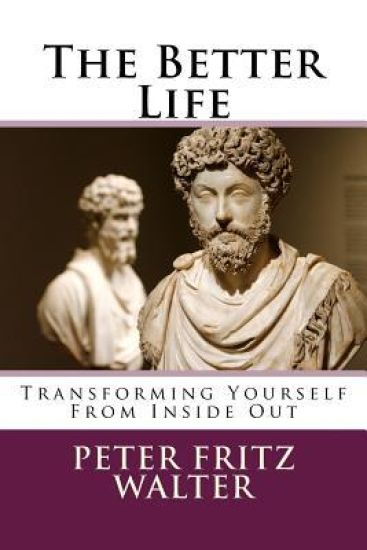
The Better Life: Transforming Yourself From Inside Out

The Better Life: Transforming Yourself From Inside Out

Peter Fritz Walter

Createspace Independent Publishing Platform
2014
nidottu
'The Better Life: Transforming Yourself from Inside Out'-2017 Revised, Updated and Reformatted Edition-is the result of a wisdom quest the author engaged in after having lost more than one third of his fortune in an unlucky real estate investment. During this time of great loss and financial difficulty, he remembered and applied some of the teachings of the ancient stoics, and this helped him overcome the personal crisis and recover both emotionally and financially. The intention behind this book is to share helpful and practically useful methods the author applied to bring a new balance in his shaken life, and to live life more consciously, more happily, with more gratitude, and a stronger grounding in the present. The main questions the book asks and answers are how to use the power of your subconscious mind to steer your life in alignment with your higher purpose, and how to adjust your thinking process so as to attract harmonious conditions, success, and wealth. Furthermore, the author explains the creative process with many practical and biographical examples, and teaches techniques such as creative writing, affirmative prayer, and spontaneous art. Besides, topics such as positive parenting, health, making friends, and success strategies are covered in this uncanny selfhelp guide that comes with an extensive bibliography and Q & A sessions after each of the 9 chapters.
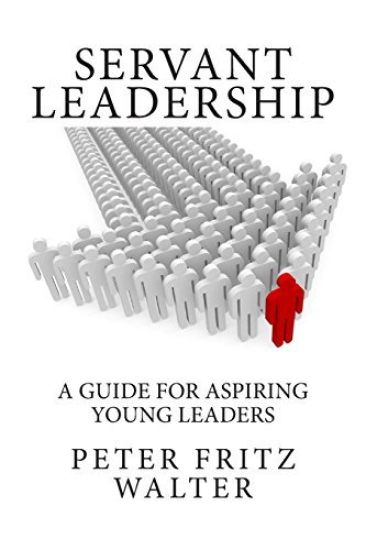
Servant Leadership: A Guide for Aspiring Young Leaders

Servant Leadership: A Guide for Aspiring Young Leaders

Peter Fritz Walter

Createspace Independent Publishing Platform
2015
nidottu
'Servant Leadership' presents a novel approach to understanding and training the new servant leadership approach for top and middle management audiences. This guide to servant leadership addresses college students who are looking for a way to prepare for their upcoming exposure to the corporate environment. Many of the ideas the author comes up with in this guide are non-standard, and the result of his own creative thinking. The author's approach is original in the sense that he has enriched and transformed the traditional leadership paradigm through basic elements of timeless wisdom, taken from Zen and the I Ching, thereby expanding the paradigm beyond the borders of the strictly Western corporate culture, adapting it for international, and particularly, Asian audiences. This book doesn't offer quick fixes for developing leadership skills. It presents an approach to raise the awareness level of the whole of the person. The author contends that leaders must develop not only values like integrity and accountability, but must also expand their critical thinking ability, which is one quality of several for becoming accountable as a leader in the corporate or political world. To be critical means to question tradition and authority, in the first place; it means to look for realizing our personal style and cognitive preferences and to activate our heart, which according to newest HeartMath(R) research is essentially contributing to the sharpness of our cognitive apparatus, and thus a factor for right decision-making. The main focus of the guide is upon developing the broad-mindedness and the human qualities that make a servant leader being followed not because of obedience, but because of the willingness to share with him a personal growth experience that ultimately will be to the benefit of the organization as a whole. As uncanny as it sounds, but 2600 years ago, the Taoist sage Lao-tzu has described precisely the qualities of the servant leader in the Tao Te Ching with the laconic dictum that when the task is accomplished, and the leader had the right qualities in place, the people will say 'We have done it all by ourselves.' That such a form of leading is not child play, but requires self-discipline and years of practice, everybody will know who is familiar with the requirements of leading organizations in our time of global challenges.