Kirjojen hintavertailu. Mukana 11 342 296 kirjaa ja 12 kauppaa.

Kirjahaku

Etsi kirjoja tekijän nimen, kirjan nimen tai ISBN:n perusteella.

3 kirjaa tekijältä Peter G. Clote

RNA: Computational Methods for Structure, Kinetics, and Rational Design: Volume One
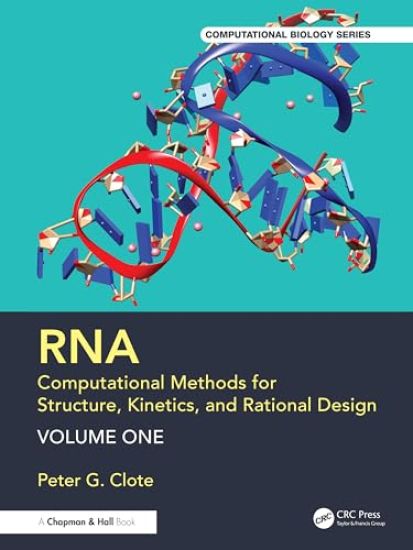
Comprising two volumes, RNA: Computational Methods for Structure, Kinetics, and Rational Design is a comprehensive treatment of computational methods concerning the secondary structure, folding kinetics and rational design of RNA.Volume One concerns energy and structure and is divided into five chapters. Chapter 1 describes the molecular structure of ribonucleotides, basic classes of RNA and databases of RNA sequences and structure. Chapter 2 presents the basic concepts of thermodynamics, since thermodynamics-based algorithms constitute an essential tool in rational design of functional RNA molecules. Chapter 3 describes how empirical secondary structure energy parameters are obtained from ultraviolet absorbance experiments via Van 't Hoff plots and least-squares data fitting. Chapter 4 describes methods from combinatorics, automata and formal language theory, and complex analysis. Chapter 5 provides an overview of some of the most important thermodynamics-based algorithms related to secondary structure. Exercises and solutions are provided at the end of every chapter and source code is available at the book's website (sometimes including computer programs using Python and extensions Numpy and Scipy).This book provides the nuts, bolts and tools to take the next steps in computational RNA synthetic biology. It is perfect for advanced undergraduate, graduate and post-graduate readers having analytical interests and skills from areas such as physical chemistry, physics, mathematics, computer science, and statistics.
RNA: Computational Methods for Structure, Kinetics, and Rational Design
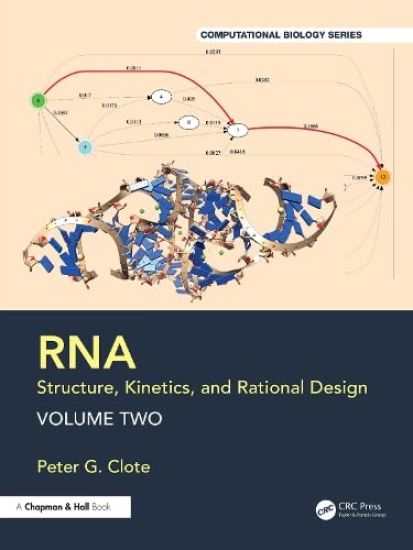
Comprising two volumes, RNA: Computational Methods for Structure, Kinetics, and Rational Design is a comprehensive treatment of computational methods concerning the secondary structure, folding kinetics and rational design of RNA. Volume 2 covers secondary structure folding kinetics, starting with an inquiry into whether the ensemble of RNA structures is small-world or scale-free, then proceeding to the identification of local energy minima that create a basin of attraction, leading to a coarse-grained kinetics model. The book describes Markov state models created from secondary structure folding trajectories generated by the kinetic Monte Carlo (Gillespie) algorithm, the first such application. Python code is available at the book’s website, allowing research teams to use the code and extend the approach. Current RNA research concerns the rational design of functional RNA molecules, which The book provides an overview and comparison of various inverse folding algorithms, combinatorial optimization, and the question of whether inverse folding is computationally hard (NP-complete). Another chapter focuses on various types of designed RNA including ribozymes, RNA thermometers, bistable switches, toehold switches, mRNA vaccines, and paper-based COVID-19 tests. The final chapter is a math appendix for the linear algebra and Markov chain results that are essential to folding kinetics. This book provides the nuts, bolts and tools for the next generation of computational work on RNA, especially for the rational design of functional molecules – a topic that not so long ago seemed more like science fiction. Exercises at the end of each chapter introduce new material or related concepts, and solutions are available at the book’s website. It is perfect for advanced undergraduate, graduate and post-graduate readers having analytical interests and skills from areas such as physical chemistry, physics, mathematics, computer science, and statistics.
RNA: Computational Methods for Structure, Kinetics, and Rational Design
Comprising two volumes, RNA: Computational Methods for Structure, Kinetics, and Rational Design is a comprehensive treatment of computational methods concerning the secondary structure, folding kinetics and rational design of RNA. Volume 2 covers secondary structure folding kinetics, starting with an inquiry into whether the ensemble of RNA structures is small-world or scale-free, then proceeding to the identification of local energy minima that create a basin of attraction, leading to a coarse-grained kinetics model. The book describes Markov state models created from secondary structure folding trajectories generated by the kinetic Monte Carlo (Gillespie) algorithm, the first such application. Python code is available at the book’s website, allowing research teams to use the code and extend the approach. Current RNA research concerns the rational design of functional RNA molecules, which The book provides an overview and comparison of various inverse folding algorithms, combinatorial optimization, and the question of whether inverse folding is computationally hard (NP-complete). Another chapter focuses on various types of designed RNA including ribozymes, RNA thermometers, bistable switches, toehold switches, mRNA vaccines, and paper-based COVID-19 tests. The final chapter is a math appendix for the linear algebra and Markov chain results that are essential to folding kinetics. This book provides the nuts, bolts and tools for the next generation of computational work on RNA, especially for the rational design of functional molecules – a topic that not so long ago seemed more like science fiction. Exercises at the end of each chapter introduce new material or related concepts, and solutions are available at the book’s website. It is perfect for advanced undergraduate, graduate and post-graduate readers having analytical interests and skills from areas such as physical chemistry, physics, mathematics, computer science, and statistics.