Kirjojen hintavertailu. Mukana 12 016 292 kirjaa ja 12 kauppaa.

Kirjahaku

Etsi kirjoja tekijän nimen, kirjan nimen tai ISBN:n perusteella.

3 kirjaa tekijältä Peter G. Platt

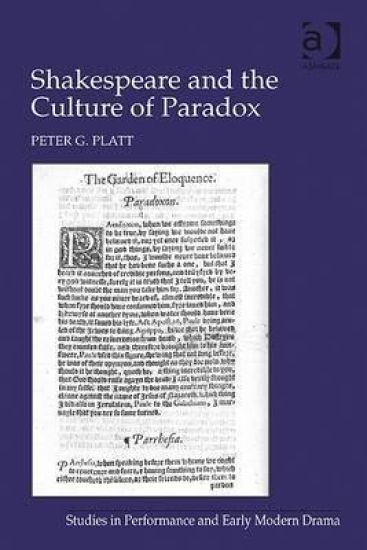
Shakespeare and the Culture of Paradox

Shakespeare and the Culture of Paradox

Peter G. Platt

Ashgate Publishing Limited
2009
sidottu
Exploring Shakespeare's intellectual interest in placing both characters and audiences in a state of uncertainty, mystery, and doubt, this book interrogates the use of paradox in Shakespeare's plays and in performance. By adopting this discourse-one in which opposites can co-exist and perspectives can be altered, and one that asks accepted opinions, beliefs, and truths to be reconsidered-Shakespeare used paradox to question love, gender, knowledge, and truth from multiple perspectives. Committed to situating literature within the larger culture, Peter Platt begins by examining the Renaissance culture of paradox in both the classical and Christian traditions. He then looks at selected plays in terms of paradox, including the geographical site of Venice in Othello and The Merchant of Venice, and equity law in The Comedy of Errors, Merchant, and Measure for Measure. Platt also considers the paradoxes of theater and live performance that were central to Shakespearean drama, such as the duality of the player, the boy-actor and gender, and the play/audience relationship in the Henriad, Hamlet, As You Like It, Twelfth Night, Antony and Cleopatra, The Winter's Tale, and The Tempest. In showing that Shakespeare's plays create and are created by a culture of paradox, Platt offers an exciting and innovative investigation of Shakespeare's cognitive and affective power over his audience.
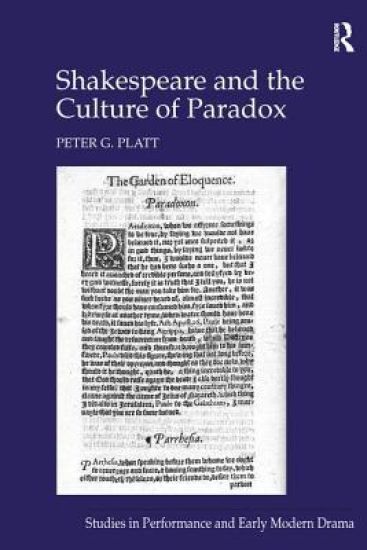
Shakespeare and the Culture of Paradox
Exploring Shakespeare's intellectual interest in placing both characters and audiences in a state of uncertainty, mystery, and doubt, this book interrogates the use of paradox in Shakespeare's plays and in performance. By adopting this discourse-one in which opposites can co-exist and perspectives can be altered, and one that asks accepted opinions, beliefs, and truths to be reconsidered-Shakespeare used paradox to question love, gender, knowledge, and truth from multiple perspectives. Committed to situating literature within the larger culture, Peter Platt begins by examining the Renaissance culture of paradox in both the classical and Christian traditions. He then looks at selected plays in terms of paradox, including the geographical site of Venice in Othello and The Merchant of Venice, and equity law in The Comedy of Errors, Merchant, and Measure for Measure. Platt also considers the paradoxes of theater and live performance that were central to Shakespearean drama, such as the duality of the player, the boy-actor and gender, and the play/audience relationship in the Henriad, Hamlet, As You Like It, Twelfth Night, Antony and Cleopatra, The Winter's Tale, and The Tempest. In showing that Shakespeare's plays create and are created by a culture of paradox, Platt offers an exciting and innovative investigation of Shakespeare's cognitive and affective power over his audience.

Shakespeare'S Essays

Shakespeare'S Essays

Peter G. Platt

EDINBURGH UNIVERSITY PRESS
2022
nidottu
In this revisionist study, Peter G. Platt provides a detailed history of the literary-critical interest in the Montaigne Shakespeare connection from the eighteenth century to the present day. Through sustained close readings of Montaigne's essays and Shakespeare's plays, Platt explores both authors' approaches to self, knowledge and form that stress fractures, interruptions and alternatives. While the change in monarchy, the revived interest in judicial rhetoric and the alterations in Shakespeare's acting company helped shape plays such as Measure for Measure, King Lear and The Tempest, this book contends that Shakespeare's reading of Montaigne is an under-recognised driving force in these later plays.