Kirjojen hintavertailu. Mukana 12 016 292 kirjaa ja 12 kauppaa.

Kirjahaku

Etsi kirjoja tekijän nimen, kirjan nimen tai ISBN:n perusteella.

3 kirjaa tekijältä Peter G. Smithurst

Making the Enfield Pattern 1853 Rifle-Musket

Making the Enfield Pattern 1853 Rifle-Musket

Peter G. Smithurst

PEN SWORD BOOKS LTD
2025
sidottu
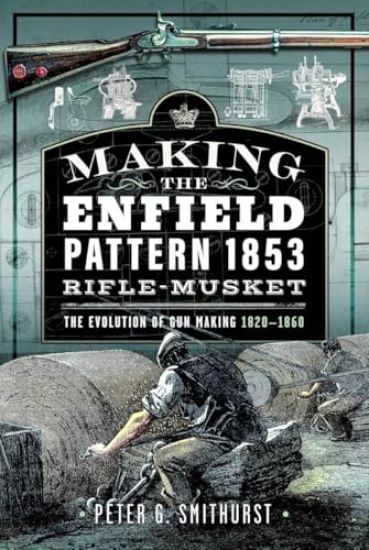
The Pattern 1853 Enfield Rifle Musket embodies a number of revolutionary milestones for Britain; it, and the carbines and short rifles derived from it, were the first rifled firearms to be issued universally to all troops; its design owed more to the French 1777 musket than to its English forbears; it was the first firearm to be produced en masse extensively by machinery; in 1857 it became the first firearm in Britain to be made fully interchangeable. The nature of this new rifle presented a number of challenges for the private contractors who traditionally had supplied military firearms and some unique contract documents specifying standards are shown. Their failure to meet contractual obligations led to the formation of the Select Committee on Small Arms in 1854 to examine its manufacture and procurement. However, its outcome was pre-empted - in that same year the Committee on the Machinery of the United States, was sent to America to examine the machinery used in gun manufacture and given authority to purchase appropriate machines for use at Enfield. Aspects of its manufacture at Enfield are covered in a small number of contemporary accounts. These vary in the detail provided and contain errors which have been noted and corrected. Access to a wealth of specimens, drawings and documents not previously studied or published, has allowed the manufacture of this iconic rifle using these new technologies to be presented in unprecedented detail.
The Evolution of Gun Making

The Evolution of Gun Making

Peter G. Smithurst

PEN SWORD BOOKS LTD
2024
sidottu
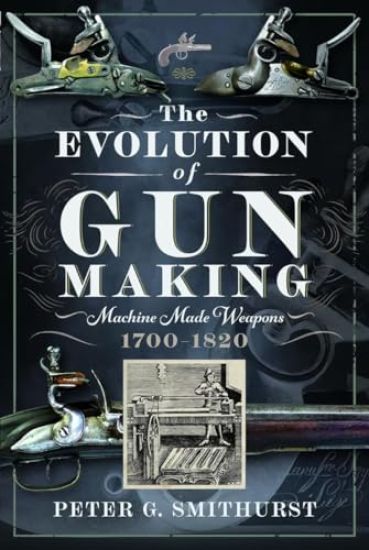
A variety of factors surround military firearms – they needed to be produced in large numbers to a standardised pattern at an affordable price. This books examines the transition from traditional hand-craft methods to the beginnings of mechanised manufacture using as examples the French Model 1777 and the Russian Model 1808 infantry muskets. A number of factors led to this choice. The French Model 1777 musket, designed by Honoré Blanc working under General Gribeauval, contained many novel features which became blueprints for the arms of numerous countries and was copied in its entirety by Russia. Another factor is that they are the only firearms whose manufacture is covered in contemporary accounts. A third factor is that they provide contrasts in their methods of manufacture; the French 1777 musket was largely produced by hand-craft methods, whereas in Russia we see the beginnings of extensive mechanisation in the early 19th century. Another important aspect which appears is ‘interchangeability’ – the ability to exchange identical parts of identical mechanism without ‘special adjustment’. This is a vital factor at the foundation of modern manufacturing and first appears in early 18th century France, was pursued again by Blanc in 1777 and was picked up in Russia. For the first time, all these ‘technologies’ are examined, explained, compared and contrasted in extensive detail.
The Evolution of Socket Bayonet Manufacture

The Evolution of Socket Bayonet Manufacture

Peter G. Smithurst

PEN SWORD BOOKS LTD
2025
sidottu
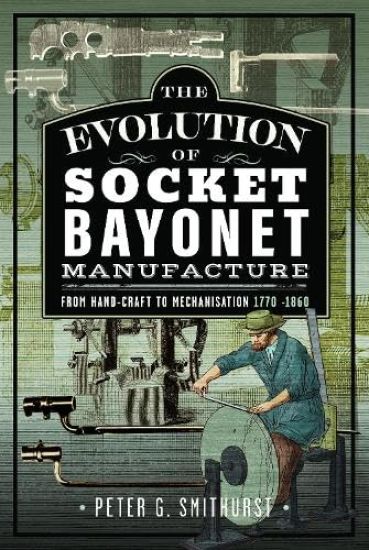
In the case of military muskets and rifles the bayonet was, and still is, an integral part of the ‘weapon system’. There are many excellent books covering the history of the bayonet in its myriad varieties adopted and used by the armed forces of the world. These books provide a wealth of detail on national variations and often include many rare, and in some instances, bizarre bayonets. They focus on the end of the bayonet’s story and do not cover its beginning – the conversion of more or less amorphous pieces of iron and steel into finished products. That is the focus of this publication. It might be asked why, out of all the bayonets of the world, these three have been selected since at first sight they appear very ordinary and mundane when compared with some of their more ‘exotic’ brethren. However, as with the arms they were fitted to and whose manufacture has been covered in two earlier companion volumes, they are the only bayonets whose manufacture is described in varying degrees of detail in contemporary publications. They also share another kinship since, like the weapons they fitted, the Russian M.1808 is a direct copy, and the Enfield Pattern 1853 bayonet a descendant of, the French M.1777. This bayonet was a major landmark in socket bayonet design. It may be distasteful and not something to be contemplated lightly, but the socket bayonet’s function at the end of a musket was to penetrate the body of an enemy in close combat. Earlier bayonets having a plain mortice or ‘zig-zag’ slot engaging with a stud on the barrel to hold them in place, might easily be removed from the musket by one or other of the adversaries twisting it in the wrong direction. Honoré Blanc’s design, with its medial locking ring, prevented such accidental removal and became the prototype for many, if not all, socket bayonets which followed through to the end of the 19th century.