Kirjojen hintavertailu. Mukana 11 717 486 kirjaa ja 12 kauppaa.

Kirjahaku

Etsi kirjoja tekijän nimen, kirjan nimen tai ISBN:n perusteella.

26 kirjaa tekijältä Peter Gay

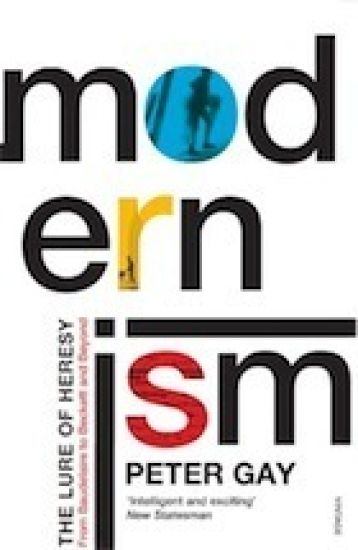
Modernism

Modernism

Peter Gay

Vintage
2009
pokkari
In his most ambitious endeavour since Freud, acclaimed cultural historian Peter Gay traces and explores the rise of Modernism in the arts, the cultural movement that heralded and shaped the modern world, dominating western high culture for over a century.
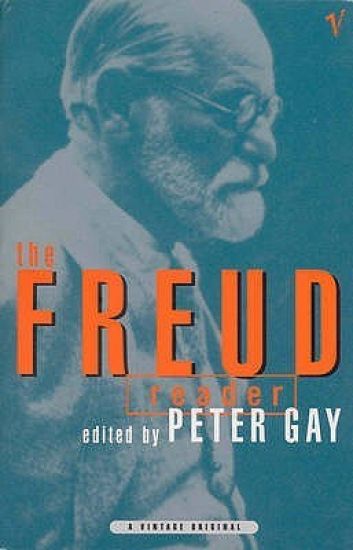
Freud Reader

Freud Reader

Peter Gay

Vintage
1995
pokkari
It contains fifty-one key texts, spanning Freud's entire career from early case histories through his work on dreams, essays on sexuality, and on to his late writings, including Civilisation and Its Discontents. Peter Gay, a leading scholar of Freud, has put together this selection to provide a full portrait of Freud's thought.
Mozart

Mozart

Peter Gay

The Penguin Press
2006
pokkari
A biography of the greatest musical mind in Western history Mozart's unshakable hold on the public's consciousness can only be strengthened by historian and biographer Peter Gay's concise and deft look at the genius's life. Mozart traces the development of the man whose life was a whirlwind of achievement, and the composer who pushed every instrument to its limit and every genre of classical music into new realms.
Freud for Historians

Freud for Historians

Peter Gay

Oxford University Press Inc
1987
nidottu
Is psychoanalysis a legitimate tool for helping us understand the past? Many traditional historians have answered with an emphatic no, greeting the introduction of Freud into historical study with responses ranging from condescending skepticism to outrage. Now Peter Gay, one of America's leading historians, builds an eloquent case for "history informed by psychoanalysis" and offers an impressive rebuttal to the charges of the profession's anti-Freudians. In this book, Gay takes on the opposition's arguments, defending psychoanalysis as a discipline that can enhance social, economic, and literary studies. No mere polemic, Freud for Historians is a thoughtful and detailed contribution to a major intellectual debate.
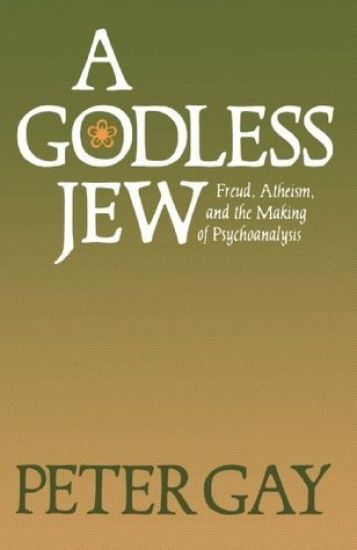
A Godless Jew

A Godless Jew

Peter Gay

Yale University Press
1989
pokkari
“Why did none of the devout create psychoanalysis? Why did it have to wait for a completely godless Jew?” Freud once asked. In this book, the eminent historian and Freud scholar Peter Gay enters the long-running controversy about the relationship between religion and psychoanalysis. Gay takes seriously Freud’s claim that he was an atheist and argues that atheism was an essential stance for the making of psychoanalysis. He contends, in fact, that Judaism was not essential and that psychoanalysis is not a “Jewish science,” as both anti-Semites and ardent Freudians have often assumed. Peter Gay begins by discussing why psychoanalysis could only have been conceived by an atheist. According to him, Freud saw science and religion as absolutely at odds with each other. While some theologians and analysts have attempted to forge an alliance between psychoanalytic and religious positions, these attempts at accommodation have failed and must fail. Psychoanalysis is not a religion, and the two comprise wholly incompatible styles of thinking about the world. Gay then deals with the question of whether Freud’s Jewish background contributed to the creation of psychoanalysis and describes Freud’s secular Judaism: while Freud was very much aware of his Jewishness and was in fact proud of it, this had nothing to do with the making of psychoanalysis itself. True, Freud himself saw a possible link between his Jewishness and his daring: as a Jew he was treated ass an outsider and therefore, he thought, could approach delicate topics such as sexuality more boldly than he would have if he had been thoroughly lodged on the inside. However, Gay maintains that this is at best a weak statement.Writing with his customary wit and charm, Gay not only discusses Freud’s life and personality as they affected his ideas on religion but also compares Freud’s thoughts on religion to those of William James, Charles Darwin, Paul Tillich, and a host of Enlightenment figures. The result is a book that will richly reward ever reader.Published in association with Hebrew Union College Press
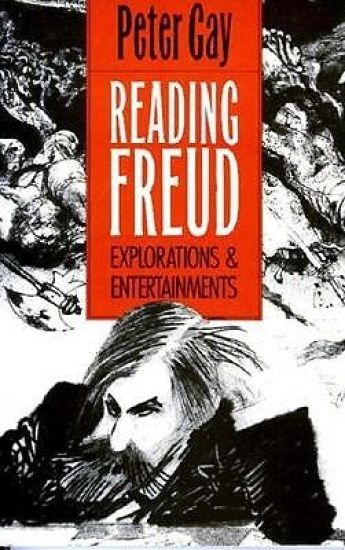
Reading Freud

Reading Freud

Peter Gay

Yale University Press
1991
pokkari
“As every biographer of Freud must ruefully acknowledge, Freud, that great unriddler of mysteries, left behind some intriguing private mysteries of his own. It was because I hoped to solve some of these mysteries that the stratagem of finding my way to Freud by indirections commended itself to me.” –Peter GayIn this book, the eminent cultural historian and Freud scholar Peter Gay presents a series of essays in which he tries to “reduce the blank spots on the map we now have of Freud’s mind.” Engaging as well as illuminating, the essays range from reflections on Freud and Shakespeare to Gay’s controversial spoof review of Freud’s The Interpretation of Dreams.The book begins with “Freud and the Man from Stratford,” in which Gay describes Freud’s fascination with the theory that the Earl of Oxford was the real author of the plays attributed to Shakespeare and speculates on the reasons for Freud’s belief. “Six Names in Search of an interpretation” considers Freud’s choices of names for his six children and what they revealed about his Jewishness, his love of science, and his ambivalent feelings toward his father. “Freud on Freedom” deals with the issue of determinism and free will in Freud’s work. “Reading Freud through Freud’s Reading” analyzes ten “good” books Freud identified in response to a questionnaire. The second half of the book, entitled “Entertainments,” includes an essay on “Serious Jests” that cites some vintage Jewish jokes frequently recounted by Freud and points out how these chestnuts illustrate not only psychoanalytic concepts but the anti-Semitism that permeated Freud’s Vienna; the “review” of The Interpretation of Dreams, published in Harper’s in 1981; “A Gentile Science?” which is a “report” on the work of one Sigmund Oberhufer, a fictitious Austrian doctor said to have “invented” psychoanalysis; and “The Dog That Did Not Bark in the Night,” Gay’s account of the newly accessible correspondence between Freud and his sister-in-law Minna Bernays, who some writers claim was his lover. The essays, some of them published for the first time or expanded from their original versions, are accompanied by informative introductions.
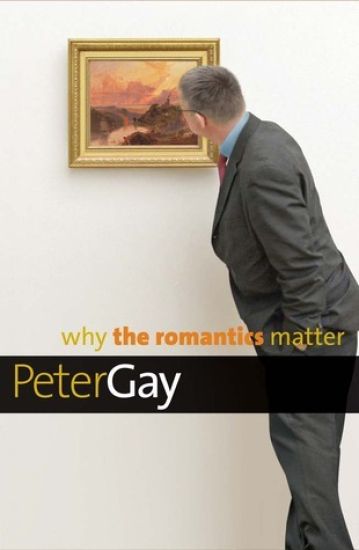
Why the Romantics Matter

Why the Romantics Matter

Peter Gay

Yale University Press
2015
sidottu
A renowned scholar’s reflections on the romantic period, its disparate participants, and our unacknowledged debt to them With his usual wit and élan, esteemed historian Peter Gay enters the contentious, long-standing debates over the romantic period. Here, in this concise and inviting volume, he reformulates the definition of romanticism and provides a fresh account of the immense achievements of romantic writers and artists in all media. Gay’s scope is wide, his insights sharp. He takes on the recurring questions about how to interpret romantic figures and their works. Who qualifies to be a romantic? What ties together romantic figures who practice in different countries, employ different media, even live in different centuries? How is modernism indebted to romanticism, if at all? Guiding readers through the history of the romantic movement across Britain, France, Germany, and Switzerland, Gay argues that the best way to conceptualize romanticism is to accept its complicated nature and acknowledge that there is no “single basket” to contain it. Gay conceives of romantics in “families,” whose individual members share fundamental values but retain unique qualities. He concludes by demonstrating that romanticism extends well into the twentieth century, where its deep and lasting impact may be measured in the work of writers such as T. S. Eliot and Virginia Woolf.
The Party of Humanity

The Party of Humanity

Peter Gay

WW Norton Co
2008
nidottu
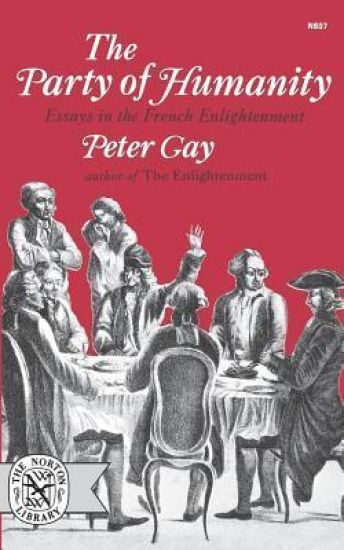
The nine related essays in The Party of Humanity fall into three divisions: three are on Voltaire, presenting the great philosophe as a tough-minded, realistic man of letters who tried to reshape his world, rather than as a merely brittle and shallow wit. Then, three essays discuss the French Enlightenment as a whole and seek for the unity underlying the diversity of tempers and attitudes among its leaders. The last three, which include Mr. Gay's well-known critique of Carl Becker's The Heavenly City of the Eighteenth Century Philosophers, challenge some widely accepted views of the Enlightenment. The longest chapter here is a detailed examination of Rousseau and his reputation among his interpreters. What all nine essays have in common, apart from their portrayal of the philosophes as serious and engaged partisans of humanity, is that they are essays in the social history of ideas; they all treat ideas as inseparable from the specific social and cultural setting from which they emerge, and which they affect.
Style in History

Style in History

Peter Gay

WW Norton Co
1989
nidottu
What does an historian’s style reveal? In this original and lucid guide to the proper reading of Gibbon, Ranke, Macaulay, and Burckhardt—great historians who were also great stylists—Peter Gay demonstrates that, style is an invaluable clue to the historian's insight. Thus, for Peter Gay, style is the key to culture, and the “truth” of history—as it helps to define that culture—can only be fully understood through an objective and thorough analysis of all its elements.
The Cultivation of Hatred: The Bourgeois Experience: Victoria to Freud
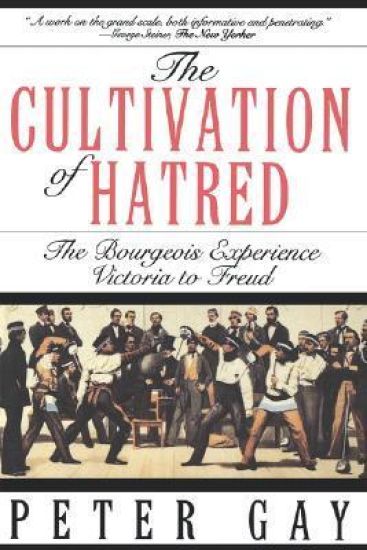
Gay's search through middle-class Victorian culture, illuminated by lively portraits of such daunting figures as Bismarck, Darwin and his acolytes, George Eliot, and the great satirists Daumier and Wilhelm Busch, covers a vast terrain: the relations between men and women, wit, demagoguery, and much more. We discover the multiple ways in which the nineteenth century at once restrained aggressive behavior and licensed it. Aggression split the social universe into insiders and outsiders. "By gathering up communities of insiders," Professor Gay writes, the Victorians "discovered--only too often invented--a world of strangers beyond the pale, of individuals and classes, races and nations it was perfectly proper to debate, patronize, ridicule, bully, exploit, or exterminate." The aggressions so channeled or bottled could not be contained forever. Ultimately, they exploded in the First World War.
The Enlightenment

The Enlightenment

Peter Gay

WW Norton Co
1995
nidottu
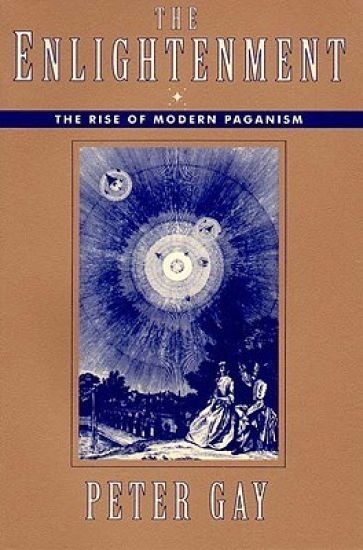
In the twentieth century, however, the Enlightenment has often been judged harshly for its apparently simplistic optimism. Now a master historian goes back to the sources to give a fully rounded account of its true accomplishments.
The Enlightenment

The Enlightenment

Peter Gay

WW Norton Co
1996
nidottu
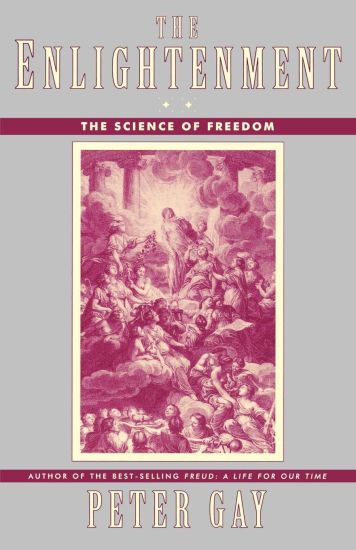
The Science of Freedom completes Peter Gay's brilliant reinterpretation begun in The Enlightenment: The Rise of Modern Paganism. In the present book, he describes the philosophes' program and their views of society. His masterful appraisal opens a new range of insights into the Enlightenment's critical method and its humane and libertarian vision.
The Naked Heart

The Naked Heart

Peter Gay

WW Norton Co
1996
nidottu
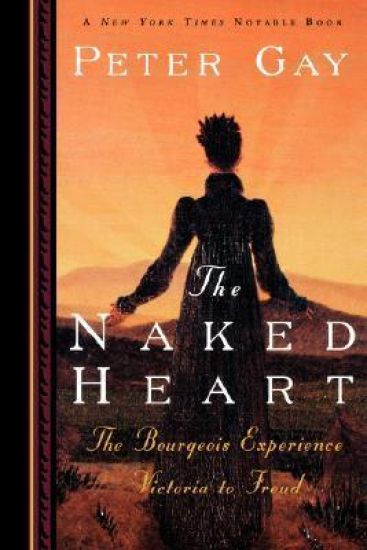
At the very time that industrialists, inventors, statesmen, and natural scientists were conquering new objective worlds, Gay writes, "the secret life of the self had grown into a favorite and wholly serious indoor sport." Following the middle class's preoccupation with inwardness through its varied cultural expressions (such as fiction, art, history, and autobiography), Gay turns also to the letters and confessional diaries of both obscure and prominent men and women. These revealing documents help to round out a sparkling portrait of an age.
Pleasure Wars

Pleasure Wars

Peter Gay

WW Norton Co
1998
nidottu
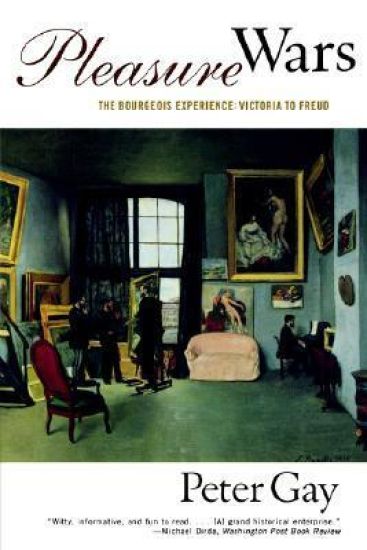
The Victorians in this richly peopled narrative maneuvered through decades marked by frequent shifts in taste, some seeking safety in traditional styles, others drawn to the avant-garde of artists, composers, and writers. Peter Gay's panoramic survey offers a fresh view of the ideas and sensibilities that dominated Victorian culture.
The Tender Passion

The Tender Passion

Peter Gay

WW Norton Co
1999
nidottu
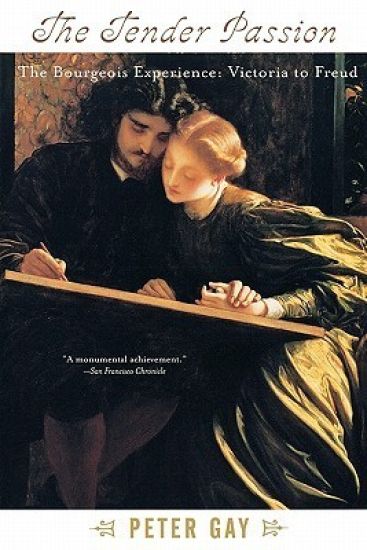
It explores an anxiety-provoking time when the boundaries between erotic expressiveness and reserve began to give way, changing the experience of love. "One of the major historical enterprises of the decade. . . . An enterprise requiring a daring and breadth of knowledge possessed by few other contemporary historians."—Gordon A. Craig, New York Review of Books "Gay's writing has an artist's feel for the flow and rhythms of language, and his extensive and exquisitely managed research is blended into a unified structure that consistently serves the author's purpose."—San Francisco Chronicle "The vicissitudes of the 'tender passion' in both the fiction and the real lives of the Victorians is an enthralling subject."—Anthony Storr, The Spectator
Weimar Culture: The Outsider as Insider

Weimar Culture: The Outsider as Insider

Peter Gay

W. W. Norton Company
2001
nidottu
First published in 1968, Weimar Culture is one of the masterworks of Peter Gay's distinguished career. A study of German culture between the two wars, the book brilliantly traces the rise of the artistic, literary, and musical culture that bloomed ever so briefly in the 1920s amid the chaos of Germany's tenuous post-World War I democracy, and crashed violently in the wake of Hitler's rise to power. Despite the ephemeral nature of the Weimar democracy, the influence of its culture was profound and far-reaching, ushering in a modern sensibility in the arts that dominated Western culture for most of the twentieth century. Vivid and eminently readable, Weimar Culture is the finest introduction for the casual reader and historian alike.