Kirjojen hintavertailu. Mukana 11 244 527 kirjaa ja 12 kauppaa.

Kirjahaku

Etsi kirjoja tekijän nimen, kirjan nimen tai ISBN:n perusteella.

4 kirjaa tekijältä Peter Gidal

Materialist Film

Materialist Film

Peter Gidal

Routledge
2013
sidottu
A polemical introduction to the avant-garde and experimental in film (including making and viewing), Materialist Film is a highly original, thought-provoking book.Thirty-seven short chapters work through a series of concepts which will enable the reader to deal imaginatively with the contradictory issues produced by experimental film. Each concept is explored in conjunction with specific films by Andy Warhol, Malcolm LeGrice, Lis Rhodes, Jean-Luc Goddard, Rose Lowder, Kurt Kren, and others.Peter Gidal draws on important politico-aesthetic writings, and uses some of his own previously published essays from Undercut, Screen, October, and Millennium Film Journal to undertake this concrete process of working through abstract concepts. Originally published in 1989.
Materialist Film

Materialist Film

Peter Gidal

Routledge
2016
nidottu
A polemical introduction to the avant-garde and experimental in film (including making and viewing), Materialist Film is a highly original, thought-provoking book.Thirty-seven short chapters work through a series of concepts which will enable the reader to deal imaginatively with the contradictory issues produced by experimental film. Each concept is explored in conjunction with specific films by Andy Warhol, Malcolm LeGrice, Lis Rhodes, Jean-Luc Goddard, Rose Lowder, Kurt Kren, and others.Peter Gidal draws on important politico-aesthetic writings, and uses some of his own previously published essays from Undercut, Screen, October, and Millennium Film Journal to undertake this concrete process of working through abstract concepts. Originally published in 1989.
Andy Warhol

Andy Warhol

Peter Gidal

Afterall Publishing
2008
pokkari
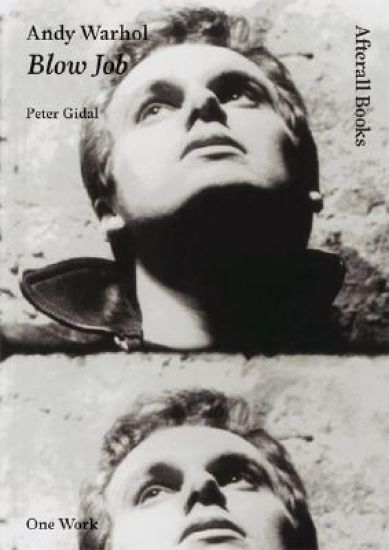
A critical close-up of Warhol's famous film and its cultural impactIn Andy Warhol's silent black-and-white movie, Blow Job (1964), a youth is filmed as he is apparently being given the sex act named in the title. The 35-minute film is accentuated by the paucity of expression on the actor's face: we see only his head and shoulders, rigidly framed so that all offscreen space has to be imagined, or avoided. Sometimes the young actor looks bored, sometimes as if he is thinking, sometimes as if he is aware of the camera, sometimes as if he is not. Like the protagonists of other Warhol films, he is apparently left to his own devices. Warhol's 16mm films (including Blow Job, Sleep, Empire, and Henry Geldzahler), with their take on boredom, voyeurism, and the supposedly unmoving camera, continue to be influential today. In their own era of the early 1960s, they forced avant-garde film away from various forms of romantic illusionism and onto the reality of the specific film-as-projected. The film process itself became inseparable from the act of the viewer's viewing. In this extended examination of Blow Job, Peter Gidal deciphers the structures, abstract and concrete, of Warhol's crucial film. Warhol's techniques-the use of the close-up, the general use of camera movement, and the complete theatrical mis-en-scene-(especially when compared to the Godardian cinema verite of the time) make the materiality of the film process, its making and viewing, ineluctably present. Peter Gidal has written books on the works of Samuel Beckett, Andy Warhol, and Gerhard Richter, as well as on avant-garde materialist film. An experimental filmmaker himself, Gidal has had retrospectives at the London Film Co-op, LUX, the National Film Theatre, Centre Pompidou, and the Institute of Contemporary Arts, London. Andy Warhol (1928-1987) was one of the twentieth century's most important artists and cultural icons.