Kirjojen hintavertailu. Mukana 11 244 527 kirjaa ja 12 kauppaa.

Kirjahaku

Etsi kirjoja tekijän nimen, kirjan nimen tai ISBN:n perusteella.

36 kirjaa tekijältä Peter Gill

Misleading DNA Evidence

Misleading DNA Evidence

Peter Gill

Academic Press Inc
2014
nidottu
Misleading DNA Evidence: A Guide for Scientists, Judges, and Lawyers presents the reasons miscarriages of justice can occur when dealing with DNA, what the role of the forensic scientist is throughout the process, and how judges and lawyers can educate themselves about all of the possibilities to consider when dealing with cases that involve DNA evidence. DNA has become the gold standard by which a person can be placed at the scene of a crime, and the past decade has seen great advances in this powerful crime solving tool. But the statistics that analysts can attach to DNA evidence often vary, and in some cases the statistical weight assigned to that match, can vary enormously. The numbers provided to juries often overstate the evidence, and can result in a wrongful conviction. In addition to statistics, the way the evidence is collected, stored and analyzed can also result in a wrongful conviction due to contamination. This book reviews high-profile and somewhat contentious cases to illustrate these points, including the death of Meredith Kercher. It examines crucial topics such as characterization of errors and determination of error rates, reporting DNA profiles and the source and sub-source levels, and the essentials of statement writing. It is a concise, readable resource that will help not only scientists, but legal professionals with limited scientific backgrounds, to understand the intricacies of DNA use in the justice system.
Famine and Foreigners: Ethiopia Since Live Aid

Famine and Foreigners: Ethiopia Since Live Aid

Peter Gill

Oxford University Press
2010
sidottu
The terrible 1984 famine in Ethiopia focused the world's attention on the country and the issue of aid as never before. Anyone over the age of 30 remembers something of the events - if not the original TV pictures, then Band Aid and Live Aid, Geldof and Bono. Peter Gill was the first journalist to reach the epicentre of the famine and one of the TV reporters who brought the tragedy to light. This book is the story of what happened to Ethiopia in the 25 years following Live Aid: the place, the people, the westerners who have tried to help, and the wider multinational aid business that has come into being. We saved countless lives in the beginning and continued to save them now, but have we done much else to transform the lives of Ethiopia's poor and set them on a 'development' course that will enable the country to do without us?
Democracy, Law and Security

Democracy, Law and Security

Peter Gill

Routledge
2020
nidottu
In the past decade there have been significant changes in the operations of security and intelligence agencies throughout Europe. Those in the former Eastern Europe have undergone the most obvious changes in their targets and the legal context within which they operate, but these changes have affected all the agencies to some extent. It is these changes that will provide the context of structures and processes through which the agencies will respond to the September 11, 2001 attack on New York and Washington. This edited collection of papers by an international group of experts in the study of security and intelligence examines recent and current developments in the light of the rule of law and democracy and specifically addresses a number of common themes. Firstly, security and intelligence agencies are placed within the broader context of their parent state, including whether their powers originate in legislation or executive decree and the form of oversight. Secondly, the types of agency - civilian, military, foreign and domestic - are considered in the context of their historical development, including the transition from authoritarian to liberal state forms. Thirdly, the changes in their mandate and targets are discussed, in particular, towards 'terrorism', 'transnational organized crime' and economic intelligence. Finally, each author considers the enduring issue of how the impact of security and intelligence agencies is to be assessed in terms both of security and human rights. This book represents the first systematic attempt to present a collection of contemporary studies on the shifts in this crucial aspect of the operation of all states, and to do so within a framework of common themes. Although significant differences remain in the operation of security intelligence, all the authors highlight the common dilemmas that accompany the attempt to provide security but to do so democratically.
York Realist, The

York Realist, The

Peter Gill

Faber Faber
2018
pokkari
Early 1960s, Yorkshire. Farm labourer George is cast in an amateur staging of the York Mystery Plays. His world is shaken when he falls for metropolitan assistant director John and the two men embark on a clandestine affair.Peter Gill's influential play is not only a finely drawn love story; it is also a touching reflection on the rival forces of family, class, and the origins and ownership of art.The York Realist was premiered by the English Touring Theatre at The Lowry, Salford Quays in November 2001; it moved to the Bristol Old Vic that same year and, in 2002, to the Royal Court Theatre, London. The play was revived by the Donmar Warehouse, London, in February 2018.Winner of the London Critics' Circle Award for Best New Play.'As a love story, The York Realist is riveting and heart-rendering... Gill is always terrifically perceptive about male tenderness. The personal and political are subtly united in a study of English masculinity, class and culture. Such outstanding work.' Independent on Sunday'Sensationally fine and poignant.' Evening Standard'It has the Lawrentian qualities of emotional intelligence, raw honesty and fascination with the intersection of class and sex... It is about the way the English, however hard they try, can never finally escape their origins. But, far from being emotionally conservative, it is adventurous, witty and fresh... The play comes like a rare blast of reality.' Guardian
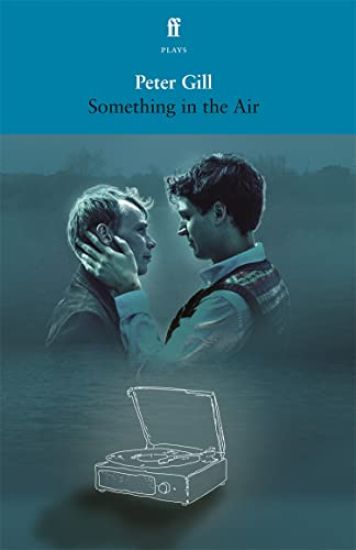
Something in the Air

Something in the Air

Peter Gill

FABER FABER
2022
nidottu
You took relationships as if they were the next train.Alex and Colin's stories flow like mist down the Thames, roll under Hammersmith Bridge, and slip past the windows of forgotten Soho restaurants. As the old men's youth comes to life, so do the young men they once loved.Peter Gill's captivating, romantic new play premiered at Jermyn Street Theatre, London, in October 2022.'Peter Gill's influence on British theatre is profound. An unsung hero.' Michael Billington, Guardian
Policing Politics

Policing Politics

Peter Gill

Routledge
1994
sidottu
Numerous allegations of abuse of power have been made against the domestic security intelligence agencies in the United Kingdom such as police special branches and MI5. These include the improper surveillance of trade unionists and peace activists, campaigns of mis-information against elected politicians and even the elimination' of people believed to be engaged in political violence. Drawing on extensive foreign material and making use of the social science concepts of information, power and law, this book develops a framework for the comparative analysis of these agencies.
Policing Politics

Policing Politics

Peter Gill

Routledge
1994
nidottu
Numerous allegations of abuse of power have been made against the domestic security intelligence agencies in the United Kingdom such as police special branches and MI5. These include the improper surveillance of trade unionists and peace activists, campaigns of mis-information against elected politicians and even the elimination' of people believed to be engaged in political violence. Drawing on extensive foreign material and making use of the social science concepts of information, power and law, this book develops a framework for the comparative analysis of these agencies.
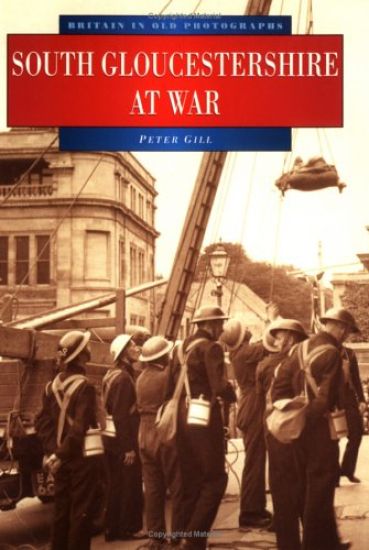
South Gloucestershire at War

South Gloucestershire at War

Peter Gill

Sutton Publishing Ltd
1995
nidottu
This addition to the "Britain in Old Photographs" series brings together a collection of black-and-white pictures spanning the late 19th and early 20th centuries. Drawn from family albums, local collections and professional photographers, they show the way things were and how they have changed. Every photograph is captioned, providing names and dates where possible, revealing historical and anecdotal detail and giving life to the scenes and personalities captured through the camera lens. Bringing together all aspects of daily life - celebrations and disasters, work and leisure, people and buildings - the collection should inspire memories, as well as serve as an introduction to visitors.
North Gloucestershire at War

North Gloucestershire at War

Peter Gill

Sutton Publishing Ltd
1995
nidottu
This addition to the "Britain in Old Photographs" series brings together a collection of black-and-white pictures spanning the late 19th and early 20th centuries. Drawn from family albums, local collections and professional photographers, they show the way things were and how they have changed. Every photograph is captioned, providing names and dates where possible, revealing historical and anecdotal detail and giving life to the scenes and personalities captured through the camera lens. Bringing together all aspects of daily life - celebrations and disasters, work and leisure, people and buildings - the collection should inspire memories, as well as serve as an introduction to visitors.
Cheltenham's Music

Cheltenham's Music

Peter Gill

The History Press Ltd
2007
nidottu
Brian Jones of the Rolling Stones, Jaz Coleman of Killing Joke and Gustav Holst were all born in Cheltenham. This book explores the town's musical heritage, focusing especially on the personalities, both professional and amateur, who bring so much to the musical life of the town every day of the year.
Democracy, Law and Security

Democracy, Law and Security

Peter Gill

Ashgate Publishing Limited
2002
sidottu
In the past decade there have been significant changes in the operations of security and intelligence agencies throughout Europe. Those in the former Eastern Europe have undergone the most obvious changes in their targets and the legal context within which they operate, but these changes have affected all the agencies to some extent. It is these changes that will provide the context of structures and processes through which the agencies will respond to the September 11, 2001 attack on New York and Washington. This edited collection of papers by an international group of experts in the study of security and intelligence examines recent and current developments in the light of the rule of law and democracy and specifically addresses a number of common themes. Firstly, security and intelligence agencies are placed within the broader context of their parent state, including whether their powers originate in legislation or executive decree and the form of oversight. Secondly, the types of agency - civilian, military, foreign and domestic - are considered in the context of their historical development, including the transition from authoritarian to liberal state forms. Thirdly, the changes in their mandate and targets are discussed, in particular, towards 'terrorism', 'transnational organized crime' and economic intelligence. Finally, each author considers the enduring issue of how the impact of security and intelligence agencies is to be assessed in terms both of security and human rights. This book represents the first systematic attempt to present a collection of contemporary studies on the shifts in this crucial aspect of the operation of all states, and to do so within a framework of common themes. Although significant differences remain in the operation of security intelligence, all the authors highlight the common dilemmas that accompany the attempt to provide security but to do so democratically.
Intelligence Governance and Democratisation
This book analyses changes in intelligence governance and offers a comparative analysis of intelligence democratisation.Within the field of Security Sector Reform (SSR), academics have paid significant attention to both the police and military. The democratisation of intelligence structures that are at the very heart of authorit
Rounding Up the Usual Suspects?
This title was first published in 2000: Policing is associated more with "doing" than with "thinking", so how can policing be "intelligent"? This text attempts to answer questions on police intelligence, and discusses whether or not policing can re-invent itself in the Information age. By using emerging technological tools is policing changing or is it just using them to control the "dangerous classes"? The development of "intelligence-led policing" seeks to shift organizational practices in order to attain goals more effectively. Charting and explaining the progress of this shift is a central aim of this study. The author compares the police intelligence structures of the UK with North America, especially Canada and New York State. The book looks at the contributions made, by the Government, the police and the criminals to the development of intelligence policing.
Rounding Up the Usual Suspects?
This title was first published in 2000: Policing is associated more with "doing" than with "thinking", so how can policing be "intelligent"? This text attempts to answer questions on police intelligence, and discusses whether or not policing can re-invent itself in the Information age. By using emerging technological tools is policing changing or is it just using them to control the "dangerous classes"? The development of "intelligence-led policing" seeks to shift organizational practices in order to attain goals more effectively. Charting and explaining the progress of this shift is a central aim of this study. The author compares the police intelligence structures of the UK with North America, especially Canada and New York State. The book looks at the contributions made, by the Government, the police and the criminals to the development of intelligence policing.
Intelligence Governance and Democratisation
This book analyses changes in intelligence governance and offers a comparative analysis of intelligence democratisation.Within the field of Security Sector Reform (SSR), academics have paid significant attention to both the police and military. The democratisation of intelligence structures that are at the very heart of authoritarian regimes, however, have been relatively ignored. The central aim of this book is to develop a conceptual framework for the specific analytical challenges posed by intelligence as a field of governance. Using examples from Latin America and Europe, it examines the impact of democracy promotion and how the economy, civil society, rule of law, crime, corruption and mass media affect the success or otherwise of achieving democratic control and oversight of intelligence. The volume draws on two main intellectual and political themes: intelligence studies, which is now developing rapidly from its original base in North America and UK; and democratisation studies of the changes taking place in former authoritarian regimes since the mid-1980s including security sector reform. The author concludes that, despite the limited success of democratisation, the dangers inherent in unchecked networks of state, corporate and para-state intelligence organisations demand that academic and policy research continue to meet the challenge.This book will be of much interest to students of intelligence studies, democracy studies, war and conflict studies, comparative politics and IR in general.
Today We Drop Bombs, Tomorrow We Build Bridges
'An indispensible inquiry into our moral health and humanity.' LSE Review of BooksThe war on terror has politicised foreign aid as never before. Aid workers are being killed at an alarming rate and civilians in war-torn countries abandoned to their fate.From the ravaged streets of Mogadishu to the unending struggle in Helmand, Peter Gill travels to some of the most conflict-stricken places on earth to reveal the true relationship between the aid business and Western security. While some agencies have clung to their neutrality against ever stiffer odds, others have compromised their impartiality to secure the flow of official funds.In a world where the advance of Islamic State constitutes the gravest affront to humanitarian practice and principle the aid community has faced in decades, Gill poses the crucial question - can Western nations fight in a country and aid it at the same time?