Kirjojen hintavertailu. Mukana 11 717 486 kirjaa ja 12 kauppaa.

Kirjahaku

Etsi kirjoja tekijän nimen, kirjan nimen tai ISBN:n perusteella.

29 kirjaa tekijältä Peter Godfrey-Smith

Other Minds

Other Minds

Peter Godfrey-Smith

Harper Collins UK
2018
pokkari
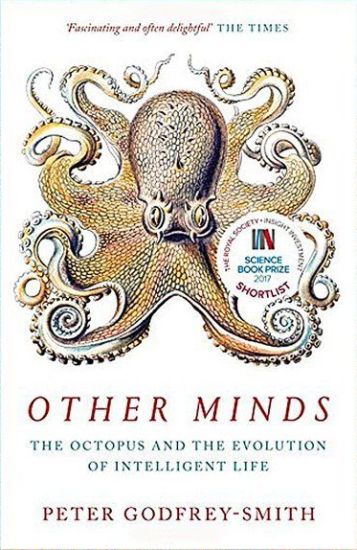
BBC R4 Book of the Week â??Brilliantâ?? Guardian â??Fascinating and often delightfulâ?? The Times What if intelligent life on Earth evolved not once, but twice? The octopus is the closest we will come to meeting an intelligent alien. What can we learn from the encounter?
Metazoa

Metazoa

Peter Godfrey-Smith

William Collins
2021
nidottu
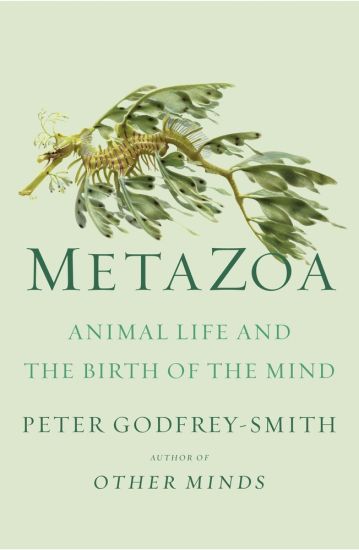
The follow-up to the BBC Radio 4 Book of the Week Other Minds A Times and Sunday Times Book of the Year A Waterstones Best Book of 2020 The scuba-diving philosopher explores the origins of animal consciousness. Dip below the ocean’s surface and you are soon confronted by forms of life that could not seem more foreign to our own: sea sponges, soft corals and flower-like worms, whose rooted bodies and intricate geometry are more reminiscent of plant life than anything recognisably animal. Yet these creatures are our cousins. As fellow members of the animal kingdom – the Metazoa – they can teach us about the evolutionary origins of not only our bodies, but also our minds. In his acclaimed book, Other Minds, Peter Godfrey-Smith explored the mind of the octopus – the closest thing to an intelligent alien on Earth. In Metazoa, he expands his inquiry to animals at large, investigating the evolution of experience with the assistance of far-flung species. Godfrey-Smith shows that the appearance of the first animal body form well over half a billion years ago was a profound innovation that set life upon a new path. He charts the ways that subsequent evolutionary developments – eyes that track, for example, and bodies that move through and manipulate the environment – shaped the lives of animals. Following the evolutionary paths of a glass sponge, soft coral, banded shrimp, octopus and fish, then moving onto land and the world of insects, birds and primates like ourselves, Metazoa gathers these stories together to bridge the gap between matter and mind and address one of the most important philosophical questions: what is the origin of consciousness? Combining vivid animal encounters with philosophy and biology, Metazoa reveals the impossibility of separating the evolution of our minds from the evolution of animals themselves.
Living on Earth

Living on Earth

Peter Godfrey-Smith

HARPERCOLLINS PUBLISHERS
2024
sidottu
The eagerly anticipated conclusion to Peter Godfrey-Smithâ??s three-part exploration of the origins of intelligence on Earth, which began with the bestselling Other Minds in 2018 and continued with Metazoa in 2020.
Living on Earth

Living on Earth

Peter Godfrey-Smith

Harper Collins UK
2024
nidottu
The eagerly anticipated conclusion to Peter Godfrey-Smith's three-part exploration of the origins of intelligence on Earth, which began with the bestselling Other Minds in 2018 and continued with Metazoa in 2020.
Living on Earth

Living on Earth

Peter Godfrey-Smith

HARPERCOLLINS PUBLISHERS
2025
nidottu
The eagerly anticipated conclusion to Peter Godfrey-Smith’s three-part exploration of the origins of intelligence on Earth, which began with the bestselling Other Minds in 2018 and continued with Metazoa in 2020. The eagerly anticipated conclusion to Peter Godfrey-Smith’s three-part exploration of the origins of intelligence on Earth, which began with the bestselling Other Minds in 2018 and continued with Metazoa in 2020. Peter Godfrey-Smith, the scuba-diving philosopher, examined the evolution of sentience in Other Minds. In Metazoa he asked how that consciousness shaped and was shaped by animal bodies. Now, in Living on Earth, he takes that line of questioning a step further, asking, how has life shaped and been shaped by our planet? He visits the largest living stromatolite fields, examples of how cyanobacteria began belching oxygen into the atmosphere as they converted carbon dioxide and water into living matter using the sun's light. The extraordinary increase in oxygen in the atmosphere resulted in an explosion in the diversity of life. And so began a riotous tangle of coevolution between plants and animals, as each changed the environment around them allowing others to utilise these new ecosystems and thus new species to evolve. From cyanobacteria, through algae on to ferns or trees or grasses, and from protists , through invertebrates and fish through the dinosaurs and on to birds and mammals – our planet has seen an explosion of life forms, all reacting to their environment and all creating new environments that allow other life to evolve. In our own evolutionary line, an initially unremarkable mammal changed in new ways, evolving to come out of the trees to inhabit new savannas and then onto inhabit the whole planet. One of the most adaptable species ever found on Earth, and arguably the species causing the most change, humans are still part of this 3.8 billion year history of life forms changing the world around them. In Living on Earth, Godfrey-Smith takes us on a grand tour of the history of life on earth. He visits Rwandan gorillas and Australian bowerbirds, returns to coral reefs and octopus dens, considers the impact of language and writing, and weighs the responsibilities our unique powers bring with them, as they relate to factory farming, habitat preservation, climate change, and the use of animals in experiments. Living on Earth shows that Humans belong to the infinitely complex system that is the Earth, and our minds are products of that system, but we are also an acting force within it. We are creatures of Earth, but we hold Earth's future in our hands. It is a responsibility that we must all understand and accept.
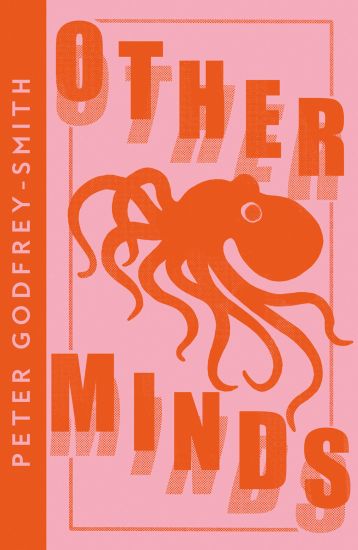
Other Minds

Other Minds

Peter Godfrey-Smith

William Collins
2021
nidottu
Introducing the Collins Modern Classics, a series featuring some of the most significant books of recent times, books that shed light on the human experience – classics which will endure for generations to come. What if intelligent life on earth not only evolved on land, but also in the sea? Other Minds is a bold new story of how nature became aware of itself – a story that largely occurs in the ocean, where animals first appeared. Tracking the mind’s fitful development over millennia, Other Minds explores the incredible evolutionary journey of the cephalopods. What kind of intelligence do they possess? And how did the octopus, a solitary creature with little social life, become so smart? Heralded as the ‘scuba-diving philosopher’ when Other Minds first published, Peter Godfrey-Smith explores the underwater world and the concept of sentience to trace the question of inner life back to its roots. By comparing human beings with our most remarkable animal relatives, Other Minds casts crucial new light on the octopus mind – and on our own.
Darwinian Populations and Natural Selection

Darwinian Populations and Natural Selection

Peter Godfrey-Smith

Oxford University Press
2009
sidottu
In 1859 Darwin described a deceptively simple mechanism that he called "natural selection," a combination of variation, inheritance, and reproductive success. He argued that this mechanism was the key to explaining the most puzzling features of the natural world, and science and philosophy were changed forever as a result. The exact nature of the Darwinian process has been controversial ever since, however. Godfrey-Smith draws on new developments in biology, philosophy of science, and other fields to give a new analysis and extension of Darwin's idea. The central concept used is that of a "Darwinian population," a collection of things with the capacity to undergo change by natural selection. From this starting point, new analyses of the role of genes in evolution, the application of Darwinian ideas to cultural change, and "evolutionary transitions" that produce complex organisms and societies are developed. Darwinian Populations and Natural Selection will be essential reading for anyone interested in evolutionary theory
Darwinian Populations and Natural Selection

Darwinian Populations and Natural Selection

Peter Godfrey-Smith

Oxford University Press
2011
nidottu
In 1859 Darwin described a deceptively simple mechanism that he called "natural selection," a combination of variation, inheritance, and reproductive success. He argued that this mechanism was the key to explaining the most puzzling features of the natural world, and science and philosophy were changed forever as a result. The exact nature of the Darwinian process has been controversial ever since, however. Godfrey-Smith draws on new developments in biology, philosophy of science, and other fields to give a new analysis and extension of Darwin's idea. The central concept used is that of a "Darwinian population," a collection of things with the capacity to undergo change by natural selection. From this starting point, new analyses of the role of genes in evolution, the application of Darwinian ideas to cultural change, and "evolutionary transitions" that produce complex organisms and societies are developed. Darwinian Populations and Natural Selection will be essential reading for anyone interested in evolutionary theory.
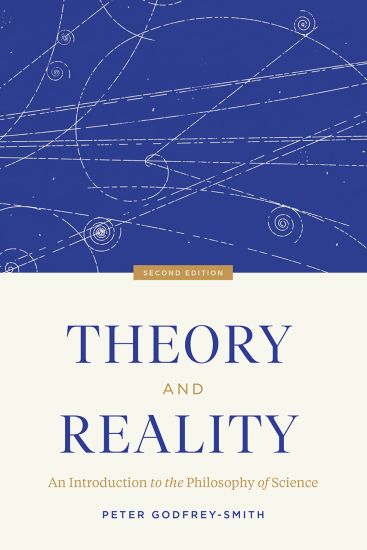
Theory and Reality

Theory and Reality

Peter Godfrey-Smith

University of Chicago Press
2021
nidottu
How does science work? Does it tell us what the world is “really” like? What makes it different from other ways of understanding the universe? In Theory and Reality, Peter Godfrey-Smith addresses these questions by taking the reader on a grand tour of more than a hundred years of debate about science. The result is a completely accessible introduction to the main themes of the philosophy of science. Examples and asides engage the beginning student, a glossary of terms explains key concepts, and suggestions for further reading are included at the end of each chapter. Like no other text in this field, Theory and Reality combines a survey of recent history of the philosophy of science with current key debates that any beginning scholar or critical reader can follow. The second edition is thoroughly updated and expanded by the author with a new chapter on truth, simplicity, and models in science.
Living on Earth: Forests, Corals, Consciousness, and the Making of the World
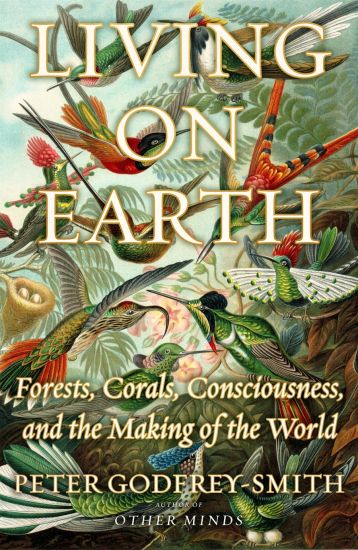
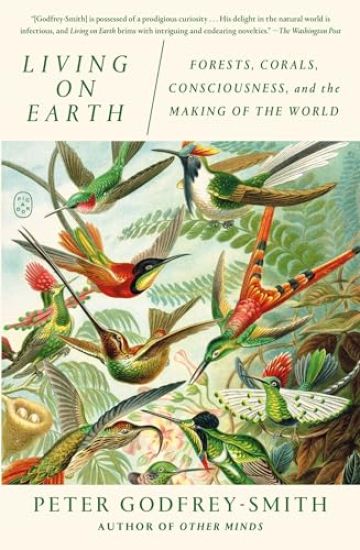
One of the Washington Post's 50 Best Nonfiction Books of 2024The bestselling author of Other Minds shows how we and our ancestors have reinvented our planet. If the history of the Earth were compressed down to a year, our species would arise in the last thirty minutes or so of the final hour. But life itself is not such a late arrival: It has existed on Earth for something like 3.7 billion years--most of our planet's history and over a quarter of the age of the universe (as far as we can tell). What have these organisms--bacteria, animals, plants, and the rest--done in all this time? In Living on Earth, the philosopher Peter Godfrey-Smith proposes a new way of understanding how the actions of living beings have shaped our planet. Where his acclaimed books Other Minds and Metazoa explored the riddle of how conscious minds came to exist on Earth, Living on Earth turns to what happens when we look at the mind from another side--when we come to see organisms as active causes, not merely as results of the evolutionary process. The planet we inhabit is significantly the work of other living beings, who shaped the environments that we ourselves later transformed. To that end, Godfrey-Smith takes us on a grand tour of the history of life on earth. He visits Rwandan gorillas and Australian bowerbirds, returns to coral reefs and octopus dens, considers the impact of language and writing, and weighs the responsibilities our unique powers bring with them, as they relate to factory farming, habitat preservation, climate change, and the use of animals in experiments. Ranging from the seas to the forests, and from animate matter's first appearance to its future extinction, Godfrey-Smith offers a novel picture of the course of life on Earth and how we might meet the challenges of our time, the Anthropocene.
Metazoa: Animal Life and the Birth of the Mind

Metazoa: Animal Life and the Birth of the Mind

Peter Godfrey-Smith

Farrar, Straus and Giroux
2020
sidottu
"Enthralling . . . breathtaking . . . Metazoa brings an extraordinary and astute look at our own mind's essential link to the animal world." --The New York Times Book Review (Editors' Choice) "A great book . . . Godfrey-Smith is] brilliant at describing just what he sees, the patterns of behaviour of the animals he observes." --Nigel Warburton, Five BooksThe scuba-diving philosopher who wrote Other Minds explores the origins of animal consciousness Dip below the ocean's surface and you are soon confronted by forms of life that could not seem more foreign to our own: sea sponges, soft corals, and serpulid worms, whose rooted bodies, intricate geometry, and flower-like appendages are more reminiscent of plant life or even architecture than anything recognizably animal. Yet these creatures are our cousins. As fellow members of the animal kingdom--the Metazoa--they can teach us much about the evolutionary origins of not only our bodies, but also our minds. In his acclaimed 2016 book, Other Minds, the philosopher and scuba diver Peter Godfrey-Smith explored the mind of the octopus--the closest thing to an intelligent alien on Earth. In Metazoa, Godfrey-Smith expands his inquiry to animals at large, investigating the evolution of subjective experience with the assistance of far-flung species. As he delves into what it feels like to perceive and interact with the world as other life-forms do, Godfrey-Smith shows that the appearance of the animal body well over half a billion years ago was a profound innovation that set life upon a new path. In accessible, riveting prose, he charts the ways that subsequent evolutionary developments--eyes that track, for example, and bodies that move through and manipulate the environment--shaped the subjective lives of animals. Following the evolutionary paths of a glass sponge, soft coral, banded shrimp, octopus, and fish, then moving onto land and the world of insects, birds, and primates like ourselves, Metazoa gathers their stories together in a way that bridges the gap between mind and matter, addressing one of the most vexing philosophical problems: that of consciousness. Combining vivid animal encounters with philosophical reflections and the latest news from biology, Metazoa reveals that even in our high-tech, AI-driven times, there is no understanding our minds without understanding nerves, muscles, and active bodies. The story that results is as rich and vibrant as life itself.
Other Minds: The Octopus, the Sea, and the Deep Origins of Consciousness
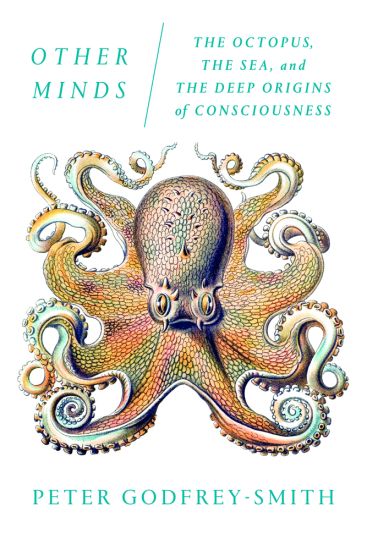
Philosopher Peter Godfrey-Smith dons a wet suit and journeys into the depths of consciousness in Other Minds Although mammals and birds are widely regarded as the smartest creatures on earth, it has lately become clear that a very distant branch of the tree of life has also sprouted higher intelligence: the cephalopods, consisting of the squid, the cuttlefish, and above all the octopus. In captivity, octopuses have been known to identify individual human keepers, raid neighboring tanks for food, turn off lightbulbs by spouting jets of water, plug drains, and make daring escapes. How is it that a creature with such gifts evolved through an evolutionary lineage so radically distant from our own? What does it mean that evolution built minds not once but at least twice? The octopus is the closest we will come to meeting an intelligent alien. What can we learn from the encounter? In Other Minds, Peter Godfrey-Smith, a distinguished philosopher of science and a skilled scuba diver, tells a bold new story of how subjective experience crept into being--how nature became aware of itself. As Godfrey-Smith stresses, it is a story that largely occurs in the ocean, where animals first appeared. Tracking the mind's fitful development, Godfrey-Smith shows how unruly clumps of seaborne cells began living together and became capable of sensing, acting, and signaling. As these primitive organisms became more entangled with others, they grew more complicated. The first nervous systems evolved, probably in ancient relatives of jellyfish; later on, the cephalopods, which began as inconspicuous mollusks, abandoned their shells and rose above the ocean floor, searching for prey and acquiring the greater intelligence needed to do so. Taking an independent route, mammals and birds later began their own evolutionary journeys. But what kind of intelligence do cephalopods possess? Drawing on the latest scientific research and his own scuba-diving adventures, Godfrey-Smith probes the many mysteries that surround the lineage. How did the octopus, a solitary creature with little social life, become so smart? What is it like to have eight tentacles that are so packed with neurons that they virtually "think for themselves"? What happens when some octopuses abandon their hermit-like ways and congregate, as they do in a unique location off the coast of Australia? By tracing the question of inner life back to its roots and comparing human beings with our most remarkable animal relatives, Godfrey-Smith casts crucial new light on the octopus mind--and on our own.
Complexity and the Function of Mind in Nature

Complexity and the Function of Mind in Nature

Peter Godfrey-Smith

Cambridge University Press
1996
sidottu
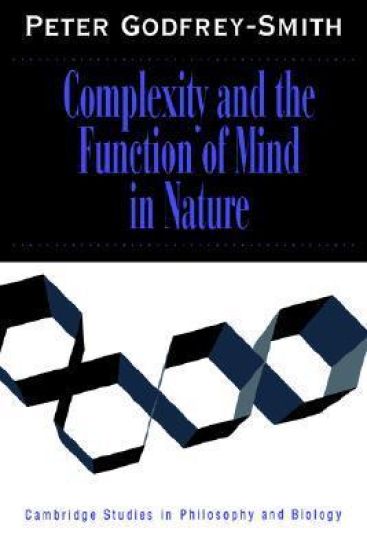
This book explains the relationship between intelligence and environmental complexity, and in so doing links philosophy of mind to more general issues about the relations between organisms and environments, and to the general pattern of ‘externalist’ explanations. The author provides a biological approach to the investigation of mind and cognition in nature. In particular he explores the idea that the function of cognition is to enable agents to deal with environmental complexity. The history of the idea in the work of Dewey and Spencer is considered, as is the impact of recent evolutionary theory on our understanding of the place of mind in nature.
Complexity and the Function of Mind in Nature

Complexity and the Function of Mind in Nature

Peter Godfrey-Smith

Cambridge University Press
1998
pokkari
This book explains the relationship between intelligence and environmental complexity, and in so doing links philosophy of mind to more general issues about the relations between organisms and environments, and to the general pattern of ‘externalist’ explanations. The author provides a biological approach to the investigation of mind and cognition in nature. In particular he explores the idea that the function of cognition is to enable agents to deal with environmental complexity. The history of the idea in the work of Dewey and Spencer is considered, as is the impact of recent evolutionary theory on our understanding of the place of mind in nature.
Philosophy of Biology

Philosophy of Biology

Peter Godfrey-Smith

Princeton University Press
2014
sidottu
This is a concise, comprehensive, and accessible introduction to the philosophy of biology written by a leading authority on the subject. Geared to philosophers, biologists, and students of both, the book provides sophisticated and innovative coverage of the central topics and many of the latest developments in the field. Emphasizing connections between biological theories and other areas of philosophy, and carefully explaining both philosophical and biological terms, Peter Godfrey-Smith discusses the relation between philosophy and science; examines the role of laws, mechanistic explanation, and idealized models in biological theories; describes evolution by natural selection; and assesses attempts to extend Darwin's mechanism to explain changes in ideas, culture, and other phenomena. Further topics include functions and teleology, individuality and organisms, species, the tree of life, and human nature. The book closes with detailed, cutting-edge treatments of the evolution of cooperation, of information in biology, and of the role of communication in living systems at all scales. Authoritative and up-to-date, this is an essential guide for anyone interested in the important philosophical issues raised by the biological sciences.
Philosophy of Biology

Philosophy of Biology

Peter Godfrey-Smith

Princeton University Press
2016
pokkari
This is a concise, comprehensive, and accessible introduction to the philosophy of biology written by a leading authority on the subject. Geared to philosophers, biologists, and students of both, the book provides sophisticated and innovative coverage of the central topics and many of the latest developments in the field. Emphasizing connections between biological theories and other areas of philosophy, and carefully explaining both philosophical and biological terms, Peter Godfrey-Smith discusses the relation between philosophy and science; examines the role of laws, mechanistic explanation, and idealized models in biological theories; describes evolution by natural selection; and assesses attempts to extend Darwin's mechanism to explain changes in ideas, culture, and other phenomena. Further topics include functions and teleology, individuality and organisms, species, the tree of life, and human nature. The book closes with detailed, cutting-edge treatments of the evolution of cooperation, of information in biology, and of the role of communication in living systems at all scales. Authoritative and up-to-date, this is an essential guide for anyone interested in the important philosophical issues raised by the biological sciences.
Living on Earth: Forests, Corals, Consciousness, and the Making of the World
One of the Washington Post's 50 Best Nonfiction Books of 2024The bestselling author of Other Minds shows how we and our ancestors have reinvented our planet. If the history of the Earth were compressed down to a year, our species would arise in the last thirty minutes or so of the final hour. But life itself is not such a late arrival: It has existed on Earth for something like 3.7 billion years--most of our planet's history and over a quarter of the age of the universe (as far as we can tell). What have these organisms--bacteria, animals, plants, and the rest--done in all this time? In Living on Earth, the philosopher Peter Godfrey-Smith proposes a new way of understanding how the actions of living beings have shaped our planet. Where his acclaimed books Other Minds and Metazoa explored the riddle of how conscious minds came to exist on Earth, Living on Earth turns to what happens when we look at the mind from another side--when we come to see organisms as active causes, not merely as results of the evolutionary process. The planet we inhabit is significantly the work of other living beings, who shaped the environments that we ourselves later transformed. To that end, Godfrey-Smith takes us on a grand tour of the history of life on earth. He visits Rwandan gorillas and Australian bowerbirds, returns to coral reefs and octopus dens, considers the impact of language and writing, and weighs the responsibilities our unique powers bring with them, as they relate to factory farming, habitat preservation, climate change, and the use of animals in experiments. Ranging from the seas to the forests, and from animate matter's first appearance to its future extinction, Godfrey-Smith offers a novel picture of the course of life on Earth and how we might meet the challenges of our time, the Anthropocene.
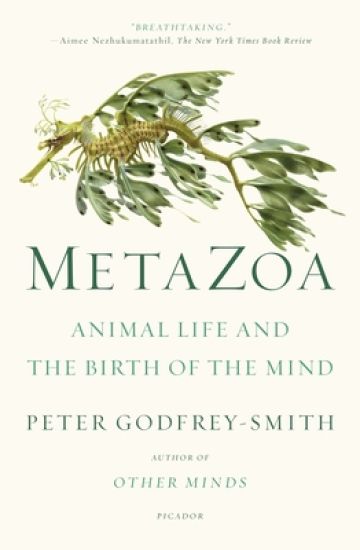
Metazoa: Animal Life and the Birth of the Mind

Metazoa: Animal Life and the Birth of the Mind

Peter Godfrey-Smith

Picador USA
2021
nidottu
"Enthralling . . . breathtaking . . . Metazoa brings an extraordinary and astute look at our own mind's essential link to the animal world." --The New York Times Book Review (Editors' Choice) "A great book . . . Godfrey-Smith is] brilliant at describing just what he sees, the patterns of behaviour of the animals he observes." --Nigel Warburton, Five BooksThe scuba-diving philosopher who wrote Other Minds explores the origins of animal consciousness Dip below the ocean's surface and you are soon confronted by forms of life that could not seem more foreign to our own: sea sponges, soft corals, and serpulid worms, whose rooted bodies, intricate geometry, and flower-like appendages are more reminiscent of plant life or even architecture than anything recognizably animal. Yet these creatures are our cousins. As fellow members of the animal kingdom--the Metazoa--they can teach us much about the evolutionary origins of not only our bodies, but also our minds. In his acclaimed 2016 book, Other Minds, the philosopher and scuba diver Peter Godfrey-Smith explored the mind of the octopus--the closest thing to an intelligent alien on Earth. In Metazoa, Godfrey-Smith expands his inquiry to animals at large, investigating the evolution of subjective experience with the assistance of far-flung species. As he delves into what it feels like to perceive and interact with the world as other life-forms do, Godfrey-Smith shows that the appearance of the animal body well over half a billion years ago was a profound innovation that set life upon a new path. In accessible, riveting prose, he charts the ways that subsequent evolutionary developments--eyes that track, for example, and bodies that move through and manipulate the environment--shaped the subjective lives of animals. Following the evolutionary paths of a glass sponge, soft coral, banded shrimp, octopus, and fish, then moving onto land and the world of insects, birds, and primates like ourselves, Metazoa gathers their stories together in a way that bridges the gap between mind and matter, addressing one of the most vexing philosophical problems: that of consciousness. Combining vivid animal encounters with philosophical reflections and the latest news from biology, Metazoa reveals that even in our high-tech, AI-driven times, there is no understanding our minds without understanding nerves, muscles, and active bodies. The story that results is as rich and vibrant as life itself.