Kirjojen hintavertailu. Mukana 11 342 296 kirjaa ja 12 kauppaa.

Kirjahaku

Etsi kirjoja tekijän nimen, kirjan nimen tai ISBN:n perusteella.

4 kirjaa tekijältä Peter H. Hoffenberg

An Empire on Display

An Empire on Display

Peter H. Hoffenberg

University of California Press
2001
sidottu
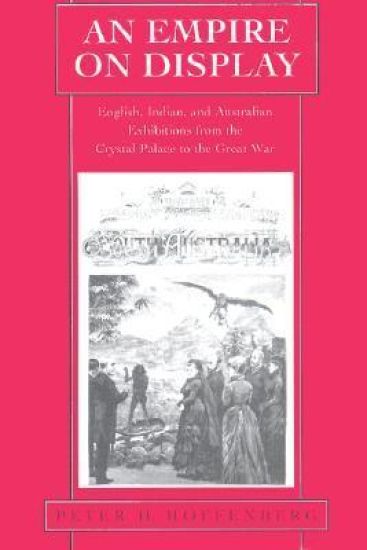
The grand exhibitions of the Victorian and Edwardian eras are the lens through which Peter Hoffenberg examines the economic, cultural, and social forces that helped define Britain and the British Empire. He focuses on major exhibitions in England. Australia, and India between the Great Exhibition of 1851 and the Festival of Empire sixty years later, taking special interest in the interactive nature of the exhibition experience, the long-term consequences for the participants and host societies, and the ways in which such popular gatherings revealed dissent as well as celebration. Hoffenberg shows how exhibitions shaped culture and society within and across borders in the transnational working of the British Empire. The exhibitions were central to establishing and developing a participatory imperial world, and each polity in that world provided distinctive information, visitors, and exhibits. Among the displays were commercial goods, working machines, and ethnographic scenes. Exhibits were intended to promote external commonwealth and internal nationalism. The imperial overlay did not erase significant differences but explained and used them in economic and cultural terms. The exhibitions in cities such as London, Sydney, and Calcutta were living and active public inventories of the Empire and its national political communities. The process of building and consuming such inventories persists today in the cultural bureaucracies, museums, and festivals of modern nation-states, the appeal to tradition and social order, and the actions of transnational bodies.
Science of Our Own, A

Science of Our Own, A

Peter H. Hoffenberg

University of Pittsburgh Press
2019
sidottu
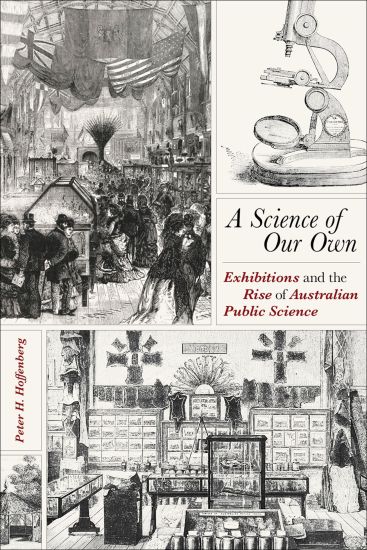
When the Reverend Henry Carmichael opened the Sydney Mechanics’ School of Arts in 1833, he introduced a bold directive: for Australia to advance on the scale of nations, it needed to develop a science of its own. Prominent scientists in the colonies of New South Wales and Victoria answered this call by participating in popular exhibitions far and near, from London’s Crystal Place in 1851 to Sydney, Melbourne, Adelaide, and Brisbane during the final decades of the nineteenth century. A Science of Our Own explores the influential work of local botanists, chemists, and geologists—William B. Clarke, Joseph Bosisto, Robert Brough Smyth, and Ferdinand Mueller—who contributed to shaping a distinctive public science in Australia during the nineteenth century. It extends beyond the political underpinnings of the development of public science to consider the rich social and cultural context at its core. For the Australian colonies, as Peter H. Hoffenberg argues, these exhibitions not only offered a path to progress by promoting both the knowledge and authority of local scientists and public policies; they also ultimately redefined the relationship between science and society by representing and appealing to the growing popularity of science at home and abroad.
Oceania and the Victorian Imagination

Oceania and the Victorian Imagination

Peter H. Hoffenberg

Routledge
2016
nidottu
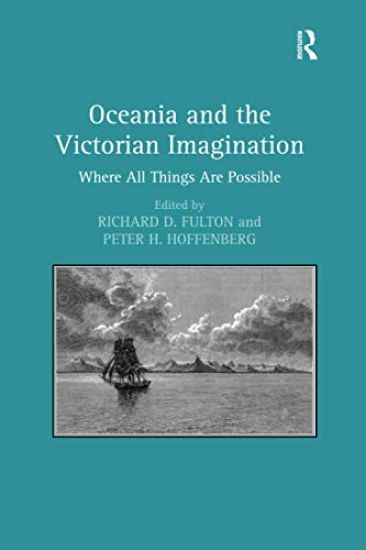
Oceania, or the South Pacific, loomed large in the Victorian popular imagination. It was a world that interested the Victorians for many reasons, all of which suggested to them that everything was possible there. This collection of essays focuses on Oceania’s impact on Victorian culture, most notably travel writing, photography, international exhibitions, literature, and the world of children. Each of these had significant impact. The literature discussed affected mainly the middle and upper classes, while exhibitions and photography reached down into the working classes, as did missionary presentations. The experience of children was central to the Pacific’s effects, as youthful encounters at exhibitions, chapel, home, or school formed lifelong impressions and experience. It would be difficult to fully understand the Victorians as they understood themselves without considering their engagement with Oceania. While the contributions of India and Africa to the nineteenth-century imagination have been well-documented, examinations of the contributions of Oceania have remained on the periphery of Victorian studies. Oceania and the Victorian Imagination contributes significantly to our discussion of the non-peripheral place of Oceania in Victorian culture.
Oceania and the Victorian Imagination

Oceania and the Victorian Imagination

Peter H. Hoffenberg

Ashgate Publishing Limited
2013
sidottu
Oceania, or the South Pacific, loomed large in the Victorian popular imagination. It was a world that interested the Victorians for many reasons, all of which suggested to them that everything was possible there. This collection of essays focuses on Oceania’s impact on Victorian culture, most notably travel writing, photography, international exhibitions, literature, and the world of children. Each of these had significant impact. The literature discussed affected mainly the middle and upper classes, while exhibitions and photography reached down into the working classes, as did missionary presentations. The experience of children was central to the Pacific’s effects, as youthful encounters at exhibitions, chapel, home, or school formed lifelong impressions and experience. It would be difficult to fully understand the Victorians as they understood themselves without considering their engagement with Oceania. While the contributions of India and Africa to the nineteenth-century imagination have been well-documented, examinations of the contributions of Oceania have remained on the periphery of Victorian studies. Oceania and the Victorian Imagination contributes significantly to our discussion of the non-peripheral place of Oceania in Victorian culture.