Kirjojen hintavertailu. Mukana 11 342 296 kirjaa ja 12 kauppaa.

Kirjahaku

Etsi kirjoja tekijän nimen, kirjan nimen tai ISBN:n perusteella.

153 kirjaa tekijältä Peter Handke

Handke Plays: 1

Handke Plays: 1

Peter Handke

Methuen Drama
1997
nidottu
Peter Handke's work is amongst the most strikingly original of all post-war European writing (Times Educational Supplement) Offending the Audience is "a dissection of our expectations about what ought to happen in the theatre." Self-Accusation is "a cunning and ironic attack on bureaucratic moral guilt" (Observer); Kaspar is based on the true story of Kaspar Hauser, a sixteen year old boy who appeared from nowhere in Nuremberg in 1828 and who had to be taught to speak from scratch. Handke's play is a downright attack on the way language is used by a corrupt society to depersonalise the individual; My Foot My Tutor is a mime for two actors - "Handke has here written an hour-long play without words that may at first look like a piece of audience-provocation but that finishes up as sheer theatrical poetry" (Guardian). In The Ride across Lake Constance, a group of characters (known only by the names of the actors who perform the parts) talk and play games together and skate over the thin ice that separates them from unspoken danger. "Intensely theatrical...an author for whom playwriting seems akin to tightrope walking" (The Times). They Are Dying Out puts the pillars of the bourgeoisie under the microscope to reveal an alien race, suffocated by rationality, unable to cope with untamed subjective impulses and shows an "uncanny knack for making the familiar seem strange" (Plays and Players).
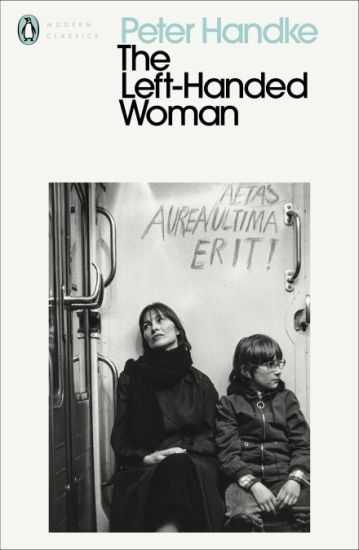
The Left-Handed Woman

The Left-Handed Woman

Peter Handke

Penguin Classics
2020
pokkari
WINNER OF THE NOBEL PRIZE FOR LITERATURE'One of Europe's great writers' Karl Ove KnausgaardOne evening Marianne, a suburban housewife living in an identikit bungalow, is struck by the realization that her husband will leave her. Whether at that moment, or in years to come, she will be deserted. So she sends him away, knowing she must fend for herself and her young son. As she adjusts to her disorienting new life alone, what she thought was fear slowly starts to feel like freedom.'Knifelike clarity of evocation ... Handke is a kind of nature poet, a romantic whose exacerbated nerves cling like pained ivy to the landscape' John UpdikeTranslated by Ralph Manheim
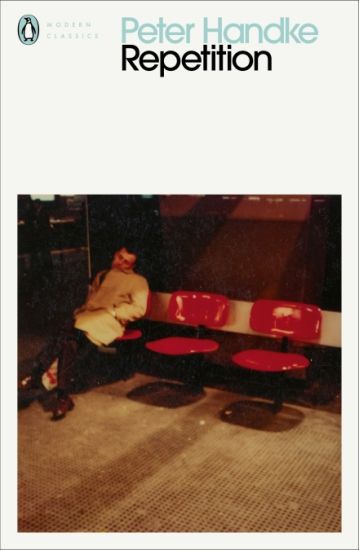
Repetition

Repetition

Peter Handke

Penguin Classics
2020
pokkari
WINNER OF THE NOBEL PRIZE FOR LITERATURE'Repetition made a great and, as I have since learned, lasting impression on me' W. G. SebaldFilip Kobal, an Austrian teenager, is on the trail of his missing older brother Gregor, who he never knew. All he has is two of Gregor's books: a school copy book, and a dictionary in which certain words have been marked. As he enters Slovenia on his journey, Filip discovers something else entirely: the transformative power of language to describe the world, and the unnerving joy of being an outsider in a strange land.'One of the most moving evocations I have ever read of what it means to be alive, to walk upon this earth' Gabriel JosipoviciTranslated by Ralph Manheim
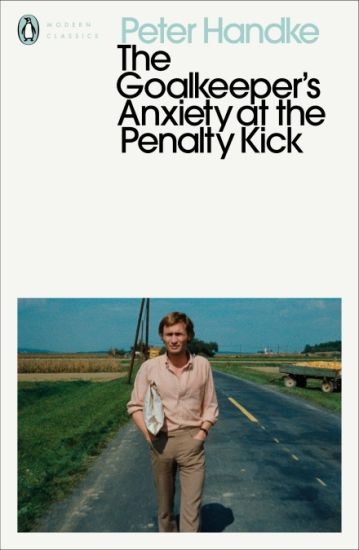
The Goalkeeper's Anxiety at the Penalty Kick
WINNER OF THE NOBEL PRIZE FOR LITERATURE'Portrays the breakdown of a murderer in ways that recall Camus' The Stranger' The New York TimesJoseph Bloch, a once-famous goalkeeper turned construction worker, commits a random murder without thought or regret. As he wanders the streets, from hotel to bar, cinema to tram stop, experiencing strange and violent encounters on the way, he finds himself, and everything around him, disintegrating. Told in spare and icy prose, Peter Handke's masterpiece of alienation takes apart our ideas of humanity and reality itself.'A Kafkaesque crime novel' Los Angeles TimesTranslated by Michael Roloff
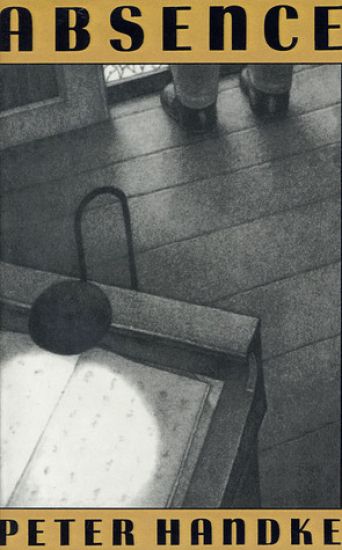
Absence

Absence

Peter Handke

Picador USA
2000
nidottu
A "challenging and rewarding novel"* from Nobel Prize-winning author Peter Handke.The time is an unspecified modernity, the place possibly Europe. Absence follows four nameless people -- the old man, the woman, the soldier, and the gambler--as they journey to a desolate wasteland beyond the limits of an unnamed city. "In this smoothly written fable, Handke forcefully summons readers to the recognition that the essence of human life lies in the striving for self-expression even though its perfect realization must always remain elusive."--*Publishers Weekly
The Goalie's Anxiety at the Penalty Kick

The Goalie's Anxiety at the Penalty Kick

Peter Handke

Farrar, Straus and Giroux
2007
nidottu
The first of Nobel Prize winner Peter Handke's novels to be published in English, The Goalie's Anxiety at the Penalty Kick is a true modern classic that "portrays the...breakdown of a murderer in ways that recall Camus's The Stranger" (The New York Times). The self-destruction of a soccer goalie turned construction worker who wanders aimlessly around a stifling Austrian border town after pursuing and then murdering, almost unthinkingly, a female movie cashier is mirrored by Handke's use of direct, sometimes fractured prose that conveys "at its best a seamless blend of lyricism and horror seen in the runes of a disintegrating world" (Boston Sunday Globe).
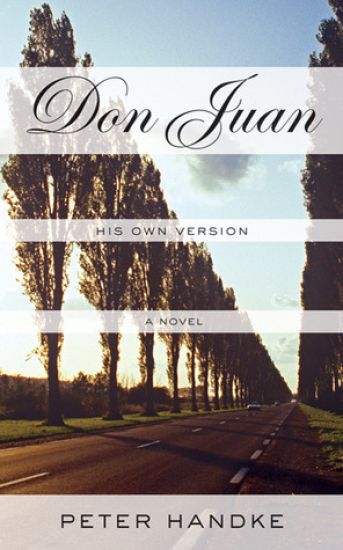
Don Juan: His Own Version

Don Juan: His Own Version

Peter Handke

Farrar, Straus and Giroux
2011
nidottu
Nobel Prize winner Peter Handke offers a wry and entertaining take on history's most famous seducer as he takes a respite from his stressful existence Don Juan's story--"his own version"--is filtered through the consciousness of an anonymous narrator, a failed innkeeper and chef, into whose solitude Don Juan bursts one day. On each day of the week that follows, Don Juan describes the adventures he experienced on that same day a week earlier. The adventures are erotic, but Handke's Don Juan is more pursued than pursuer. What makes his accounts riveting are the remarkable evocations of places and people, and the nature of his narration. Don Juan: His Own Version is, above all, a book about storytelling and its ability to burst the ordinary boundaries of time and space. In this brief and wry volume, Peter Handke conjures images and depicts the subtleties of human interaction with an unforgettable vividness. Along the way, he offers a sharp commentary on many features of contemporary life.
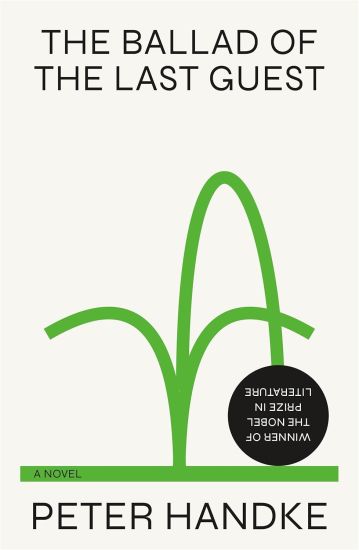
The Ballad of the Last Guest

The Ballad of the Last Guest

Peter Handke

Farrar, Straus and Giroux
2025
sidottu
A novel about a man who returns home, only to find that home is now unrecognizable, by the Nobel laureate Peter Handke. Gregor returns home from another continent. The landscape, formerly dotted with small villages, has been absorbed into the outskirts of a large city, both familiar and foreign at the same time. His father sits playing cards, waiting for him, but Gregor is surprised to find his sister holding an infant. He, the older brother, is to be the child's godfather--though he also carries with him the secret of his younger brother's death. In the end, Gregor is never quite able to stay put. He is drawn out into the world, into the streets and alleys of what is now a city, to the cinema, the soccer stadium, the forest, and above all the old fruit orchard, now overgrown and beyond saving. As he walks, the present and the past become intertwined--memories of childhood surface, and inner voices enter into dialogue. Revisiting many of the settings and themes of Peter Handke's previous works, The Ballad of the Last Guest takes stock of the changes that have been wrought on the land--and on human beings --over the course of the twenty-first century.
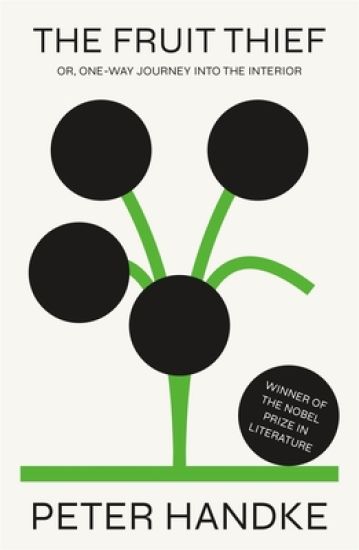
The Fruit Thief

The Fruit Thief

Peter Handke

FARRAR, STRAUS GIROUX INC
2022
sidottu
A major new novel from the Nobel laureate Peter Handke--one of his most inventive and dazzlingly original works On a summer day under a blue sky a man is stung on his foot by a bee. "The sting signaled that the time had come to set out, to hit the road. Off with you. The hour of departure has arrived." The man boards a train to Paris, crosses the city by M tro, then boards another, disembarking in a small town on the plains to the north. He is searching for a young woman he calls the Fruit Thief, who, like him, has set off on a journey to the Vexin plateau. What follows is a vivid but dreamlike exploration of topography both physical and affective, charting the Fruit Thief's perambulations across France's internal borderlands: alongside rivers and through ravines, beside highways and to a bolt-hole under the stairs of an empty hotel. Chance encounters--with a man scrambling through the underbrush in search of his lost cat, and with a delivery boy who abandons his scooter to become a fellow traveler for a day--are like so many throws of the dice, each exposing new facets of this mysterious individual in the manner of a cubist portrait. In prose of unrivaled precision, lucidly rendered into English by Krishna Winston, The Fruit Thief elevates the terrain of everyday life to epic status, and situates the microgeography of an individual at the center of a book like few others. This is one of Nobel laureate Peter Handke's most significant and original achievements.
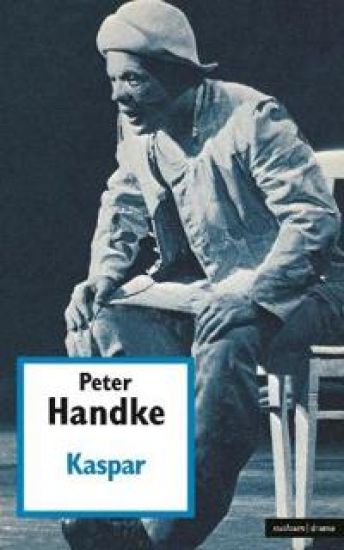
Kaspar

Kaspar

Peter Handke

Methuen Drama
1972
nidottu
'Kaspar is based on the historical case of a 16-year-old boy who appeared from nowhere in Nuremberg in 1828 and who had to be taught to speak from scratch . . . Handke's play is a downright attack on the way language is used by a corrupt society to depersonalise the individual'. - Michael Billington, the Guardian.'Handke's most sustained study in social indoctrination . . . there could be no better introduction to Handke.' - Irving Wardle, The Times.Kaspar is the most extraordinary and impressive play to date by Peter Handke. First staged in Germany in 1968, it was hailed by Max Frisch as 'the play of the decade'. The central character is Kaspar, a figure based on the historical Kaspar Hauser, an autistic adolescent, who is guided and taught until he speaks 'normally', by the voices of unseen prompters. As the words begin to coincide with reality, Kaspar learns to manipulate both. In the latter part of the play the tension between the individual and 'the others' is further expressed through the image of the original Kaspar surrounded by a host of identical 'Kaspars'.Having chosen language as a vehicle, Peter Handke explores it as a means of oppression - a means of creating artificial uniformity by teaching people to comprehend the world only in terms of the speech patterns they are given.
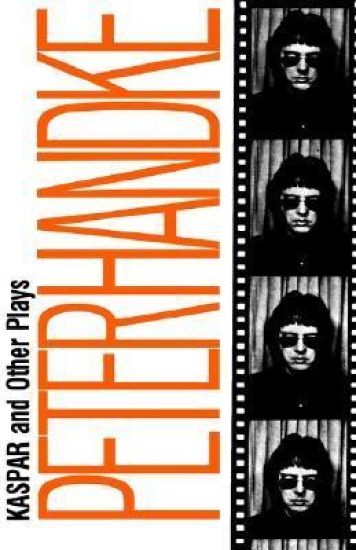
Kaspar and Other Plays

Kaspar and Other Plays

Peter Handke

Picador USA
1970
nidottu
Nobel Prize winner Peter Handke's first full-length drama, hailed in Europe as "the play of the decade" and compared in importance to Waiting for Godot Kaspar is the story of an autistic adolescent who finds himself at a complete existential loss on the stage, with but a single sentence to call his own. Drilled by prompters who use terrifyingly funny logical and alogical language-sequences, Kaspar learns to speak "normally" and eventually becomes creative--"doing his own thing" with words; for this he is destroyed. In Offending the Audience and Self-Accusation, one-character "speak-ins," Handke further explores the relationship between public performance and personal identity, forcing us to reconsider our sense of who we are and what we know.
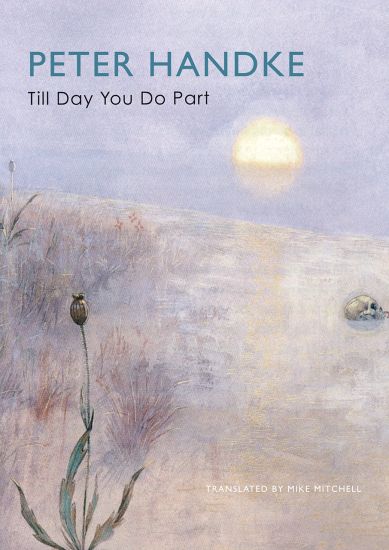
Till Day You Do Part

Till Day You Do Part

Peter Handke

Seagull Books London Ltd
2018
pokkari
Described as an answer to or at least an echo of Samuel Beckett's Krapp's Last Tape?, Till Day You Do Part Or A Question of Light, by esteemed Austrian playwright and novelist Peter Handke, is a monologue delivered by the "she" in Beckett's play. This unnamed female similarly recalls other significant women protagonists in Handke's own work such as The Lefthanded Woman. Handke prefaces the monologue in Till Day You Do PartOr a Question of Light with a description of two stone figures. While the male figure remains "as dead and gone as anyone can," the female bursts into life, and her monologue gradually focuses on Krapp's use of pauses and language to dominate the other characters in the Beckett play. Ultimately, however, her complaints and critique of Krapp become a declaration of her love for Krapp or at least an affirmation of their attachment, as the two of them are ultimately bound together, perhaps even inseparable. Till Day You Do Part Or a Question of Light is Handke at his best, evidencing the great skill, psychological acumen, and vision for which his work has been celebrated.
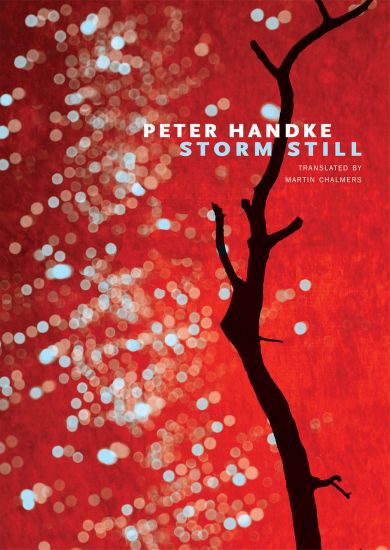
Storm Still

Storm Still

Peter Handke

Seagull Books London Ltd
2018
pokkari
Peter Handke, a giant of Austrian literature, has produced decades of fiction, poetry, and drama informed by some of the most tumultuous events in modern history. But even as these events shaped his work, the presence of his motherâ--a woman whose life spanned the Weimar Republic, both world wars, and the postwar consumer economy--loomed even larger. In Storm Still, Handke's most recent work, he returns to the land of his birth, the Austrian province of Carinthia. There on the Jaunfeld, the plain at the center of Austria's Slovenian settlement, the dead and the living of a family meet and talk. Composed as a series of monologues, Storm Still chronicles both the battle of the Slovene minority against Nazism and their love of the land. Presenting a panorama that extends back to the author's bitter roots in the region, Storm Still blends penetrating prose and poetic drama to explore Handke's personal history, taking up themes from his earlier books and revisiting some of their characters. In this book, the times of conflict and peace, war and prewar, and even the seasons themselves shift and overlap. And the fate of an orchard comes to stand for the fate of a people.
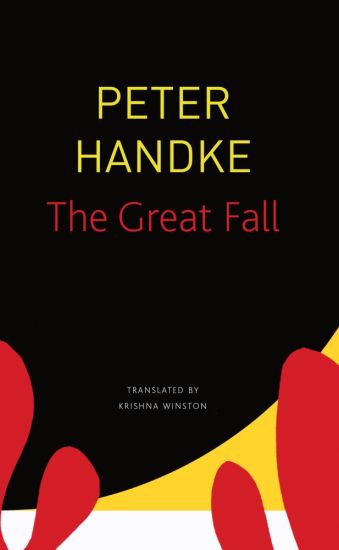
The Great Fall

The Great Fall

Peter Handke

Seagull Books London Ltd
2021
nidottu
“On the day of the Great Fall he left nothing, nothing at all behind.” The latest work by Peter Handke, one of our greatest living writers, chronicles a day in life of an aging actor as he makes his way on foot from the outskirts of a great metropolis into its center. He is scheduled to receive a prestigious award that evening from the country’s president, and the following day he is supposed to start shooting for a film—perhaps his last—in which he plays a man who runs amok. While passing through a forest, he encounters the outcasts of the society—homeless people and migrants—but he keeps trudging along, traversing a suburb whose inhabitants are locked in petty but mortal conflicts, crossing a seemingly unbridgeable superhighway, and wandering into an abandoned railyard, where police, unused to pedestrians, detain him briefly on suspicion of terrorism. Things don’t improve when he reaches the heart of the city. There he can’t help but see the alienation characteristic of its residents and the omnipresent malign influence of electronic technology. What, then, is the “Great Fall”? What is this heart-wrenching, humorous, distinctively attentive narrative trying to tell us? As usual, Peter Handke, deeply introspective and powerfully critical of the world around him, leaves it to the reader to figure out.
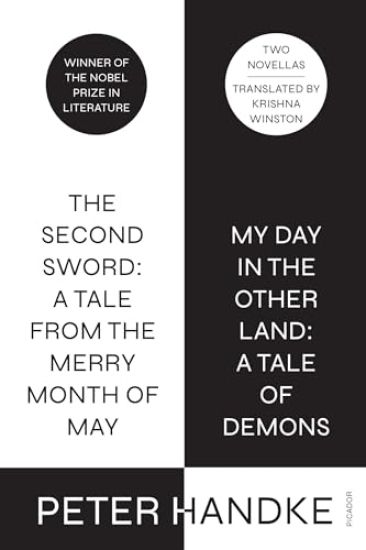
The Second Sword: A Tale from the Merry Month of May, and My Day in the Other Land: A Tale of Demons
The Second Sword and My Day in the Other Land are two new novellas by the 2019 Nobel laureate Peter Handke. The first picks up the story where Handke’s last work of fiction, The Fruit Thief (described in The New York Times as “an experience of unadulterated literature”), left off. Here a man has returned to his home in the suburbs of Paris, only to soon set out again. Why? We learn, over the course of a story redolent of Handke’s harrowing A Sorrow Beyond Dreams, that he is seeking to avenge his mother, who has been unjustly denounced in the pages of a newspaper. The Second Sword is a suspenseful work of self-examination: Will the narrator’s journey end in him throwing down the gauntlet? My Day in the Other Land is Handke’s most recently published work - and the first to be written after he was awarded the Nobel Prize. Evoking imagery from the Bible and classical mythology, it portrays a man who has been possessed by demons, causing him to rage endlessly against the inhabitants of his rural village. Aided by his sister, he embarks on a journey to a lake on whose opposite shore lies the “other land.” What ensues is an exorcism of sorts - and one of Handke’s most evocative and original endings.
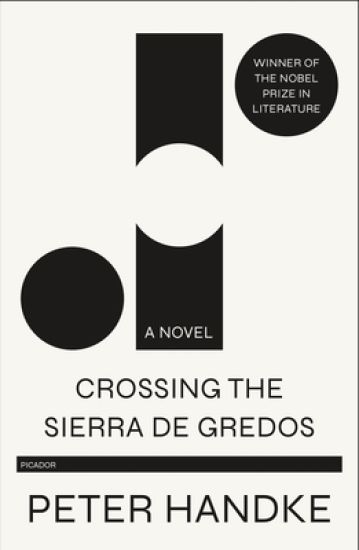
Crossing the Sierra de Gredos

Crossing the Sierra de Gredos

Peter Handke

Picador USA
2020
pokkari
In this visionary novel, Nobel Prize winner Peter Handke offers descriptions of objects, relationships, and events that teach readers a renewed way of seeing; he creates a wealth of images to replace those lost to convention and conformity. On the outskirts of a northwestern European river port city lives a powerful woman banker, a public figure admired and hated in equal measure, who has decided to turn from the worlds of high finance and modern life to embark on a quest. Having commissioned a famous writer to undertake her "authentic" biography, she journeys through the Spanish Sierra de Gredos and the region of La Mancha to meet him. As she travels by all-terrain vehicle, bus, and finally on foot, the nameless protagonist encounters five way stations that become the stuff of her biography and the biography of the modern world, a world in which genuine images and unmediated experiences have been exploited and falsified by commercialization and by the voracious mass media. Crossing the Sierra de Gredos is a very human book of yearning and the ancient quest for love, peopled with memorable characters (from multiple historical periods) and imbued with Handke's inimitable ability to portray universal, inner-worldly adventures that blend past, future, present, and dreamtime.
On a Dark Night I Left My Silent House
A short, powerful new novel by one of the greatest writers in the German language. On a Dark Night I Left My Silent House is Nobel Prize-winning author Peter Handke's evocative, moving, often fantastic, novel about one man's conflict with himself and his journey toward resolution. During one night shift, an unnamed, middle-aged pharmacist in Taxham, an isolated suburb of Salzburg, tells his story to a narrator. The pharmacist is known and well-respected, but lonely and estranged from his wife. He feels most comfortable wandering about in nature, collecting and eating hallucinogenic mushrooms. One day he receives a blow to the head that leaves him unable to speak, and the narrative is transformed from ironic description into a collection of sensual impressions, observations and reflections. The pharmacist, who is now called the driver, sets out on a quest, travelling into the Alps with two companions--a former Olympic skiing champion and a formerly famous poet--where he is beaten and later stalked by a woman. He drives through a tunnel and has a premonition of death, then finds himself in a surreal, foreign land. In a final series of bizarre, cathartic events, the driver regains his speech and is taken back to his pharmacy--back to his former life, but forever changed. A powerful, poetic exploration of language, longing and dislocation in the human experience, On a Dark Night I Left My Silent House reveals Handke at his magical best.