Kirjojen hintavertailu. Mukana 12 016 292 kirjaa ja 12 kauppaa.

Kirjahaku

Etsi kirjoja tekijän nimen, kirjan nimen tai ISBN:n perusteella.

29 kirjaa tekijältä Peter Harrison

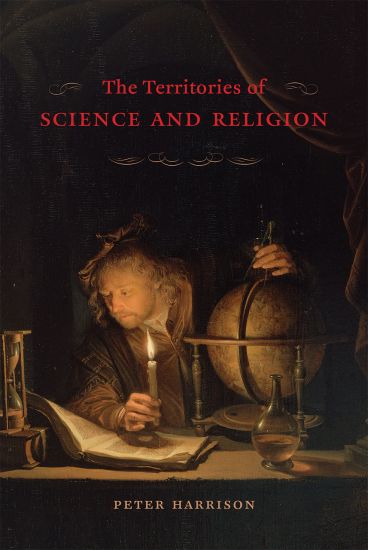
The Territories of Science and Religion

The Territories of Science and Religion

Peter Harrison

University of Chicago Press
2017
nidottu
The conflict between science and religion seems indelible, even eternal. Surely two such divergent views of the universe have always been in fierce opposition? Actually, that's not the case, says Peter Harrison: our very concepts of science and religion are relatively recent, emerging only in the past three hundred years, and it is those very categories, rather than their underlying concepts, that constrain our understanding of how the formal study of nature relates to the religious life. In The Territories of Science and Religion, Harrison dismantles what we think we know about the two categories, then puts it all back together again in a provocative, productive new way. By tracing the history of these concepts for the first time in parallel, he illuminates alternative boundaries and little-known relations between them thereby making it possible for us to learn from their true history, and see other possible ways that scientific study and the religious life might relate to, influence, and mutually enrich each other. A tour de force by a distinguished scholar working at the height of his powers, The Territories of Science and Religion promises to forever alter the way we think about these fundamental pillars of human life and experience.
As Twilight Fades Away

As Twilight Fades Away

Peter Harrison

Lulu.com
2018
pokkari
Above Lake Teresa in the quiet hills of Provence, the new Auberge du Lac private retirement home opens its doors for the first time. Amongst the new residents are Charles Drew, a retired policeman with an unusual hobby and Daphne Ferris, retired secretary, with an apparent dislike for all humanity. Between the two of them, an unlikely friendship develops; which holds them in good stead with the arrival of the mysterious Lady Sophie Vanseer and her husband. But their insatiable curiosity becomes their undoing, and as everything seems to spiral out of control, their peaceful retirement becomes a thing of the past.
The Bible, Protestantism, and the Rise of Natural Science

The Bible, Protestantism, and the Rise of Natural Science

Peter Harrison

Cambridge University Press
2001
pokkari
Peter Harrison examines the role played by the Bible in the emergence of natural science. He shows how both the contents of the Bible, and more particularly the way it was interpreted, had a profound influence on conceptions of nature from the third century to the seventeenth. The rise of modern science is linked to the Protestant approach to texts, an approach which spelt an end to the symbolic world of the Middle Ages and established the conditions for the scientific investigation and technological exploitation of nature.
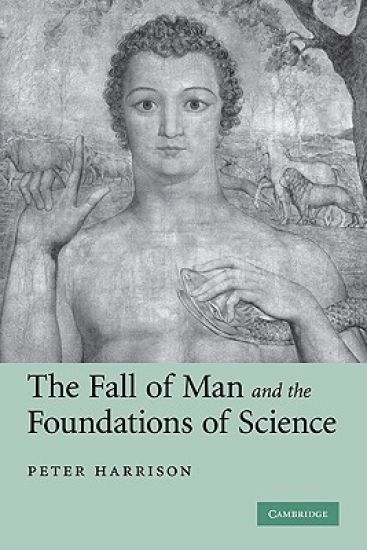
The Fall of Man and the Foundations of Science

The Fall of Man and the Foundations of Science

Peter Harrison

Cambridge University Press
2009
pokkari
Peter Harrison provides an account of the religious foundations of scientific knowledge. He shows how the approaches to the study of nature that emerged in the sixteenth and seventeenth centuries were directly informed by theological discussions about the Fall of Man and the extent to which the mind and the senses had been damaged by that primeval event. Scientific methods, he suggests, were originally devised as techniques for ameliorating the cognitive damage wrought by human sin. At its inception, modern science was conceptualized as a means of recapturing the knowledge of nature that Adam had once possessed. Contrary to a widespread view that sees science emerging in conflict with religion, Harrison argues that theological considerations were of vital importance in the framing of the scientific method.
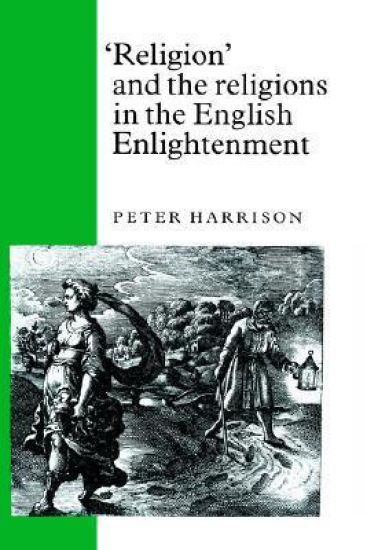
'Religion' and the Religions in the English Enlightenment

'Religion' and the Religions in the English Enlightenment

Peter Harrison

Cambridge University Press
1990
sidottu
This study examines the changes which took place in the understanding of 'religion' and 'the religions' during the Enlightenment in England, the period when the decisive break with Patristic, Medieval and Renaissance notions of religion occurred. Dr Harrison's view is that the principles of the English Enlightenment not only made a special contribution to our modern understanding of what religion is, but they pioneered, in addition, the 'scientific', or non-religious approach, to religious phenomena. During this period a crisis of authority in the Church necessitated a rational enquiry into the various forms of Christianity, and in addition, into the claims of all religions. This led to a concept of 'religion' (based on 'natural' theology) which could link together the apparently disparate religious beliefs and practices found in the empirical religions.
The Bible, Protestantism, and the Rise of Natural Science

The Bible, Protestantism, and the Rise of Natural Science

Peter Harrison

Cambridge University Press
1998
sidottu
Peter Harrison examines the role played by the Bible in the emergence of natural science. He shows how both the contents of the Bible, and more particularly the way it was interpreted, had a profound influence on conceptions of nature from the third century to the seventeenth. The rise of modern science is linked to the Protestant approach to texts, an approach which spelt an end to the symbolic world of the Middle Ages and established the conditions for the scientific investigation and technological exploitation of nature.
The Fall of Man and the Foundations of Science

The Fall of Man and the Foundations of Science

Peter Harrison

Cambridge University Press
2007
sidottu
Peter Harrison provides an account of the religious foundations of scientific knowledge. He shows how the approaches to the study of nature that emerged in the sixteenth and seventeenth centuries were directly informed by theological discussions about the Fall of Man and the extent to which the mind and the senses had been damaged by that primeval event. Scientific methods, he suggests, were originally devised as techniques for ameliorating the cognitive damage wrought by human sin. At its inception, modern science was conceptualized as a means of recapturing the knowledge of nature that Adam had once possessed. Contrary to a widespread view that sees science emerging in conflict with religion, Harrison argues that theological considerations were of vital importance in the framing of the scientific method.
'Religion' and the Religions in the English Enlightenment

'Religion' and the Religions in the English Enlightenment

Peter Harrison

Cambridge University Press
2002
pokkari
This study examines the changes which took place in the understanding of ‘religion’ and ‘the religions’ during the Enlightenment in England, the period when the decisive break with Patristic, Medieval and Renaissance notions of religion occurred. Dr Harrison’s view is that the principles of the English Enlightenment not only made a special contribution to our modern understanding of what religion is, but they pioneered, in addition, the ‘scientific’, or non-religious approach, to religious phenomena. During this period a crisis of authority in the Church necessitated a rational enquiry into the various forms of Christianity, and in addition, into the claims of all religions. This led to a concept of ‘religion’ (based on ‘natural’ theology) which could link together the apparently disparate religious beliefs and practices found in the empirical religions.
Some New World

Some New World

Peter Harrison

Cambridge University Press
2024
sidottu
In his famous argument against miracles, David Hume gets to the heart of the modern problem of supernatural belief. 'We are apt', says Hume, 'to imagine ourselves transported into some new world; where the whole form of nature is disjointed, and every element performs its operation in a different manner, from what it does at present.' This encapsulates, observes Peter Harrison, the disjuncture between contemporary Western culture and medieval societies. In the Middle Ages, people saw the hand of God at work everywhere. Indeed, many suppose that 'belief in the supernatural' is likewise fundamental nowadays to religious commitment. But dichotomising between 'naturalism' and 'supernaturalism' is actually a relatively recent phenomenon, just as the notion of 'belief' emerged historically late. In this masterful contribution to intellectual history, the author overturns crucial misconceptions – 'myths' – about secular modernity, challenging common misunderstandings of the past even as he reinvigorates religious thinking in the present.
Some New World

Some New World

Peter Harrison

Cambridge University Press
2025
pokkari
In his famous argument against miracles, David Hume gets to the heart of the modern problem of supernatural belief. 'We are apt', says Hume, 'to imagine ourselves transported into some new world; where the whole form of nature is disjointed, and every element performs its operation in a different manner, from what it does at present.' This encapsulates, observes Peter Harrison, the disjuncture between contemporary Western culture and medieval societies. In the Middle Ages, people saw the hand of God at work everywhere. Indeed, many suppose that 'belief in the supernatural' is likewise fundamental nowadays to religious commitment. But dichotomising between 'naturalism' and 'supernaturalism' is actually a relatively recent phenomenon, just as the notion of 'belief' emerged historically late. In this masterful contribution to intellectual history, the author overturns crucial misconceptions – 'myths' – about secular modernity, challenging common misunderstandings of the past even as he reinvigorates religious thinking in the present.
Life Downside Up

Life Downside Up

Peter Harrison

Austin Macauley Publishers
2024
nidottu
25-year-old Fae finds herself spending Christmas alone, contemplating her struggles with depression and bipolar disorder and how these battles have prised her family apart. She decided to seize her own demons and uprooted her life to Ljianstipol, a place where she spent a lot of her teenage years in an experimental mental healthcare facility. With determination, courage, and a thrust for a 'normal' life, not only is she now living in Ljianstipol but also working at the same mental healthcare facility, the hotel Davizioso, However, life is not always so straight forward, and problems arise when asked to document her experiences for a magazine article this only rekindles issues, she has spent years evading. In the midst of a depression and anxiety attack she is befriended by a mysterious passing stranger, who shows Fae that there is a world of friendship, acceptance, hope and just a little bit of magic all waiting for her, even if Fae has lived her Life Downside Up.
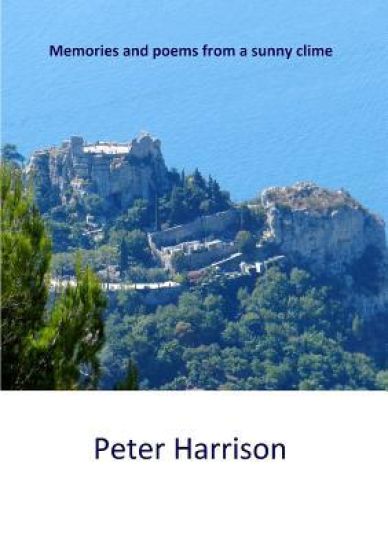
Memories and Poems from a Sunny Clime
Peter Harrison has lived in France for over thirty-five years.He recounts some of his memories which have resulted in so many of his poems. From his arrival in Provence with his family and working as a chef in the Var, to his often exasperating but amusing thirteen years as the butler of a very eccentric millionaire in Monaco.He is now retired and lives in Eze.