Kirjojen hintavertailu. Mukana 11 342 296 kirjaa ja 12 kauppaa.

Kirjahaku

Etsi kirjoja tekijän nimen, kirjan nimen tai ISBN:n perusteella.

2 kirjaa tekijältä Peter Haskel

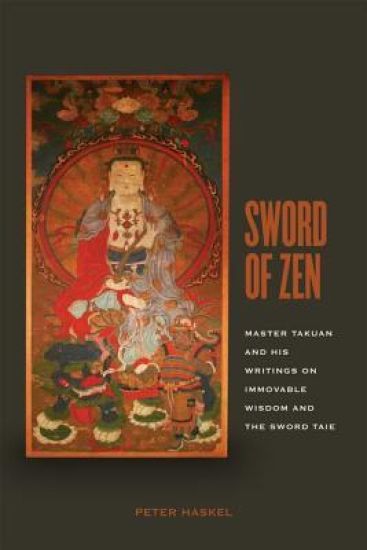
Sword of Zen

Sword of Zen

Peter Haskel

University of Hawai'i Press
2012
sidottu
Takuan Soho’s (1573–1645) two works on Zen and swordsmanship are among the most straightforward and lively presentations of Zen ever written and have enjoyed great popularity in both premodern and modern Japan. Although dealing ostensibly with the art of the sword,Record of Immovable Wisdom andOn the Sword Taie are basic guides to Zen—“user’s manuals” for Zen mind that show one how to manifest it not only in sword play but from moment to moment in everyday life.Along with translations of Record of Immovable Wisdom and On the Sword Taie (the former, composed in all likelihood for the shogun Tokugawa Iemitsu and his fencing master, Yagyu Munenori), this book includes an introduction to Takuan’s distinctive approach to Zen, drawing on excerpts from the master’s other writings. It also offers an accessible overview of the actual role of the sword in Takuan’s day, a period that witnessed both a bloody age of civil warfare and Japan’s final unification under the Tokugawa shoguns. Takuan was arguably the most famous Zen priest of his time, and as a pivotal figure, bridging the Zen of the late medieval and early modern periods, his story (presented in the book’s biographical section) offers a rare picture of Japanese Zen in transition.For modern readers, whether practitioners of Zen or the martial arts, Takuan’s emphasis on freedom of mind as the crux of his teaching resonates as powerfully as it did with the samurai and swordsmen of Tokugawa Japan. Scholars will welcome this new, annotated translation of Takuan’s sword-related works as well as the host of detail it provides, illuminating an obscure period in Zen’s history in Japan.
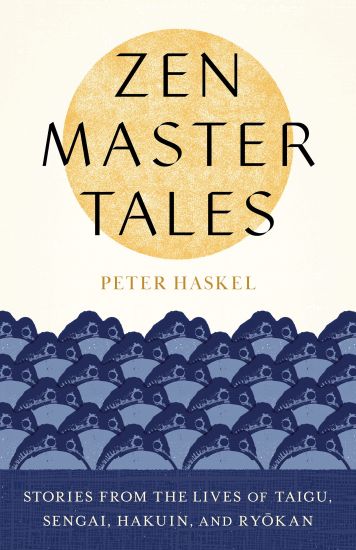
Zen Master Tales

Zen Master Tales

Peter Haskel

SHAMBHALA PUBLICATIONS INC
2022
nidottu
A lively collection of folk tales and Buddhist teaching stories from four noted premodern Japanese Zen masters: Taigu S chiku (1584-1669), Sengai Gibon (1750-1831), Hakuin Ekaku (1686-1769), and Taigu Ry kan (1758-1831). Zen Master Tales collects never before translated stories of four prominent Zen masters from the Edo period of Japanese history (1603-1868). Drawn from an era that saw the "democratization" of Japanese Zen, these stories paint a picture of robust, funny, and poignant engagement between Zen luminaries and the emergent chоnin or "townsperson" culture of early modern Japan. Here we find Zen monks engaging with samurai, merchants, housewives, entertainers, and farmers. These masters affirmed that the essentials of Zen practice--zazen, koan study, even enlightenment--could be conveyed to all members of Japanese society in ordinary speech, including even comic verse and work songs. Against the backdrop of this rich tableau, Zen Master Tales serves not only as a text for Zen students but also as a wide-ranging window onto the fascinating literary, material, and social history of Edo Japan. In his introduction, translator Peter Haskel explains the history of Zen "stories" from the tradition's Golden Age in China through the compilation of the classic koan collections and on to the era from which the stories in Zen Master Tales are drawn. What was true of the Chinese tradition, he writes--"its focus on the individual's ordinary activity as the function, the manifestation of the absolute"--continued in the Japanese context. "Most of these Japanese stories, however unabashedly humorous and at times crude, impart something of the character of the Zen masters involved, whose attainment must be plainly manifest in even the most humble and unlikely of situations."