Kirjojen hintavertailu. Mukana 11 244 527 kirjaa ja 12 kauppaa.

Kirjahaku

Etsi kirjoja tekijän nimen, kirjan nimen tai ISBN:n perusteella.

14 kirjaa tekijältä Peter J. Adams

Reflecting on the Inevitable

Reflecting on the Inevitable

Peter J. Adams

Oxford University Press Inc
2020
nidottu
Death studies have, over the last twenty years, witnessed a flourishing of research and scholarship particularly in areas such as dying and bereavement, cultural practices and fear of dying. But, despite its importance, a specific focus on the nature of personal mortality has attracted surprisingly little attention. Reflecting on the Inevitable combines evidence from several disciplinary fields to explore the varying ways each of us engages with the prospect of personal mortality. Chapters are organized around the question of how an ongoing relationship might be possible when the threat of consciousness coming to an end points to an unspeakable nothingness. The book then argues that, despite this threat, an ongoing relationship with one's own death is still possible by means of conceptual devices, or 'enabling frames', that help shape personal mortality into a relatable object. In each chapter the subtleties and applicability of key ideas are enhanced through a series of illustrative narratives built up around the lives of four people at different ages living in two adjacent houses. Reflecting on the Inevitable is relevant not only to academics of death studies, but also those training and practicing in people-helping professions, as well as anyone experiencing or attempting to make sense of major life events.

Fragmented Intimacy

Fragmented Intimacy

Peter J. Adams

Springer-Verlag New York Inc.
2007
sidottu
I recall during my early years as a clinical psychologist being asked by hospital staff to speak with a 32-year-old man addicted to alcohol who was being discharged following treatment for pancreatitis. This had been his third admission for the same illness, and hospital practitioners were exasperated by his choice to continue dri- ing despite being repeatedly told it would cause irreparable damage to his pancreas from which he would be unlikely to survive. I met him in a side-room on the ward. He sat in his pyjamas in the corner of the room, thin and ashen looking, with a worried frown fixed across his face. Our conversation was initially stilted and I was trying hard not to replicate the lectures and sermons he was likely to have already received from hospital staff. As we talked I was able to piece together bits of inf- mation about his current circumstances: he lived alone, he was unemployed, and his only family contact was with a brother who visited to check on him occasionally. He started to relax into the conversation and then talked about his long struggles with alcohol: his drinking had begun in his early teens; it had provided him with con- dence and friendships; he had had some serious motor vehicle accidents; he had tried to stop drinking but soon continued; he had lost friends, jobs, and family re- tionships; and in response he had increasingly sought intoxication as a refuge.
Gambling, Freedom and Democracy

Gambling, Freedom and Democracy

Peter J. Adams

Routledge
2012
nidottu
As a consequence of the rapid proliferation of commercial gambling in Western-style democracies, governments and communities are encountering a complex array of economic, social and cultural harms associated with this expansion. This book focuses specifically on harms to democratic systems. It examines how people with key roles in democratic structures are vulnerable to subtle influence from the burgeoning profits of gambling. It focuses particularly on the Western-style democracies of North America, Europe and Australasia. It argues that governments have a duty of care to protect their own democratic processes from subtle degradations and that independence from the gambling industries needs to be proactively built into public sector structures and processes. It outlines how a public health approach, harm minimisation strategies and international conventions can provide the base for protecting the integrity of democratic systems.
Gambling, Freedom and Democracy

Gambling, Freedom and Democracy

Peter J. Adams

Routledge
2007
sidottu
As a consequence of the rapid proliferation of commercial gambling in Western-style democracies, governments and communities are encountering a complex array of economic, social and cultural harms associated with this expansion. This book focuses specifically on harms to democratic systems. It examines how people with key roles in democratic structures are vulnerable to subtle influence from the burgeoning profits of gambling. It focuses particularly on the Western-style democracies of North America, Europe and Australasia. It argues that governments have a duty of care to protect their own democratic processes from subtle degradations and that independence from the gambling industries needs to be proactively built into public sector structures and processes. It outlines how a public health approach, harm minimisation strategies and international conventions can provide the base for protecting the integrity of democratic systems.
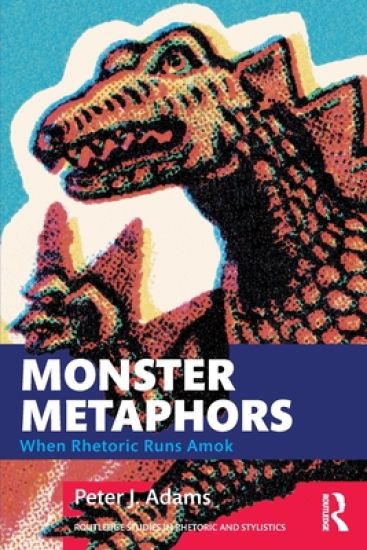
Monster Metaphors

Monster Metaphors

Peter J. Adams

TAYLOR FRANCIS LTD
2023
sidottu
This book explores ways in which common metaphors can play a detrimental role in everyday life; how they can grow in outsized importance to dominate their respective terrains and push out alternative perspectives; and how forms of resistance might act to contain their dominance. The volume begins by unpacking the dynamics of metaphors, their power and influence and the ways in which they are bolstered by other rhetorical devices. Adams draws on four case studies to illustrate their destructive impact when they eclipse other points of view—the metaphor of mental illness; the metaphor of free-flowing markets; the metaphor of the mind as a mirror and the metaphor of men as naturally superior. Taken together, these examples prompt further reflection on the beneficiaries of these "monster metaphors" and how they promote such metaphors to serve their own interests but also on ways forward for challenging their dominance, strategies for preventing their rise and ways of creating space for alternatives.This book will be of interest to scholars interested in the study of metaphor, across such fields as linguistics, rhetoric and media studies.
Monster Metaphors

Monster Metaphors

Peter J. Adams

TAYLOR FRANCIS LTD
2023
nidottu
This book explores ways in which common metaphors can play a detrimental role in everyday life; how they can grow in outsized importance to dominate their respective terrains and push out alternative perspectives; and how forms of resistance might act to contain their dominance. The volume begins by unpacking the dynamics of metaphors, their power and influence and the ways in which they are bolstered by other rhetorical devices. Adams draws on four case studies to illustrate their destructive impact when they eclipse other points of view—the metaphor of mental illness; the metaphor of free-flowing markets; the metaphor of the mind as a mirror and the metaphor of men as naturally superior. Taken together, these examples prompt further reflection on the beneficiaries of these "monster metaphors" and how they promote such metaphors to serve their own interests but also on ways forward for challenging their dominance, strategies for preventing their rise and ways of creating space for alternatives.This book will be of interest to scholars interested in the study of metaphor, across such fields as linguistics, rhetoric and media studies.
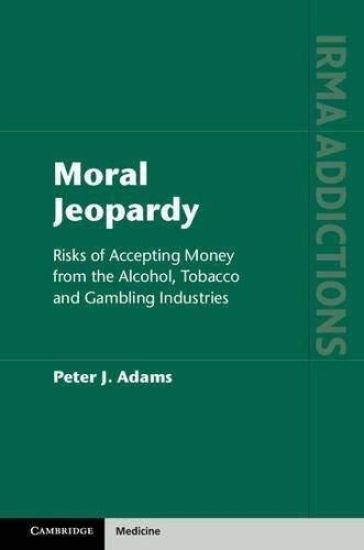
Moral Jeopardy

Moral Jeopardy

Peter J. Adams

Cambridge University Press
2016
sidottu
Tobacco, alcohol and gambling corporations have been highly effective in stalling, diverting and blocking public health measures. This book provides an original and engaging exposé of the ethical issues faced by people and organizations when they accept industry money in ways that facilitate corporate influence with the public and with policy makers. It starts with a detailed examination of the risks of accepting such profits and what might be done to reduce them, then moves on to introduce the concept of a continuum of 'moral jeopardy' which shifts the emphasis from accept/not accept binaries to a focus on the extent to which people are willing to accept funding. This shift encourages people to think and speak more about the risks and to develop clearer positions for themselves. The content will be helpful to those working in government agencies, addiction services, community organizations or anyone interested in reducing the harms of addictive consumption.
Fragmented Intimacy

Fragmented Intimacy

Peter J. Adams

Springer-Verlag New York Inc.
2010
nidottu
I recall during my early years as a clinical psychologist being asked by hospital staff to speak with a 32-year-old man addicted to alcohol who was being discharged following treatment for pancreatitis. This had been his third admission for the same illness, and hospital practitioners were exasperated by his choice to continue dri- ing despite being repeatedly told it would cause irreparable damage to his pancreas from which he would be unlikely to survive. I met him in a side-room on the ward. He sat in his pyjamas in the corner of the room, thin and ashen looking, with a worried frown fixed across his face. Our conversation was initially stilted and I was trying hard not to replicate the lectures and sermons he was likely to have already received from hospital staff. As we talked I was able to piece together bits of inf- mation about his current circumstances: he lived alone, he was unemployed, and his only family contact was with a brother who visited to check on him occasionally. He started to relax into the conversation and then talked about his long struggles with alcohol: his drinking had begun in his early teens; it had provided him with con- dence and friendships; he had had some serious motor vehicle accidents; he had tried to stop drinking but soon continued; he had lost friends, jobs, and family re- tionships; and in response he had increasingly sought intoxication as a refuge.
Navigating Everyday Life

Navigating Everyday Life

Peter J. Adams

Lexington Books
2018
sidottu
Navigating Everyday Life explores the special moments, big and small, that rupture the surface of everyday life and that can help readers adjust to the disrupting effects of major life crises. Peter Adams delves into the two forces, finitude (the aspects that constrain a person to a situation) and transcendence (those aspects that enable movement beyond such constraints). Building on this framework, Adams looks at the processes and circumstances that both facilitate and block the tensions between finitude and transcendence. He then illustrates how these tensions function in the personal and existential challenges faced by five members of a modern suburban family. Their stories traverse life transitions such as separation, depression, chronic illness, injury, violence, addiction, aging, death, and forgiveness. This book is recommended for scholars and others interested in the intersections between psychology and philosophy.
How to Talk About Spiritual Encounters

How to Talk About Spiritual Encounters

Peter J. Adams

Springer Nature Switzerland AG
2020
sidottu
This book develops a new and innovative way of understanding how language is used when people describe their spiritual and mystical encounters. Early chapters provide overviews of the nature of spiritual encounters, how commonly they occur, and the role of language. The book then develops a unique way of understanding the dynamics of talking about spirituality, using original research to support this perspective. In particular, Peter J. Adams explores how this characteristically vague way of speaking can be viewed as an intentional and not an incidental aspect of such communications because certain types of vagueness have the capacity to engage the imaginative participation of receptive listeners. This expressive vagueness is achieved by embedding missing bits, or “gaps,” in the flow of what is described and these in turn provide sites for listeners to insert their own content. Later chapters focus on practical ways people (including helping professionals) can improve their skills in talking about their spiritual encounters. All content is situated in café conversations between four people each of whom is, in their own way, concerned with the challenges they face in converting the content of their encounters into words.
How to Talk About Spiritual Encounters

How to Talk About Spiritual Encounters

Peter J. Adams

Springer Nature Switzerland AG
2021
nidottu
This book develops a new and innovative way of understanding how language is used when people describe their spiritual and mystical encounters. Early chapters provide overviews of the nature of spiritual encounters, how commonly they occur, and the role of language. The book then develops a unique way of understanding the dynamics of talking about spirituality, using original research to support this perspective. In particular, Peter J. Adams explores how this characteristically vague way of speaking can be viewed as an intentional and not an incidental aspect of such communications because certain types of vagueness have the capacity to engage the imaginative participation of receptive listeners. This expressive vagueness is achieved by embedding missing bits, or “gaps,” in the flow of what is described and these in turn provide sites for listeners to insert their own content. Later chapters focus on practical ways people (including helping professionals) can improve their skills in talking about their spiritual encounters. All content is situated in café conversations between four people each of whom is, in their own way, concerned with the challenges they face in converting the content of their encounters into words.
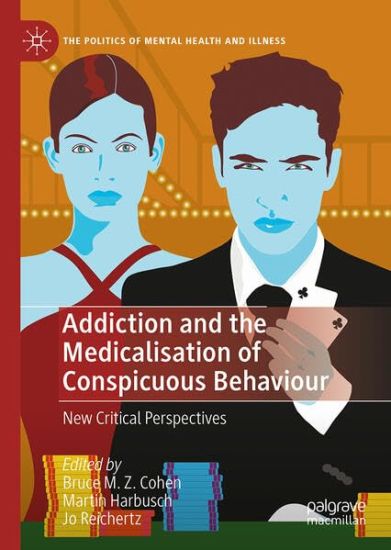
Addiction and the Medicalisation of Conspicuous Behaviour

Addiction and the Medicalisation of Conspicuous Behaviour

Peter J. Adams

Springer Nature Switzerland AG
2026
sidottu
This volume critically interrogates the dominant understanding of 'addiction' and 'addicts'. It examines the proliferation of the addiction concept by psychiatry and other psy-professions, exploring the processes and underlying drivers of this form of medicalisation. Through discussions from leading scholars in the field on gambling, smoking, and drug use, as well as the passionate engagement with social media, sport, sex, pornography, opioids, and psychedelics, the collection argues that addiction is better understood as a sociological rather than psychiatric phenomenon. It contends that the discourse of addiction is fundamentally political in nature, rather than purely medical. In doing so, this timely collection fills a significant gap in academic knowledge. It will be of strong interest to scholars and students of mental health and addiction, as well as to critical practitioners working in these areas.