Kirjojen hintavertailu. Mukana 12 016 292 kirjaa ja 12 kauppaa.

Kirjahaku

Etsi kirjoja tekijän nimen, kirjan nimen tai ISBN:n perusteella.

20 kirjaa tekijältä Peter J. Bowler

Reconciling Science and Religion

Reconciling Science and Religion

Peter J. Bowler

University of Chicago Press
2001
sidottu
This text provides a survey of the interplay between British science and religion from the late 19th century to World War II. The book argues that, unlike the United States, where a strong fundamentalist opposition to evolutionism developed in the 1920s (most famously expressed in the Scopes "monkey trial" of 1925), in Britain there was a concerted effort to reconcile science and religion. Intellectually conservative scientists championed the reconciliation and were supported by liberal theologians in the Free Churches and the Church of England, especially the Anglican "Modernists". Popular writers such as Julian Huxley and George Bernard Shaw sought to create a non-Christian religion similar in some respects to the Modernist position. Younger scientists and secularists - including rationalists such as H.G. Wells and the Marxists - tended to oppose these efforts, as did conservative Christians, who saw the liberal position as a betrayal of the true spirit of their religion. With the increased social tensions of the 1930s, as the churches move toward a neo-orthodoxy unfriendly to natural theology and biologists adopted the "modern synthesis" of genetics and evolutionary theory, the proposed reconciliation fell apart.
Science for All

Science for All

Peter J. Bowler

University of Chicago Press
2009
sidottu
Recent scholarship has revealed that pioneering Victorian scientists endeavored through voluminous writing to raise public interest in science and its implications. But it has generally been assumed that once science became a profession around the turn of the twentieth century, this new generation of scientists turned its collective back on public outreach. "Science for All" debunks this apocryphal notion. Peter J. Bowler surveys the books, serial works, magazines, and newspapers published between 1900 and the outbreak of World War II to show that practicing scientists were very active in writing about their work for a general readership. "Science for All" argues that the social environment of early twentieth-century Britain created a substantial market for science books and magazines aimed at those who had benefited from better secondary education but could not access higher learning. Scientists found it easy and profitable to write for this audience, Bowler reveals, and because their work was seen as educational, they faced no hostility from their peers. But when admission to colleges and universities became more accessible in the 1960s, this market diminished and professional scientists began to lose interest in writing at the nonspecialist level. Eagerly anticipated by scholars of scientific engagement throughout the ages, "Science for All" speaks to our own era and the continuing tension between science and public understanding.
Darwin Deleted

Darwin Deleted

Peter J. Bowler

University of Chicago Press
2013
sidottu
The ideas and terminology of Darwinism are so pervasive these days that it seems impossible to avoid them, let alone imagine a world without them. But in this remarkable rethinking of scientific history, Peter J. Bowler does just that. He asks: What if Charles Darwin had not returned from the voyage of the Beagle and thus did not write "On the Origin of Species"? Would the absence of Darwin's book have led to a different sequence of events, in which biology developed along a track that did not precipitate a great debate about the impact of evolutionism? Would there have been anything equivalent to "social Darwinism," and if so would the alternatives have been less pernicious and misappropriated? In "Darwin Deleted", Bowler argues that no one else was in a position to duplicate Darwin's complete theory of evolution by natural selection. Evolutionary biology would almost certainly have emerged, but through alternative theories, which were frequently promoted by scientists, religious thinkers, and moralists who feared the implications of natural selection. Because non-Darwinian elements of evolutionism flourished for a time in the real world, it is possible to plausibly imagine how they might have developed. Bowler's unique approach enables him to clearly explain the non-Darwinian tradition and fully elucidate the ideas of other scientists, such as Richard Owen and Thomas Huxley, whose work has often been misunderstood because of their distinctive responses to Darwin. "Darwin Deleted" boldly offers a new vision of scientific history. It is one where the sequence of discovery and development could have led to an alternative understanding of the relationship between evolution, heredity, and the environment-and, most significantly, a less contentious relationship between science and religion, avoiding the polarized attitudes that shape the conversation today.
Life's Splendid Drama

Life's Splendid Drama

Peter J. Bowler

University of Chicago Press
1996
sidottu
Peter J. Bowler seeks to recover some of this lost history in this work, giving an account of evolutionary morphology and its relationships with paleontology and biogeography. He tracks major scientific debates over the origins of the main types of living animals and of extinct forms such as the dinosaurs. Charting the role of Darwin's ideas and the degree of their influence, the author seeks to show how these interactions constituted an interdisciplinary programme in evolutionary biology with a focus on reconstructing the past rather than on the mechanisms of change. Also examined is the rhetoric of "social Darwinism", Bowler arguing that it may have been derived not directly from the theory of natural selection but from the application of Darwinian principles to the rise and fall of different animal groups over time.
Life's Splendid Drama

Life's Splendid Drama

Peter J. Bowler

University of Chicago Press
1998
nidottu
The story of life's splendid drama has captivated generations of the general public, just as it has intrigued biologists, especially those who began to try to solve evolutionary puzzles in the years immediately after the publication of Darwin's Origin of Species in 1859. Yet histories of the Darwinian revolution have paid far more attention to theoretical debates and have largely ignored the researchers who struggled to comprehend the deeper evolutionary significance of fossil bones and the structures of living animals. Peter J. Bowler recovers some of this lost history in Life's Splendid Drama, the definitive account of evolutionary morphology and its relationships with paleontology and bio-geography."Intriguing and insightful."—William Kimler, American Scientist"[A] volume of impressive scholarship and extensive references."—Library Journal"One of Bowler's best."—Kevin Padian, Nature"[Bowler's] comprehensive review of the various debates and ideas in taxonomy, morphology, and vertebrate evolution . . . deserves the attention of biologists and other scholars interested in the history of ideas."—Choice"The persistence of pre-Darwinian modes of thought in contemporary biology underlines the importance of Bowler's book. Its value is not only in the history it provides, but also in the way it illumines the present."—Peter J. Causton, Boston Book Review
The Earth Encompassed

The Earth Encompassed

Peter J. Bowler

WW Norton Co
2000
pokkari
This authoritative volume chronicles humanity's long quest to understand its own origins. Peter J. Bowler brilliantly synthesizes discoveries in geography, geology, and evolutionary biology that have brought us to our current knowledge of the fragility and connectedness of life on earth and created the new science of ecology. Bowler adeptly balances a long historical perspective with discussion of specific developments in the major fields relating to the physical and organic environment. He brings to life theoretical debates surrounding the notion of nature as an interconnected whole and addresses the controversial ethical questions raised by the ways we investigate our world and our use of the planet's resources. This book is not only the history of a discipline but also a wide-ranging study of scientific and theoretical innovations and the cultural and professional factors that influence the way scientists explain and understand their observations.
Evolution

Evolution

Peter J. Bowler

University of California Press
2009
pokkari
Since its original publication in 1989, "Evolution: The History of an Idea" has been recognized as a comprehensive and authoritative source on the development and impact of this most controversial of scientific theories. This twentieth anniversary edition is updated with a new preface examining recent scholarship and trends within the study of evolution.
Charles Darwin

Charles Darwin

Peter J. Bowler

Cambridge University Press
1996
sidottu
Darwin’s enormous influence on science and culture, begun during his lifetime, is still very evident today. The Origin of Species excited much debate and controversy, challenging the foundations of Christianity, yet underpinning the Victorian concept of progress, and today still evokes powerful and contradictory responses. Yet he was not first to publish evolutionary ideas and his theory of natural selection was not accepted by many of his contemporaries. Peter Bowler’s study of Darwin’s life and influence combines biography and cultural history. He shows how Darwin’s contemporaries were unable to appreciate precisely those aspects of his thinking that are considered scientifically important today. Darwin was a product of his time, but he also transcended it, by creating an idea capable of being exploited by twentieth-century scientists and intellectuals who had very different values from his own.
Charles Darwin

Charles Darwin

Peter J. Bowler

Cambridge University Press
1996
pokkari
Darwin’s enormous influence on science and culture, begun during his lifetime, is still very evident today. The Origin of Species excited much debate and controversy, challenging the foundations of Christianity, yet underpinning the Victorian concept of progress, and today still evokes powerful and contradictory responses. Yet he was not first to publish evolutionary ideas and his theory of natural selection was not accepted by many of his contemporaries. Peter Bowler’s study of Darwin’s life and influence combines biography and cultural history. He shows how Darwin’s contemporaries were unable to appreciate precisely those aspects of his thinking that are considered scientifically important today. Darwin was a product of his time, but he also transcended it, by creating an idea capable of being exploited by twentieth-century scientists and intellectuals who had very different values from his own.
Monkey Trials and Gorilla Sermons

Monkey Trials and Gorilla Sermons

Peter J. Bowler

Harvard University Press
2009
nidottu
From the beginning, Darwin’s dangerous idea has been a snake in the garden, denounced from pulpits then and now as incompatible with the central tenets of Christian faith. Recovered here is the less well-known but equally long history of thoughtful engagement and compromise on the part of liberal theologians. Peter J. Bowler doesn’t minimize the hostility of many of the faithful toward evolution, but he reveals the existence of a long tradition within the churches that sought to reconcile Christian beliefs with evolution by finding reflections of the divine in scientific explanations for the origin of life. By tracing the historical forerunners of these rival Christian responses, Bowler provides a valuable alternative to accounts that stress only the escalating confrontation. Our polarized society, Bowler says, has all too often projected its rivalries onto the past, concealing the efforts by both scientists and theologians to find common ground. Our perception of past confrontations has been shaped by an oversimplified model of a “war” between science and religion. By uncovering the complexity of the debates sparked by Darwin’s theory, we might discover ways to depolarize our own debates about where we came from and why we are here.
The Non-Darwinian Revolution

The Non-Darwinian Revolution

Peter J. Bowler

Johns Hopkins University Press
1992
pokkari
Concise and clearly written, "The Non-Darwinian Revolution" sets forth a convincing argument for a reappraisal of Darwin's importance not only for the history of science but for the history of ideas as well. Bowler finds no fault with Darwin's theory, only with the mistaken notion of its revolutionary effect on nineteenth-century thought. Examining the work of such figures as Owen, Spencer, Kelvin, Huxley, Haeckel, and Freud, Bowler discovers a near-universal tendency to accept evolutionism while rejecting Darwin's central premise: natural selection. Instead, leading scientists and thinkers stubbornly clung to the Lamarckian theory of evolution as guided, purposeful development until they were forced by the twentieth century's "rediscovery" of Mendelian law to concede otherwise.
The Eclipse of Darwinism

The Eclipse of Darwinism

Peter J. Bowler

Johns Hopkins University Press
1992
pokkari
In this pioneering study of the first major challenges to Darwinism, Bowler examines the completing theories of evolution, identifies their intellectual origins, and describes the process by which the modern concept of evolution emerged.
Evolution for the People

Evolution for the People

Peter J. Bowler

Cambridge University Press
2024
sidottu
From Darwin's The Origin of Species to the twenty-first century, Peter Bowler reinterprets the long Darwinian Revolution by refocussing our attention on the British and American public. By applying recent historical interest in popular science to evolutionary ideas, he investigates how writers and broadcasters have presented both Darwinism and its discontents. Casting new light on how the theory's more radical aspects gradually grew in the public imagination, Evolution for the People extends existing studies of the popularization of evolutionism to give a more comprehensive picture of how attitudes have changed through time. In tracing changes in public perception, Bowler explores both the cultural impact and the cultural exploitation of these ideas in science, religion, social thought and literature.
Evolution for the People

Evolution for the People

Peter J. Bowler

Cambridge University Press
2024
pokkari
From Darwin's The Origin of Species to the twenty-first century, Peter Bowler reinterprets the long Darwinian Revolution by refocussing our attention on the British and American public. By applying recent historical interest in popular science to evolutionary ideas, he investigates how writers and broadcasters have presented both Darwinism and its discontents. Casting new light on how the theory's more radical aspects gradually grew in the public imagination, Evolution for the People extends existing studies of the popularization of evolutionism to give a more comprehensive picture of how attitudes have changed through time. In tracing changes in public perception, Bowler explores both the cultural impact and the cultural exploitation of these ideas in science, religion, social thought and literature.
A History of the Future

A History of the Future

Peter J. Bowler

Cambridge University Press
2017
sidottu
In this wide-ranging survey, Peter J. Bowler explores the phenomenon of futurology: predictions about the future development and impact of science and technology on society and culture in the twentieth century. Utilising science fiction, popular science literature and the novels of the literary elite, Bowler highlights contested responses to the potential for revolutionary social change brought about by real and imagined scientific innovations. Charting the effect of social and military developments on attitudes towards innovation in Europe and America, Bowler shows how conflict between the enthusiasm of technocrats and the pessimism of their critics was presented to the public in books, magazines and exhibitions, and on the radio and television. A series of case studies reveals the impact of technologies such as radio, aviation, space exploration and genetics, exploring rivalries between innovators and the often unexpected outcome of their efforts to produce mechanisms and machines that could change the world.
Progress Unchained

Progress Unchained

Peter J. Bowler

Cambridge University Press
2021
sidottu
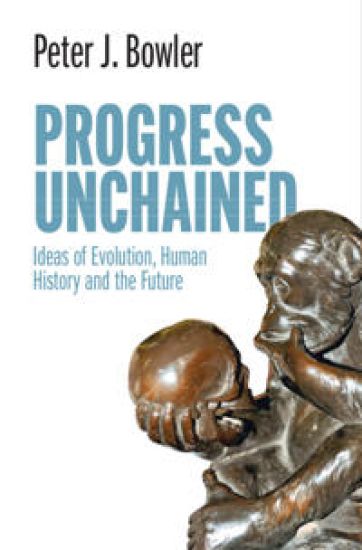
Progress Unchained reinterprets the history of the idea of progress using parallels between evolutionary biology and changing views of human history. Early concepts of progress in both areas saw it as the ascent of a linear scale of development toward a final goal. The 'chain of being' defined a hierarchy of living things with humans at the head, while social thinkers interpreted history as a development toward a final paradise or utopia. Darwinism reconfigured biological progress as a 'tree of life' with multiple lines of advance not necessarily leading to humans, each driven by the rare innovations that generate entirely new functions. Popular writers such as H. G. Wells used a similar model to depict human progress, with competing technological innovations producing ever-more rapid changes in society. Bowler shows that as the idea of progress has become open-ended and unpredictable, a variety of alternative futures have been imagined.
A History of the Future

A History of the Future

Peter J. Bowler

Cambridge University Press
2017
pokkari
In this wide-ranging survey, Peter J. Bowler explores the phenomenon of futurology: predictions about the future development and impact of science and technology on society and culture in the twentieth century. Utilising science fiction, popular science literature and the novels of the literary elite, Bowler highlights contested responses to the potential for revolutionary social change brought about by real and imagined scientific innovations. Charting the effect of social and military developments on attitudes towards innovation in Europe and America, Bowler shows how conflict between the enthusiasm of technocrats and the pessimism of their critics was presented to the public in books, magazines and exhibitions, and on the radio and television. A series of case studies reveals the impact of technologies such as radio, aviation, space exploration and genetics, exploring rivalries between innovators and the often unexpected outcome of their efforts to produce mechanisms and machines that could change the world.
Viewegs Geschichte der Umweltwissenschaften

Viewegs Geschichte der Umweltwissenschaften

Peter J. Bowler

Springer-Verlag Berlin and Heidelberg GmbH Co. K
2012
nidottu
Die Geschichte der Naturwissenschaften und der Technik ist in den letzten Jahrzehnten um wichtige neue Aspekte und Interpretationen bereichert worden. Diese Ergebnisse waren aber bis jetzt nur in Spezialistenkreisen bekannt und verbreitet. Mit dieser Reihe werden nun die vielen Einzelergebnisse zusammengefaßt und einem breiten Publikum präsentiert. International anerkannte Wissenschafts-Historiker schreiben über ihr Spezialgebiet, ohne nur die Fakten aufzuhäufen, sondern unter Betonung der gemeinsamen Themen über lange Zeiträume und über alle Grenzen hinweg.
Viewegs Geschichte der Umweltwissenschaften

Viewegs Geschichte der Umweltwissenschaften

Peter J. Bowler

Vieweg+teubner Verlag
2013
nidottu
Die Geschichte der Naturwissenschaften und der Technik ist in den letzten Jahrzehnten um wichtige neue Aspekte und Interpretationen bereichert worden. Diese Ergebnisse waren aber bis jetzt nur in Spezialistenkreisen bekannt und verbreitet. Mit dieser Reihe werden nun die vielen Einzelergebnisse zusammengefaßt und einem breiten Publikum präsentiert. International anerkannte Wissenschafts-Historiker schreiben über ihr Spezialgebiet, ohne nur die Fakten aufzuhäufen, sondern unter Betonung der gemeinsamen Themen über lange Zeiträume und über alle Grenzen hinweg. (...) Eine interessante und sehr komplexe Darstellung des Themas (...) ekz-Bibl. Bereich 1997