Kirjojen hintavertailu. Mukana 11 244 527 kirjaa ja 12 kauppaa.

Kirjahaku

Etsi kirjoja tekijän nimen, kirjan nimen tai ISBN:n perusteella.

2 kirjaa tekijältä Peter J. Capuano

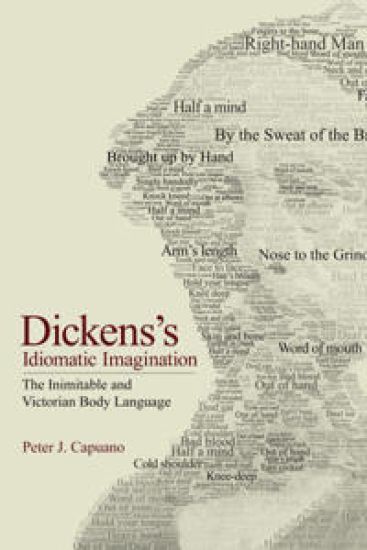
Dickens's Idiomatic Imagination

Dickens's Idiomatic Imagination

Peter J. Capuano

CORNELL UNIVERSITY PRESS
2023
sidottu
Dickens's Idiomatic Imagination offers an original analysis of how Charles Dickens's use of "low" and "slangular" (his neologism) language allowed him to express and develop his most sophisticated ideas. Using a hybrid of digital (distant) and analogue (close) reading methodologies, Peter J. Capuano considers Dickens's use of bodily idioms—"right-hand man," "shoulder to the wheel," "nose to the grindstone"—against the broader lexical backdrop of the nineteenth century. Dickens was famously drawn to the vernacular language of London's streets, but this book is the first to call attention to how he employed phrases that embody actions, ideas, and social relations for specific narrative and thematic purposes. Focusing on the mid- to late career novels Dombey and Son, David Copperfield, Bleak House, Great Expectations, and Our Mutual Friend, Capuano demonstrates how Dickens came to relish using common idioms in uncommon ways and the possibilities they opened up for artistic expression. Dickens's Idiomatic Imagination establishes a unique framework within the social history of language alteration in nineteenth-century Britain for rethinking Dickens's literary trajectory and its impact on the vocabularies of generations of novelists, critics, and speakers of English.
Dickens's Idiomatic Imagination

Dickens's Idiomatic Imagination

Peter J. Capuano

CORNELL UNIVERSITY PRESS
2023
pokkari
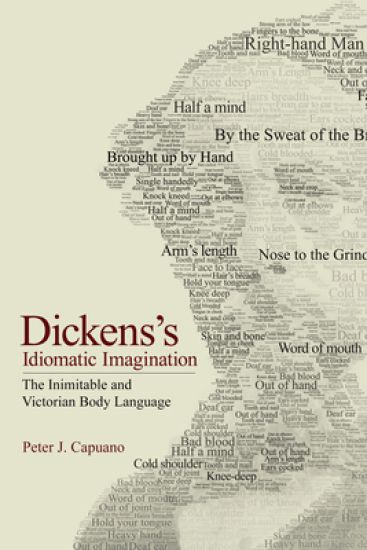
Dickens's Idiomatic Imagination offers an original analysis of how Charles Dickens's use of "low" and "slangular" (his neologism) language allowed him to express and develop his most sophisticated ideas. Using a hybrid of digital (distant) and analogue (close) reading methodologies, Peter J. Capuano considers Dickens's use of bodily idioms—"right-hand man," "shoulder to the wheel," "nose to the grindstone"—against the broader lexical backdrop of the nineteenth century. Dickens was famously drawn to the vernacular language of London's streets, but this book is the first to call attention to how he employed phrases that embody actions, ideas, and social relations for specific narrative and thematic purposes. Focusing on the mid- to late career novels Dombey and Son, David Copperfield, Bleak House, Great Expectations, and Our Mutual Friend, Capuano demonstrates how Dickens came to relish using common idioms in uncommon ways and the possibilities they opened up for artistic expression. Dickens's Idiomatic Imagination establishes a unique framework within the social history of language alteration in nineteenth-century Britain for rethinking Dickens's literary trajectory and its impact on the vocabularies of generations of novelists, critics, and speakers of English.