Kirjojen hintavertailu. Mukana 12 390 323 kirjaa ja 12 kauppaa.

Kirjahaku

Etsi kirjoja tekijän nimen, kirjan nimen tai ISBN:n perusteella.

3 kirjaa tekijältä Peter J. Holliday

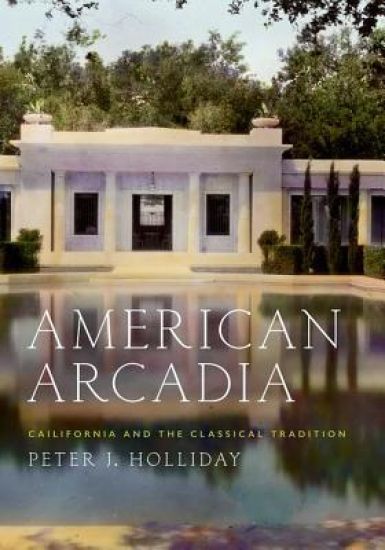
American Arcadia

American Arcadia

Peter J. Holliday

Oxford University Press Inc
2016
sidottu
A vivid and engaging exploration of California's debt to the ancient world. Discussing the influence of the classics on America is nothing new; indeed, classical antiquity could be considered second only to Christianity as a force in modeling America's national identity. What has never been explored until now is how, from the beginning, Californians in particular chose to visually and culturally craft their new world using the rhetoric of classical antiquity. Through a lively exploration of material culture, literature, and architecture, American Arcadia offers a tour through California's development as a Mediterranean haven from the late nineteenth century to the present. In its earliest days, California was touted as the last opportunity for alienated Yankees to establish the refined gentleman-farmer culture envisioned by Jefferson and build new cities free of the filth and corruption of those they left back East. Through architecture and landscape design Californians fashioned an Arcadian setting evocative of ancient Greece and Rome.Later, as Arcadia gave way to urban sprawl, entire city plans were drafted to conjure classical antiquity, self-styled villas dotted the hills, and utopian communities began to shape the state's social atmosphere. Art historian Peter J. Holliday traces the classical influence primarily through the evidence of material culture, yet the book emphasizes the stories and people, famous and forgotten, behind the works, such as Florence Yoch, the renowned landscape designer and set designer for Gone with the Wind, and "Sister Aimee" Semple McPherson, the most publicized Christian evangelist of her day, whose sermons filled the Pantheon-like Angelus Temple. Telling stories from the creation of the famed aqueducts that turned the semi-arid landscape to a cornucopia of almonds, alfalfa, and oranges to the birth of the body-sculpting movement, American Arcadia offers readers a new way of seeing our past and ourselves.
Power, Image, and Memory

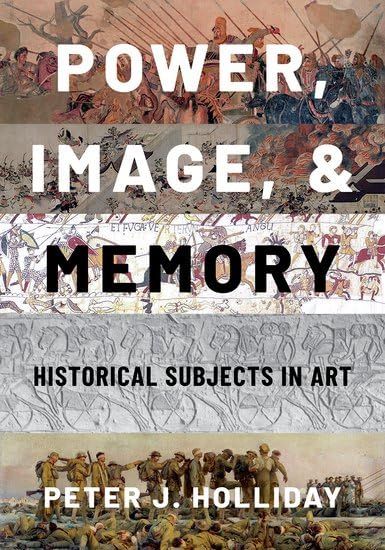
Power, Image, and Memory

Peter J. Holliday

OXFORD UNIVERSITY PRESS INC
2024
sidottu
Those who write history determine its narrative, whether through written text or through the visual language of art and public monuments. Power, Image, and Memory examines a wide variety of artistic traditions, showing how art commemorating historical events can shape collective memory, and with it, the identities of social groups and nations. From the Mesopotamians to the present day, leaders and societies have used art to frame and memorialize important events. This account establishes a dialogue among traditions in a series of case studies, ranging from the reliefs at Ramses' temple at Abu Simbel and the ancient Greek "Alexander Mosaic" to the Heian Period Japanese scroll of the Night Attack on the Sanjo Palace, the Benin Bronzes, Diego Velázquez's Surrender at Breda, and Picasso's Guernica. Weaving together meticulous historic detail, theory, and visual analysis, this volume offers a complex picture of the power of art and memory, as well as of the life of these monuments and messages over time, distanced from their original cultures and context. With insights relevant to contemporary debates reexamining historic monuments, Power, Image, and Memory sheds new light on the power of art to shape social memory and identity.
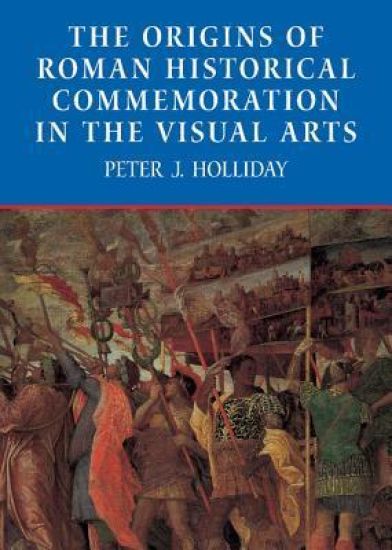
The Origins of Roman Historical Commemoration in the Visual Arts

The Origins of Roman Historical Commemoration in the Visual Arts

Peter J. Holliday

Cambridge University Press
2002
sidottu
History was an important element of Roman Republican culture, as revealed by the numerous historical accounts and panegyrics written during this period. Roman patrons also exploited the visual arts to convey messages about history whose immediacy no text could rival. In this study, Peter Holliday explores the development of Roman history painting in an effort to broaden our understanding of the ways in which Roman commemorative art constructed a narrative for the ancient viewer. Providing a survey of this subject that takes into account recent archaeological discoveries and theoretical debates, he also considers how style worked in tandem with narrative and had political significance. Holliday’s study sharpens our understanding of the kinds of narrative that the Roman elite wished to convey through images, and what these images tell us about their achievements and the Republic that they served.