Kirjojen hintavertailu. Mukana 11 699 587 kirjaa ja 12 kauppaa.

Kirjahaku

Etsi kirjoja tekijän nimen, kirjan nimen tai ISBN:n perusteella.

3 kirjaa tekijältä Peter J. Spiro

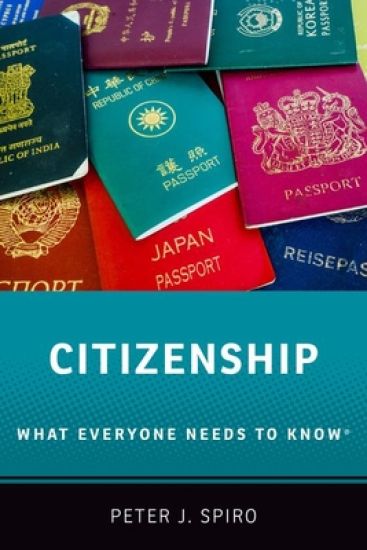
Citizenship

Citizenship

Peter J. Spiro

Oxford University Press Inc
2020
nidottu
Almost everyone has citizenship, and yet it has emerged as one of the most hotly contested issues of contemporary politics. Even as cosmopolitan elites and human rights advocates aspire to some notion of "global citizenship," populism and nativism have re-ignited the importance of national citizenship. Either way, the meaning of citizenship is changing. Citizenship once represented solidarities among individuals committed to mutual support and sacrifice, but as it is decoupled from national community on the ground, it is becoming more a badge of privilege than a marker of equality. Intense policy disagreement about whether to extend birthright citizenship to the children of unauthorized immigrants opens a window on other citizenship-related developments. At the same time that citizenship is harder to get for some, for others it is literally available for purchase. The exploding incidence of dual citizenship, meanwhile, is moving us away from a world in which states jealously demanded exclusive affiliation, to one in which individuals can construct and maintain formal multinational identities. Citizenship does not mean the same thing to everyone, nor have states approached citizenship policy in lockstep. Rather, global trends point to a new era for citizenship as an institution. In Citizenship: What Everyone Needs to Know®, legal scholar Peter J. Spiro explains citizenship through accessible terms and questions: what citizenship means, how you obtain citizenship (and how you lose it), how it has changed through history, what benefits citizenship gets you, and what obligations it extracts from you—all in comparative perspective. He addresses how citizenship status affects a person's rights and obligations, what it means to be stateless, the refugee crisis, and whether or not countries should terminate the citizenship of terrorists. He also examines alternatives to national citizenship, including sub-national and global citizenship, and the phenomenon of investor citizenship. Spiro concludes by considering whether nationalist and extremist politics will lead to a general retreat from state-based forms of association and the end of citizenship as we know it. Ultimately, Spiro provides historical and critical perspective to a concept that is a part of our everyday discourse, providing a crucial contribution to our understanding of a central organizing principle of the modern world.
Citizenship

Citizenship

Peter J. Spiro

Oxford University Press Inc
2020
sidottu
Almost everyone has citizenship, and yet it has emerged as one of the most hotly contested issues of contemporary politics. Even as cosmopolitan elites and human rights advocates aspire to some notion of "global citizenship," populism and nativism have re-ignited the importance of national citizenship. Either way, the meaning of citizenship is changing. Citizenship once represented solidarities among individuals committed to mutual support and sacrifice, but as it is decoupled from national community on the ground, it is becoming more a badge of privilege than a marker of equality. Intense policy disagreement about whether to extend birthright citizenship to the children of unauthorized immigrants opens a window on other citizenship-related developments. At the same time that citizenship is harder to get for some, for others it is literally available for purchase. The exploding incidence of dual citizenship, meanwhile, is moving us away from a world in which states jealously demanded exclusive affiliation, to one in which individuals can construct and maintain formal multinational identities. Citizenship does not mean the same thing to everyone, nor have states approached citizenship policy in lockstep. Rather, global trends point to a new era for citizenship as an institution. In Citizenship: What Everyone Needs to Know®, legal scholar Peter J. Spiro explains citizenship through accessible terms and questions: what citizenship means, how you obtain citizenship (and how you lose it), how it has changed through history, what benefits citizenship gets you, and what obligations it extracts from you--all in comparative perspective. He addresses how citizenship status affects a person's rights and obligations, what it means to be stateless, the refugee crisis, and whether or not countries should terminate the citizenship of terrorists. He also examines alternatives to national citizenship, including sub-national and global citizenship, and the phenomenon of investor citizenship. Spiro concludes by considering whether nationalist and extremist politics will lead to a general retreat from state-based forms of association and the end of citizenship as we know it. Ultimately, Spiro provides historical and critical perspective to a concept that is a part of our everyday discourse, providing a crucial contribution to our understanding of a central organizing principle of the modern world.

Beyond Citizenship

Beyond Citizenship

Peter J. Spiro

Oxford University Press Inc
2008
sidottu
American identity has always been capacious as a concept but narrow in its application. Citizenship has mostly been about being here, either through birth or residence. The territorial premises for citizenship have worked to resolve the peculiar challenges of American identity. But globalization is detaching identity from location. What used to define American was rooted in American space. Now one can be anywhere and be an American, politically or culturally. Against that backdrop, it becomes difficult to draw the boundaries of human community in a meaningful way. Longstanding notions of democratic citizenship are becoming obsolete, even as we cling to them. Beyond Citizenship charts the trajectory of American citizenship and shows how American identity is unsustainable in the face of globalization. Peter J. Spiro describes how citizenship law once reflected and shaped the American national character. Spiro explores the histories of birthright citizenship, naturalization, dual citizenship, and how those legal regimes helped reinforce an otherwise fragile national identity. But on a shifting global landscape, citizenship status has become increasingly divorced from any sense of actual community on the ground. As the bonds of citizenship dissipate, membership in the nation-state becomes less meaningful. The rights and obligations distinctive to citizenship are now trivial. Naturalization requirements have been relaxed, dual citizenship embraced, and territorial birthright citizenship entrenched--developments that are all irreversible. Loyalties, meanwhile, are moving to transnational communities defined in many different ways: by race, ethnicity, gender, religion, age, and sexual orientation. These communities, Spiro boldly argues, are replacing bonds that once connected people to the nation-state, with profound implications for the future of governance. Learned, incisive, and sweeping in scope, Beyond Citizenship offers a provocative look at how globalization is changing the very definition of who we are and where we belong.