Kirjojen hintavertailu. Mukana 11 424 844 kirjaa ja 12 kauppaa.

Kirjahaku

Etsi kirjoja tekijän nimen, kirjan nimen tai ISBN:n perusteella.

4 kirjaa tekijältä Peter J. Wallison

Dissent from the Majority Report of the Financial Crisis Inquiry Commission
Peter J. Wallison is the only member of the Financial Crisis Inquiry Commission (FCIC) to release a formal dissent to the FCIC’s official report on the causes of the financial crisis. Wallison, codirector of financial policy studies at the American Enterprise Institute, argues that the FCIC’s report fails to address the cause of the deterioration in mortgage underwriting standards that led to the housing bubble widely accepted as the key factor in destabilizing the American economy. Wallison’s Dissent to the Majority Report of the Financial Crisis Inquiry Commission reveals that government-mandated subprime loans, not greedy investors, were the force behind the deterioration in underwriting standards. This dissent is a must-read for anyone seeking to understand the causes of the financial crisis—and to prevent future economic collapse.
Bad History, Worse Policy

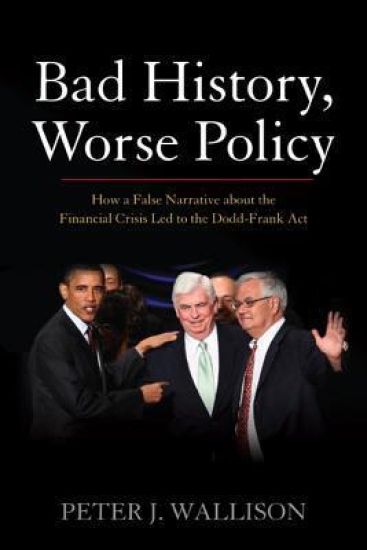
Bad History, Worse Policy

Peter J. Wallison

AEI Press
2013
sidottu
This timely study focuses on how the government-constructed narratives surrounding the collapse of Fannie Mae and Freddie Mac and the 2008 financial crisis shaped the policymaking that led to the Dodd-Frank Act. The book shows that every major provision of the act can be traced directly to that narrative, which ignored the government’s own role and focused entirely on the errors of the private sector. In the next Congress, whether or not the Republicans are in control of the House and Senate, there will be a concerted effort to make changes in—or even repeal—the Dodd-Frank Act. The essays in this book, originally published by AEI as Financial Services Outlooks, and the accompanying commentary provide a thorough backgrounder for anyone interested in financial policy.
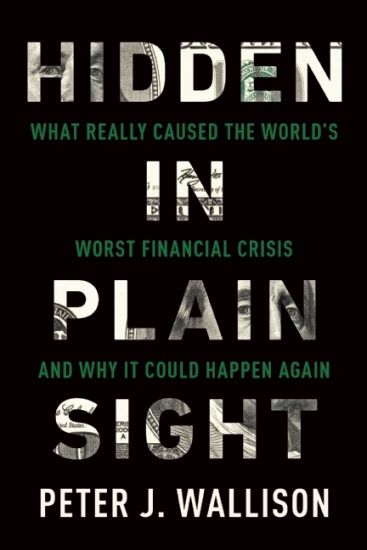
Hidden in Plain Sight

Hidden in Plain Sight

Peter J. Wallison

Encounter Books,USA
2016
pokkari
The 2008 financial crisis--like the Great Depression--was a world-historical event. What caused it will be debated for years, if not generations. The conventional narrative is that the financial crisis was caused by Wall Street greed and insufficient regulation of the financial system. That narrative produced the Dodd-Frank Act, the most comprehensive financial-system regulation since the New Deal. There is evidence, however, that the Dodd-Frank Act has slowed the recovery from the recession. If insufficient regulation caused the financial crisis, then the Dodd-Frank Act will never be modified or repealed; proponents will argue that doing so will cause another crisis. A competing narrative about what caused the financial crisis has received little attention. This view, which is accepted by almost all Republicans in Congress and most conservatives, contends that the crisis was caused by government housing policies. This book extensively documents this view. For example, it shows that in June 2008, before the crisis, 58 percent of all US mortgages were subprime or other low-quality mortgages. Of these, 76 percent were on the books of government agencies such as Fannie Mae and Freddie Mac. When these mortgages defaulted in 2007 and 2008, they drove down housing prices and weakened banks and other mortgage holders, causing the crisis. After this book is published, no one will be able to claim that the financial crisis was caused by insufficient regulation, or defend Dodd-Frank, without coming to terms with the data this book contains.
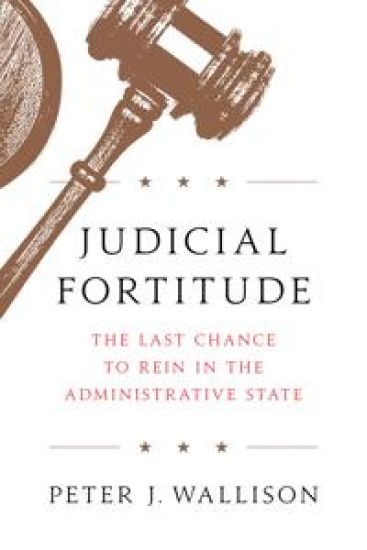
Judicial Fortitude

Judicial Fortitude

Peter J. Wallison

Encounter Books,USA
2018
sidottu
In this book, Peter J. Wallison argues that the administrative agencies of the executive branch have gradually taken over the legislative role of Congress, resulting in what many call the administrative state. The judiciary bears the major responsibility for this development because it has failed to carry out its primary constitutional responsibility: to enforce the constitutional separation of powers by ensuring that the elected branches of government—the legislative and the executive—remain independent and separate from one another. Since 1937, and especially with the Chevron deference adopted by the Supreme Court in 1984, the judiciary has abandoned this role. It has allowed Congress to delegate lawmaking authorities to the administrative agencies of the executive branch and given these agencies great latitude in interpreting their statutory authorities. Unelected officials of the administrative state have thus been enabled to make decisions for the American people that, in a democracy, should only be made by Congress. The consequences have been grave: unnecessary regulation has imposed major costs on the U.S. economy, the constitutional separation of powers has been compromised, and unabated agency rulemaking has created a significant threat that Americans will one day question the legitimacy of their own government. To address these concerns, Wallison argues that the courts must return to the role the Framers expected them to fulfill.