Kirjojen hintavertailu. Mukana 11 342 296 kirjaa ja 12 kauppaa.

Kirjahaku

Etsi kirjoja tekijän nimen, kirjan nimen tai ISBN:n perusteella.

73 kirjaa tekijältä Peter King

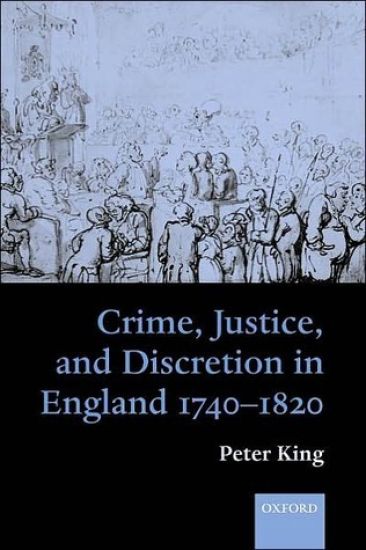
Crime, Justice, and Discretion in England 1740-1820
The criminal law has often been seen as central to the rule of the 18th century landed elite in England. This book presents a detailed analysis of the judicial process - of victim's reactions, pretrial practices, policing, magistrates hearings, trials, sentencing, pardoning and punishment - using property offenders as its main focus. The period 1740-1820, the final era before the coming of the new police and the repeal of the capital code, emerges as the great age of discretionary justice, and the book explores the impact of the vast discretionary powers held by many social groups. It reassesses both the relationship betweeen crime rates and economic deprivation, and the many ways that vulnerability to prosecution varied widely across the lifecycle, in the light of the highly selective nature of pretrial negotiations. More centrally, by asking at every stage who used the law, for what purposes, in whose interests and with what effects, it opens up a number of new perspectives on the role of the law in eighteenth century social relations. The law emerges as the less the instrument of particular elite groups and more as an arena of struggle, of negotiation and of compromise. Its rituals were less controllable and its merciful moments less manageable and less exclusively available to the gentry elite than has been previously suggested. Justice was vulnerable to power but was also mobilised to constrain it. Despite the key functions that the propertied fulfilled, courtroom crowds, the counter-theatre of the condemned and the decisions of the victims from a very wide range of backgrounds had a role to play, and the criteria on which decisions were based were shaped as much by the broad and more humane discourse which Fielding called the "good mind" as by the instrumental needs of the propertied elites.
Crime, Justice and Discretion in England 1740-1820

Crime, Justice and Discretion in England 1740-1820

Peter King

Oxford University Press
2003
nidottu
The criminal law has often been seen as central to the rule of the eighteenth-century landed élite in England. This book presents a detailed analysis of the judicial processs - of victims' reactions, pretrial practices, policing, magistrates hearings, trials, sentencing, pardoning and punishment - using property offenders as its main focus. The period 1740-1820 - the final era before the coming of the new police and the repeal of the capital code - emerges as the great age of discretionary justice, and the book explores the impact of the vast discretionary powers held by many social groups. It reassesses both the relationship between crime rates and the economic deprivation, and the many ways that vulnerability to prosecution varied widely across the lifecycle, in the light of the highly selective nature of pretrial negotiations. More centrally, by asking at every stage - who used the law, for what purposes, in whose interests and with what social effects - it opens up a number of new perspectives on the role of the law in eighteenth-century social relations. The law emerges as less the instrument of particular élite groups and more as an arena of struggle, of negotiation, and of compromise. Its rituals were less controllable and its merciful moments less manageable and less exclusively available to the gentry élite than has been previously suggested. Justice was vulnerable to power, but was also mobilised to constrain it. Despite the key functions that the propertied fulfilled, courtroom crowds, the counter-theatre of the condemned, and the decisions of the victims from a very wide range of backgrounds had a role to play, and the criteria on which decisions were based were shaped as much by the broad and more humane discourse which Fielding called the 'good mind' as by the instrumental needs of the propertied élites.
Housing, Individuals and the State
Can the state solve housing problems or does it create them? This book explores the question by combining a detailed critique of contemporary housing policy with a philisophical analysis of the role of the state and individuals. Examining the state's role as controller and funder of housing, the author contends that the state is not capable of planning and controlling a sustainable housing policy.
Private Dwelling

Private Dwelling

Peter King

Routledge
2004
sidottu
Housing is something that is deeply personal to us. It offers us privacy and security and allows us to be intimate with those we are close to. This book considers the nature of privacy but also how we choose to share our dwelling. The book discusses the manner in which we talk about our housing, how it manifests and assuages our anxieties and desires and how it helps us come to terms with loss.Private Dwelling offers a deeply original take on housing. The book proceeds through a series of speculations, using philosophical analysis and critique, personal anecdote, film criticism, social and cultural theory and policy analysis to unpick the subjective nature of housing as a personal place where we can be sure of ourselves.
Private Dwelling

Private Dwelling

Peter King

Routledge
2004
nidottu
Housing is something that is deeply personal to us. It offers us privacy and security and allows us to be intimate with those we are close to. This book considers the nature of privacy but also how we choose to share our dwelling. The book discusses the manner in which we talk about our housing, how it manifests and assuages our anxieties and desires and how it helps us come to terms with loss.Private Dwelling offers a deeply original take on housing. The book proceeds through a series of speculations, using philosophical analysis and critique, personal anecdote, film criticism, social and cultural theory and policy analysis to unpick the subjective nature of housing as a personal place where we can be sure of ourselves.
Understanding Housing Finance

Understanding Housing Finance

Peter King

Routledge
2009
sidottu
One of the biggest challenges for students of housing is understanding the financial principles which underpin the place of housing in the wider economy. By taking a political economy approach, Peter King's Understanding Housing Finance makes the basic principles of the subject accessible, without requiring detailed prior knowledge of economics or financial systems. The book explains housing finance by exploring the way in which markets and governments react together. It takes a conceptual approach to consider the advantages and limits of housing markets and why governments intervene. The consequences of intervention are explored in detail using examples of housing subsidy systems and policy mechanisms such as rent control, housing allowances and subsidies to owner occupation. This is a key reference for students on housing and planning courses at both undergraduate and postgraduate level. The book’s approach means that its relevance is not confined to one particular housing system, but is useful for those studying housing finance in most developed and developing countries.
Understanding Housing Finance

Understanding Housing Finance

Peter King

Routledge
2009
nidottu
One of the biggest challenges for students of housing is understanding the financial principles which underpin the place of housing in the wider economy. By taking a political economy approach, Peter King's Understanding Housing Finance makes the basic principles of the subject accessible, without requiring detailed prior knowledge of economics or financial systems. The book explains housing finance by exploring the way in which markets and governments react together. It takes a conceptual approach to consider the advantages and limits of housing markets and why governments intervene. The consequences of intervention are explored in detail using examples of housing subsidy systems and policy mechanisms such as rent control, housing allowances and subsidies to owner occupation. This is a key reference for students on housing and planning courses at both undergraduate and postgraduate level. The book’s approach means that its relevance is not confined to one particular housing system, but is useful for those studying housing finance in most developed and developing countries.
Housing Boom and Bust

Housing Boom and Bust

Peter King

Routledge
2010
sidottu
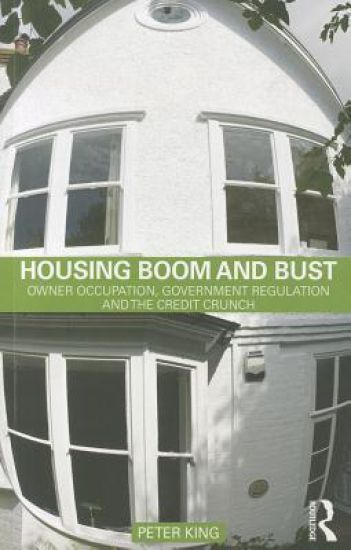
Housing bubbles burst, creating economic misery for millions. Over the past thirty years, the culture of property ownership has become so ingrained that policy makers, bankers and households have taken for granted that housing is a good investment and forgotten about the bust. Explaining how the current crisis in housing markets has arisen, this topical and sharp analysis considers the causes of house price bubbles and the reason for the collapse in markets worldwide. Written for students, it explains the economic cycle of housing, ways in which future booms and busts can be mitigated and how the lessons of this latest housing bubble can finally be learned.
Housing Boom and Bust

Housing Boom and Bust

Peter King

Routledge
2010
nidottu
Housing bubbles burst, creating economic misery for millions. Over the past thirty years, the culture of property ownership has become so ingrained that policy makers, bankers and households have taken for granted that housing is a good investment and forgotten about the bust. Explaining how the current crisis in housing markets has arisen, this topical and sharp analysis considers the causes of house price bubbles and the reason for the collapse in markets worldwide. Written for students, it explains the economic cycle of housing, ways in which future booms and busts can be mitigated and how the lessons of this latest housing bubble can finally be learned.
Crime and Law in England, 1750–1840

Crime and Law in England, 1750–1840

Peter King

Cambridge University Press
2010
pokkari
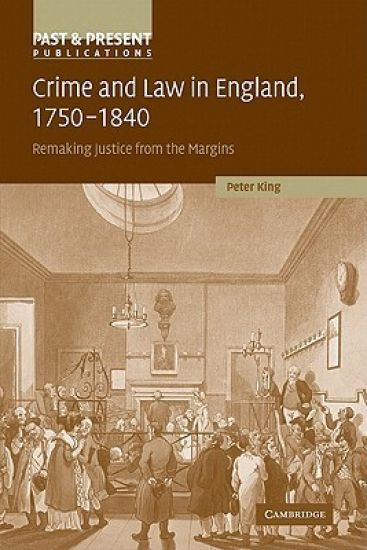
How was law made in England in the eighteenth and early nineteenth centuries? Through detailed studies of what the courts actually did, Peter King argues that parliament and the Westminster courts played a less important role in the process of law making than is usually assumed. Justice was often remade from the margins by magistrates, judges and others at the local level. His book also focuses on four specific themes - gender, youth, violent crime and the attack on customary rights. In doing so it highlights a variety of important changes - the relatively lenient treatment meted out to women by the late eighteenth century, the early development of the juvenile reformatory in England before 1825, i.e. before similar changes on the continent or in America, and the growing intolerance of the courts towards everyday violence. This study is invaluable reading to anyone interested in British political and legal history.
Crime and Law in England, 1750–1840

Crime and Law in England, 1750–1840

Peter King

Cambridge University Press
2006
sidottu
How was law made in England in the eighteenth and early nineteenth centuries? Through detailed studies of what the courts actually did, Peter King argues that parliament and the Westminster courts played a less important role in the process of law making than is usually assumed. Justice was often remade from the margins by magistrates, judges and others at the local level. His book also focuses on four specific themes - gender, youth, violent crime and the attack on customary rights. In doing so it highlights a variety of important changes - the relatively lenient treatment meted out to women by the late eighteenth century, the early development of the juvenile reformatory in England before 1825, i.e. before similar changes on the continent or in America, and the growing intolerance of the courts towards everyday violence. This study is invaluable reading to anyone interested in British political and legal history.
In Dwelling

In Dwelling

Peter King

Ashgate Publishing Limited
2008
sidottu
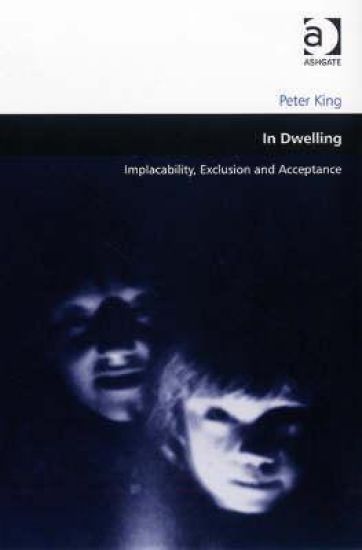
A 'dwelling', or the physical space we call a house, is full of meaning for us. It can be implacable, in that it can work for or against us, depending on how we are able to access and use it. This means that we have to learn to accept dwelling as it is and find some accommodation with our surrounding environment. This book develops a new approach to looking at dwelling and how we use it. It explores the manner in which we use housing to exclude others and so protect our privacy. It also argues we need to exclude others in order to protect and nurture our loved ones. The book combines philosophical analysis and literary and film criticism to put forward an innovative and insightful new approach to looking at housing. It draws on the work of thinkers as diverse as Aristotle, Derrida, Kierkegaard, Nussbaum and Scruton and the films of Chaplin, Bergman, Lynch, Tarr, Teshigahara and Van Sant to construct a new theoretical approach to housing research.
The Common Place

The Common Place

Peter King

CRC Press Inc
2017
sidottu
Much of what constitutes our experience of our immediate environment is quite ordinary and familiar, in particular, where we live. While policymakers and academics are constantly seeking transformations in housing, what we seek from our own housing is stability and lack of change. We seek secure roots to our lives rather than step-changes and radical reform. This book considers this ordinary experience of housing and how we come to depend upon it. The notion of the ordinary is used to argue against the conceits of policymaking and the fetish for domestic design. Using a variety of methods such as critical analysis and film criticism (looking at the work of film-makers as diverse as Bergman, Dreyer, Shyamalan, Tarkovsky, Tati and the Wachowski Brothers), it provides an original, impressionistic view of the role housing plays in our lives.
West Papua and Indonesia Since Suharto

West Papua and Indonesia Since Suharto

Peter King

NewSouth Publishing
2004
nidottu
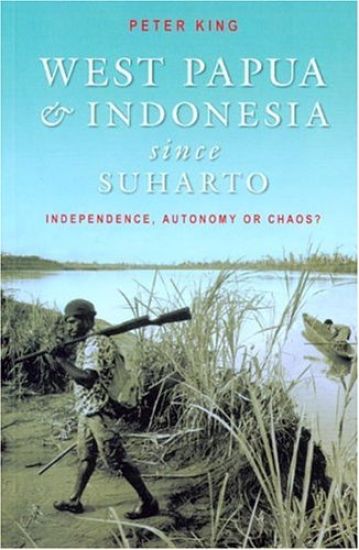
In the 1950s the Dutch promised the people of West Papua (the western half of New Guinea) self-determination and eventual independence. But in 1963 Indonesia took control of the territory with the blessing of the US, the UN and Australia. In a tragic clash between two very different cultures over the next 40 years the Papuans have refused - just like the East Timorese - to 'bow to the inevitable': Indonesian occupation and assimilation into that country This book reviews the long guerilla struggle of the Organisasi Papua Merdeka (OPM) for a Free Papua, and traces the rise of a non-violent independence movement alongside it, the Papua Council, following the fall from power of Indonesia's military dictator, General Suharto, in 1998. The book is based on the author's extensive field research. It places the Papuan struggle in a context of failing reform within Indonesia and a politically reviving military: the feared and loathed TNI. More than ever, Indonesia needs West Papua's resource treasures - the giant Freeport copper mine, and BP's huge new natural gas field in Bintuni Bay - and the Indonesian army is ruthlessly 'defending' and exploiting these projects. However, the Papuans are equally determined to win independence. King argues passionately and persuasively that international intervention to resolve Papua's plight is essential: Australia, the US and other countries must act in concert through the UN once more, as they did in East Timor. Indonesians must be persuaded that their best interests lie not in a 'security approach' but in dialogue and negotiation with the Papuans and other disenchanted minorities.
Western Monasticism

Western Monasticism

Peter King

Liturgical Press
1999
pokkari
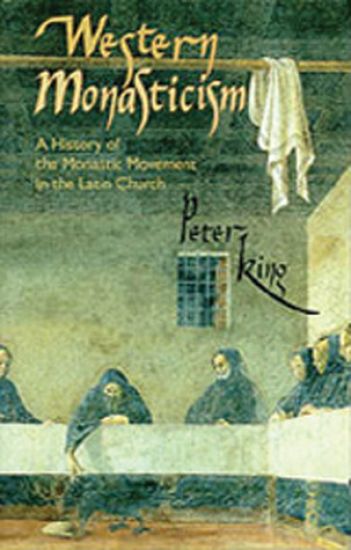
Christians have been drawn to monastic life nearly as long as Christianity has existed. Dedicating themselves to prayer, meditation, and good works, men and women in many diverse times and places have been willing to abstain from marriage, sexual relations, and personal ownership to serve God single-mindedly. In this overview of the Latin tradition, Peter King, emeritus senior lecturer of medieval history at Saint Andrew's University, leads readers quickly but deftly along the rugged monastic road from late antique Egypt to the present day, passing through spectacular expansion in medieval Europe, dissolution during the Reformation, retrenchment at the Counter Reformation, condemnation during the Enlightenment, destruction at the hands of revolutionaries, refoundation and new vigor during the nineteenth and the ecumenical twentieth centuries.
Flying High

Flying High

Peter King

Northway Publications
2011
sidottu
Peter King's book ranks among the great jazz autobiographies. One of the world's leading alto saxophonists, he tells his story with searing honesty, revealing the obsessions and motivations that have driven him and the dilemmas of surviving as a top creative musician in an often inhospitable world. With cool, unsparing self-analysis, he describes the difficulties that accompanied his brilliant career for many years. Internationally recognised as a jazz star, he has performed and recorded with a galaxy of musical legends, many of them his close friends. Among those vividly recalled in this book are Bud Powell, Ray Charles, Anita O'Day, Elvin Jones, Max Roach, Hampton Hawes, Al Haig, Philly Joe Jones, Zoot Sims, Jimmy Witherspoon, Dakota Staton, Red Rodney, Jon Hendricks, Tony Bennett and Marlene Dietrich. But while the story here centres on Peter King's life in jazz it shows other important sides of him too: his ambitions and achievements in classical composing, his interests outside music (he is a leading figure and writer in the aero-modelling world) and, above all, the treasured personal relationships that have sustained him through a turbulent life."Flying High" tells of an exhilarating high altitude journey, in the jazz world and beyond.
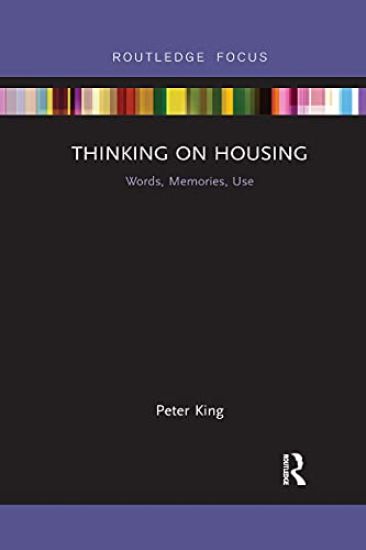
Thinking on Housing

Thinking on Housing

Peter King

TAYLOR FRANCIS LTD
2021
nidottu
If we do stop to think on housing, what do we see? What is housing and what does it do? These seem deceptively simple questions, but they are often left unanswered. The reason for this is that a lot of discourse on housing is really a concern for policy-making and the critical evaluation of existing policies. Discourse, is not, properly speaking, on housing at all. It is concerned with provision, distribution and access, but this thinking on housing stops at the front door. It is only concerned with what is actually external to housing.But for most people, housing already exists and they have access to it. Housing is not then about policy, but about how we can use what is a complex object in a manner that allows us to live well. Housing, for most of us, is about what we do when the front door is firmly shut and we are free from the external world.These essays explore this idea of housing as an object that exists for use. Housing is pictured as an object that contains activity. These pieces look at what we do with housing once we have it and so provides a necessary underpinning for any understanding of why housing is important.A further purpose of these pieces is to present different ways of thinking and writing on housing. It is an attempt to show that housing is a suitable topic for philosophical discourse. It is suggested that we can and should seek to establish a philosophy of housing, rather than just relying on the traditional social sciences.