Kirjojen hintavertailu. Mukana 11 627 220 kirjaa ja 12 kauppaa.

Kirjahaku

Etsi kirjoja tekijän nimen, kirjan nimen tai ISBN:n perusteella.

73 kirjaa tekijältä Peter Kreeft

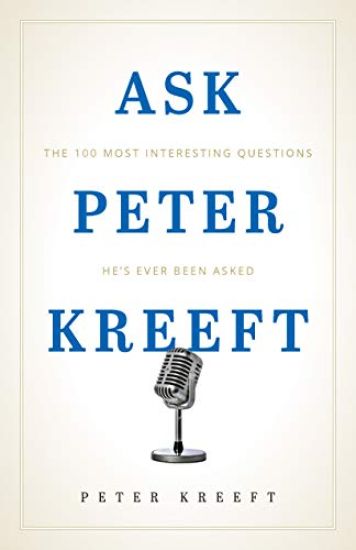
Ask Peter Kreeft: The 100 Most Interesting Questions He's Ever Been Asked
I've given thousands of lectures around the country to engaged, thoughtful, curious university and church audiences and have always made it a practice to allow for as many questions as possible. Here are the most interesting ones I've been asked, and the answers I gave. Of course, as real questions from real people, they're an eclectic mix, ranging from questions about God and sex and sin and suffering to those about heaven, my favorite movies, even surfing Some of the questions and answers are easy, some hard; some profound, some silly; some tragic, some funny; most of them thought-provoking and all of them, I hope, entertaining. Join me now as I answer scores of questions I've been asked over the decades, including the following: Why are you a Catholic? Why are so many philosophers weird? Why do you feel the need to bring God into everything? What is your favorite method of prayer? Why does the Church resist women's ordination? Why can't divorced and remarried Catholics receive Communion? Why is the Catholic Church obsessed with sex? Why does the Church still forbid birth control? Why not trial marriages--living together? Why can't Catholics believe in reincarnation? Have you ever witnessed a miracle? If you were pope, what's the first thing you would do? What ten books would you take to a desert island? Which modern invention do you believe is the most dangerous? Why don't we have as many deep friendships anymore? What's the secret of your success as a writer? What's the hardest question you've ever been asked? And many more questions and answers on an unbridled assortment of topics
Between Heaven and Hell

Between Heaven and Hell

Peter Kreeft

IVP Books
2008
nidottu
On November 22, 1963, three great men died within a few hours of each other: C. S. Lewis, John F. Kennedy and Aldous Huxley. All three believed, in different ways, that death is not the end of human life. Suppose they were right, and suppose they met after death. How might the conversation go? Peter Kreeft imagines their discussion as a part of The Great Conversation that has been going on for centuries. Does human life have meaning? Is it possible to know about life after death? What if one could prove that Jesus was God? With Kennedy taking the role of a modern humanist, Lewis representing Christian theism and Huxley advocating Eastern pantheism, the dialogue is lively and informative. This new edition of this classic work includes a postscript in which Kreeft describes why and how he wrote what has remained a standard of apologetic literature for a generation. He also adds an outline and index to the book as well as a never-before-published dialog in which he imagines "A World Without an Easter." Now more than ever this book offers an animated interaction that involves not only good thinking but good drama.
Between Allah & Jesus

Between Allah & Jesus

Peter Kreeft

Inter-Varsity Press,US
2010
nidottu
What would happen if Christians and a Muslim at a university talked and disagreed, but really tried to understand each other? What would they learn? That is the intriguing question Peter Kreeft seeks to answer in these imaginative conversations at Boston College. An articulate and engaging Muslim student named 'Isa challenges the Christian students and professors he meets on issues ranging from prayer and worship to evolution and abortion, from war and politics to the nature of spiritual struggle and spiritual submission. While Kreeft believes Christians should not learn extremism or unitarian theology from Muslims, he does believe that if we really listened we could learn much about devoted religious practice and ethics. Here is a book to open your understanding of one of the key forces shaping our world today. It's a book that just could make you a better Christian.
Between One Faith and Another – Engaging Conversations on the World`s Great Religions
How do we make sense of the world's different religions? In today's globalized society, religion is deeply intertwined with every issue we see on the news. But talking about multiple religions can be contentious. Are different faiths compatible somehow? And how can we know whether one religion is more true than another? In this creative thought experiment, Peter Kreeft invites us to encounter dialogues on the world's great faiths. His characters Thomas Keptic and Bea Lever are students in Professor Fesser's course on world religions, and the three explore the content and distinctive claims of each. Together they probe the plausibility of major religions, from Hinduism and Buddhism to Christianity and Islam. Along the way they explore how religions might relate to each other and to what extent exclusivism or inclusivism might make sense. Ultimately Kreeft gives us helpful tools for thinking fairly and critically about competing religious beliefs. If the religions are different kinds of music, do they together make harmony or cacophony? Decide for yourself.
Between Heaven and Hell – A Dialog Somewhere Beyond Death with John F. Kennedy, C. S. Lewis and Aldous Huxley
On November 22, 1963, three great men died within a few hours of each other: C. S. Lewis, John F. Kennedy and Aldous Huxley. All three believed, in different ways, that death is not the end of human life. Suppose they were right, and suppose they met after death. How might the conversation go? Peter Kreeft imagines their discussion as part of the great conversation that has been going on for centuries about life's biggest questions. Does human life have meaning? Is it possible to know about life after death? What if one could prove that Jesus was God? With Kennedy taking the role of a modern humanist, Lewis representing Christian theism and Huxley advocating Eastern pantheism, the dialogue is lively and informative. With clarity and wit, Between Heaven and Hell presents insightful responses to common objections to the Christian faith. This classic apologetics work is now available as part of the IVP Signature Collection, which features special editions of iconic books in celebration of the seventy-fifth anniversary of InterVarsity Press.
The Best Things in Life – A Contemporary Socrates Looks at Power, Pleasure, Truth the Good Life
What are the best things in life? Questions like that may boggle your mind. But they don't boggle Socrates. The indomitable old Greek brings his unending questions to Desperate State University. With him come the same mind-opening and spirit-stretching challenge that disrupted ancient Athens. What is the purpose of education?Why do we make love?What good is money?Can computers think like people?Is there a difference between Capitalism and Communism?What is the greatest good?Is belief in God like belief in Santa Claus? In twelve short, Socratic dialogues Peter Kreeft explodes contemporary values like success, power and pleasure. And he bursts the modern bubbles of agnosticism and subjectivism. He leaves you richer, wiser and more able to discern what the best things in life actually are.
Wisdom of the Heart: The Good, the True, and the Beautiful at the Center of Us All
No word in our language is more misunderstood than the word "heart.' And almost no word is more important, for it refers to what is at the very center of our soul. We have mapped the outer world, in fact the whole universe, with amazing exactness . . . but we have neglected the world within. This new book by venerable Catholic thinker Peter Kreeft offers a map of that inner world, of the self. In it, he takes up the mantle of Dietrich von Hildebrand and plumbs the depths of that most misunderstood (by the world) and overlooked (by philosophers and theologians) part of the human being. In Wisdom of the Heart, Kreeft examines the two common understandings of the heart's purpose and shows how they are not at odds, but rather different (and essential) facets: Feeling and emotion: can reduce us to action without thinking, but also drives us to compassion, empathy, and gratitude Love: An act of the will, designed so that we can follow Jesus' commandment to love God and others This book, therefore, is a psychological aid to understanding the philosophy behind St. John Paul's "Theology of the Body" while exploring the three dimensions of persons: the will, the mind, and the emotions, and their three loves: the good, the true, and the beautiful. A new masterwork by one of the foremost Catholic philosophers of our time, Wisdom of the Heart is essential reading for understanding ourselves, our God, and our relationship with him.
Letters to an Atheist

Letters to an Atheist

Peter Kreeft

BLOOMSBURY PUBLISHING PLC
2024
pokkari
In Letters to an Atheist, esteemed philosopher and author Peter Kreeft corresponds with a young atheist who is wrestling with the question of God. Together they work through some of the primary reasons people don’t believe in God, including violence committed in the name of religion, the problem of evil, and more. They also discuss many of the reasons for belief, including love, miracles, and the relationship between religion and science.The debate between atheists and theists today is often strident and angry, and understandably so—the debate encompasses fundamental questions about how we live our lives. As Kreeft writes, “if God does not exist, then religion is the biggest hoax, the biggest myth, the biggest lie in the history of the world.” However, Letters to an Atheist showcases a respectful exploration of some of life’s biggest questions, trying to understand the opposing point of view. With characteristic warmth and clarity, Kreeft’s letters offer believers and non-believers alike much to consider.
Before I Go

Before I Go

Peter Kreeft

Sheed Ward,U.S.
2007
sidottu
Most parents have no trouble telling their children how to dress, drive, study, or shave, but struggle to talk with them about how best to live—about real love, faith, integrity, values, true enrichment, and success. In the tradition of Tuesdays With Morrie, Catholic philosopher Peter Kreeft shares with us the wisdom that he has compiled for his children as his best gift to them. Readable and browsable, these heart to heart chats present priceless truths to live by in a casual yet compelling way.
Because God is Real

Because God is Real

Peter Kreeft

Ignatius Press
2008
pokkari
Atheistic and agnostic writers are aggressively attacking traditional religious beliefs. Philosopher and prolific writer Peter Kreeft is up to the challenge in this work of popular apologetics aimed at both teens and adults. The masterful Kreeft tackles sixteen crucial issues about the deeper meaning of life. The questions that Kreeft explores range from, Is faith reasonable?, Can you prove there is a God?, and Why is Jesus different?, to Why is sex so confusing?, Why is there evil?, and Why must we die? Kreeft provides thoughtful, lucid, and persuasive answers for believers, unbelievers, and seekers to consider. As always, Kreeft is insightful, inspiring, and entertaining. This book is ideal for those exploring faith for the first time, as well as for confirmation and religious education classes. It's an intellectual and spiritual feast This is vintage Kreeft.
Ecumenical Jihad – Ecumenism and the Culture War
Juxtaposing “ecumenism” and “jihad,” two words that many would consider strange and at odds with one another, Peter Kreeft argues that we need to change our current categories and alignments. We need to realize that we are at war and that the sides have changed radically. Documenting the spiritual and moral decay that has taken hold of modern society, Kreeft issues a wake-up call to all God-fearing Christians, Jews, and Muslims to unite together in a “religious war” against the common enemy of godless secular humanism, materialism, and immorality. Aware of the deep theological differences of these monotheistic faiths, Kreeft calls for a moratorium on our polemics against one another so that we can form an alliance to fight together to save Western civilization.
Ha! – A Christian Philosophy of Humor

Ha! – A Christian Philosophy of Humor

Peter Kreeft

ST AUGUSTINE'S PRESS
2022
nidottu
"This book almost didn't exist. I was about to write a serious, heavy book entitled How To Save Western Civilization, as a sequel to my book How To Destroy Western Civilization and Other Ideas from the Cultural Abyss. But writing it was not making me happy, and reading it was not going to make anybody else happy either. And then I stopped just long enough for my guardian angel to squeeze through that tiny window of opportunity that I had opened up by my silence and to whisper this commonsense question into my subconscious: "Why not make them happy instead?" (Angels specialize in common sense.) I started thinking: Western civilization is neither healthy, happy, nor holy. Humor is all three. Humor is not only holy, it's Heavenly. And if you are surprised to be told that humor is Heavenly, you need to read this book because you reveal your misunderstanding of both humor and Heaven. If you ask, 'Is there laughter in Heaven?' my answer is: 'You can't be serious!'"
If Einstein Had Been a Surfer – A Surfer, a Scientist, and a Philosopher Discuss a "Universal Wave Theory" or "Theory of Everything"
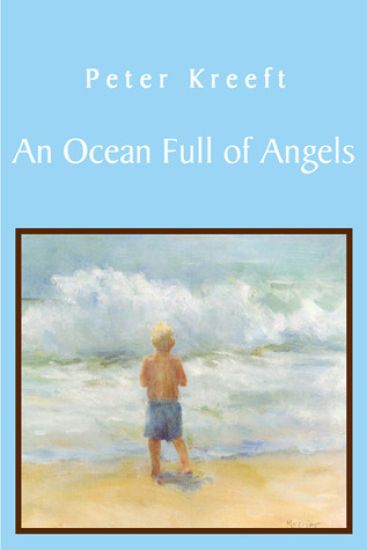
(1) Science, (2) philosophy, and (3) poetry, myth, and mysticism are three modes of consciousness that are radically different today. We are usually very good at carefully distinguishing them so as not to corrupt them, reduce them, or to confuse them with each other. But almost no one tries to connect them in a synthesis in which each maintains its own identity yet each contributes to a greater whole that no one of them could attain alone – like a happy marriage. If we bring them together at all, it is only to focus in three different ways on a specific issue (like health care, or children’s literature, or gender roles). If Einstein Had Been a Surfer dares to do it for Everything, or rather for a “Theory of Everything” that only scientists today dare to talk about. But how can a “theory of the whole” be discovered by a brain that is less than a whole brain? In this book all three dimensions of consciousness not only speak about a “theory of everything” but speak to each other in dialog. The three voices are incarnated in three characters from an upcoming novel, An Ocean Full of Angels: Evan Jellema is a theoretical physicist (and a clumsy Dutchman), ’Isa Ben Adam is a philosophical Muslim (and cantankerously clear), and Libby Rawls is a poet, mystic, and surfer (and a sassy, classy Black feminist). Isn’t “surfer” a bit of a stretch? Not at all. Actually, the papers reported last year that an amateur scientist has in fact finally discovered, or claimed to have discovered, the “theory of everything” that Einstein failed to find and that scientists have been searching for ever since – and he is a surfer! Perhaps this is no accident, but a natural connection: the mind of the “soul surfer,” having become one with the sea, has awakened its “third eye” which alone gives the scientist the binocular vision, the synoptic perspective, that he lacks. And perhaps only a philosopher can mediate the two other modes of vision, as Aquinas mediated and synthesized the science of Albert the Great and Aristotle with the poetry and symbolism of mystics like Augustine. This lively trialog, full of irony, intellectual surprise, and humor, is a serious call for a post-medieval synthesis. It does not claim to have arrived anywhere near the end of a journey to a “Theory of Everything,” only to have begun it. Even that modest ambition will certainly be criticized a priori as impossibly ambitious. Does that tell you anything about the book, or does it tell you something about the critic?
Jesus–Shock

Jesus–Shock

Peter Kreeft

ST AUGUSTINE'S PRESS
2008
sidottu
Jesus Shock is the second in a series of short works on seminal concerns of the impact that Jesus Christ made in the world. The first work, The Philosophy of Jesus (St. Augustine’s Press, 2007), explored philosophy in light of Jesus, rather than the other way around. The present work investigates the reception Jesus received both in His lifetime and continuously to the present time, not only from His enemies, but from His friends, a reception of shock, astonishment, even disgust. Perhaps a few remarks from the book best explains it:The point of the book: The point of the title: Imagine a storm has downed a telephone wire so that everyone who touches it is shocked in every cell of his body. Well, the storm of God’s crazy love has “downed” (incarnated) Jesus, and everyone who touches this “live wire” is shocked in every cell of his soul. The question of the book: Why is “Jesus” the most non-neutral, the most controversial, the most embarrassing name in the world? Why is talking about Jesus like talking about sex? This whole book is really about a single movie line, the greatest line in the greatest movie in history. Bet you know what it is. Jesus-Shock is about the Real Presence of Christ in the Gospels and in the Eucharist. It is not about the theology of the Real Presence, but about the experience of Him there, and about the experience of everyone in the Gospels who met Him. What was the bitterest controversy of the Protestant Reformation, both between Protestants and Catholics and between different Protestant denominations, the one that had both sides calling the other not just heretics but devils? Answer: It was not Justification by Faith, the hallmark of the Reformation, even though that question is about nothing less momentous than how to be saved, how to get to Heaven. It was not the relation between religion and politics, even though that was a matter of life or death (literally, on battlefields and at guillotines and hangings) and not just a matter of truth or falsity, or of good or evil. It was not about the sufficiency of the Bible, or the corruption in the Church, or the relation between the Bible and the Church. It was not about the Pope, and the governance of the Church. It was not about Mary or saints or angels or Purgatory. It was not about the Incarnation or the Trinity or the Atonement. It was about the Real Presence of Christ in the Eucharist. Jesus-Shock, in addressing this controversy forcefully and faithfully, shows the reasons why to this day the name of “Jesus” stirs up controversy, even revulsion, in polite society. In the true spirit of ecumenism, it also points the way toward a true rapprochement among His modern-day disciples.
The Philosophy of Jesus

The Philosophy of Jesus

Peter Kreeft

St Augustine's Press
2007
sidottu
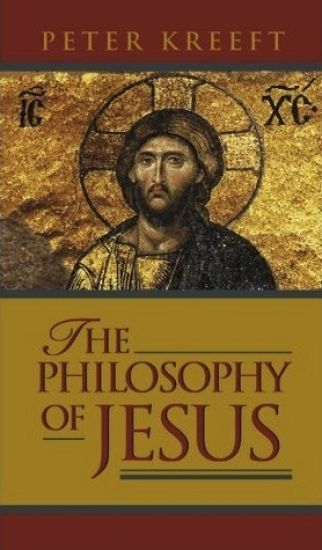
Looking at Jesus as a complete human being and philosopher, explores the most radical revolution in the history of philosophy--the differences Jesus made to metaphysics, epistemology, anthropology, and philosophical ethics and politics.