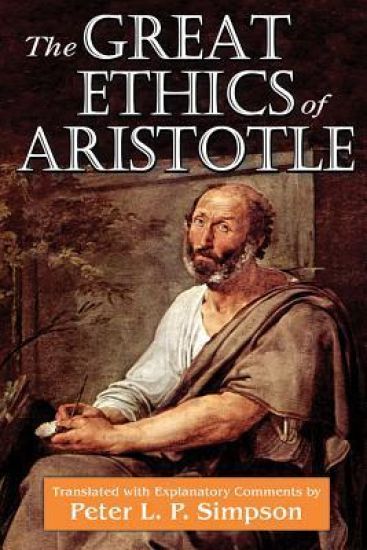
Kirjojen hintavertailu. Mukana 12 016 292 kirjaa ja 12 kauppaa.

Kirjahaku

Etsi kirjoja tekijän nimen, kirjan nimen tai ISBN:n perusteella.

8 kirjaa tekijältä Peter L. P. Simpson

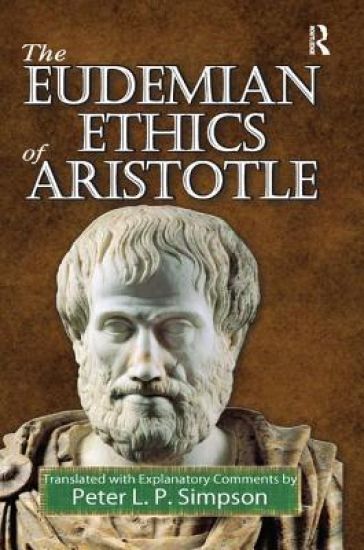
The Eudemian Ethics of Aristotle

The Eudemian Ethics of Aristotle

Peter L. P. Simpson

Routledge
2017
nidottu
Among the works on ethics in the Aristotelian corpus, there is no serious dispute among scholars that the Eudemian Ethics is authentic. The Eudemian Ethics is increasingly read and used by scholars as a useful support and confirmation and sometimes contrast to the Nicomachean Ethics. Yet, it remains a largely neglected work in the study of Aristotle's ethics, both among scholars and moral philosophers.Peter L. P. Simpson provides an analytical outline of the entire work together with summaries of each individual section, making the overall structure and detailed argument clear. His translation and explanatory notes include the common books that the Eudemian Ethics shares with the Nicomachean. This translation contains renderings of words and phrases, and proposals for emending the text that differ from what other translators and scholars have adopted.This translation is literal, without expansion or paraphrase, and yet also readable. A readable but literal translation is necessary because in the Eudemian Ethics, more than usual in Aristotle's writings, the logic of the argumentation can turn on the peculiar wording or order. Simpson explains the argumentation where necessary in notes and separate explanatory comments. This book is a fresh, twenty-first-century rendition of the work of one of the most eminent philosophers of all time.
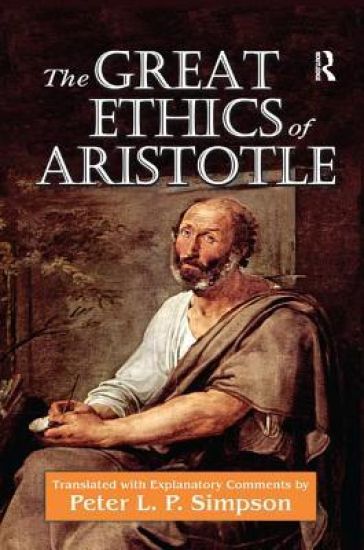
The Great Ethics of Aristotle

The Great Ethics of Aristotle

Peter L. P. Simpson

Routledge
2017
nidottu
In this follow up to The Eudemian Ethics of Aristotle, Peter L. P. Simpson centres his attention on the basics of Aristotelian moral doctrine as found in the Great Ethics: the definition of happiness, the nature and kind of the virtues, pleasure, and friendship. This work's authenticity is disputed, but Simpson argues that all the evidence favours it. Unlike the Nicomachean and Eudemian Ethics, Aristotle wrote the Great Ethics for a popular audience. It gives us insight less into Aristotle the theoretician than into Aristotle the pedagogue.For this reason, the Great Ethics has distinct advantages as an introduction to Aristotelian ethical thinking: it is simpler and clearer in its argumentation, matters such as the intellectual virtues are made suitably secondary to the practical focus, the moral virtues come through with a pleasing directness, and the work's syllogistic formalism gives it a transparency and accessibility that the other Ethics typically lack. Arius' Epitome, which relies heavily on this work, helps confirm its value and authenticity.Because the Great Ethics is generally neglected by scholars, less has been done to clear up its obscurities or to expose its structure. But to ignore it is to lose another and more instructive way of approaching and appreciating Aristotle's teaching. The translation is prefaced by an analytic outline of the whole, and the several sections of it are prefaced by brief summaries. The commentary supplies fuller descriptions and analyses, sorting out puzzles, removing misunderstandings, and resolving doubts of meaning and intention. This book is a fresh rendition of the work of the preeminent philosopher of all time.
The Eudemian Ethics of Aristotle

The Eudemian Ethics of Aristotle

Peter L. P. Simpson

AldineTransaction
2013
sidottu
Among the works on ethics in the Aristotelian corpus, there is no serious dispute among scholars that the Eudemian Ethics is authentic. The Eudemian Ethics is increasingly read and used by scholars as a useful support and confirmation and sometimes contrast to the Nicomachean Ethics. Yet, it remains a largely neglected work in the study of Aristotle's ethics, both among scholars and moral philosophers.Peter L. P. Simpson provides an analytical outline of the entire work together with summaries of each individual section, making the overall structure and detailed argument clear. His translation and explanatory notes include the common books that the Eudemian Ethics shares with the Nicomachean. This translation contains renderings of words and phrases, and proposals for emending the text that differ from what other translators and scholars have adopted.This translation is literal, without expansion or paraphrase, and yet also readable. A readable but literal translation is necessary because in the Eudemian Ethics, more than usual in Aristotle's writings, the logic of the argumentation can turn on the peculiar wording or order. Simpson explains the argumentation where necessary in notes and separate explanatory comments. This book is a fresh, twenty-first-century rendition of the work of one of the most eminent philosophers of all time.
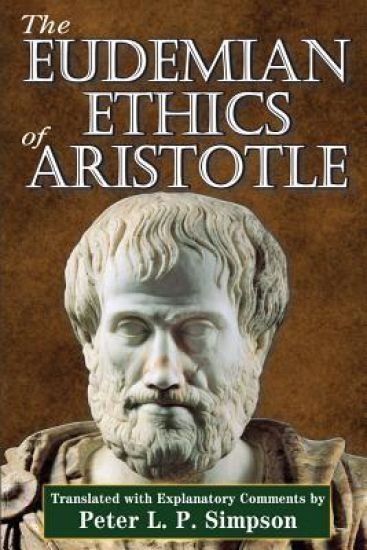
The Great Ethics of Aristotle

The Great Ethics of Aristotle

Peter L. P. Simpson

AldineTransaction
2014
sidottu
In this follow up to The Eudemian Ethics of Aristotle, Peter L. P. Simpson centres his attention on the basics of Aristotelian moral doctrine as found in the Great Ethics: the definition of happiness, the nature and kind of the virtues, pleasure, and friendship. This work's authenticity is disputed, but Simpson argues that all the evidence favours it. Unlike the Nicomachean and Eudemian Ethics, Aristotle wrote the Great Ethics for a popular audience. It gives us insight less into Aristotle the theoretician than into Aristotle the pedagogue.For this reason, the Great Ethics has distinct advantages as an introduction to Aristotelian ethical thinking: it is simpler and clearer in its argumentation, matters such as the intellectual virtues are made suitably secondary to the practical focus, the moral virtues come through with a pleasing directness, and the work's syllogistic formalism gives it a transparency and accessibility that the other Ethics typically lack. Arius' Epitome, which relies heavily on this work, helps confirm its value and authenticity.Because the Great Ethics is generally neglected by scholars, less has been done to clear up its obscurities or to expose its structure. But to ignore it is to lose another and more instructive way of approaching and appreciating Aristotle's teaching. The translation is prefaced by an analytic outline of the whole, and the several sections of it are prefaced by brief summaries. The commentary supplies fuller descriptions and analyses, sorting out puzzles, removing misunderstandings, and resolving doubts of meaning and intention. This book is a fresh rendition of the work of the preeminent philosopher of all time.
Political Illiberalism

Political Illiberalism

Peter L. P. Simpson

AldineTransaction
2015
sidottu
This book deconstructs the story of liberalism that John Rawls, author of Political Liberalism, and many others have put forward. Peter L.P. Simpson argues that political liberalism is despotic because it denies to politics a concern with the comprehensive human good; political illiberalism overcomes this despotism and restores genuine freedom. In Political Illiberalism, Simpson provides a detailed account of these political phenomena and presents a political theory opposed to that of Rawls and other proponents of modern liberalism. Simpson analyses and confronts the assumptions of this liberalism by challenging its view of liberty and especially its cornerstone that politics should not be about the comprehensive good. He presents the fundamentals of the idea of a truer liberalism as derived from human nature, with particular attention to the role and power of religion, using the political thought of Aristotle, the founding fathers of the United States, thinkers of the Roman Empire, and contemporary practice. Political Illiberalism concludes with reflections on morals in the political context of the comprehensive good. Simpson views the modern state as despotically authoritarian; consequently, seeking liberty within it is illusory. Human politics requires devolution of authority to local communities, on the one hand, and a proper distinction between spiritual and temporal powers, on the other. This thought-provoking work is essential for all political scientists and philosophy scholars.
Political Illiberalism

Political Illiberalism

Peter L. P. Simpson

AldineTransaction
2018
nidottu
This book deconstructs the story of liberalism that John Rawls, author of Political Liberalism, and many others have put forward. Peter L.P. Simpson argues that political liberalism is despotic because it denies to politics a concern with the comprehensive human good; political illiberalism overcomes this despotism and restores genuine freedom. In Political Illiberalism, Simpson provides a detailed account of these political phenomena and presents a political theory opposed to that of Rawls and other proponents of modern liberalism. Simpson analyses and confronts the assumptions of this liberalism by challenging its view of liberty and especially its cornerstone that politics should not be about the comprehensive good. He presents the fundamentals of the idea of a truer liberalism as derived from human nature, with particular attention to the role and power of religion, using the political thought of Aristotle, the founding fathers of the United States, thinkers of the Roman Empire, and contemporary practice. Political Illiberalism concludes with reflections on morals in the political context of the comprehensive good. Simpson views the modern state as despotically authoritarian; consequently, seeking liberty within it is illusory. Human politics requires devolution of authority to local communities, on the one hand, and a proper distinction between spiritual and temporal powers, on the other. This thought-provoking work is essential for all political scientists and philosophy scholars.