Kirjojen hintavertailu. Mukana 11 342 296 kirjaa ja 12 kauppaa.

Kirjahaku

Etsi kirjoja tekijän nimen, kirjan nimen tai ISBN:n perusteella.

24 kirjaa tekijältä Peter Longerich

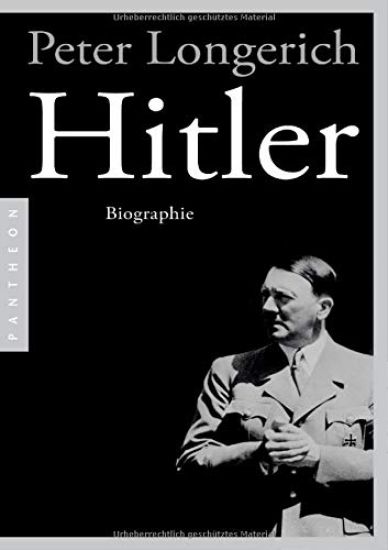
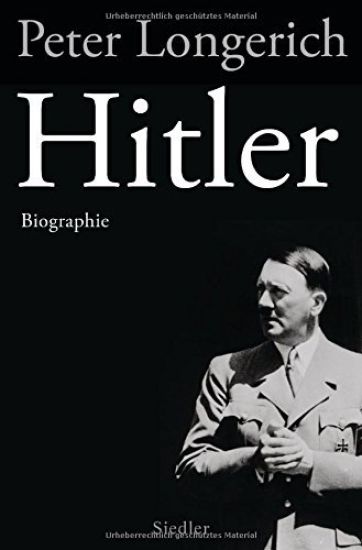
Hitler: A Biography

Hitler: A Biography

Peter Longerich

Oxford University Press
2019
sidottu
From one of the most prominent biographers of the Nazi period, a new and provocative portrait of the figure behind the century's worst crimesAcclaimed historian Peter Longerich, author of Goebbels and Heinrich Himmler now turns his attention to Adolf Hitler in this new biography. While many previous portraits have speculated about Hitler's formative years, Longerich focuses on his central role as the driving force of Nazism itself. You cannot separate the man from the monstrous movement he came to embody. From his ascendance through the party's ranks to his final hours as F hrer in April 1945, Longerich shows just how ruthless Hitler was in his path to power. He emphasizes Hitler's political skills as Germany gained prominence on the world's stage. Hitler's rise to, and ultimate hold on, power was more than merely a matter of charisma; rather, it was due to his ability to control the structure he created. His was an image constructed by his regime - an essential piece self-created of propaganda. This comprehensive biography is the culmination of Longerich's life-long pursuit to understand the man behind the century's worst crimes.
Hitler

Hitler

Peter Longerich

Oxford University Press
2019
sidottu
Tyrant, psychopath, and implementer of a ruthless programme of racial extermination, Adolf Hitler was also the charismatic Führer of millions of dedicated followers. In this major new biography, internationally acclaimed German historian Peter Longerich brings Hitler back to centre-stage in the history of Nazism, revealing a far more active and interventionist dictator than we are familiar with from recent accounts, with a flexibility of approach that often surprises. Whether it was foreign policy, war-making, terror, mass murder, cultural and religious affairs, or even mundane everyday matters, Longerich reveals how decisive a force Hitler was in the formulation of policy, sometimes right down to the smallest details, in a way which until now has not been fully appreciated. Consistently and ruthlessly destroying both the people and the power structures that stood in his way, Longerich shows how over time Hitler succeeded in forging his 'Führer dictatorship' - with terrifying and almost limitless power over the German people.
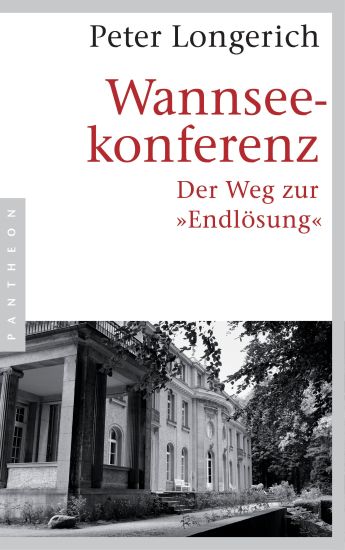
Wannsee

Wannsee

Peter Longerich

Oxford University Press
2021
sidottu
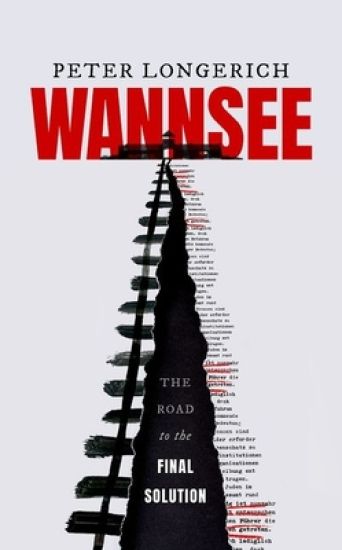
The complete story of the Wannsee Conference, the meeting that paved the way for the Holocaust. On 20 January 1942, fifteen men arrived for a meeting in a luxurious villa on the shores of the Wannsee in the far-western outskirts of Berlin. They came at the invitation of Reinhard Heydrich and were almost all high-ranking Nazi Party, government, and SS officials. The exquisite position by the lake, the imposing driveway up to the villa, culminating in a generously sized roundabout in front of the house, the expansive, carefully landscaped park, the generous suite of rooms that opened on to the park and the lake, the three-level terrace that stretched the entire garden side of the house, and the winter garden with its marble fountain, all give today's visitor to the villa a good idea of its owner's aspiration to build a sophisticated, almost palatial structure as a testament to his cultivation and worldly success. But the beauty of the situation stood in stark contrast to the purpose of the meeting to which the fifteen had come in January 1942: the 'Final Solution of the Jewish Question'. According to the surviving records of the meeting, items on the agenda included the precise definition of exactly which group of people was to be affected, followed by a discussion of how upwards of eleven million people were to be deported and subjected to the toughest form of forced labour, and following on from this a discussion of how the survivors of this forced labour as well as those not capable of it were ultimately to be killed. The next item on the agenda was breakfast.
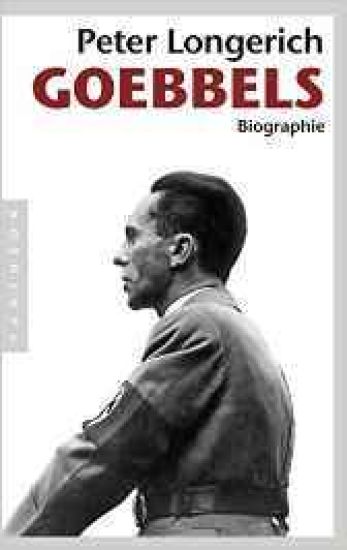
Goebbels and 'Total War'

Goebbels and 'Total War'

Peter Longerich

Oxford University Press
2025
sidottu
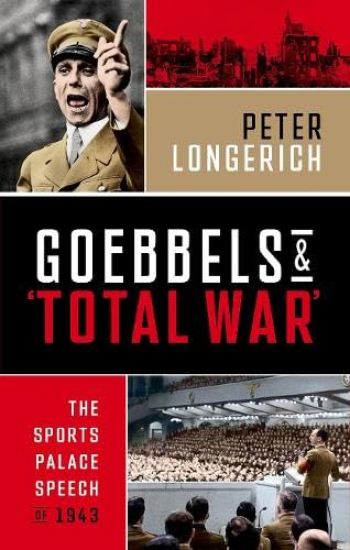
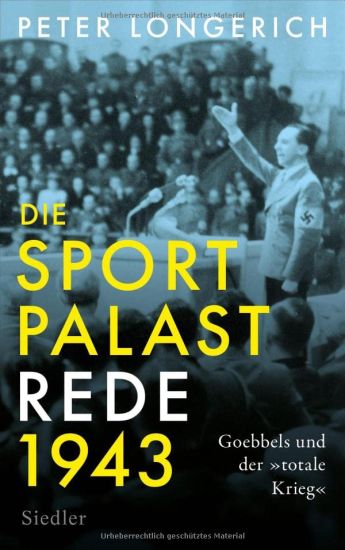
The Sports Palace speech was the climax of a campaign for 'total war'; the prime example of Nazi 'mass suggestion', a barrage of propaganda, seduction, and manipulation. On the 18th of February 1943 Nazi Propaganda Minister Joseph Goebbels made a speech in the Berlin Sports Palace that is regarded as one of the most chilling, and at the same time most effective, rhetorical performances of the twentieth century. In this definitive English translation, renowned historian Peter Longerich delves into the historical buildup to Goebbels's most notorious speech, the speech itself, and its lasting effect. Goebbels and 'Total War' singles out the Sports Palace speech to demystify the legend of Nazi propaganda by exposing the reality of the rally as a highly staged and prerecorded event, with a preselected audience and rehearsed reactions made to look spontaneous. For Goebbels, this spectacle was not only his chance to raise support for 'total war' in the German public but also the ultimate test to prove himself to his 'Führer'. Longerich traces Goebbels's path to 'total war' from his questionable demagogue skills and his tenuous relationship with Hitler, to the nation's losing battle at the front, and finally to total defeat.
Holocaust

Holocaust

Peter Longerich

Oxford University Press
2012
nidottu
A comprehensive history of the Nazi persecution and murder of European Jews, paying detailed attention to an unrivalled range sources. Focusing clearly on the perpetrators and exploring closely the process of decision making, Longerich argues that anti-Semitism was not a mere by-product of the Nazis' political mobilization or an attempt to deflect the attention of the masses, but that anti-Jewish policy was a central tenet of the Nazi movement's attempts to implement, disseminate, and secure National Socialist rule - and one which crucially shaped Nazi policy decisions, from their earliest days in power through to the invasion of the Soviet Union and the Final Solution. As Longerich shows, the 'disappearance' of Jews was designed as a first step towards a racially homogeneous society - first within the 'Reich', later in the whole of a German-dominated Europe.
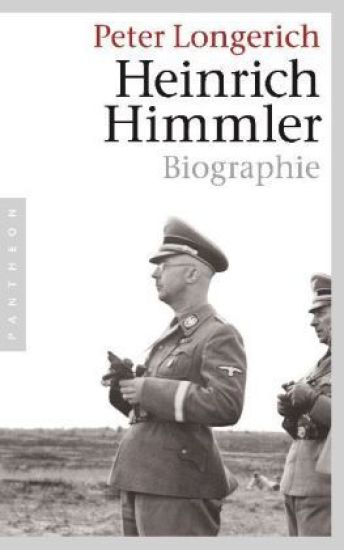
Heinrich Himmler

Heinrich Himmler

Peter Longerich

Oxford University Press
2012
nidottu
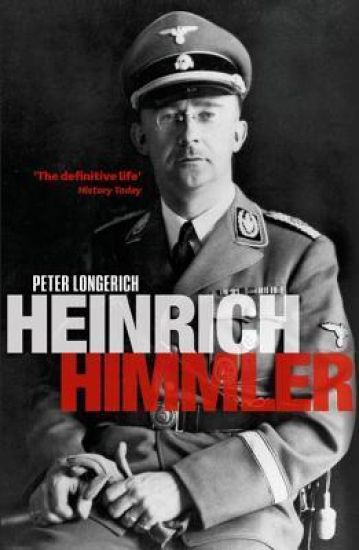
As head of the SS, chief of police, 'Reichskommissar for the Consolidation of Germanness', and Reich Interior Minister, Heinrich Himmler enjoyed a position of almost unparalleled power and responsibility in Nazi Germany. Perhaps more than any other single Nazi leader aside from Hitler, his name has become a byword for the terror, persecution, and destruction that characterized the Third Reich. His wide-ranging powers meant that he bore equal responsibility for the repression of the German people on the home front and the atrocities perpetrated by the SS in the East. Yet, in spite of his central role in the crimes of the Nazi regime, until now Himmler has remained a colourless and elusive figure in the history of the period. In this, the first-ever comprehensive biography of the SS-Reichsführer, leading German historian Peter Longerich puts every aspect of Himmler's life under the microscope. Masterfully interweaving the story of Himmler's personal life and political career with the wider history of the Nazi dictatorship, Longerich shows how skilfully he exploited and manipulated his disparate roles in the pursuit of his far-reaching and grandiose objectives. In the process, he illuminates the extraordinary degree to which Himmler's own personal prejudices, idiosyncrasies, and predilections made their mark on the organizations for which he was responsible - especially the SS, which in so many ways bore the characteristic hallmarks of its leader, and whose history remains both incomplete and incomprehensible without a detailed and intimate knowledge of its deeply sinister commander-in-chief.
The Unwritten Order

The Unwritten Order

Peter Longerich

The History Press Ltd
2016
nidottu
The Holocaust differs from other genocides in recent history for one main reason: there is no other example in which a minority was annihilated systematically and as completely as possible on the orders of a head of state and through the apparatus of government. To reconstruct Hitler’s central role in the Final Solution represents a particular challenge. Hitler treated the murder of the Jews as a matter of the utmost secrecy and was careful wherever possible not to leave behind any written orders. Wherever his instructions on this matter are recorded he has used codified language. He kept away from the implementation of the orders and feigned ignorance, even to his closest friends and colleagues. Under these conditions, the surviving source material can only be described as fragmentary. The Unwritten Order aims to offer documentary proof of Hitler’s central role in the murder of the European Jews. In order to achieve this aim, various documents and fragments of documents have been pieced together and the codified language of the dictator deciphered.
The Unwritten Order

The Unwritten Order

Peter Longerich

The History Press Ltd
2004
nidottu
The definitive study of Hitler's role in the greatest act of genocide of the twentieth century. The Holocaust differs from other genocides in recent history for one main reason: there is no other example in which a minority was annihilated systematically and as completely as possible on the orders of a head of state and through the apparatus of government.To reconstruct Hitler's central role in the Final Solution represents a particular challenge. Hitler treated the murder of the Jews as a matter of the utmost secrecy and was careful wherever possible not to leave behind any written orders. Wherever his instructions on this matter are recorded he has used codified language. He kept away from the implementation of the orders and feigned ignorance, even to his closest friends and colleagues. Under these conditions, the surviving source material can only be described as fragmentary.The aim of the book is to offer documentary proof of Hitler's central role in the murder of the European Jews. In order to achieve this aim, various documents and fragments of documents have been pieced together and the codified language of the dictator deciphered.
The Unwritten Order

The Unwritten Order

Peter Longerich

NPI Media Group
2005
nidottu
The Holocaust differs from other genocides in recent history for one main reasonthere is no other example in which a minority was annihilated so systematically on the orders of a head of state and through the apparatus of government. Through the recent discovery of documents, the central role that Hitler played in the persecution and murder of the European Jews can be proved much more conclusively than was possible just a few years ago."
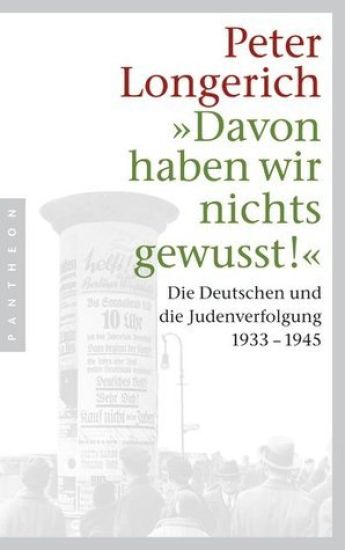
"Davon haben wir nichts gewusst!"

"Davon haben wir nichts gewusst!"

Peter Longerich

PANTHEON
2007
nidottu
Was wussten die Deutschen über die Ermordung der Juden? Was wussten die Deutschen vom Holocaust? Wie wurde die nationalsozialistische "Judenpolitik" in der Propaganda des Regimes dargestellt? Wie haben die Menschen auf Informationen und Gerüchte über den systematischen Mord an den Juden Europas reagiert? Diese Fragen gehören zu den zentralen, bisher ungelösten Problemen der Holocaust-Forschung. Auf der Grundlage neuer, bisher nicht ausgewerteter Quellen gibt Peter Longerich überzeugende Antworten. Peter Longerich gelingt es, aus der Sicht des Historikers Antworten auf die Frage nach dem Wissen der Deutschen über die "Endlösung" und ihre Einstellung zur Judenverfolgung zu geben. Er hat die antisemitische Propaganda des Regimes analysiert, sich mit alliierten Rundfunkprogrammen und Flugblättern befasst, alle noch vorhandenen geheimen NS-Stimmungsberichte zur "Judenfrage" untersucht und zusätzlich Informationen aus Tagebüchern, Gerichtsakten, Aufzeichnungen ausländischer Besucher und anderen Quellen zusammengetragen. Longerich weist nach, dass die Judenverfolgung im Deutschen Reich nicht nur in aller Öffentlichkeit stattfand, sondern dass das NS-Regime ab Ende 1941 immer wieder gezielte Hinweise auf die "Vernichtung" der Juden gab. Die konkreten Einzelheiten des Massenmordes unterlagen zwar strikter Geheimhaltung, doch diese wurde immer wieder durchbrochen. Durch seine Propagandapolitik versuchte das Regime der Bevölkerung zu signalisieren, dass sie zu Mitwissern und Komplizen eines Verbrechens ungeheuerlichen Ausmaßes geworden und ihr Schicksal auf Gedeih und Verderb mit der Existenz des Regimes verbunden war. Ein Thema, das nach wie vor die Gemüter erregt und bisher nie schlüssig behandelt wurde. "So methodisch reflektiert, so akribisch genau ist das schwierige Thema noch nie behandelt worden. Kurzum: ein exzellentes Buch, das für eine längst fällige Korrektur unseres Geschichtsbildes sorgt." Die Zeit "Der in Großbritannien lehrende Holocaustforscher Peter Longerich hat für seine mustergültige Studie eine Vielzahl von Quellen herangezogen. So entsteht ein genaues Bild der antisemitischen Propaganda des Regimes." Tagesspiegel "Longerich liefert eine notwenige Korrektur des deutschen Geschichts- und Selbstbildes, die mit einem Mythos aufräumt, dessen Glaubwürdigkeit schon lange im Zweifel stand." die tageszeitung