Kirjojen hintavertailu. Mukana 12 034 191 kirjaa ja 12 kauppaa.

Kirjahaku

Etsi kirjoja tekijän nimen, kirjan nimen tai ISBN:n perusteella.

11 kirjaa tekijältä Peter Ludlow

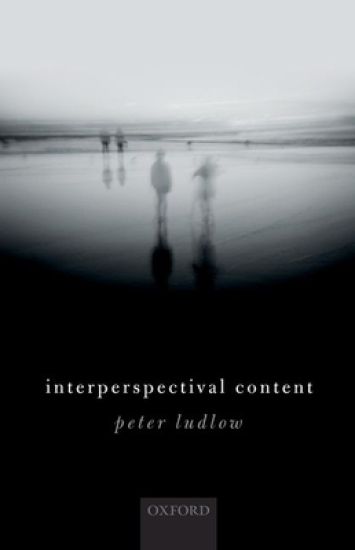
Interperspectival Content

Interperspectival Content

Peter Ludlow

Oxford University Press
2021
nidottu
Too often today it seems we find ourselves communicating from radically different perspectives on the world and we often despair of communication even being possible. Peter Ludlow argues that perspectival content, or what some call indexical content, is ineliminable and ubiquitous, running through our accounts of human action and emotions, perception, normative behaviour, and even our theories of computation and information. While such content may be ineliminable, it also gives rise to philosophical puzzles - particularly those involving reporting these contents from different perspectival positions. Such puzzles have led some to try and abandon perspectival content, and others to despair of communication across diverse perspectival positions. Ludlow argues that communication across diverse perspectival positions is not only possible, but routine, and develops a theory of interperspectival content and cognitive dynamics to explain how it is accomplished.
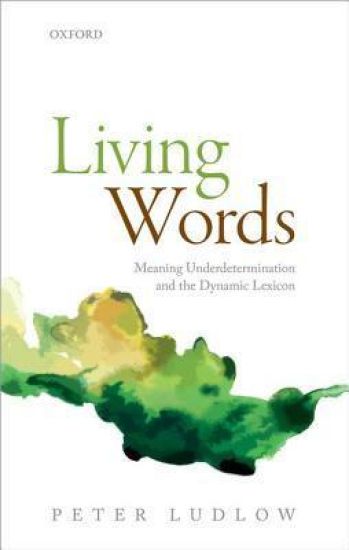
Living Words

Living Words

Peter Ludlow

Oxford University Press
2014
sidottu
Peter Ludlow shows how word meanings are much more dynamic than we might have supposed, and explores how meanings are modulated (changed) even during the course of our everyday conversations. When we engage with communicative partners we build micro-languages on the fly--languages that may be fleeting, but which serve our joint interests. Sometimes we sync up on word meanings without reflection, but in many cases we debate the proper modulation of the meanings of our words. Living Words explores the norms that govern the ways in which we litigate word meanings. The resulting view is radical, and Ludlow shows that it has far-reaching consequences for our political and legal discourse and also for some of the deepest and most intractable puzzles that have gripped English-language philosophy for the past 100 years--including puzzles in the foundations of semantics, epistemology, and logic.
Living Words

Living Words

Peter Ludlow

Oxford University Press
2017
nidottu
Peter Ludlow shows how word meanings are much more dynamic than we might have supposed, and explores how meanings are modulated (changed) even during the course of our everyday conversations. When we engage with communicative partners we build micro-languages on the fly--languages that may be fleeting, but which serve our joint interests. Sometimes we sync up on word meanings without reflection, but in many cases we debate the proper modulation of the meanings of our words. Living Words explores the norms that govern the ways in which we litigate word meanings. The resulting view is radical, and Ludlow shows that it has far-reaching consequences for our political and legal discourse and also for some of the deepest and most intractable puzzles that have gripped English-language philosophy for the past 100 years--including puzzles in the foundations of semantics, epistemology, and logic.
Interperspectival Content

Interperspectival Content

Peter Ludlow

Oxford University Press
2019
sidottu
Too often today it seems we find ourselves communicating from radically different perspectives on the world and we often despair of communication even being possible. Peter Ludlow argues that perspectival content, or what some call indexical content, is ineliminable and ubiquitous, running through our accounts of human action and emotions, perception, normative behaviour, and even our theories of computation and information. While such content may be ineliminable, it also gives rise to philosophical puzzles - particularly those involving reporting these contents from different perspectival positions. Such puzzles have led some to try and abandon perspectival content, and others to despair of communication across diverse perspectival positions. Ludlow argues that communication across diverse perspectival positions is not only possible, but routine, and develops a theory of interperspectival content and cognitive dynamics to explain how it is accomplished.
The Philosophy of Generative Linguistics

The Philosophy of Generative Linguistics

Peter Ludlow

Oxford University Press
2011
sidottu
Peter Ludlow presents the first book on the philosophy of generative linguistics, including both Chomsky's government and binding theory and his minimalist program. Ludlow explains the motivation of the generative framework, describes its basic mechanisms, and then addresses some of the many interesting philosophical questions and puzzles that arise once we adopt the general theoretical approach. He focuses on what he takes to be the most basic philosophical issues about the ontology of linguistics, about the nature of data, about language/world relations, and about best theory criteria. These are of broad philosophical interest, from epistemology to ethics: Ludlow hopes to bring the philosophy of linguistics to a wider philosophical audience and show that we have many shared philosophical questions. Similarly, he aims to set out the philosophical issues in such a way as to engage readers from linguistics, and to encourage interaction between the two disciplines on foundational issues.
The Philosophy of Generative Linguistics

The Philosophy of Generative Linguistics

Peter Ludlow

Oxford University Press
2013
nidottu
Peter Ludlow presents the first book on the philosophy of generative linguistics, including both Chomsky's government and binding theory and his minimalist program. Ludlow explains the motivation of the generative framework, describes its basic mechanisms, and then addresses some of the many interesting philosophical questions and puzzles that arise once we adopt the general theoretical approach. He focuses on what he takes to be the most basic philosophical issues about the ontology of linguistics, about the nature of data, about language/world relations, and about best theory criteria. These are of broad philosophical interest, from epistemology to ethics: Ludlow hopes to bring the philosophy of linguistics to a wider philosophical audience and show that we have many shared philosophical questions. Similarly, he aims to set out the philosophical issues in such a way as to engage readers from linguistics, and to encourage interaction between the two disciplines on foundational issues.
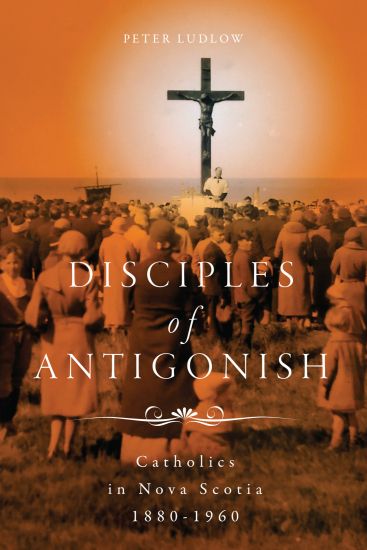
Disciples of Antigonish

Disciples of Antigonish

Peter Ludlow

MCGILL-QUEEN'S UNIVERSITY PRESS
2022
sidottu
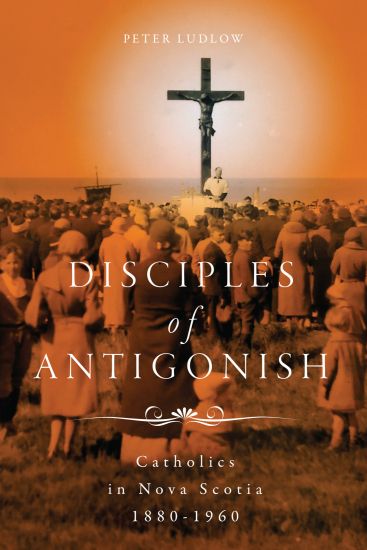
For generations eastern Nova Scotia was one of the most celebrated Roman Catholic constituencies in Canada. Occupying a corner of a small province in a politically marginalized region of the country, the Diocese of Antigonish nevertheless had tremendous influence over the development of Canadian Catholicism. It produced the first Roman Catholic prime minister of Canada, supplied the nation with clergy and women- religious, and organized one of North America’s most successful social movements.Disciples of Antigonish recounts the history of this unique multi-ethnic community as it shifted from the firm ultramontanism of the nineteenth century to a more socially conscious Catholicism after the First World War. Peter Ludlow chronicles the faithful as they built a strong Catholic sub-state, dealing with economic uncertainty, generational outmigration, and labour unrest. As the home of the Antigonish Movement – a network of adult study clubs, cooperatives, and credit unions – the diocese became famous throughout the Catholic world.The influence of “mighty big and strong Antigonish,” as one national figure described the community, reached its zenith in the 1950s. Disciples of Antigonish traces the monumental changes that occurred within the region and the wider church over nearly a century and demonstrates that the Catholic faith in Canada went well beyond Sunday Mass.
Disciples of Antigonish

Disciples of Antigonish

Peter Ludlow

MCGILL-QUEEN'S UNIVERSITY PRESS
2022
nidottu
For generations eastern Nova Scotia was one of the most celebrated Roman Catholic constituencies in Canada. Occupying a corner of a small province in a politically marginalized region of the country, the Diocese of Antigonish nevertheless had tremendous influence over the development of Canadian Catholicism. It produced the first Roman Catholic prime minister of Canada, supplied the nation with clergy and women- religious, and organized one of North America’s most successful social movements.Disciples of Antigonish recounts the history of this unique multi-ethnic community as it shifted from the firm ultramontanism of the nineteenth century to a more socially conscious Catholicism after the First World War. Peter Ludlow chronicles the faithful as they built a strong Catholic sub-state, dealing with economic uncertainty, generational outmigration, and labour unrest. As the home of the Antigonish Movement – a network of adult study clubs, cooperatives, and credit unions – the diocese became famous throughout the Catholic world.The influence of “mighty big and strong Antigonish,” as one national figure described the community, reached its zenith in the 1950s. Disciples of Antigonish traces the monumental changes that occurred within the region and the wider church over nearly a century and demonstrates that the Catholic faith in Canada went well beyond Sunday Mass.
Semantics, Tense, and Time

Semantics, Tense, and Time

Peter Ludlow

Bradford Books
1999
pokkari
According to Peter Ludlow, there is a very close relation between the structure of natural language and that of reality, and one can gain insights into long-standing metaphysical questions by studying the semantics of natural language. In this book Ludlow uses the metaphysics of time as a case study and focuses on the dispute between A-theorists and B-theorists about the nature of time. According to B-theorists, there is no genuine change, but a permanent sequence of events ordered by an earlier-than/later-than relation. According to the version of the A-theory adopted by Ludlow (a position sometimes called "presentism"), there are no past or future events or times; what makes something past or future is how the world stands right now.Ludlow argues that each metaphysical picture is tied to a particular semantical theory of tense and that the dispute can be adjudicated on semantical grounds. A presentism-compatible semantics, he claims, is superior to a B-theory semantics in a number of respects, including its abilities to handle the indexical nature of temporal discourse and to account for facts about language acquisition. Along the way, Ludlow develops a conception of "E-type" temporal anaphora that can account for both temporal anaphora and complex tenses without reference to past and future events. His view has philosophical consequences for theories of logic, self-knowledge, and memory. As for linguistic consequences, Ludlow suggests that the very idea of grammatical tense may have to be dispensed with and replaced with some combination of aspect, modality, and evidentiality.
The Canny Scot

The Canny Scot

Peter Ludlow

McGill-Queen's University Press
2015
sidottu
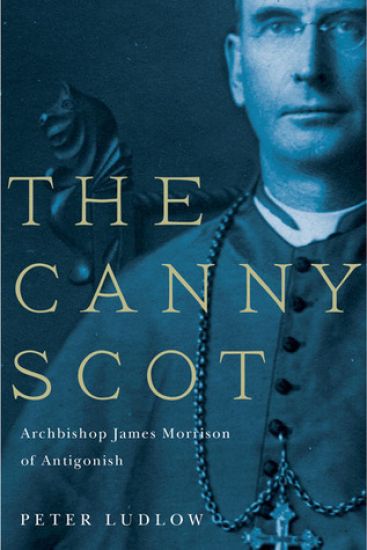
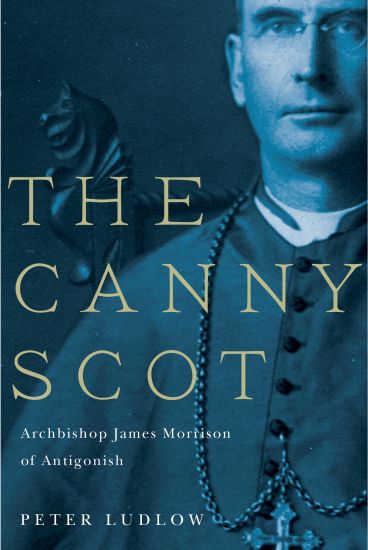
A paradoxical prelate to many, Archbishop James Morrison was the spiritual head of the Roman Catholic Diocese of Antigonish, Nova Scotia, from 1912 to 1950. Traditional, frugal, and aloof, he was also the ecclesiastical leader of a progressive program of Catholic social action that became known as the "Antigonish Movement." Elevated to bishop after a successful clerical career in Prince Edward Island, Morrison guided Catholics in eastern Nova Scotia through difficult periods of economic decline, out-migration, and war. He was unprepared for the challenges of twentieth-century Canadian society, and initially struggled to cope with a dwindling Maritime economy, labour unrest, and rural depopulation. Determined to maintain the stature of his diocese, Morrison cautiously supported the clergy reformers who wanted a program of adult education and economic reform. Peter Ludlow unravels the mystery of this figure to show that although Morrison was one of the last powerful and austere Canadian Roman Catholic prelates, he was also one of the first to recognize that the Church could offer its adherents more than spiritual guidance. A revisionist account of the foundation and application of the Antigonish Movement, The Canny Scot illustrates the important role of the Catholic Church in Nova Scotia.
The Canny Scot

The Canny Scot

Peter Ludlow

McGill-Queen's University Press
2015
nidottu
A paradoxical prelate to many, Archbishop James Morrison was the spiritual head of the Roman Catholic Diocese of Antigonish, Nova Scotia, from 1912 to 1950. Traditional, frugal, and aloof, he was also the ecclesiastical leader of a progressive program of Catholic social action that became known as the "Antigonish Movement." Elevated to bishop after a successful clerical career in Prince Edward Island, Morrison guided Catholics in eastern Nova Scotia through difficult periods of economic decline, out-migration, and war. He was unprepared for the challenges of twentieth-century Canadian society, and initially struggled to cope with a dwindling Maritime economy, labour unrest, and rural depopulation. Determined to maintain the stature of his diocese, Morrison cautiously supported the clergy reformers who wanted a program of adult education and economic reform. Peter Ludlow unravels the mystery of this figure to show that although Morrison was one of the last powerful and austere Canadian Roman Catholic prelates, he was also one of the first to recognize that the Church could offer its adherents more than spiritual guidance. A revisionist account of the foundation and application of the Antigonish Movement, The Canny Scot illustrates the important role of the Catholic Church in Nova Scotia.